This post may contain affiliate links. If you buy through them, we may earn a small commission at no extra cost to you.
When floor space runs out, the wall becomes your best friend. Japanese organizing philosophy has long embraced verticality — think tatami rooms with built-in tansu chests stacked floor to ceiling, or tiny apartments in Tokyo that make every inch count. The same logic works beautifully in a small studio, dorm room, or apartment in the US: instead of fighting for square footage, you simply go up. Below are ten practical, Japandi-friendly ways to use vertical space so your home feels calmer, more open, and far less cluttered.
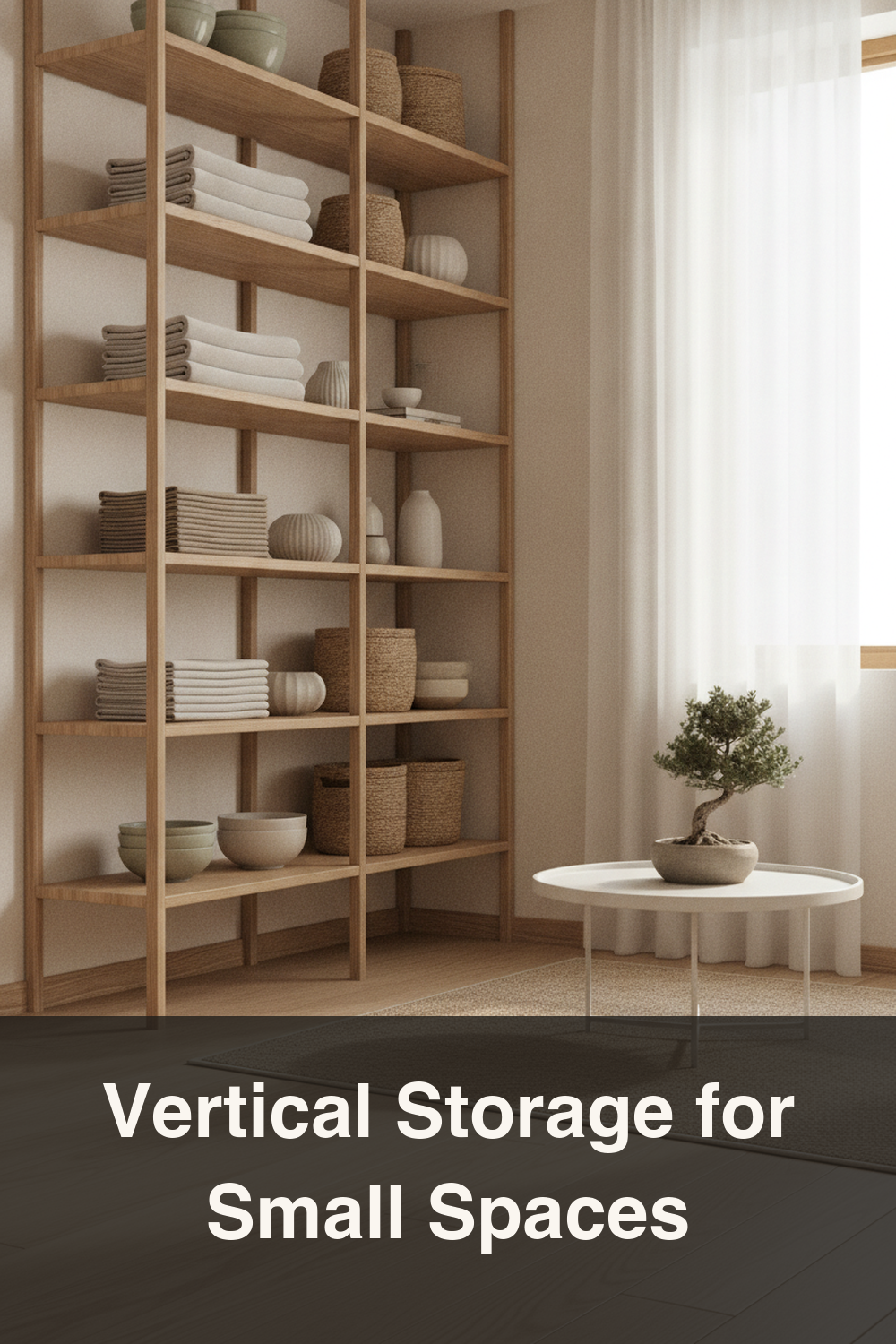
1. Install Wall-Mounted Shelving to Free Up Floor Space
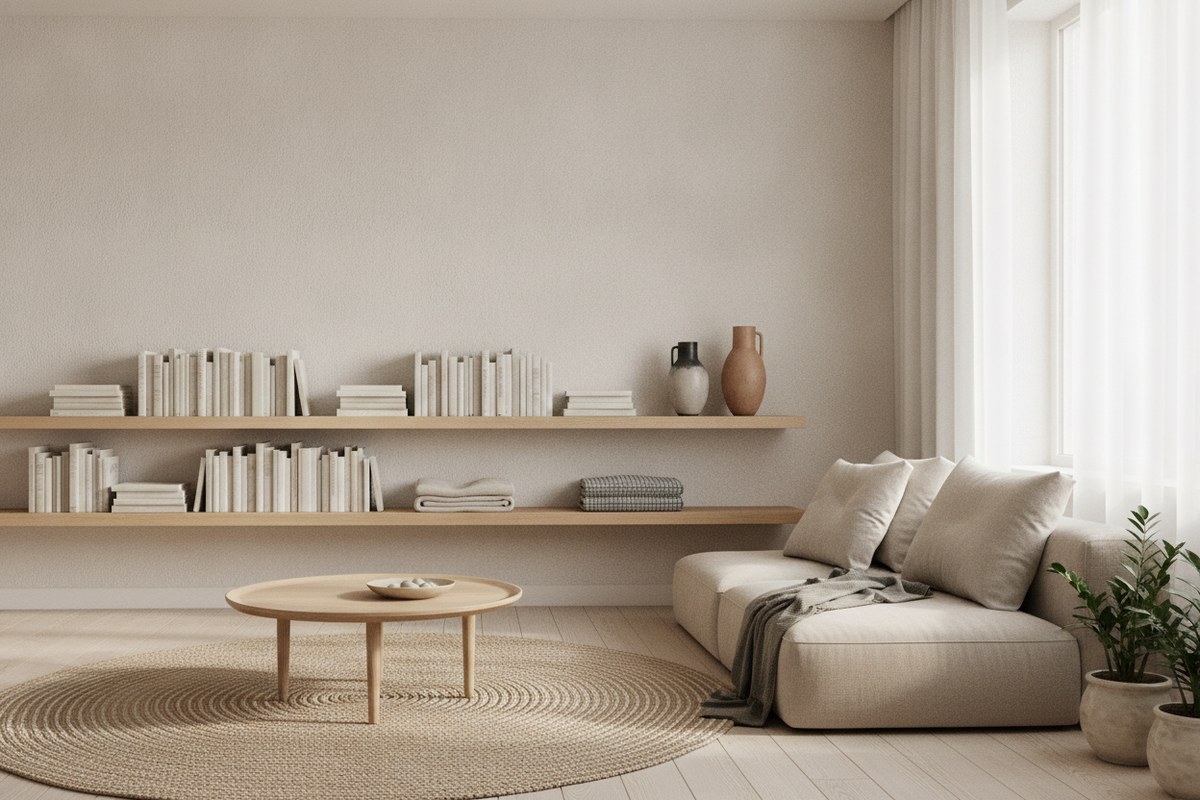
Floating shelves are the backbone of any small-space storage plan. Because they attach directly to the wall with no legs or bulky frame, they keep the floor clear and the room feeling airy — a core Japandi principle. Choose simple, light wood or matte black wall-mounted floating shelves and space them evenly rather than cramming them close together. Leave a little negative space above and below each shelf; in Japanese design this breathing room, or “ma,” is just as important as the storage itself.
2. Use a Ladder Shelf for Soft, Flexible Storage
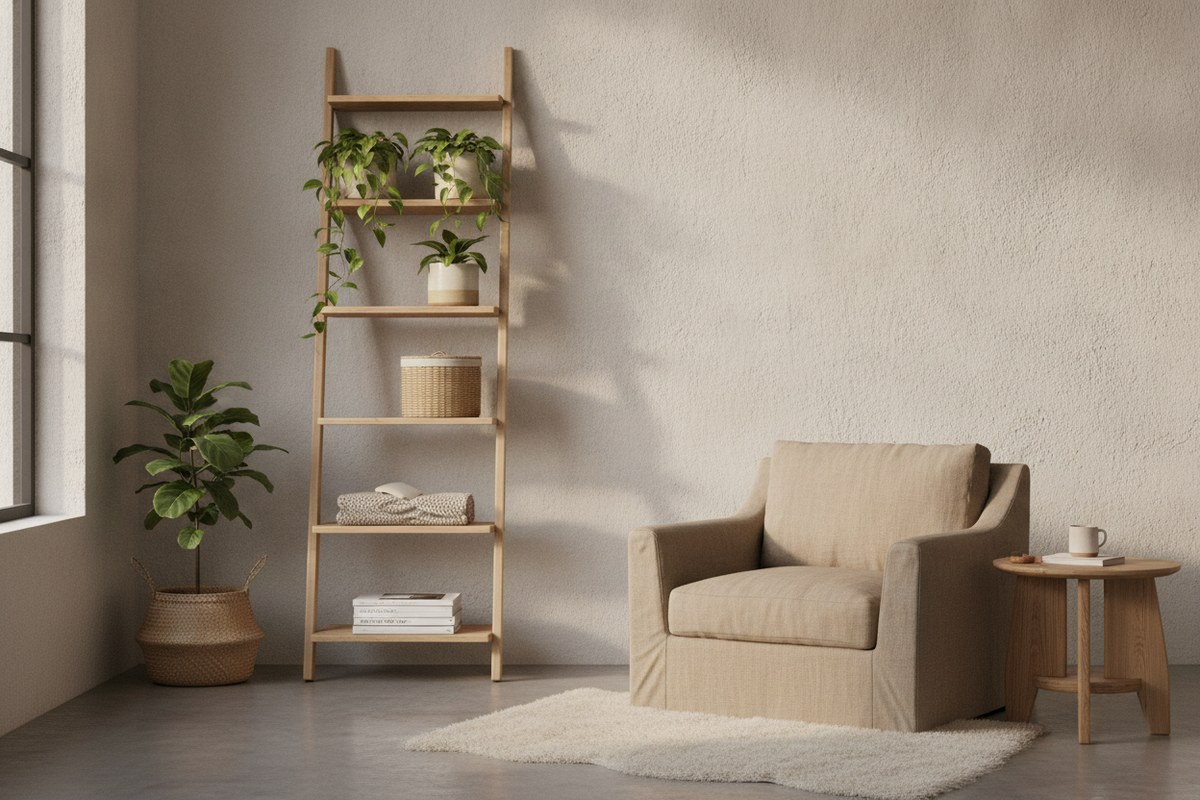
A ladder shelf leans against the wall rather than being mounted, which makes it perfect for renters who can’t drill holes. It’s ideal for corners, next to a reading chair, or beside a bed. A slim wood ladder shelf gives you five or six tiers of storage for books, plants, and folded textiles while taking up almost no footprint. Keep the bottom two shelves for heavier items and the top rungs for lighter, decorative pieces to maintain a grounded, balanced look.
3. Add Pegboards for Customizable Vertical Organization
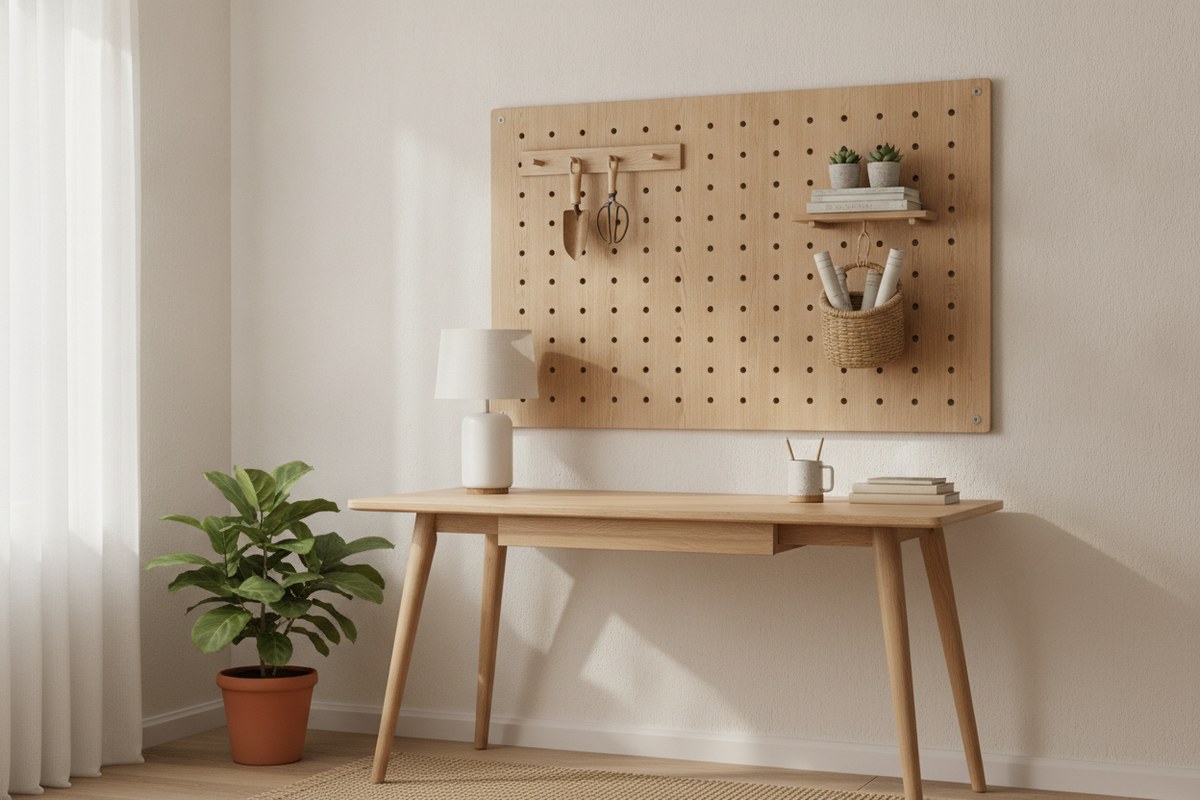
Pegboards borrow from the Japanese idea of giving every object “a home” — a cornerstone of the danshari decluttering method, which encourages letting go of anything without a clear place or purpose. Mount a wooden pegboard organizer above a desk, in an entryway, or in the kitchen, and use hooks and small shelves to hang tools, keys, or utensils. Because everything is visible and has a designated spot, it’s much easier to put things back and much harder to accumulate clutter.
4. Hang Baskets on the Wall for Textural Storage
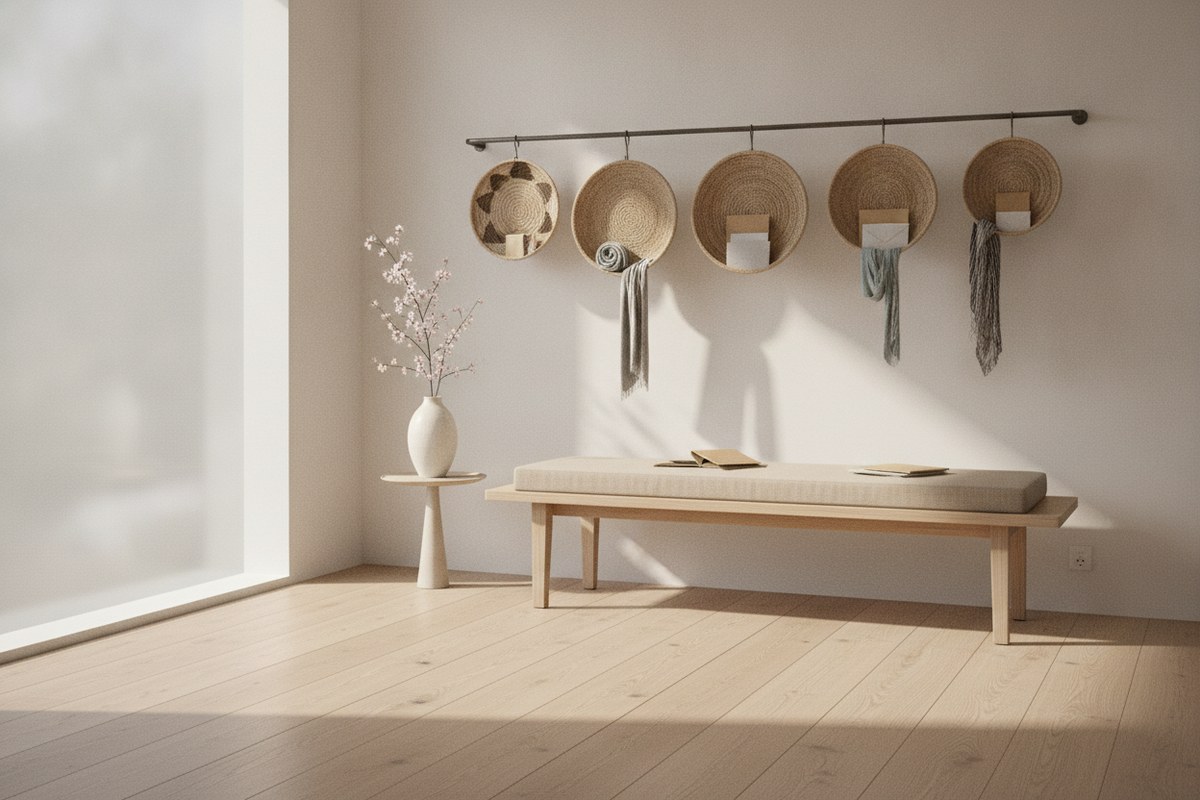
Woven baskets add warmth and texture in true Japandi fashion, blending Scandinavian simplicity with Japanese natural materials. Mount a few hanging wall baskets in a staggered pattern to store mail, scarves, or bathroom essentials. Because they sit flush against the wall, they add storage without eating into walking space, and the natural rattan or seagrass texture softens an otherwise minimal room.
5. Maximize Door Space with Over-the-Door Organizers
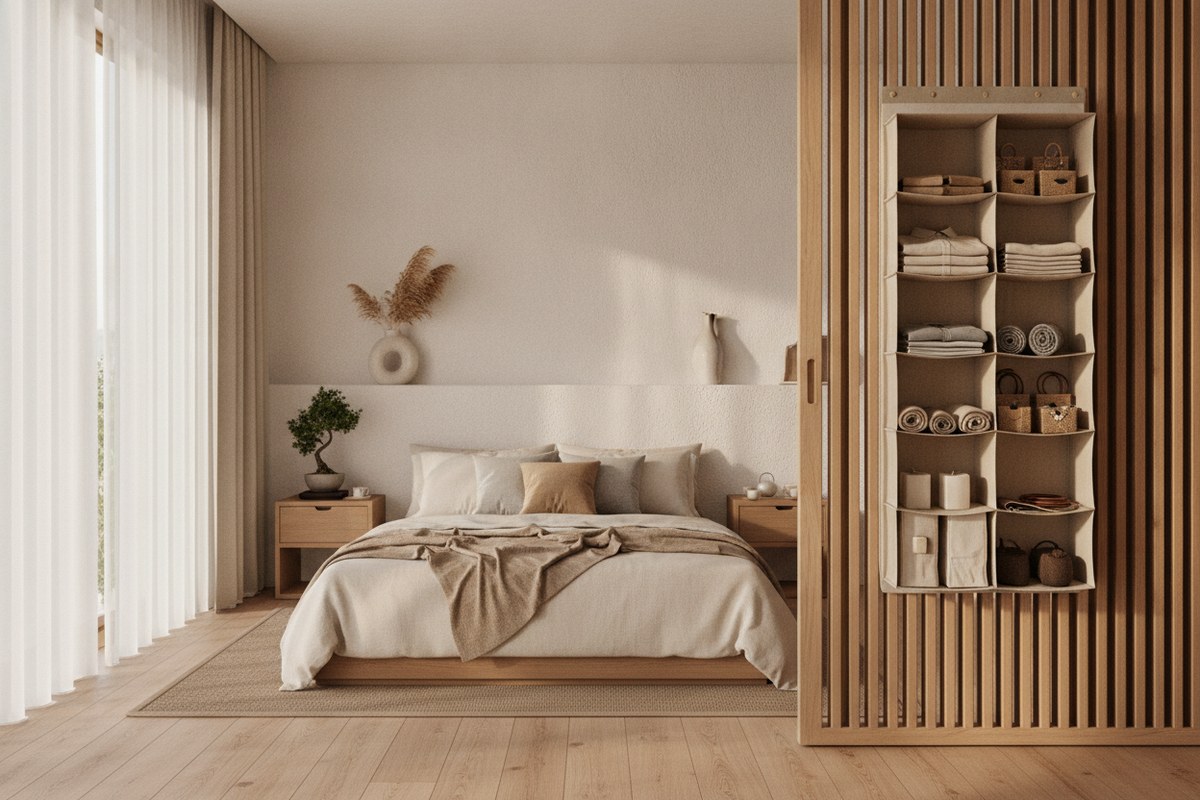
The back of a door is one of the most overlooked storage zones in a small home. A slim over-the-door organizer can hold shoes, cleaning supplies, or pantry items without taking up a single inch of usable floor space. Choose a canvas or linen version in a neutral tone so it blends into the door rather than standing out, keeping the overall look serene rather than utilitarian.
6. Stack Storage Bins Vertically in Closets
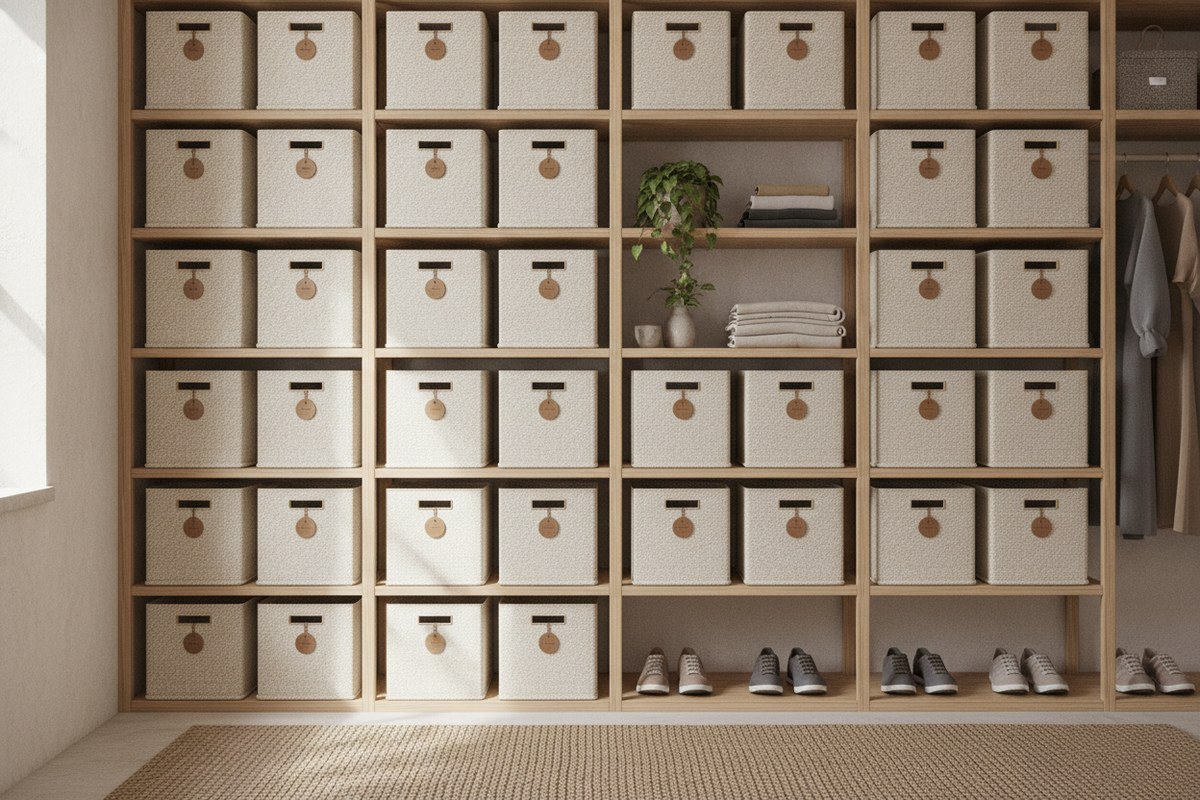
Closets often waste vertical space because items are piled haphazardly rather than organized in tiers. Uniform, stackable stackable storage bins let you build upward safely, and labeling each one keeps the system honest — a very Japanese approach to maintaining order over time. Store seasonal items on top, everyday items at eye level, and heavier items on the bottom for both safety and ease of access.
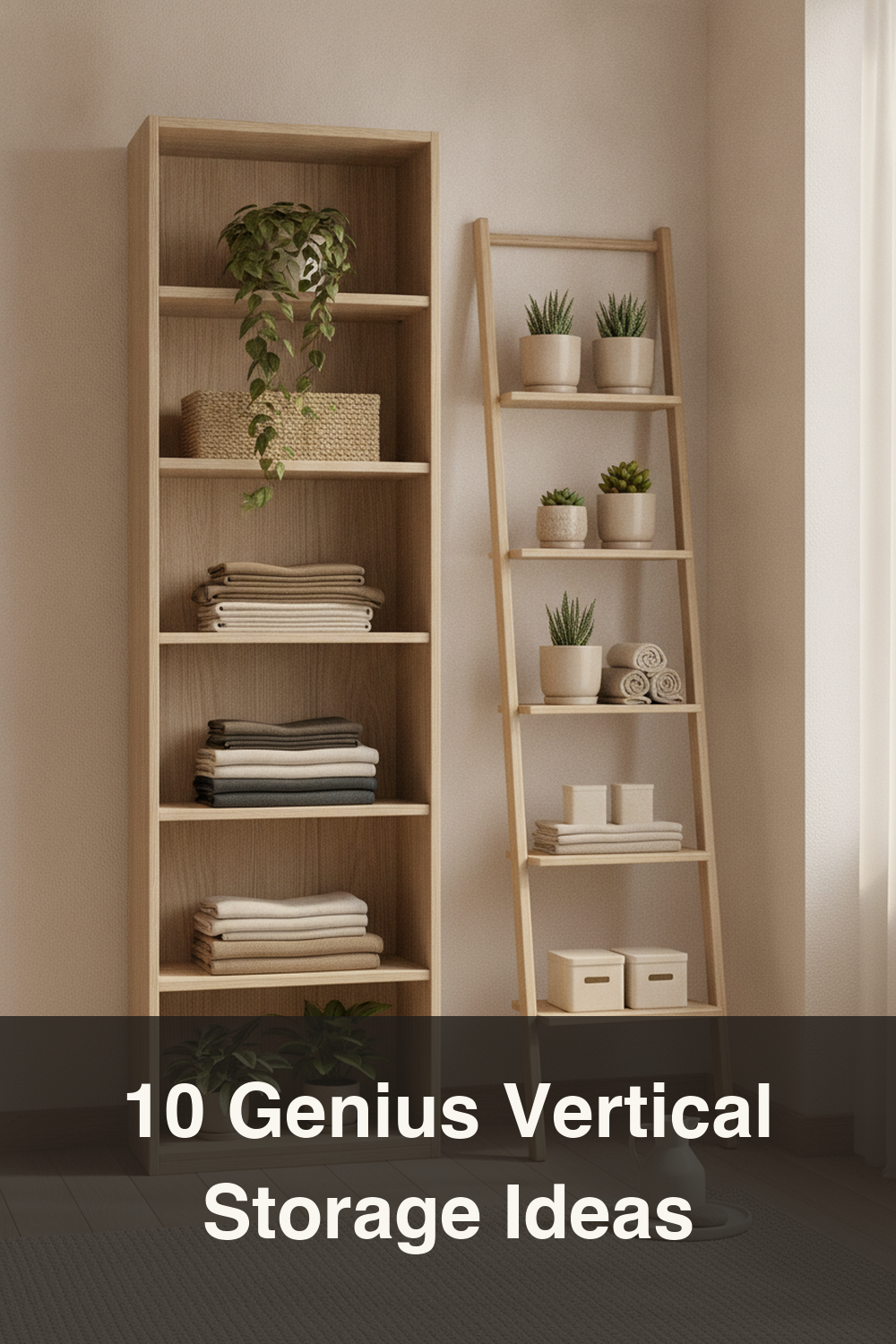
7. Use Tall, Narrow Bookcases in Tight Corners
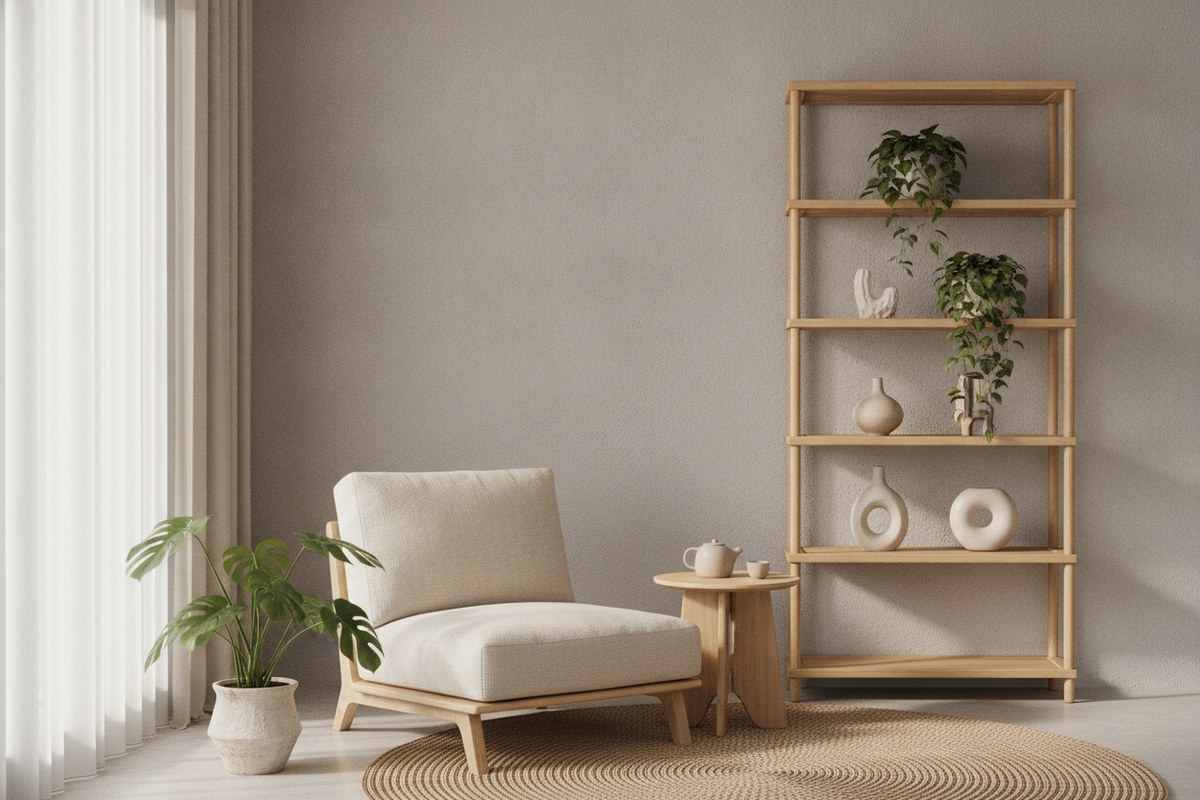
A narrow, tall bookcase can slide into gaps that would otherwise be wasted — beside a fridge, next to a sofa, or in an awkward corner. A tall narrow bookcase in light oak or bamboo keeps the Japandi palette intact while giving you several shelves of vertical storage. Style it the way you would a Japanese tokonoma alcove: a few carefully chosen objects per shelf, rather than a crowded jumble, to keep the eye calm as it travels upward.
8. Mount Floating Cabinets Above Counters
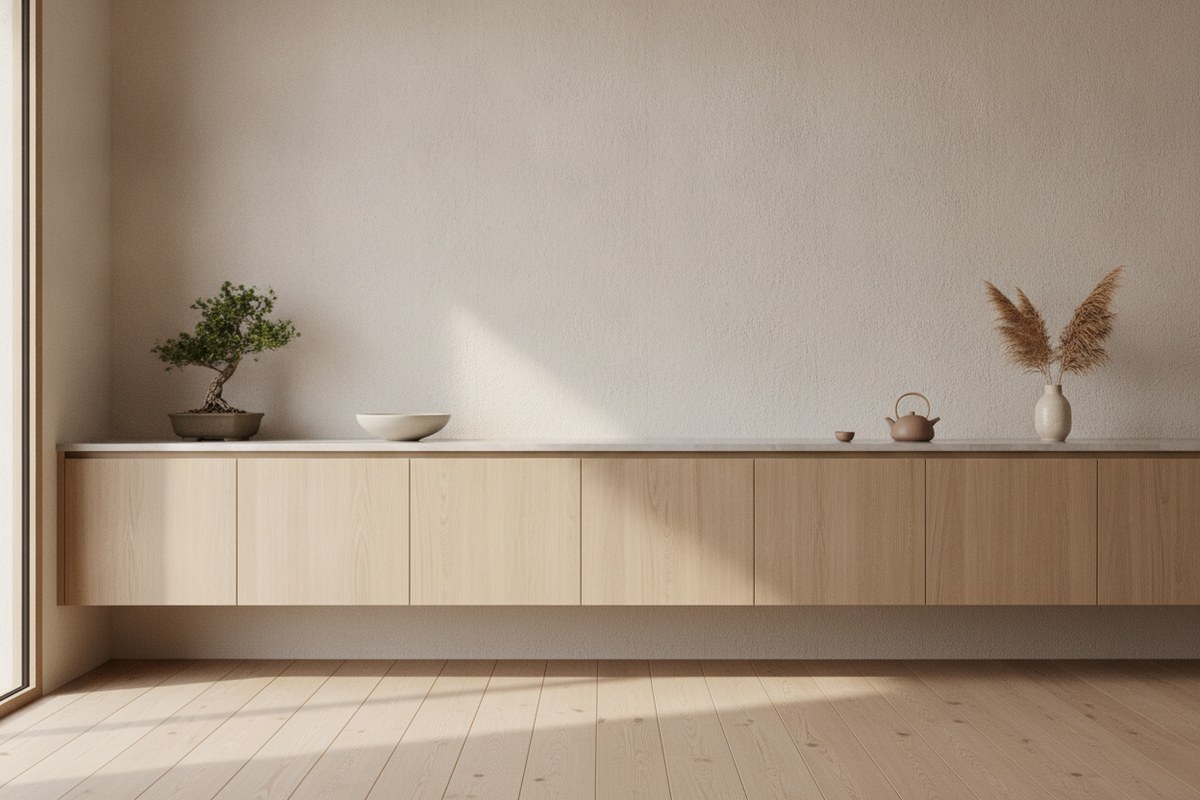
In kitchens and bathrooms, wall space above the counter is prime real estate. A floating wall cabinet with closed doors hides everyday clutter while keeping counters clear — essential for the clean lines Japandi is known for. Because the cabinet doesn’t touch the floor, the room still feels open, and you get significantly more storage than a single row of open shelving.
9. Utilize Under-Bed Vertical Storage
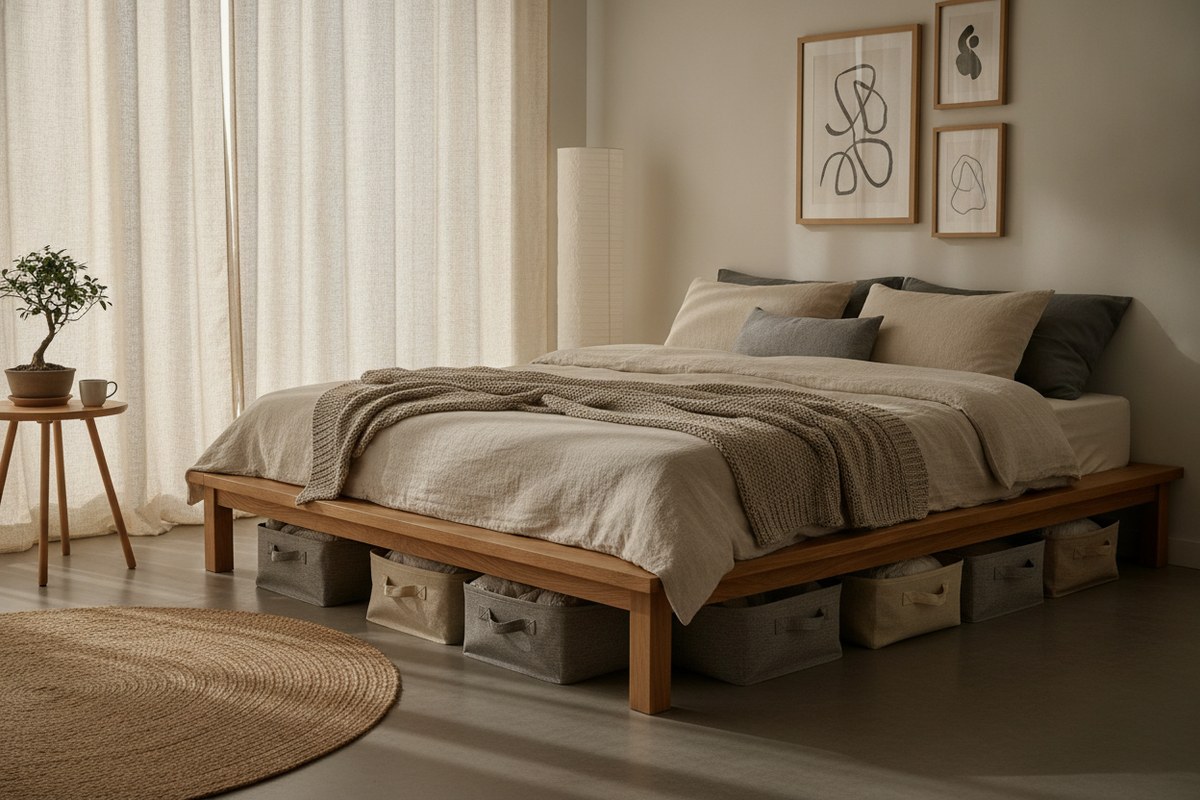
Under-bed storage is technically horizontal, but pairing it with vertical stacking inside the bins turns it into serious capacity. Slim under-bed storage bags let you layer folded clothing, linens, or off-season items in tiers rather than one flat layer. This is especially useful in dorms and studio apartments where a bed frame with clearance is often the only “extra room” you have.
10. Create a Vertical Pantry with Stackable Containers
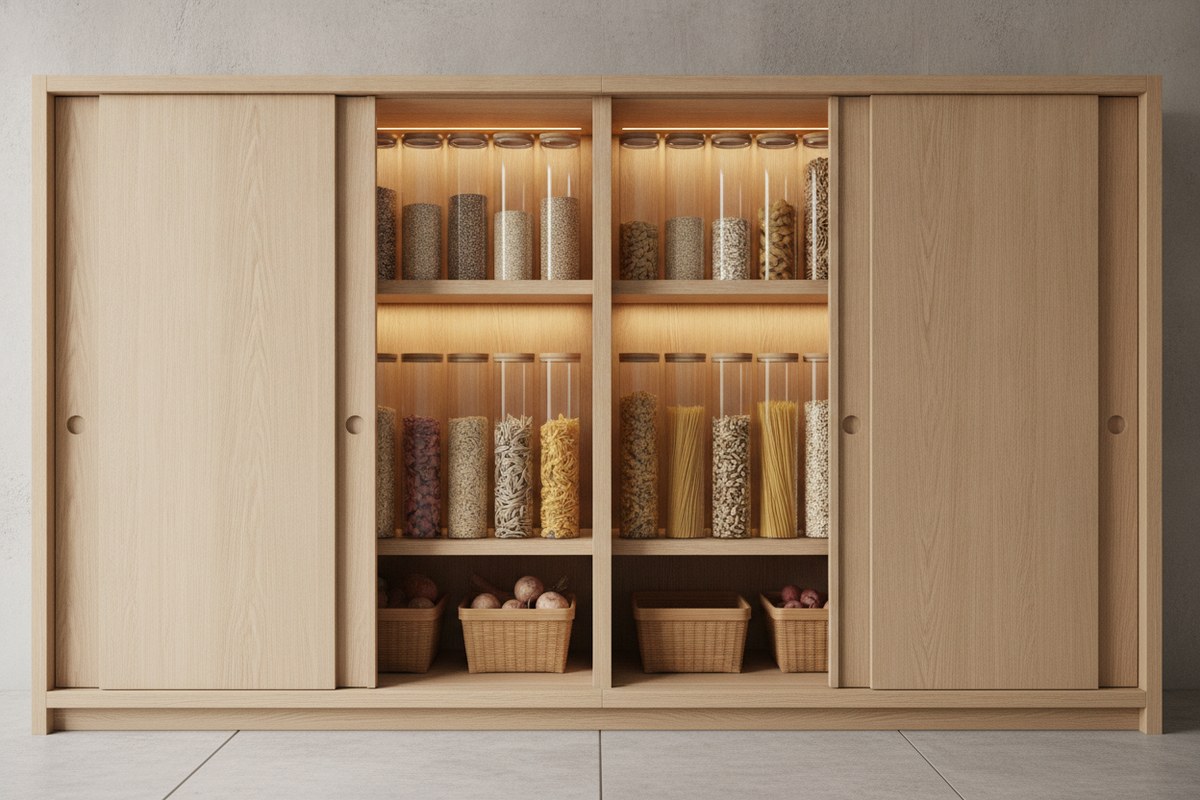
Even a narrow kitchen cabinet can become a mini vertical pantry with the right containers. Uniform stackable pantry containers let you build upward in tidy columns instead of letting bags and boxes topple over each other. Clear containers also make it easy to see what you have at a glance, reducing food waste and reflecting the Japanese principle of keeping only what you need, clearly visible and easy to reach.
Vertical storage isn’t just a space-saving trick — it’s a mindset. By giving every item a clear, elevated home and leaving room to breathe between shelves, you create a small space that feels intentional rather than crowded. Start with one or two of these ideas, and you’ll likely find the rest follow naturally as your home settles into its new, more organized rhythm.