This post may contain affiliate links. If you buy through them, we may earn a small commission at no extra cost to you.
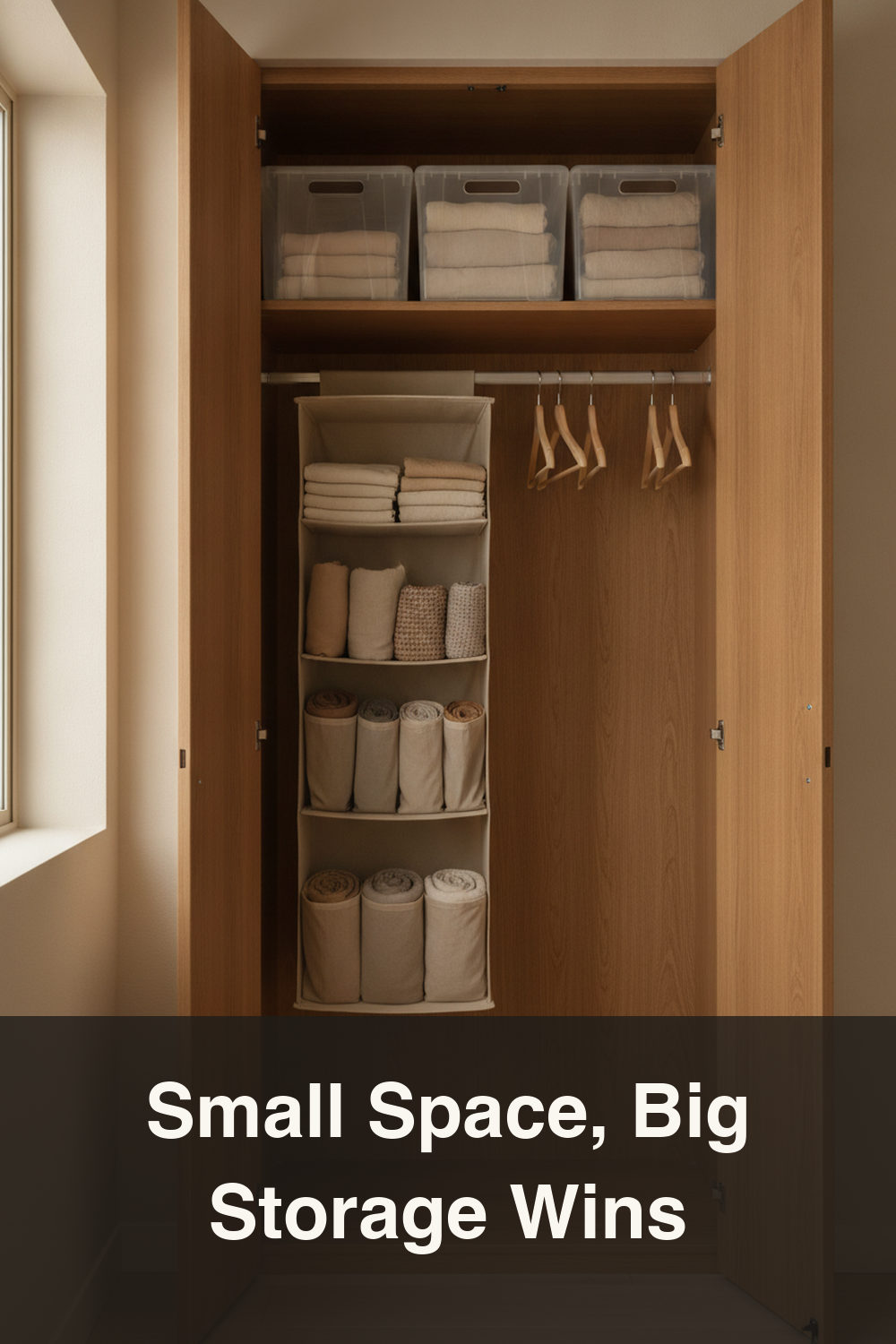
If your closet feels like a daily wrestling match, the Japanese approach to storage might be exactly what you need. Rooted in the idea that every item should have a clear, visible home, this method isn’t about buying more bins—it’s about using the space you already have with intention. Below are ten practical, small-space-friendly ideas that borrow from Japanese organizing philosophy (think KonMari folding, oshiire zoning, and minimal visual clutter) to help your closet feel twice as big without knocking down a single wall.
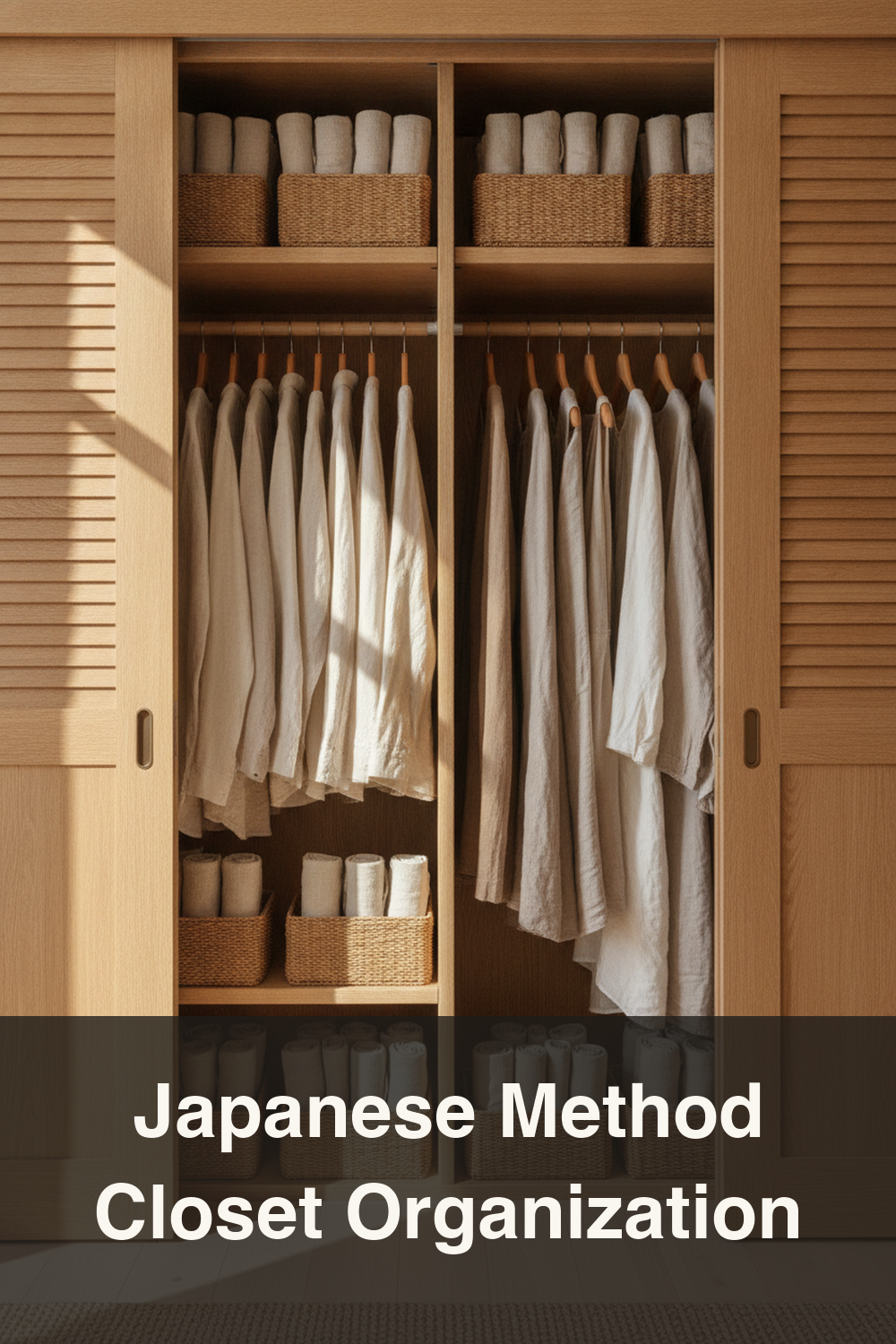
1. Fold Vertically Instead of Stacking Horizontally
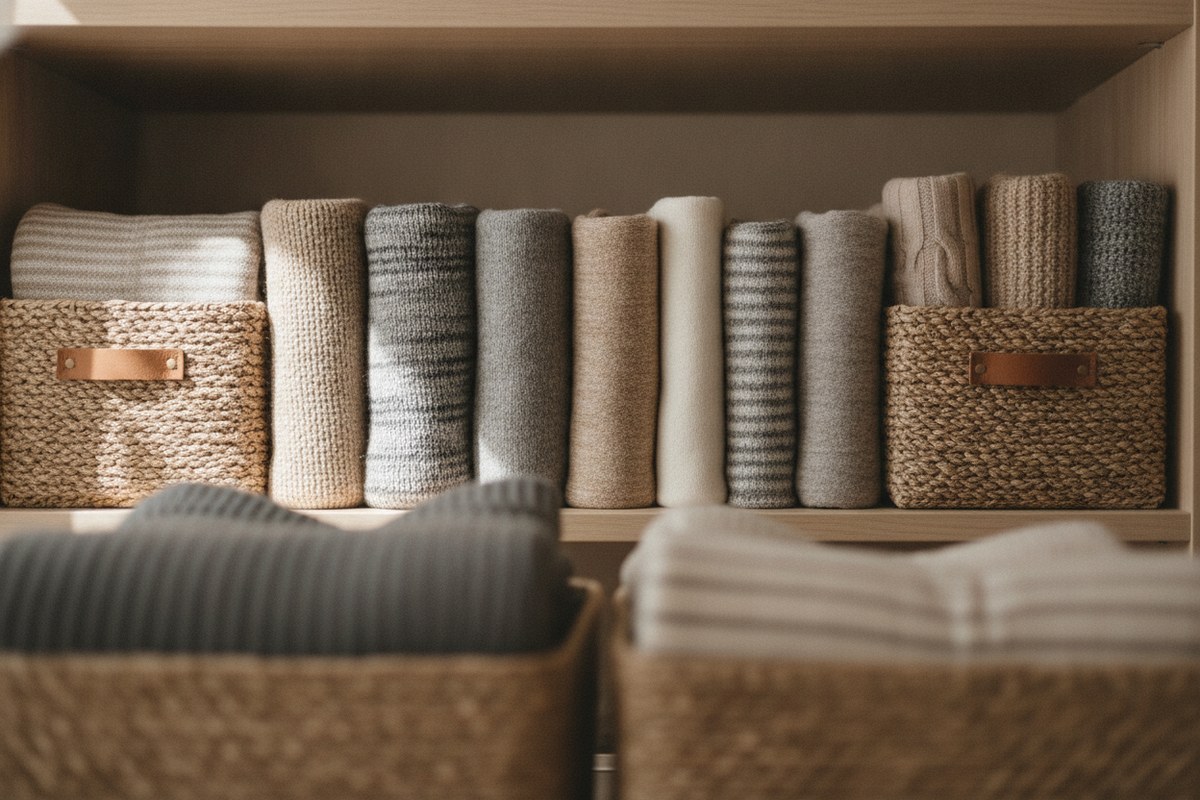
The cornerstone of Japanese closet organization is vertical folding. Instead of stacking sweaters in tall piles that topple the moment you pull one out, fold each item into a small rectangle that stands upright on its own, like a book on a shelf. This lets you see every piece at a glance and grab exactly what you need without disturbing the rest. It works especially well in shallow closets or dresser drawers where horizontal stacking wastes depth. Give every folded stack its own shallow bin so items don’t lean on each other and lose their shape.
2. Add Stackable Bins to Use Vertical Space
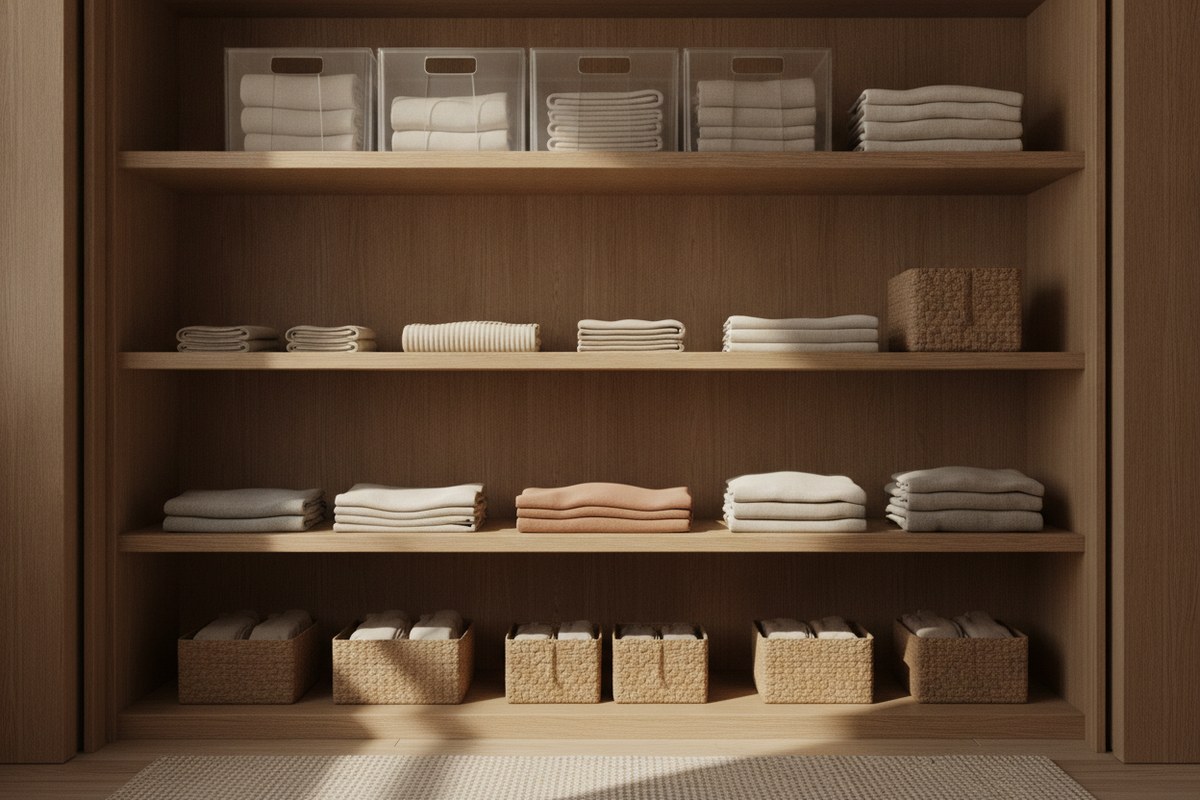
Most small closets waste the airspace above hanging clothes. Japanese storage systems love stackable, uniform containers because they turn wasted vertical space into usable real estate without looking chaotic. Try a few stackable closet bins on the top shelf for off-season items, extra linens, or accessories you don’t need daily. Keep them uniform in size and color so the closet reads as calm and cohesive rather than cluttered.
3. Sort Clothing by Category, Not Just Color
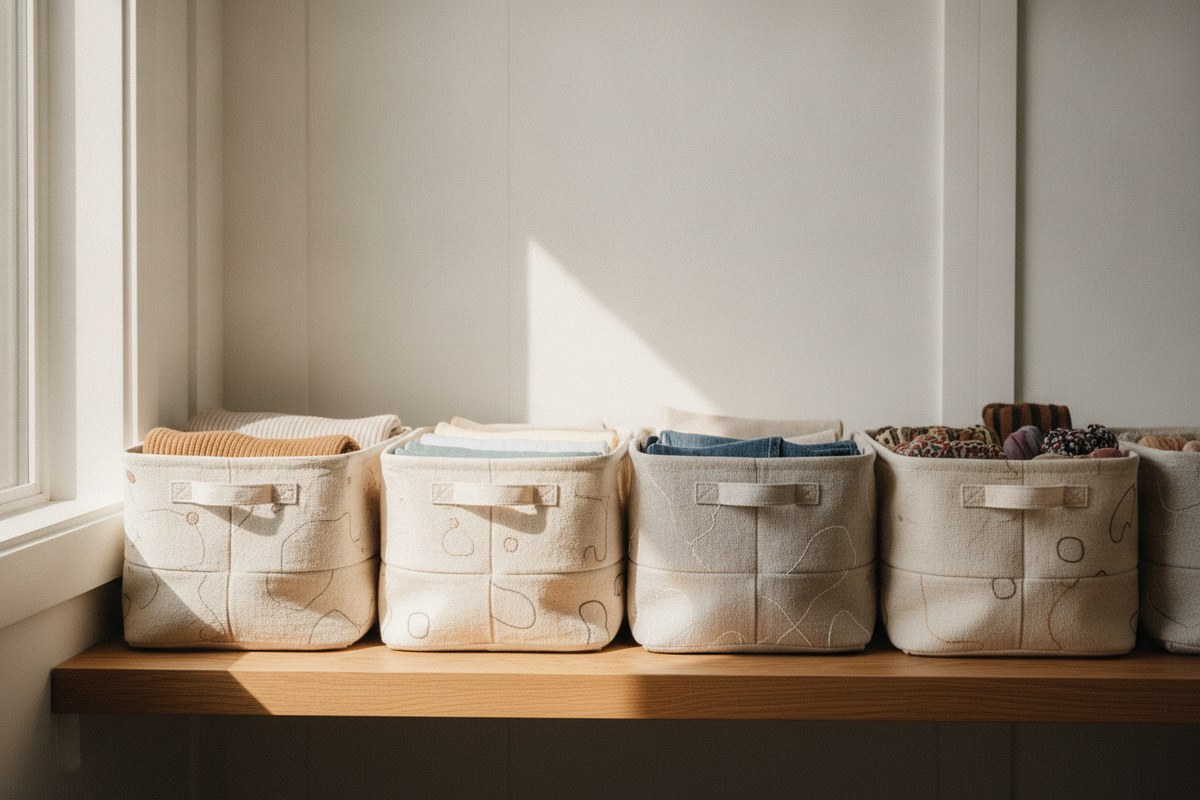
Japanese organizing puts function first: group items by how you use them—work tops, loungewear, workout gear—before worrying about color. Once categories are set, arranging by color within each group makes scanning even faster. This two-layer system means you always know exactly where to look, which cuts down on the morning shuffle and keeps you from re-buying things you already own but couldn’t find.
4. Switch to Slim, Uniform Hangers
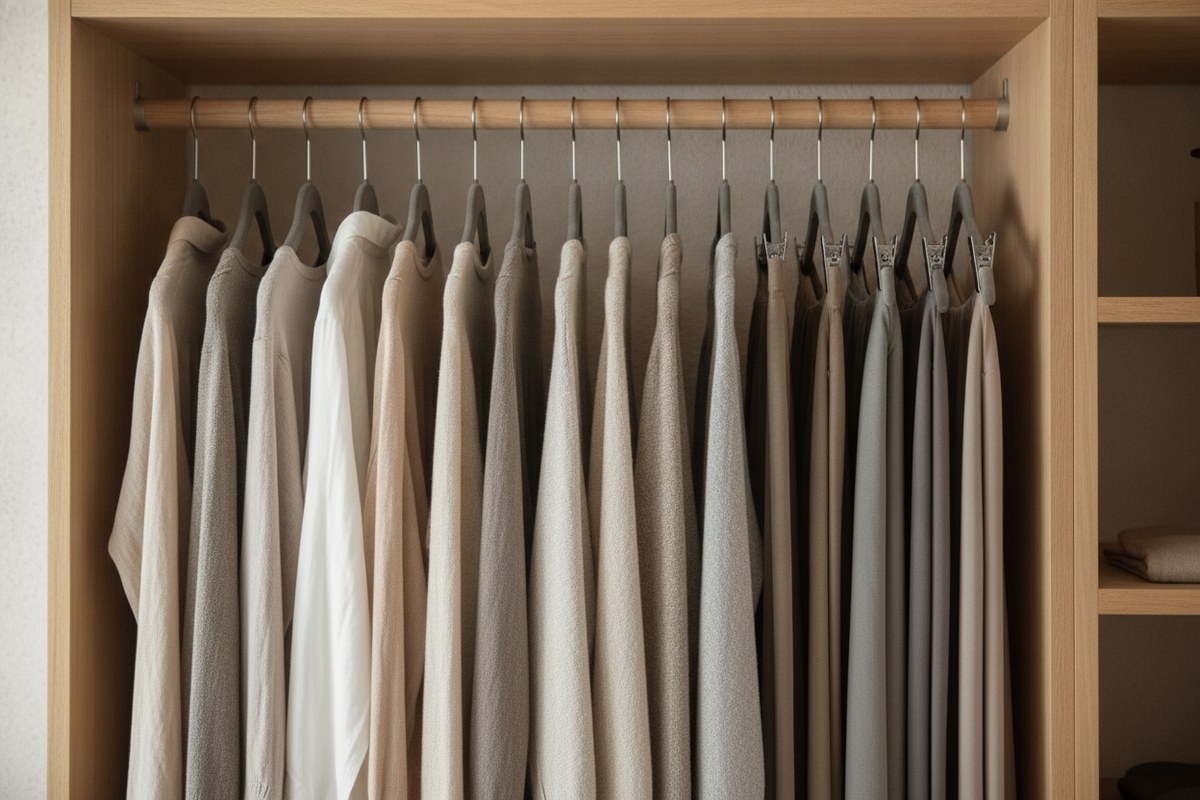
Mismatched hangers eat up closet width fast. Swapping to a single style of slim velvet hangers can free up several inches of hanging space instantly, since they’re thinner and grip fabric so clothes don’t slide off. Uniform hangers also give the closet a visually quiet, gallery-like feel—very in line with the uncluttered Japandi aesthetic.
5. Use Drawer Dividers for Small Accessories
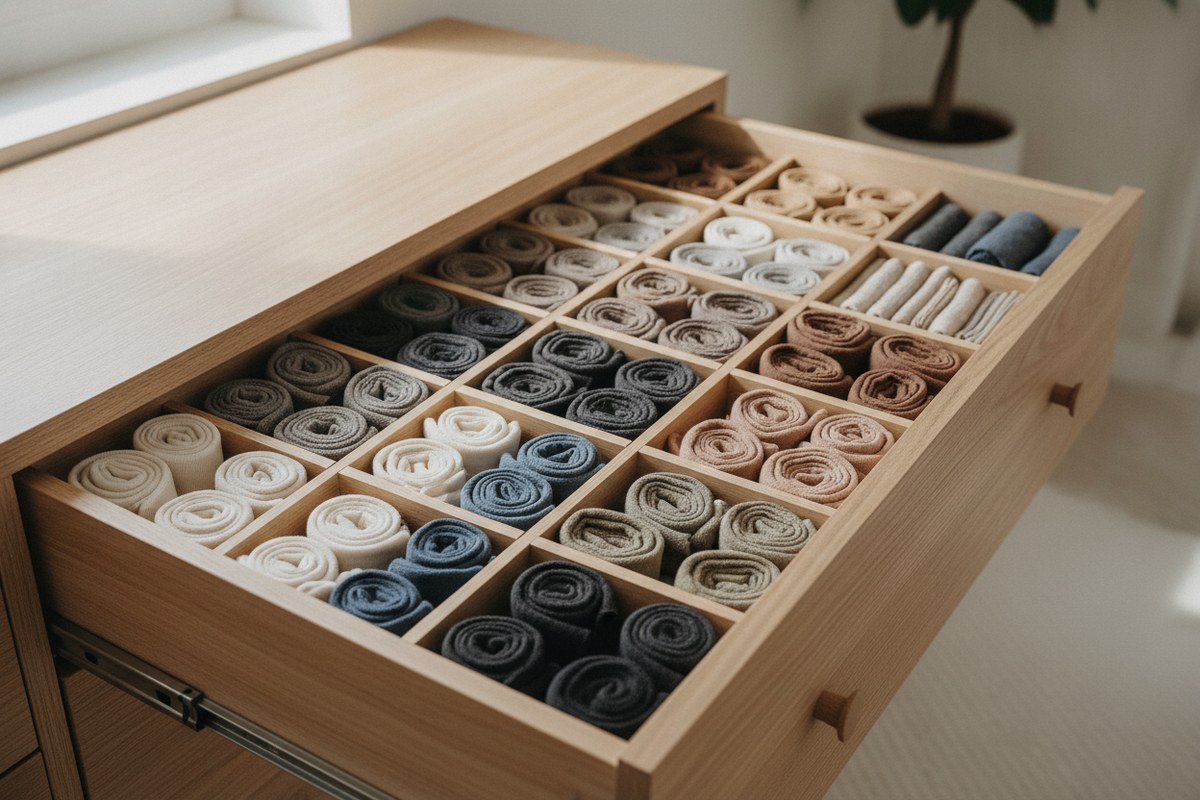
Socks, scarves, and jewelry tend to become a tangled mess at the bottom of a drawer. Japanese storage systems rely heavily on dividers to keep every category boxed into its own small footprint. Add clear drawer dividers to closet drawers or shelves so each accessory type has a defined, visible slot. You’ll be able to see everything without digging, and putting things away becomes as fast as pulling them out.
6. Add Under-Shelf Baskets for Extra Layers
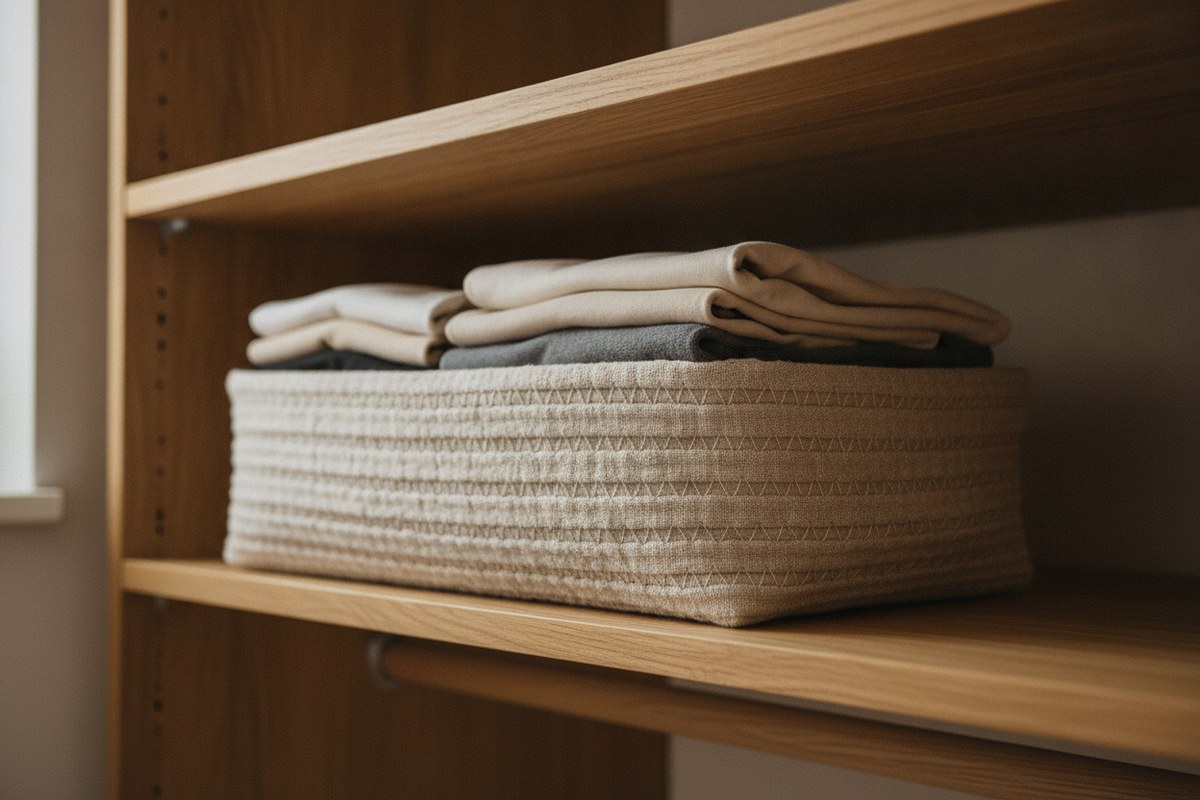
Closet shelves often have unused air between the shelf and the clothes hanging below. Slide in a few under-shelf storage baskets to create an extra layer of storage for folded tees, hats, or bags. This tucked-in method is very much in the spirit of Japanese small-space living: nothing is wasted, and nothing sits out in the open unless it needs to.
7. Rotate Seasonal Items Like an Oshiire Closet
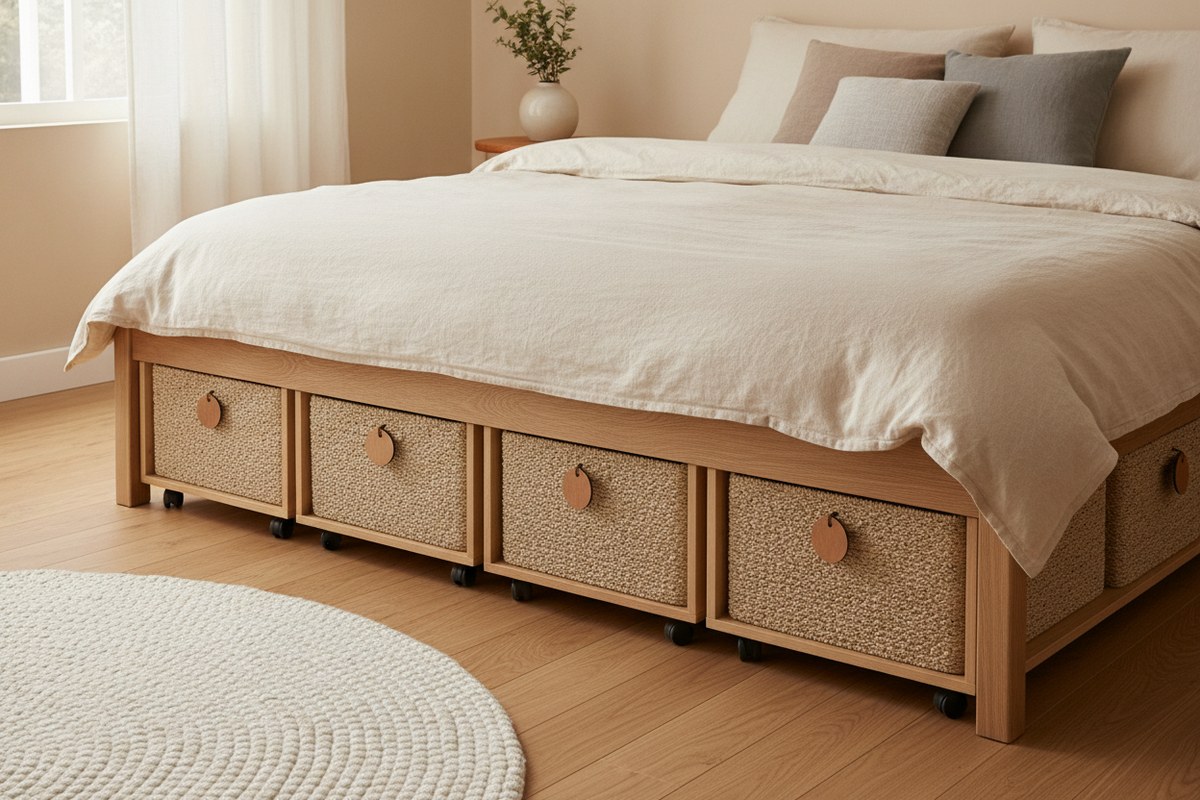
Traditional Japanese homes use the oshiire—a deep closet for futons and seasonal goods—on a rotating basis. Bring that idea into your own space by storing off-season clothing in labeled bins that live on a high shelf or under the bed. A set of under-bed storage bags works beautifully here, keeping bulky sweaters or shorts out of your daily rotation until the season calls for them, without taking up prime closet real estate.
8. Keep Everything in Clear, Labeled Containers
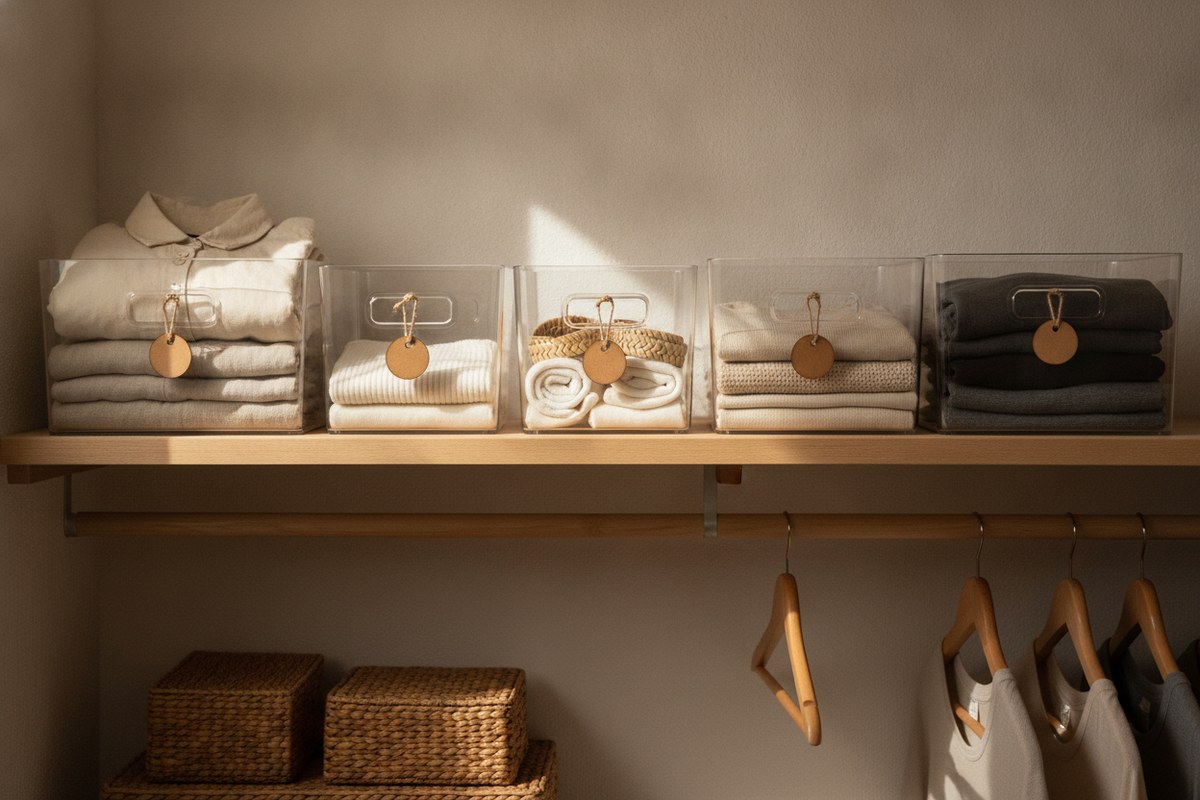
Visibility is a core principle of Japanese organizing—if you can’t see it, you’ll forget you own it. Swap opaque shoeboxes and grocery bags for clear, labeled containers so you can identify contents in seconds. This is especially useful for small closets shared by roommates or family members, since everyone can find and return items to the same visible spot.
9. Mount an Organizer on the Inside of the Door
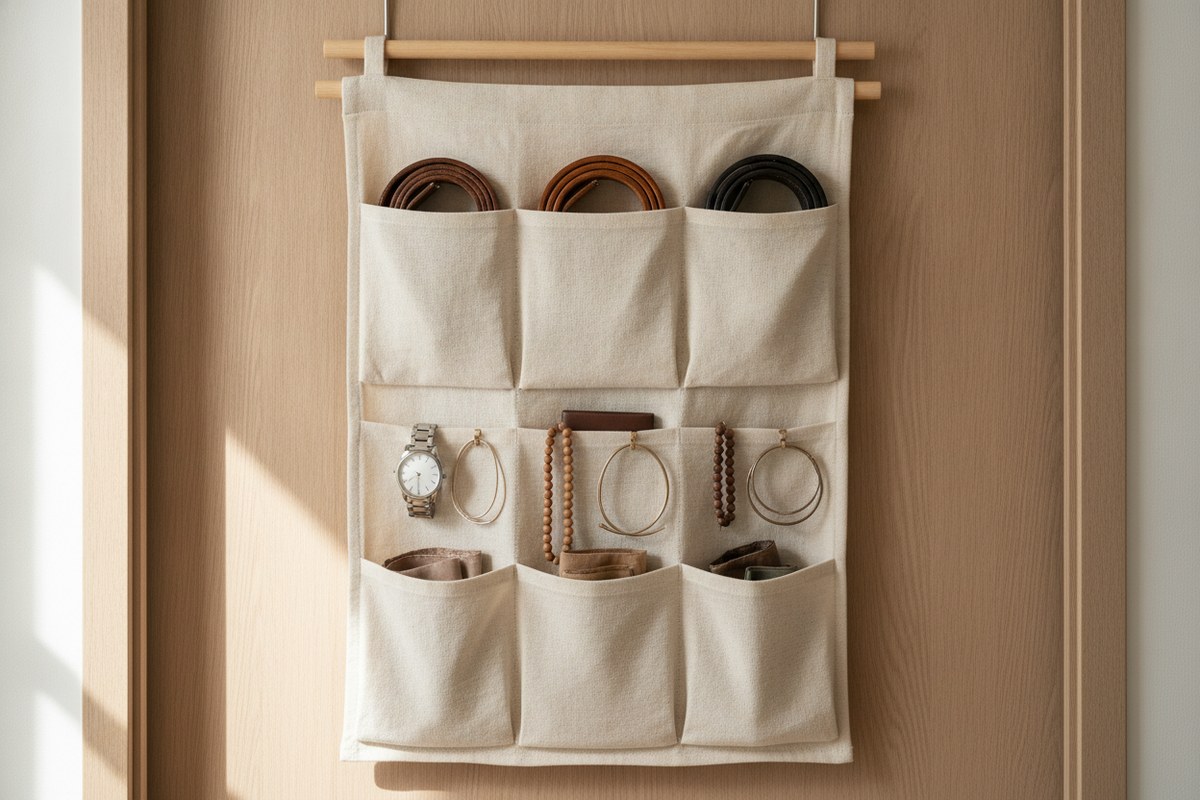
The back of your closet door is prime, often-overlooked storage. A door-mounted organizer with small pockets is perfect for jewelry, belts, sunglasses, or even cleaning supplies if it’s a hallway closet. It keeps small items out of drawers entirely, freeing up space for the categories that actually need it, and adds almost zero footprint to the room.
10. Give Every Item One Specific Home
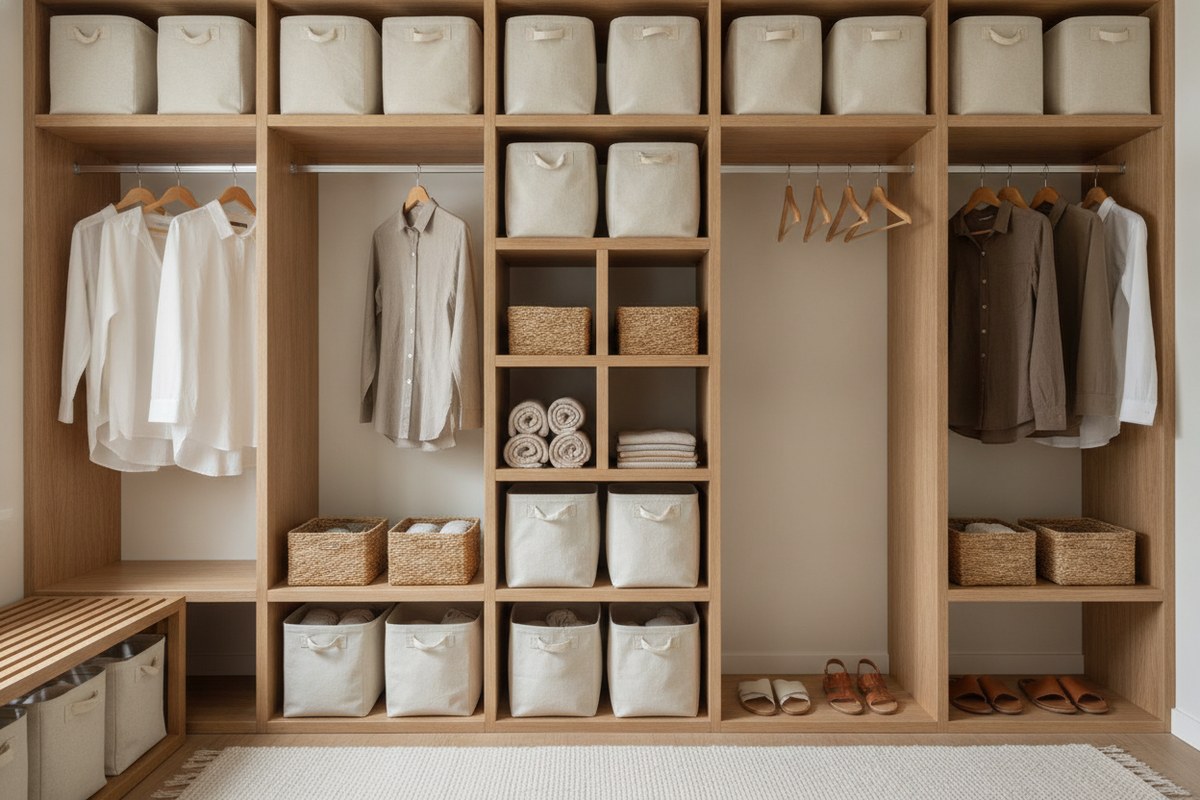
The final and most important idea isn’t a product—it’s a mindset. In Japanese organizing, every single item has one designated spot, and it always goes back there. No junk drawers, no random piles “for later.” Walk through your closet and assign a specific home to every category, even if that home is a small labeled bin. This single habit does more for long-term tidiness than any container ever could, and it’s the real secret behind closets that stay organized past the first week.
Small closets don’t need more stuff crammed into them—they need a system that respects the space they actually have. Start with just two or three of these ideas, especially the vertical folding and the one-home-per-item rule, and you’ll likely notice your closet feeling calmer within days. The rest can be layered in slowly as you find containers and hangers that fit your specific space.