This post may contain affiliate links. If you buy through them, we may earn a small commission at no extra cost to you.
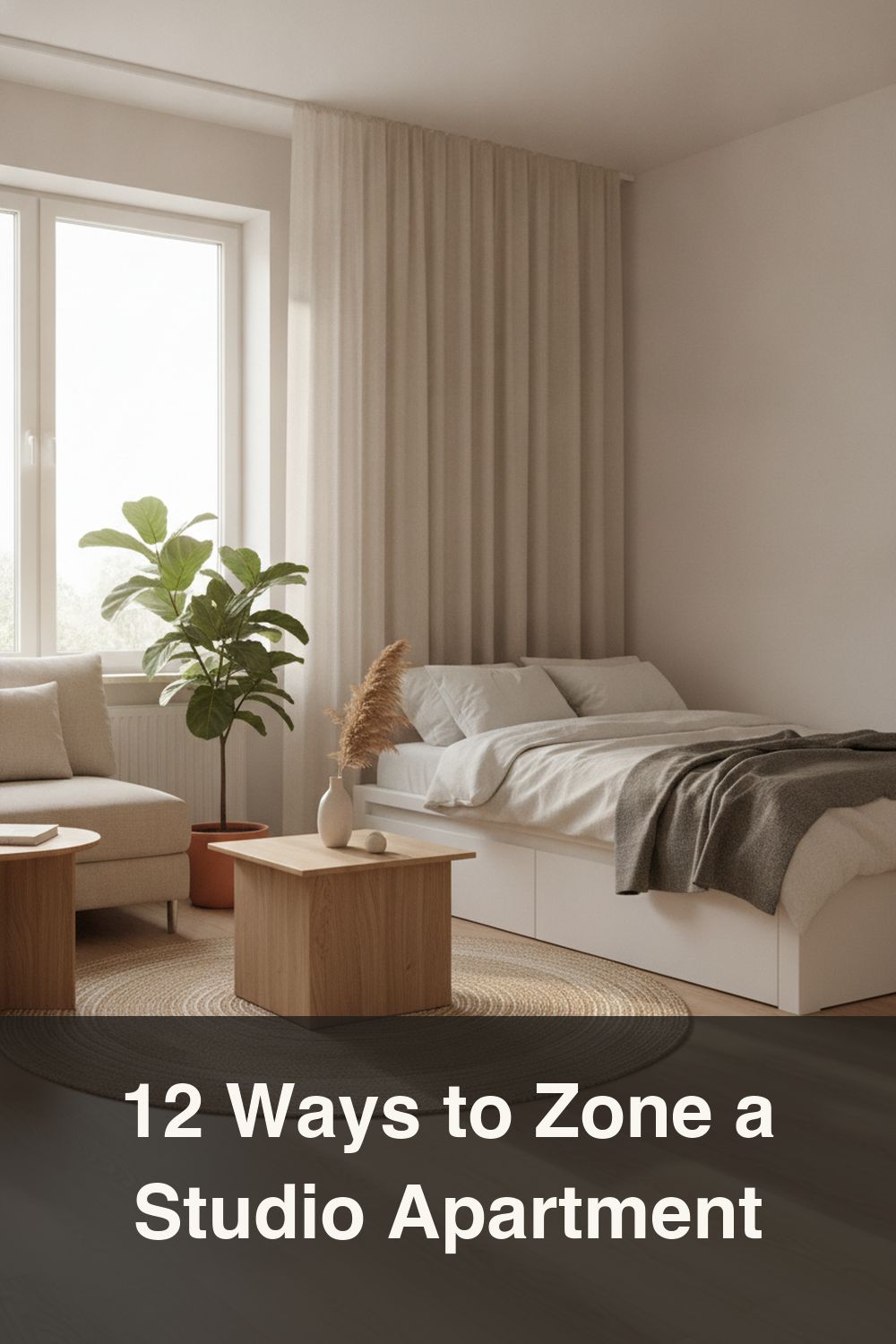
Living in a studio means your bedroom, living room, office and dining room are all the same 400 square feet. The trick to making it feel like a real home instead of one big blob of furniture is zoning — giving each activity its own visual footprint, even without walls. Japanese apartments have been solving this exact problem for decades, using low furniture, natural materials and deliberate emptiness instead of drywall. Here are twelve layout ideas that borrow from that philosophy to help your studio feel calm, organized and surprisingly spacious.
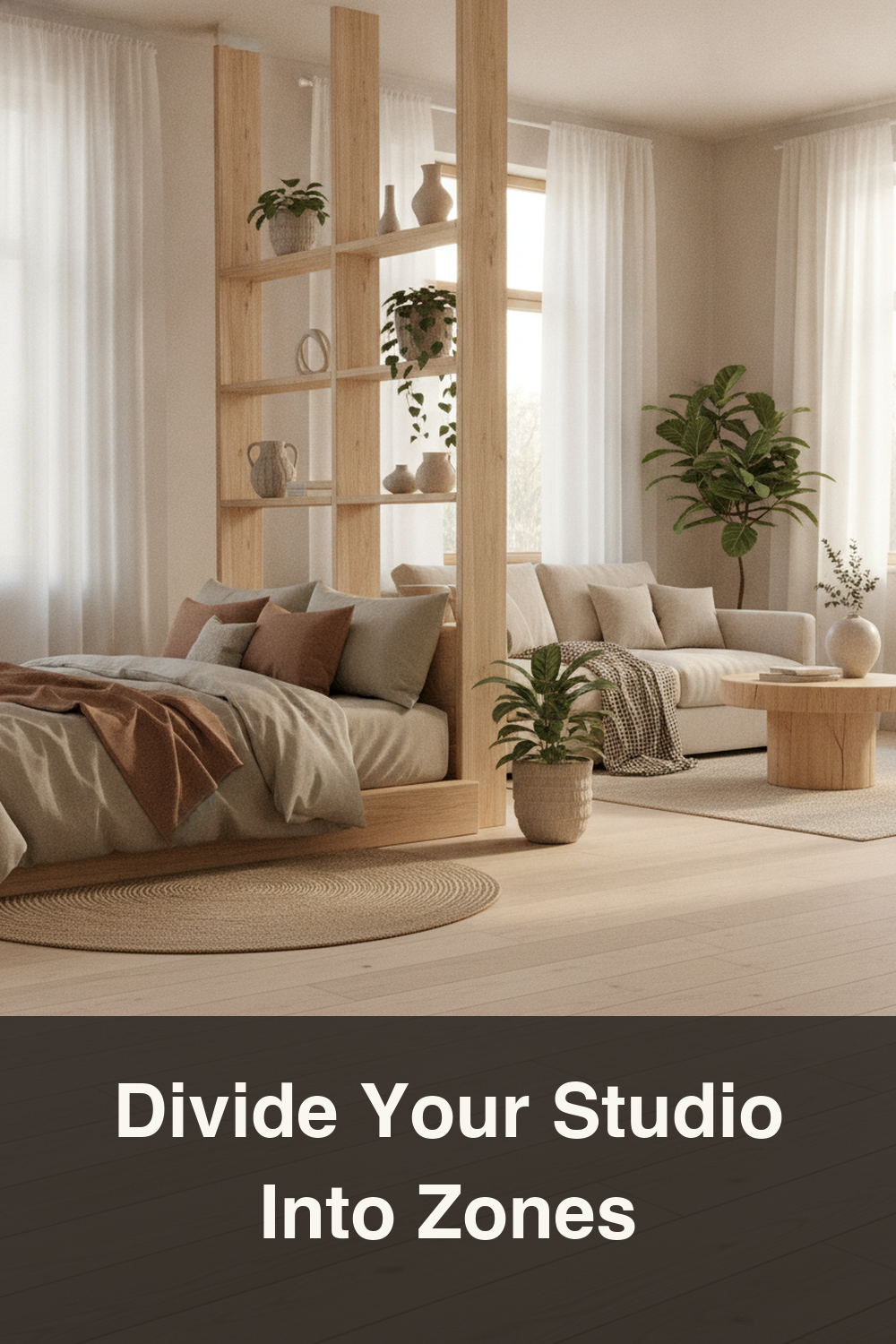
1. Start with a “One Function, One Zone” Floor Plan
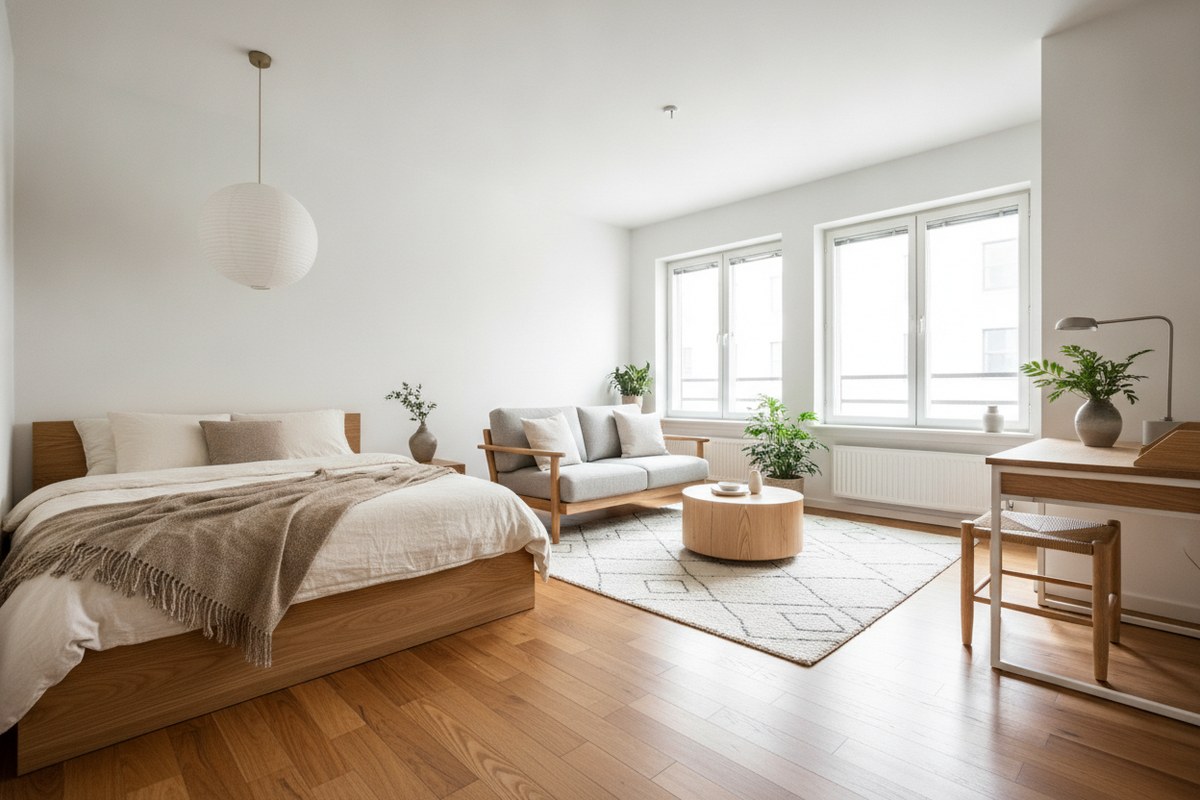
Before you buy a single divider, sketch your studio on paper and assign each corner exactly one job: sleeping, working, relaxing, eating. Traditional Japanese homes rely on this same principle — a space is defined by what happens in it, not by permanent walls. Resist the urge to let your desk creep into your living area or your bed double as a couch. Once every zone has a clear purpose, the furniture and dividers you add later will actually make sense instead of just filling space.
2. Anchor Each Zone with a Rug
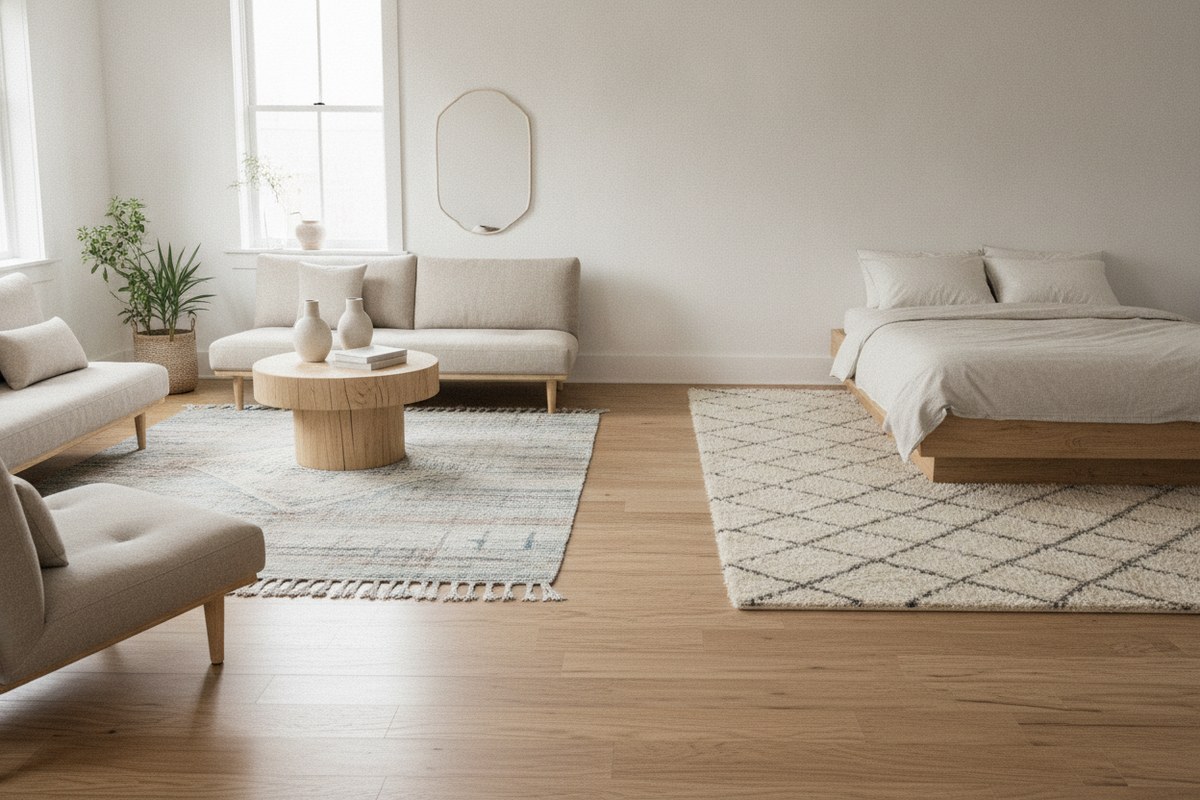
An area rug is the fastest, least permanent way to tell your eye “this is a different room.” Place a low-pile area rug for small spaces under your sleeping area and a different texture or tone under your living zone. Keep colors soft and neutral so the studio still feels cohesive — the goal is subtle separation, not a patchwork quilt. This trick works especially well in rentals where you can’t change flooring.
3. Use a Low Bookshelf or Shelving Unit as a Divider
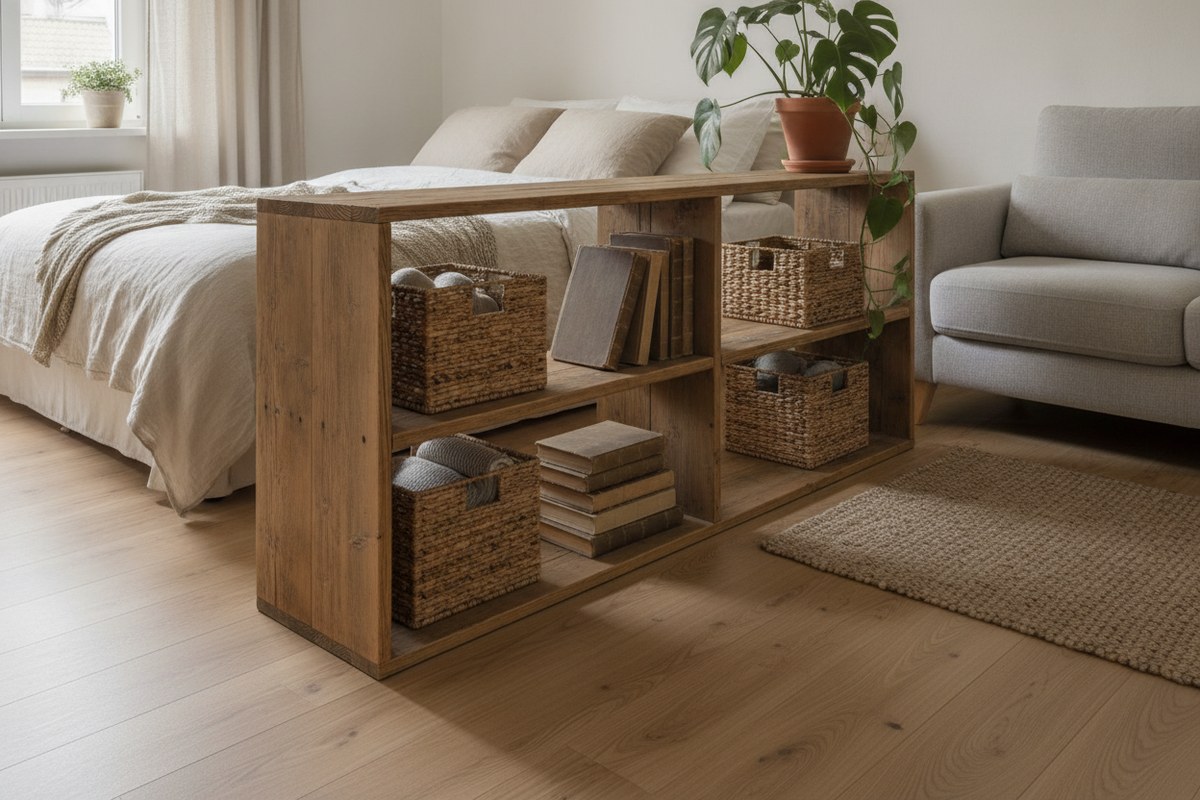
A waist-height room divider bookshelf creates a physical boundary between your bed and living area without blocking light or making the room feel chopped up. Open-backed shelves let sunlight and sightlines pass through, which keeps the whole studio feeling airy — a core Japandi rule of thumb. Use the shelf itself for storage baskets, folded blankets, or a few plants instead of clutter, so it reads as furniture, not a wall of stuff.
4. Hang a Curtain Track or Shoji-Inspired Screen
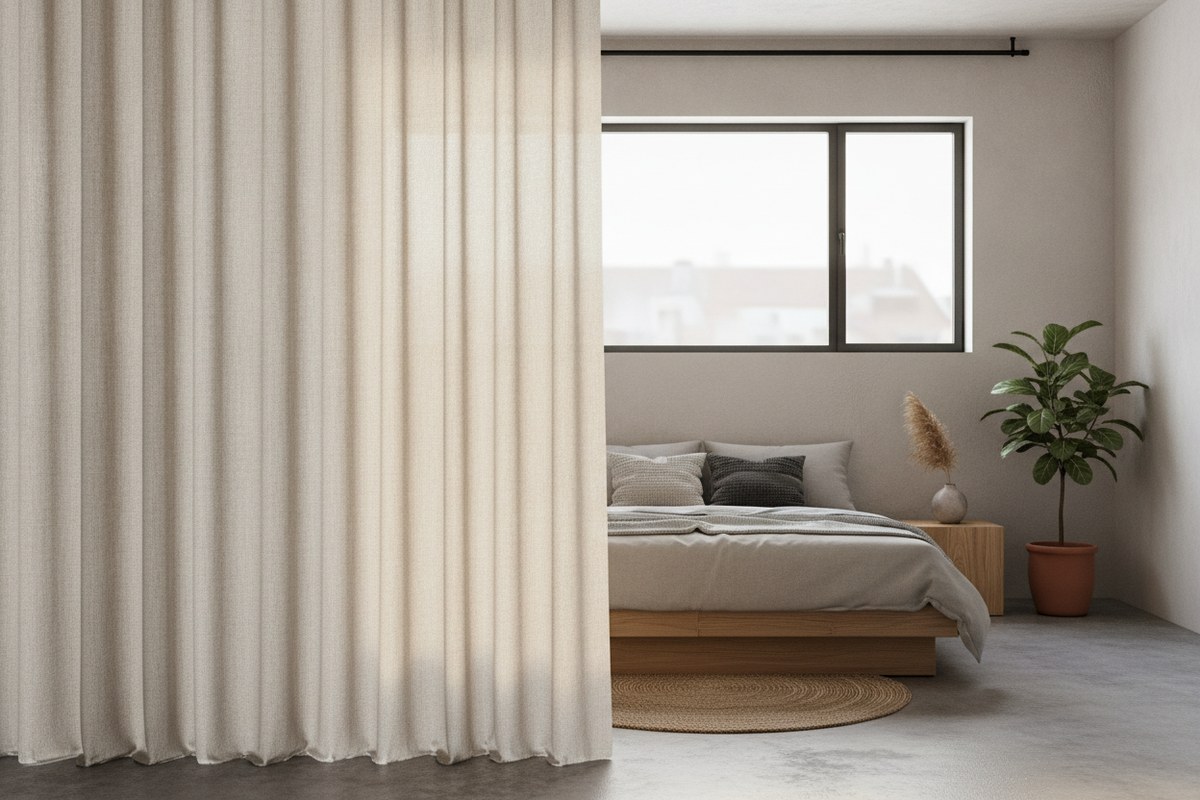
A ceiling-mounted curtain room divider track lets you close off your sleep zone at night and open it back up during the day, which is essentially how shoji screens function in a traditional Japanese home. Choose a linen-look fabric in a warm neutral to keep the Japandi palette intact. This is one of the few dividers that gives you full visual privacy when you need it and full openness when you don’t.
5. Let a Sofa or Bed Frame Do the Dividing
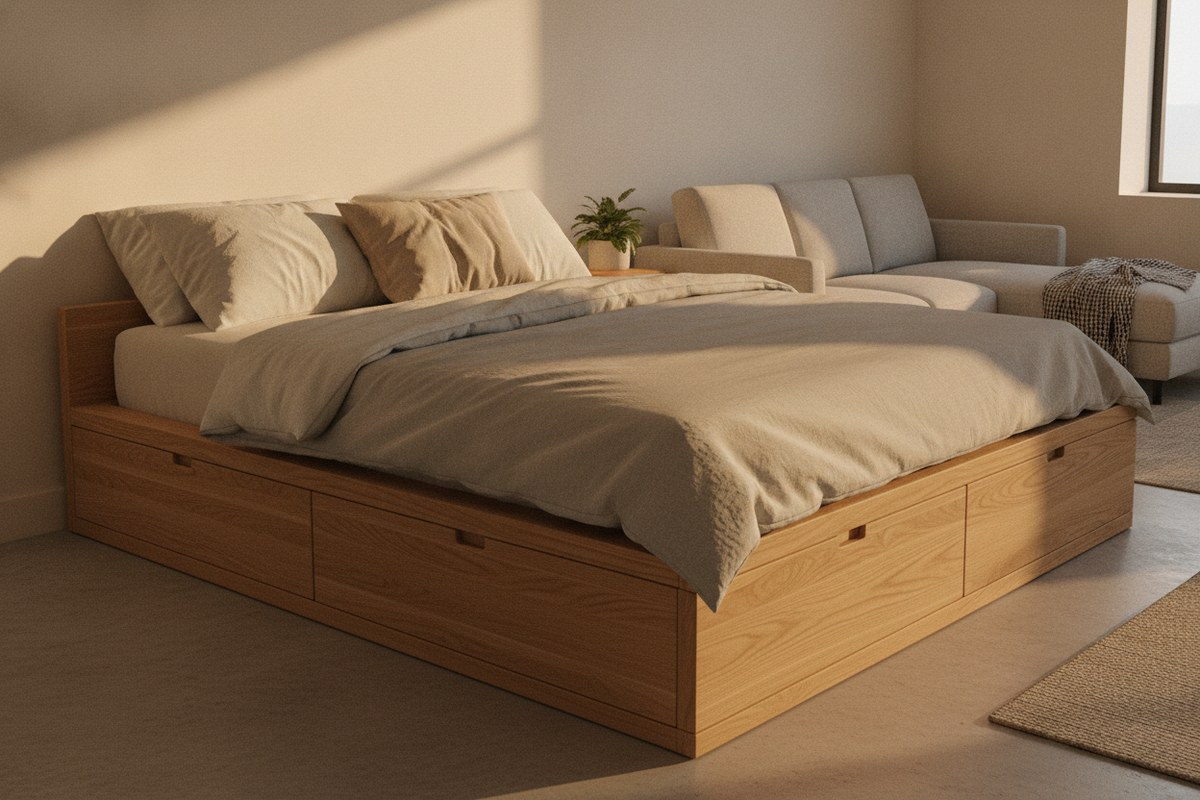
Sometimes the best divider is furniture you already need. Position your sofa with its back facing the bed, or choose a low platform storage bed frame with drawers that visually separates the sleeping area while sneaking in extra storage underneath. Keeping furniture low to the ground — another Japandi staple — helps sightlines travel over it, so the divide feels intentional rather than cramped.
6. Add a Folding Screen for Flexible Privacy
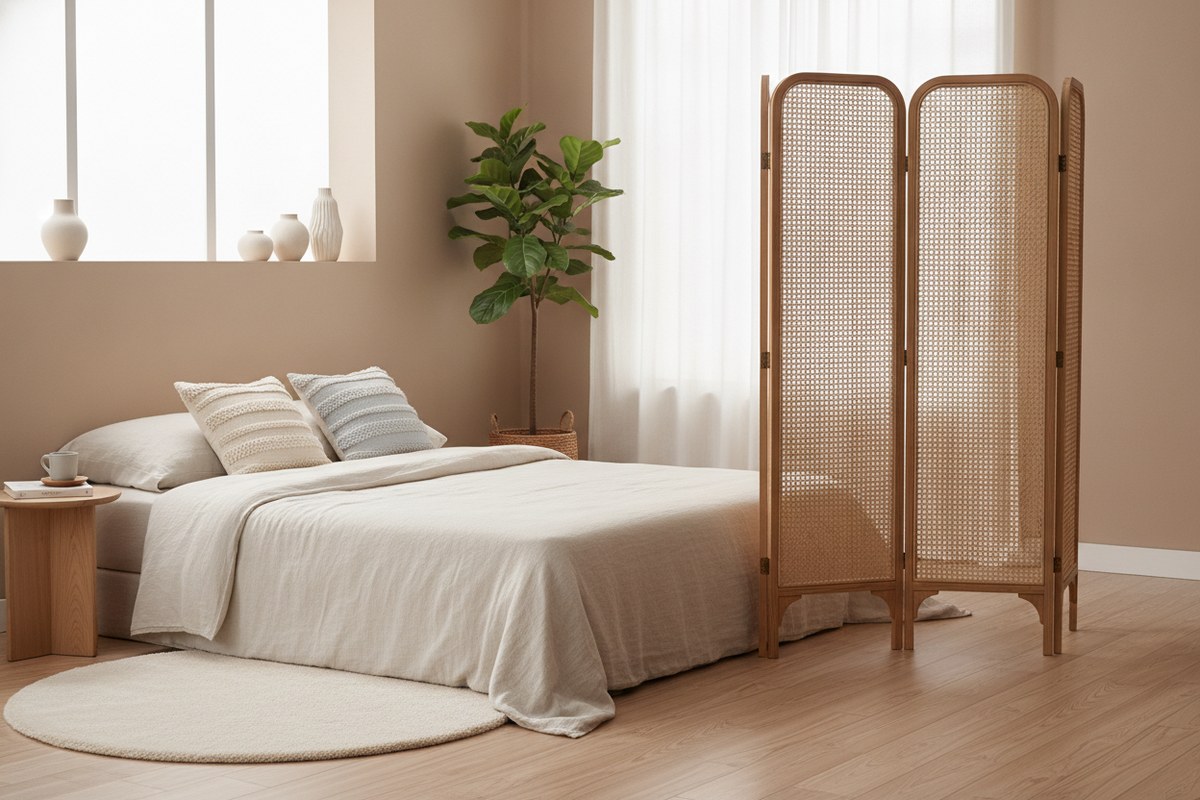
A lightweight folding privacy screen is the most flexible zoning tool in this whole list because it moves whenever your needs change. Unfold it around your bed for guests, fold it flat against a wall the rest of the time, or use it to hide a small home office when you’re done for the day. Look for one in natural wood or rattan to keep the material palette warm and grounded.
7. Use Lighting to Mark the Shift Between Zones
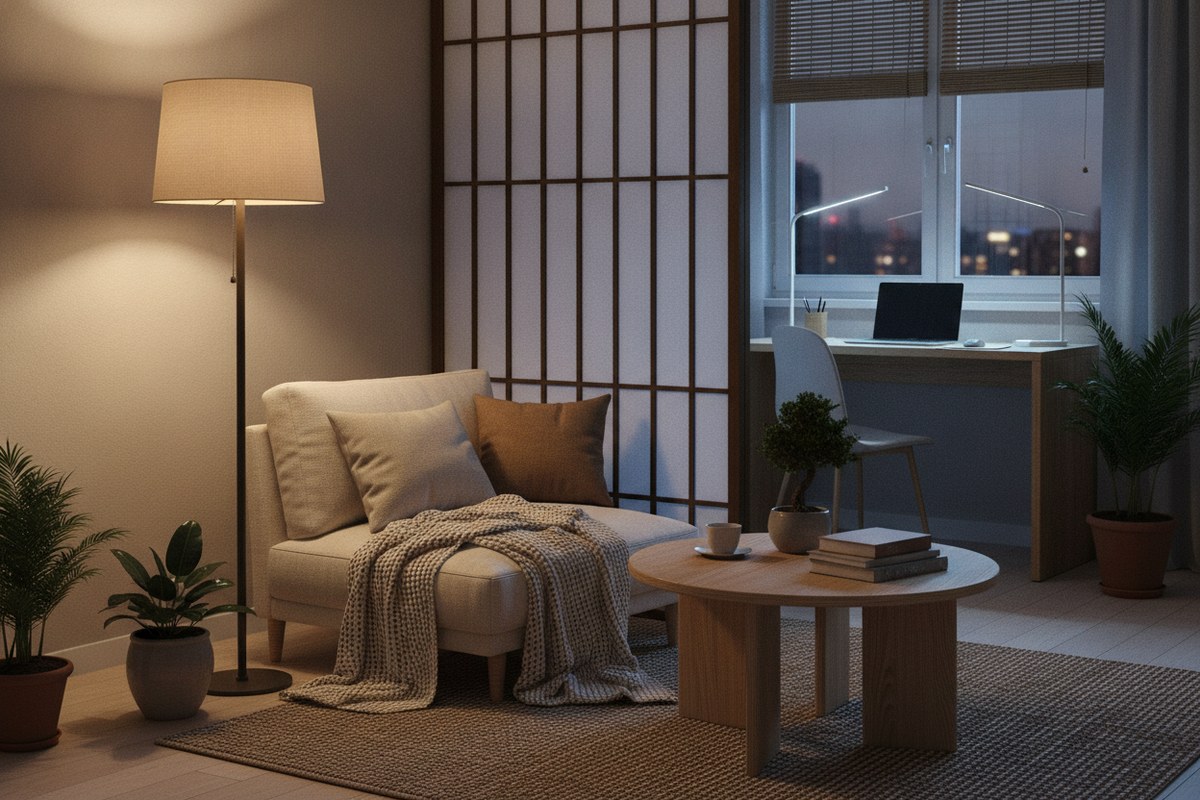
Overhead lighting treats your whole studio as one room, which flattens any zoning you’ve worked hard to create. Swap in a floor lamp for reading in your living zone, a warm pendant over your desk, and soft LED strip lights with remote behind or under furniture to wash a corner in a different tone at night. Distinct lighting is one of the cheapest ways to make each area feel like its own little room.
8. Create a Genkan-Style Entry Zone by the Door
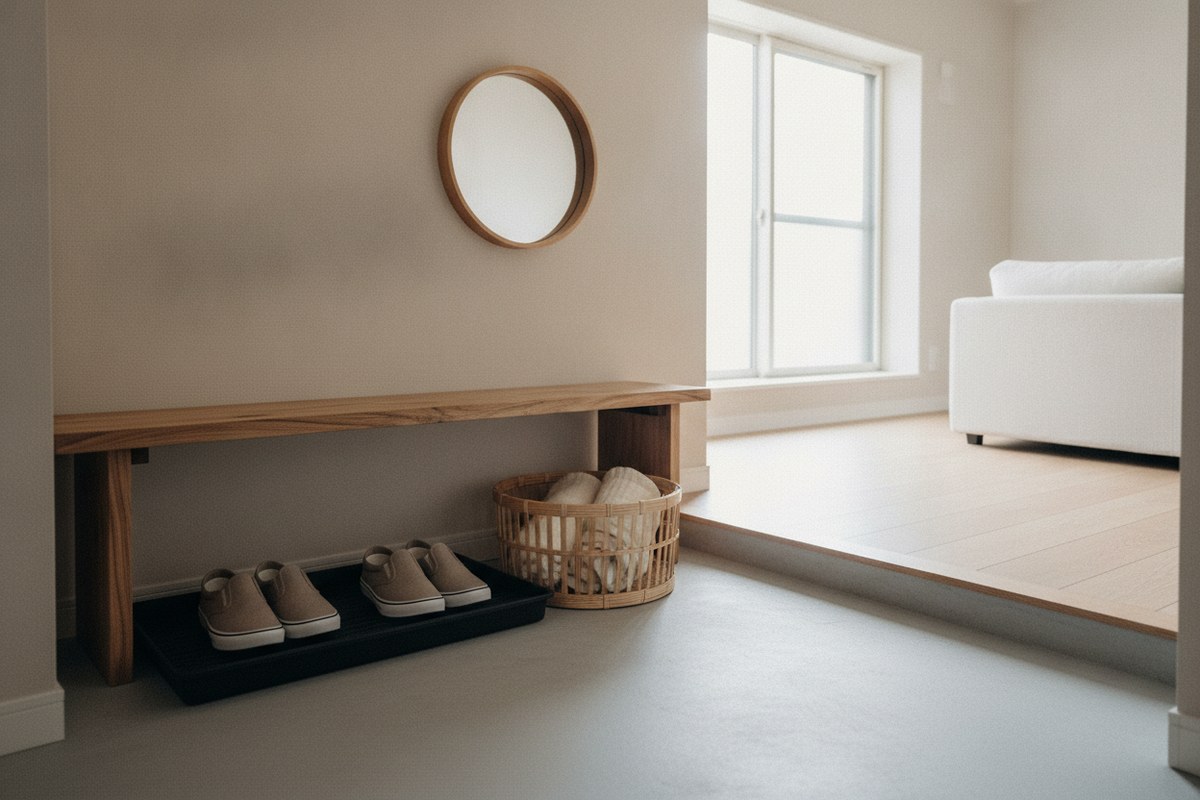
In Japanese homes, the genkan is a small sunken entry where shoes come off before stepping up into the living space — a built-in ritual that keeps outside mess from spreading inward. You can borrow this idea with a slim bench, a tray for shoes, and a small basket for mail right by your studio’s front door. Even a foot of dedicated entry space signals “transition” before your eye lands on the rest of the room.
9. Zone with Color and Texture Instead of Walls
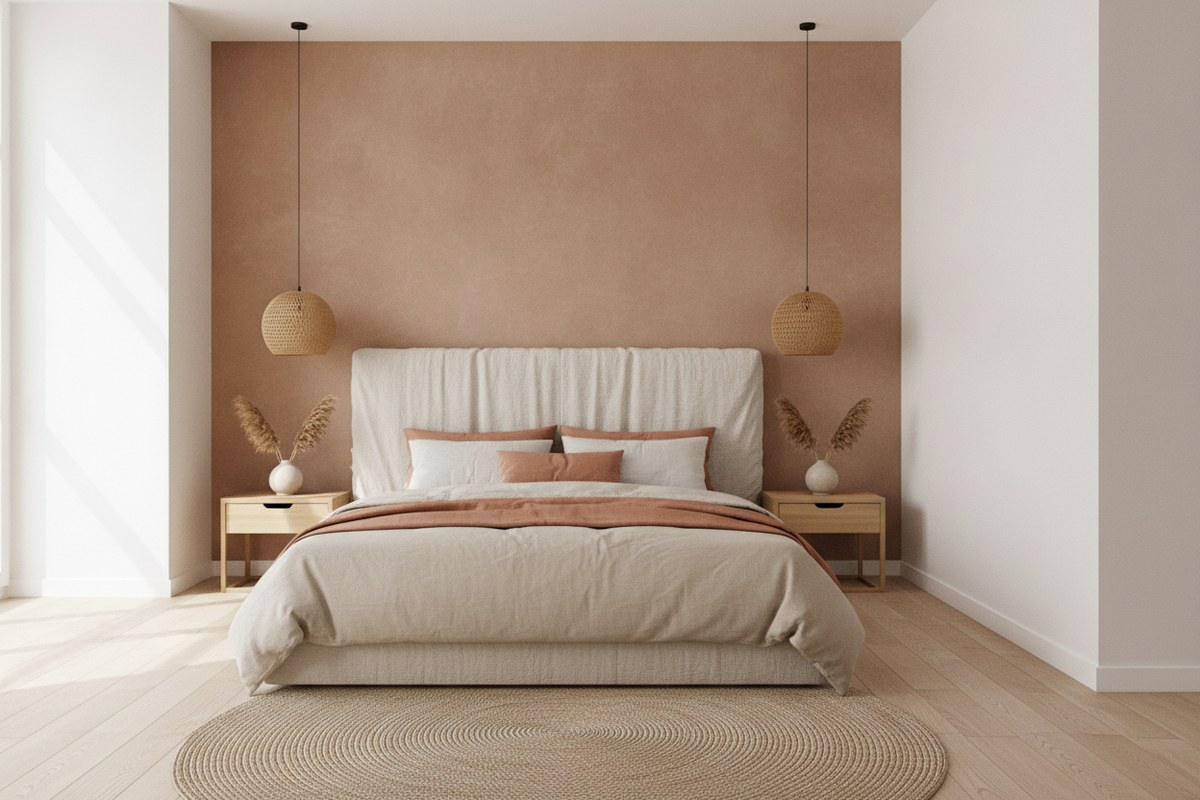
Paint isn’t off-limits just because you’re renting — a peel-and-stick wallpaper panel or a painted accent wall behind your bed can quietly mark that zone as separate from the rest of the studio. Stick to a Japandi-friendly palette of warm whites, soft clay, or muted sage so the color shift feels calm rather than jarring. Layering a different texture, like a woven wall hanging or linen headboard, reinforces the boundary even further.
10. Use Vertical Storage to Separate Without Blocking Light
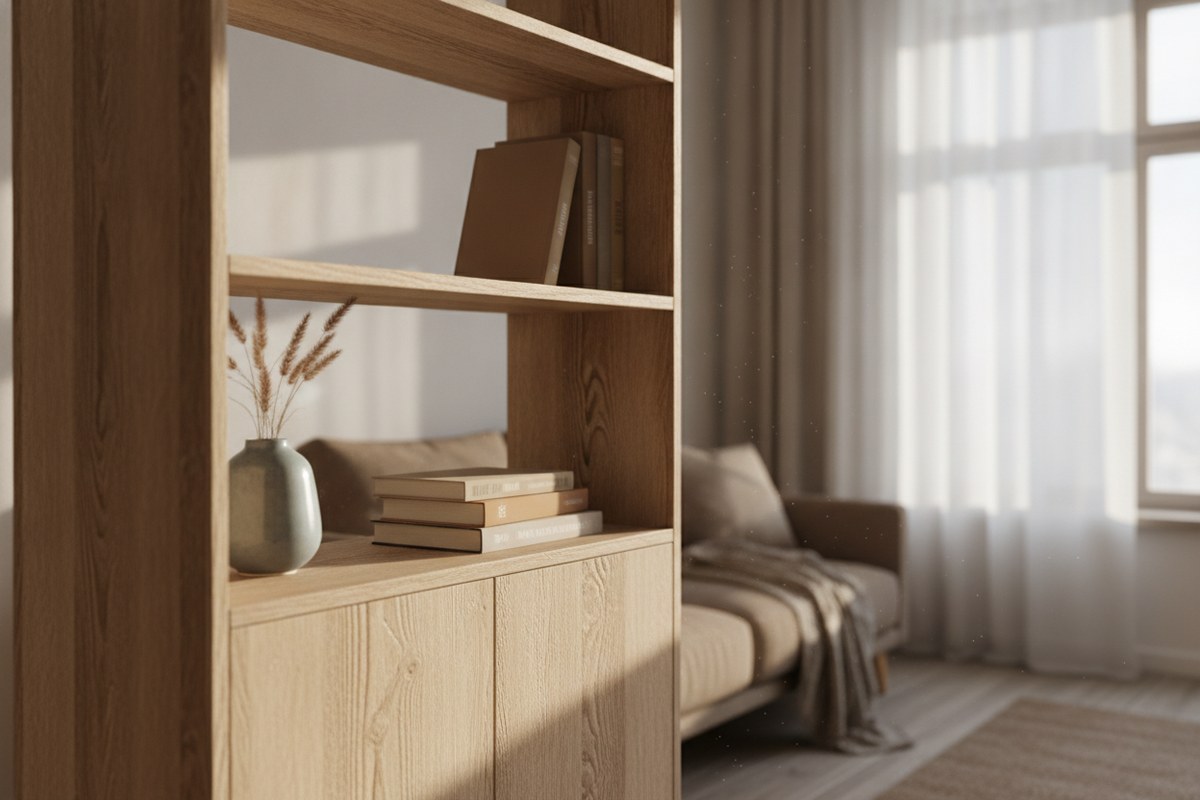
When floor space is tight, divide upward instead of outward. A tall, narrow shelving unit placed perpendicular to a wall can separate your workspace from your living area while doubling as storage for books, baskets, and display pieces. Keep the top third of the shelf open or styled sparsely so light can still travel across the room — density at the bottom, breathing room up top is a classic small-space balancing act.
11. Give the Kitchen Its Own Visual Boundary
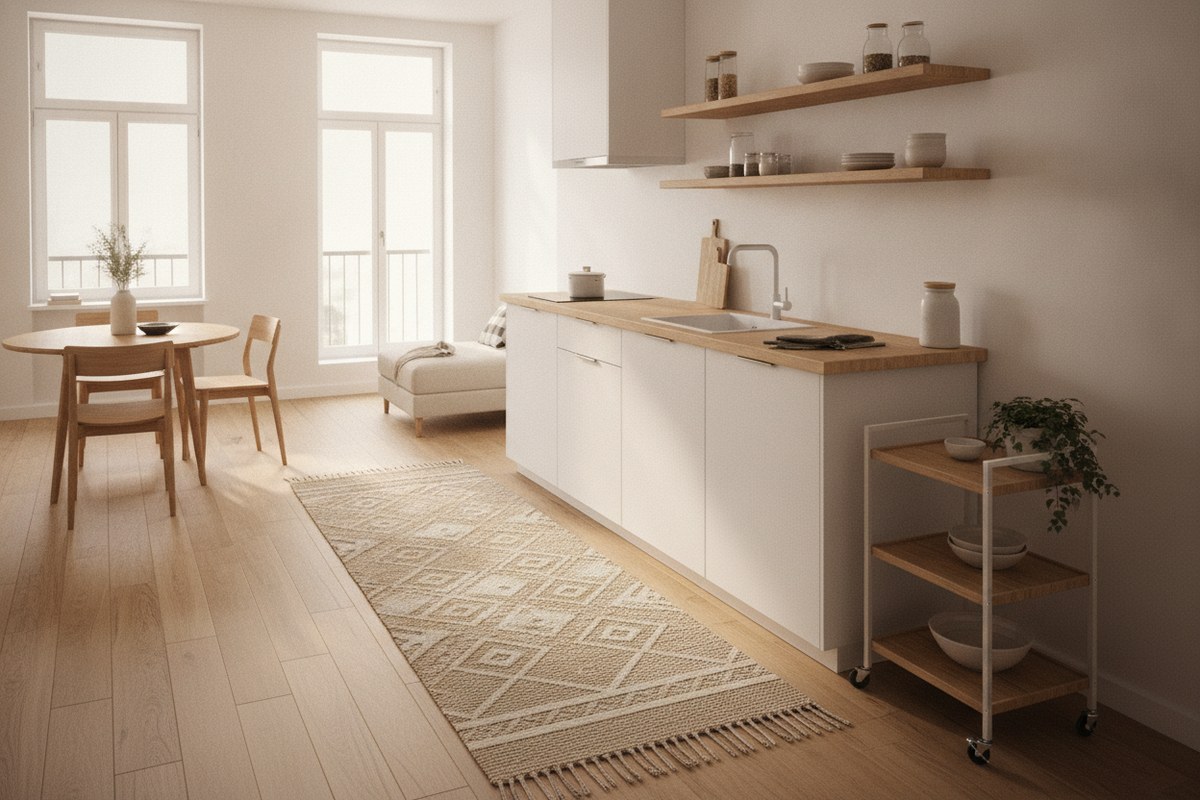
Studio kitchens often blend straight into the living area, which can make the whole apartment feel like a hallway. A slim rolling cart, a two-seat counter, or even a change in flooring material can mark where “kitchen” ends and “living room” begins. If you rent, a peel-and-stick backsplash or a woven runner rug in front of the stove works just as well as a permanent fix.
12. Keep a Multi-Purpose Zone for Everything Else
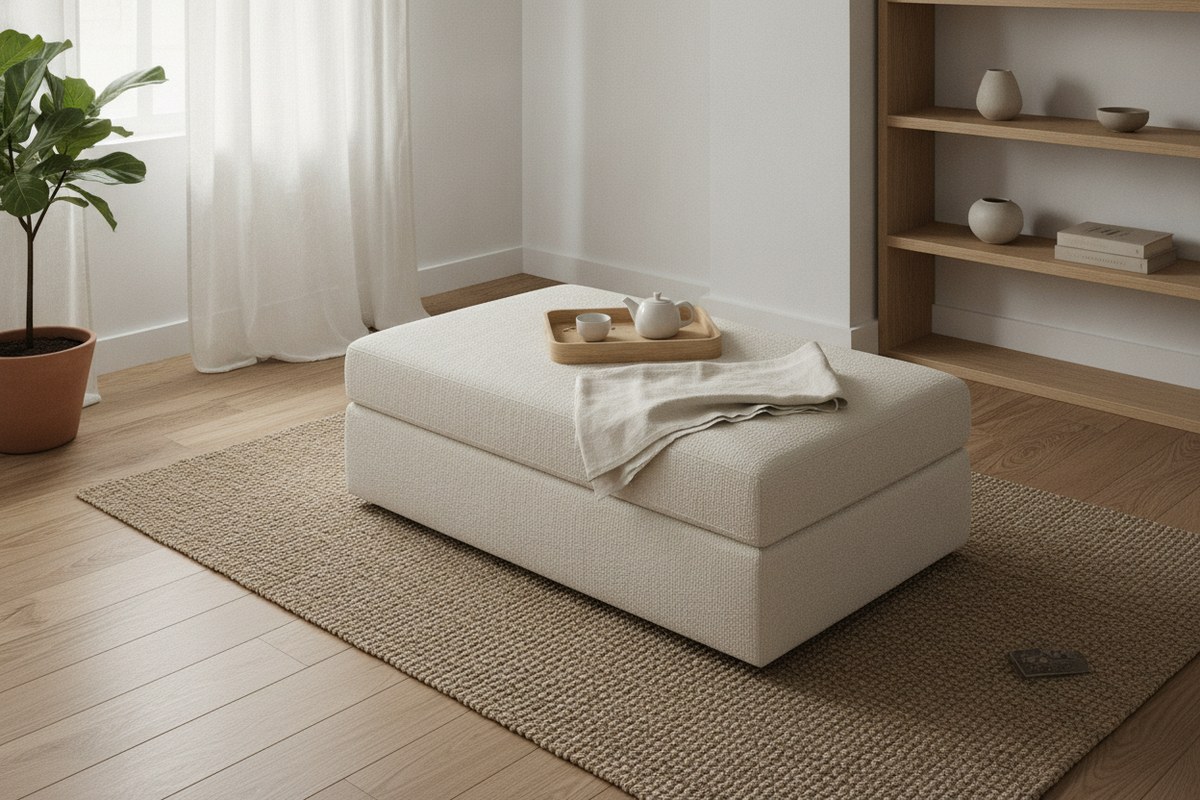
Not every square foot needs a single rigid job — leave one flexible pocket that can flex between guest seating, yoga space, or an extra work surface. A storage ottoman with tray is perfect here: it’s a coffee table, extra seating, and hidden storage in one low, unobtrusive piece. Designing in a little flexibility keeps your zoning system livable instead of feeling like a rulebook.
You don’t need a renovation to make a studio feel like separate rooms — just a few deliberate boundaries, some restraint with clutter, and lighting that shifts with the mood. Start with one or two ideas from this list, live with them for a week, and adjust. That slow, intentional approach is very Japandi in itself.