This post may contain affiliate links. If you buy through them, we may earn a small commission at no extra cost to you.
Living in a tiny bedroom doesn’t mean you have to live in chaos. Japanese organizing philosophy has always centered on doing more with less — using every inch of vertical space, keeping surfaces clear, and storing things with intention rather than just cramming them out of sight. Pair that mindset with Japandi’s soft, natural aesthetic, and you get a small bedroom that feels calm instead of cluttered. Below are ten practical storage ideas that work in real tiny rooms, from studio apartments to shared dorms.
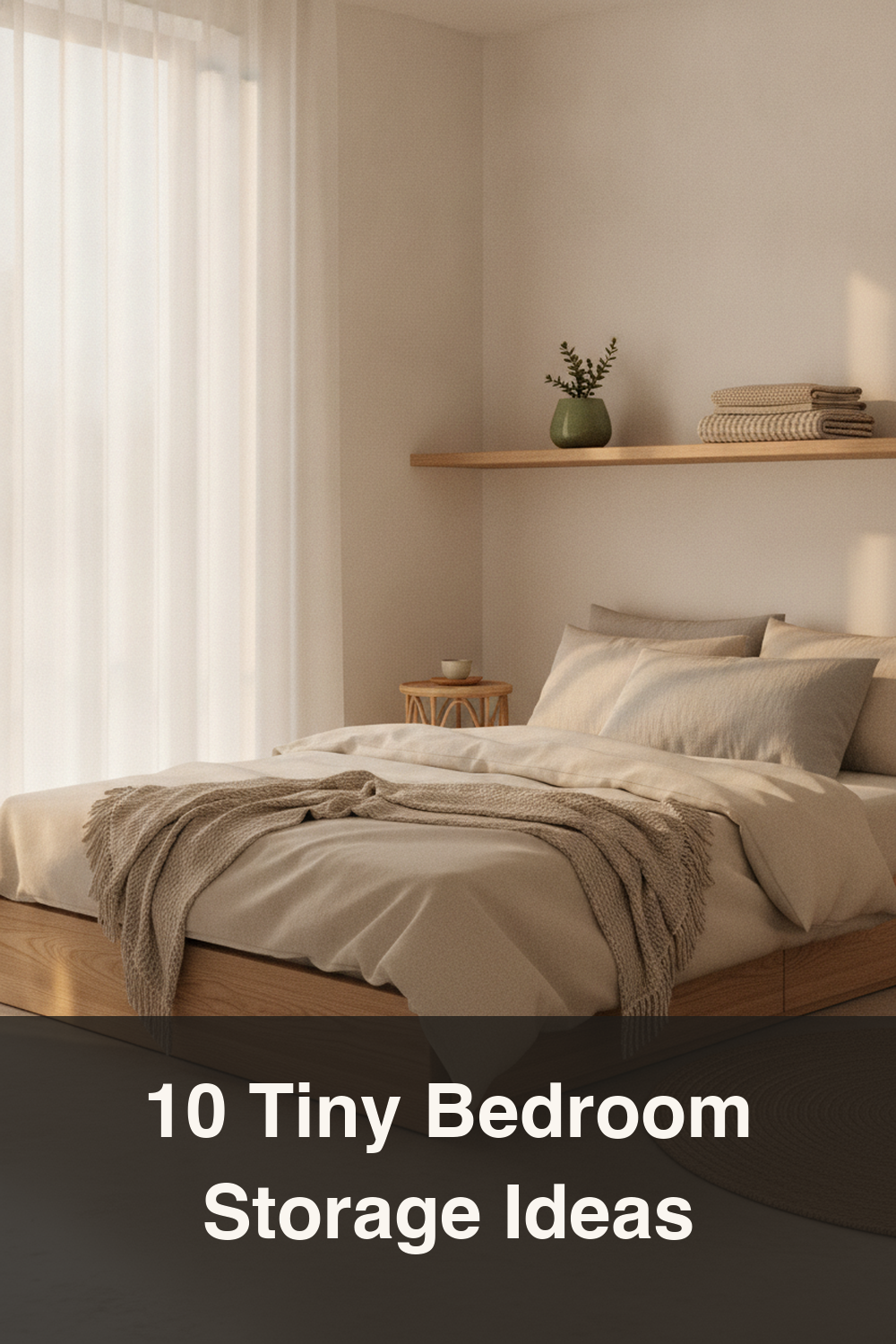
1. Turn the Space Under Your Bed Into a Hidden Drawer System
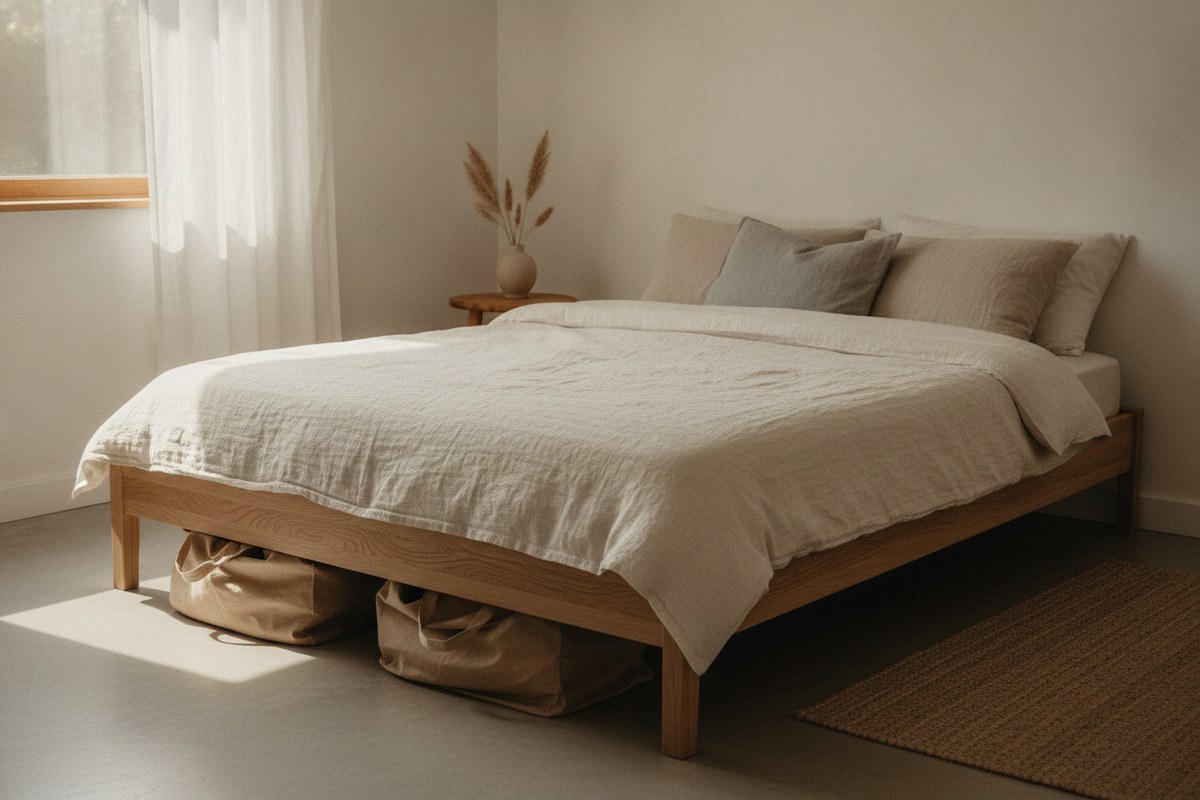
The area under your bed is often the single biggest unused storage zone in a small bedroom. Instead of shoving random boxes under there, treat it like a proper drawer system. Flat under-bed storage bags with zip tops keep off-season clothing, extra linens, or shoes dust-free and easy to slide out. If your bed frame has legs with clearance, add rolling bins so nothing gets stuck in the back corner. This one shift alone can free up an entire closet shelf.
2. Go Vertical With Floating Wall Shelves
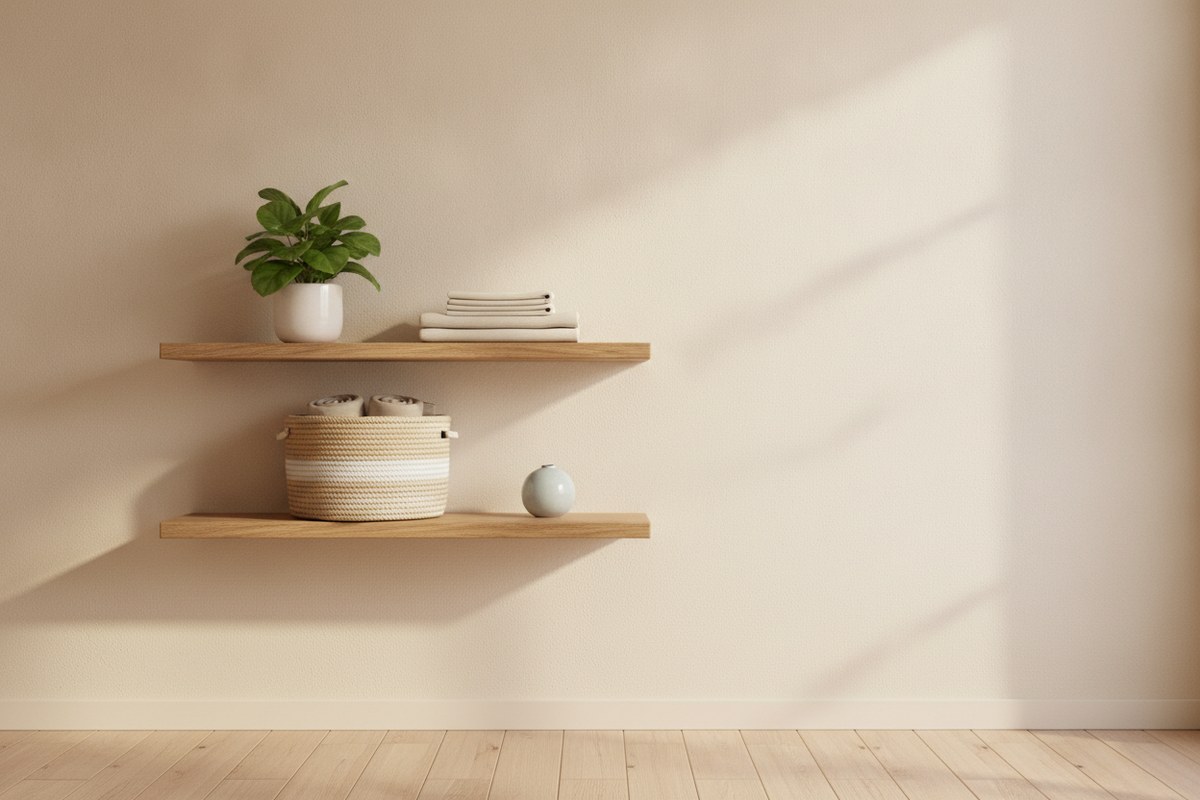
When floor space is limited, the walls become your best friend. Installing a few wall-mounted floating shelves above a desk, nightstand, or headboard gives you display and storage without eating into walkway space. In Japandi rooms, less is more, so keep shelves styled with just a few curated items — a woven basket, a small plant, a stack of books — rather than filling every inch. Negative space, or “ma” in Japanese design, is part of what makes a small room feel peaceful rather than packed.
3. Let Your Furniture Do Double Duty
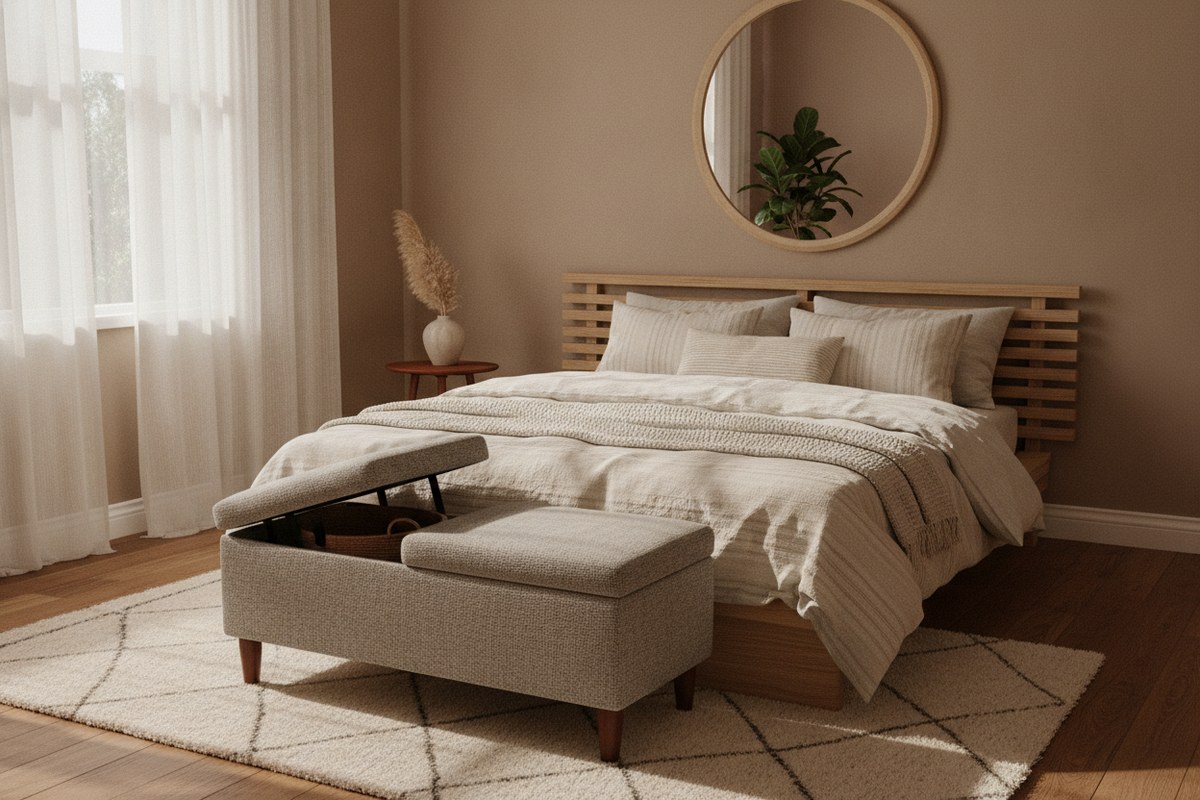
In a tiny bedroom, every piece of furniture should earn its square footage twice over. A storage ottoman bench at the foot of the bed can hold extra blankets while doubling as seating for putting on shoes. A bed frame with built-in drawers eliminates the need for a separate dresser. Even a nightstand with a small cabinet beats an open-shelf version, since closed storage keeps small items from visually cluttering the room.
4. Borrow the Japanese “One In, One Out” Rule
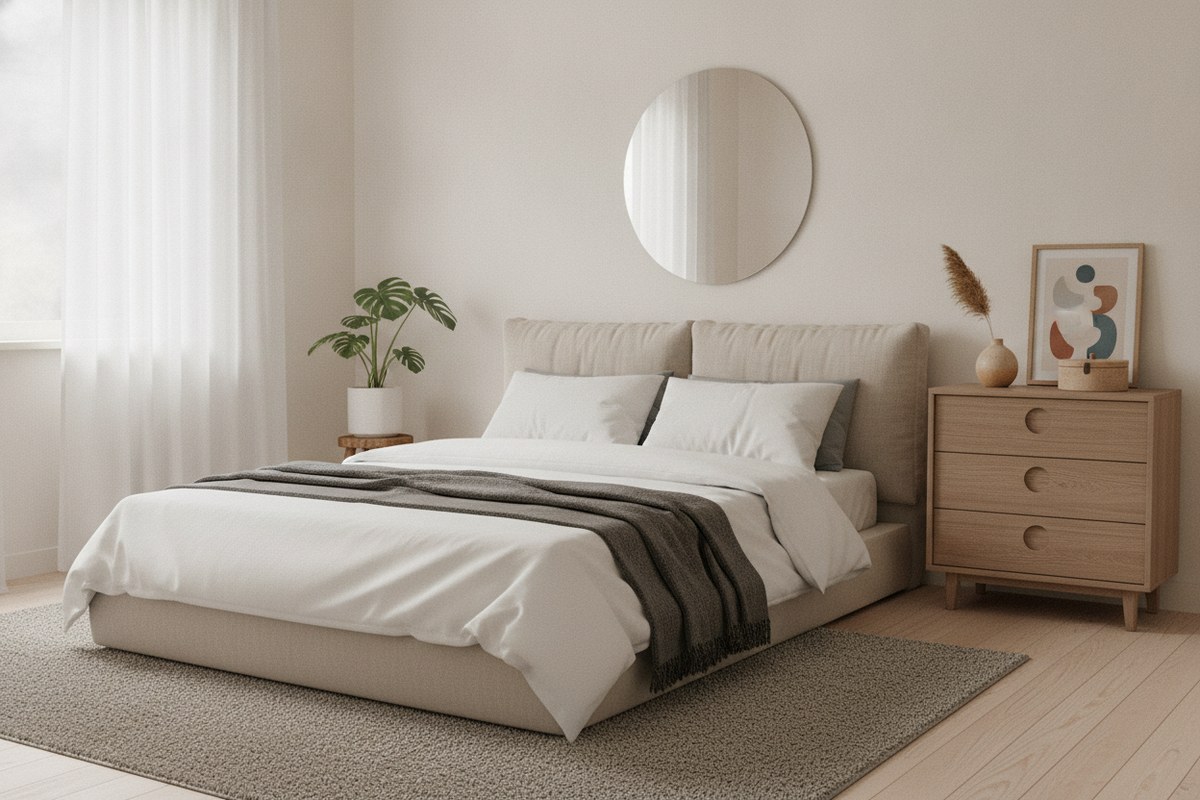
No amount of clever storage will help if your belongings keep multiplying. A simple habit borrowed from Japanese minimalism is the “one in, one out” rule: when something new comes into your bedroom, something else leaves. This keeps your closet and drawers from slowly creeping back to capacity after a big organizing day. It’s a small mental shift, but it’s the difference between a tiny room that stays tidy and one that needs re-organizing every few months.
5. Roll a Slim Cart Into Dead Corners
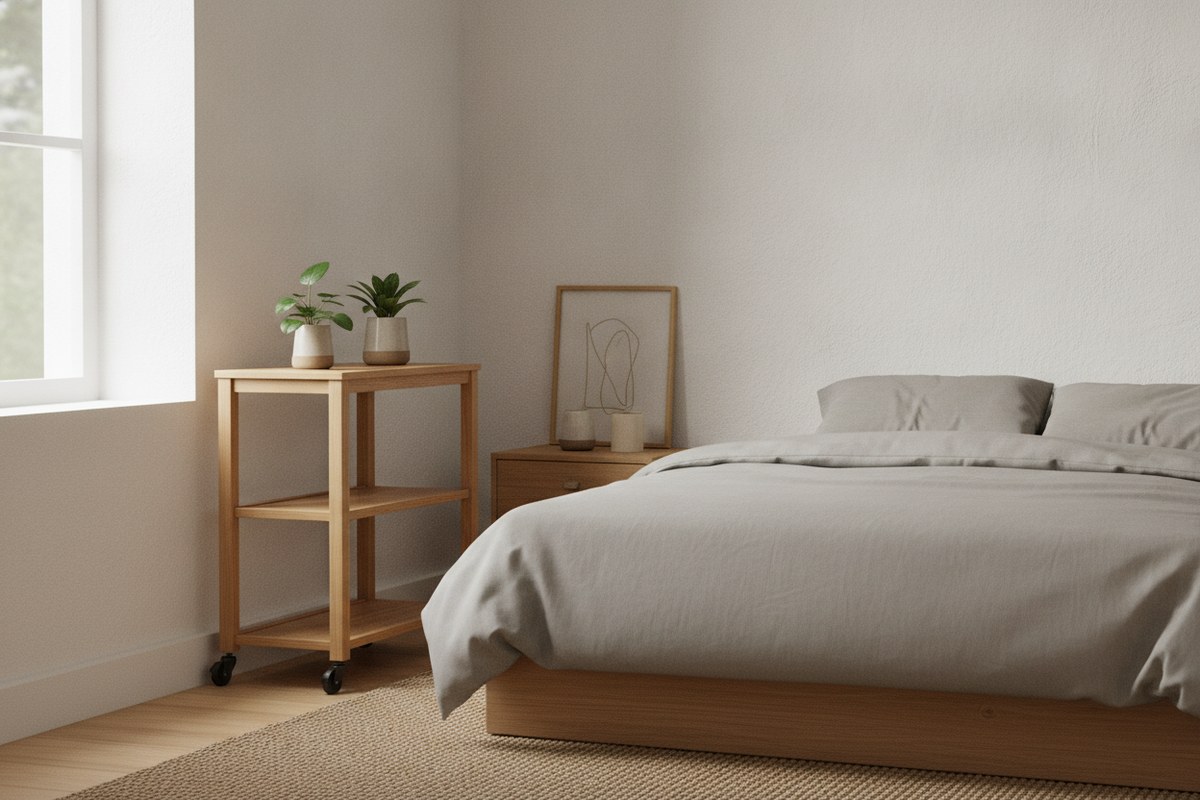
Awkward corners and narrow gaps between furniture are prime real estate in a small bedroom. A slim rolling storage cart can tuck into a gap beside a dresser or bed, holding skincare, folded clothes, or craft supplies, and you can pull it out whenever you need access. Because it’s on wheels, it also makes cleaning the floor underneath far easier than a fixed shelving unit would.
6. Fold Clothes the KonMari Way
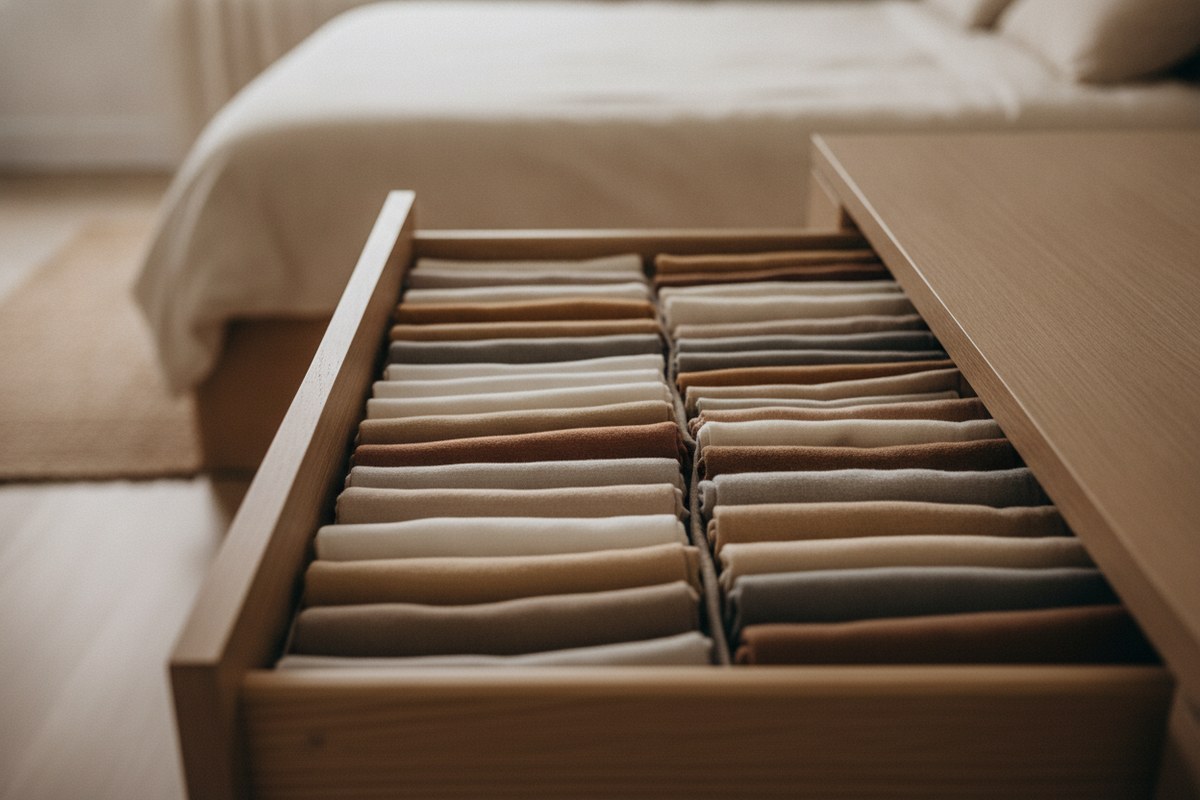
How you fold matters just as much as where you store. The KonMari vertical folding method — folding clothes into small rectangles that stand upright in a drawer — lets you see every item at a glance instead of digging through stacked piles. This method alone can roughly double the usable capacity of a small dresser. Pair it with drawer dividers to keep categories like socks, tees, and loungewear from sliding into one messy pile.
7. Hang a Pegboard for Everyday Items
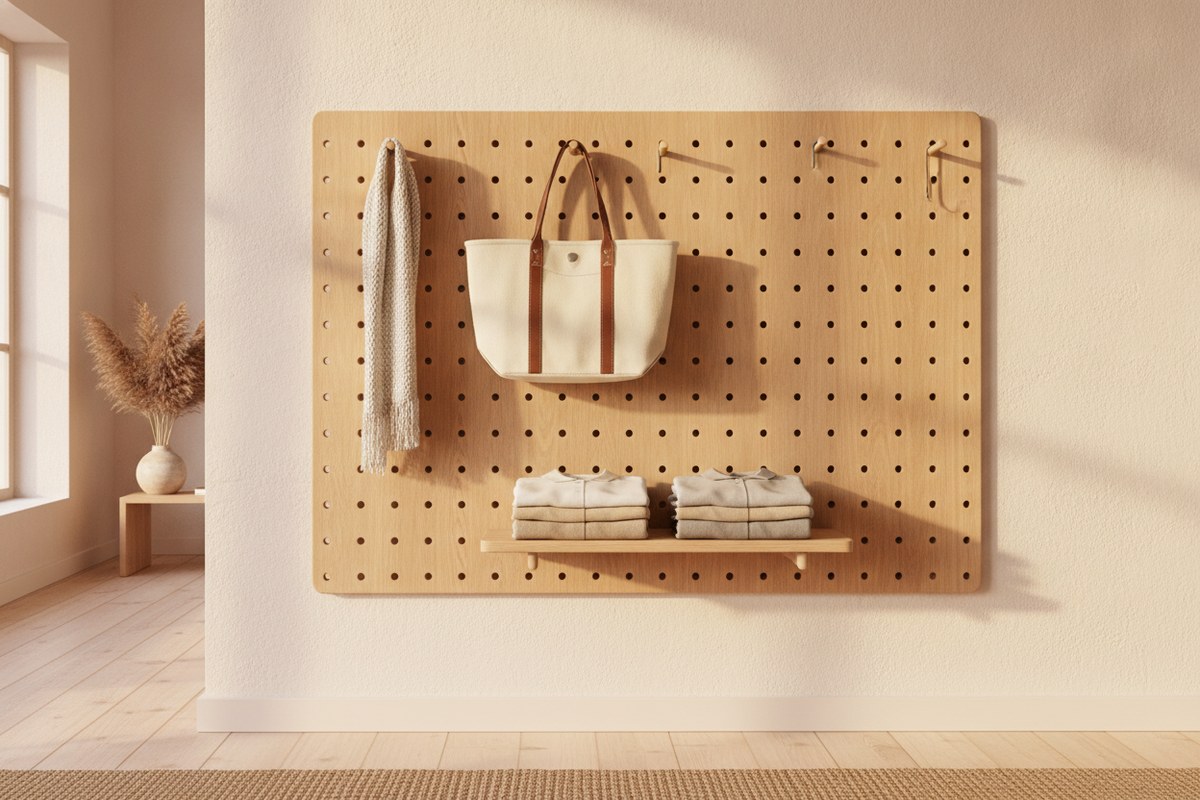
A pegboard mounted on an empty wall gives you flexible, visible storage for the things you reach for daily — bags, scarves, hats, jewelry, or a favorite cardigan. Unlike a closet, everything stays in view, so you’re not tempted to buy duplicates because you forgot what you already own. A simple pegboard organizer kit with a mix of hooks and small shelves works well above a desk or beside a closet door.
8. Stack and Label Closet Bins
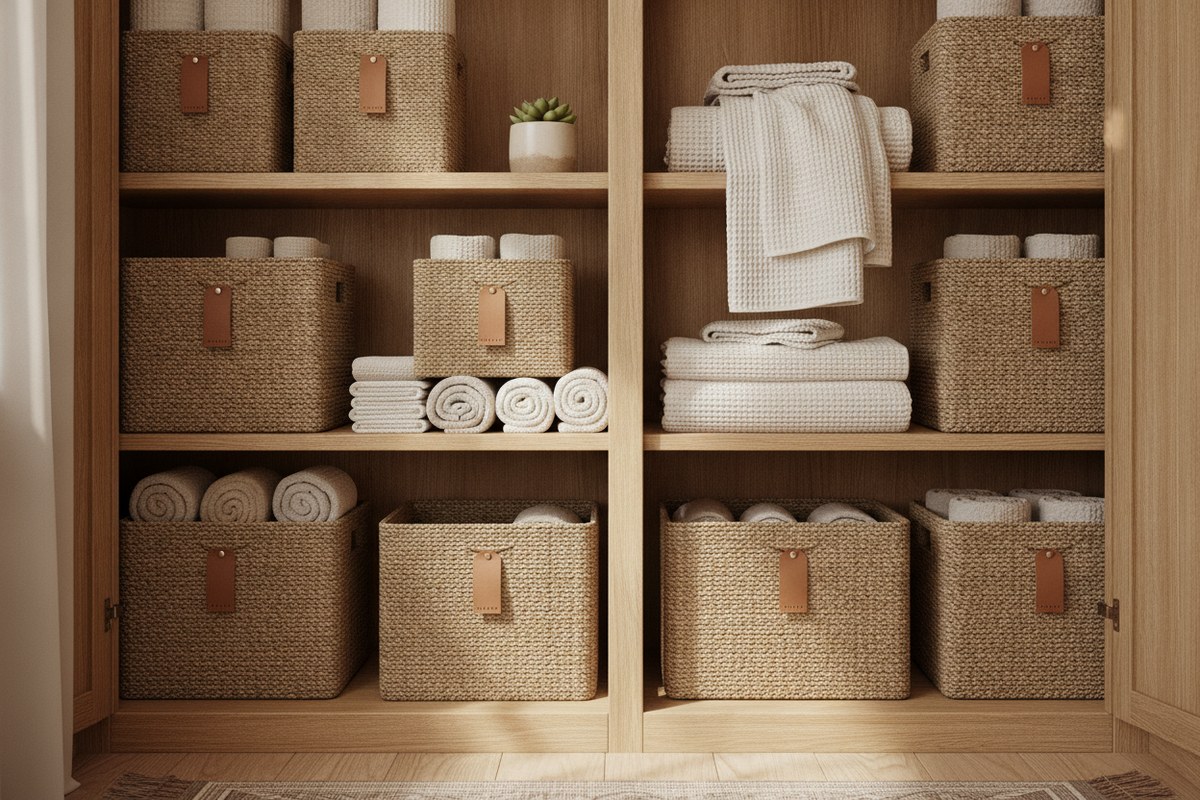
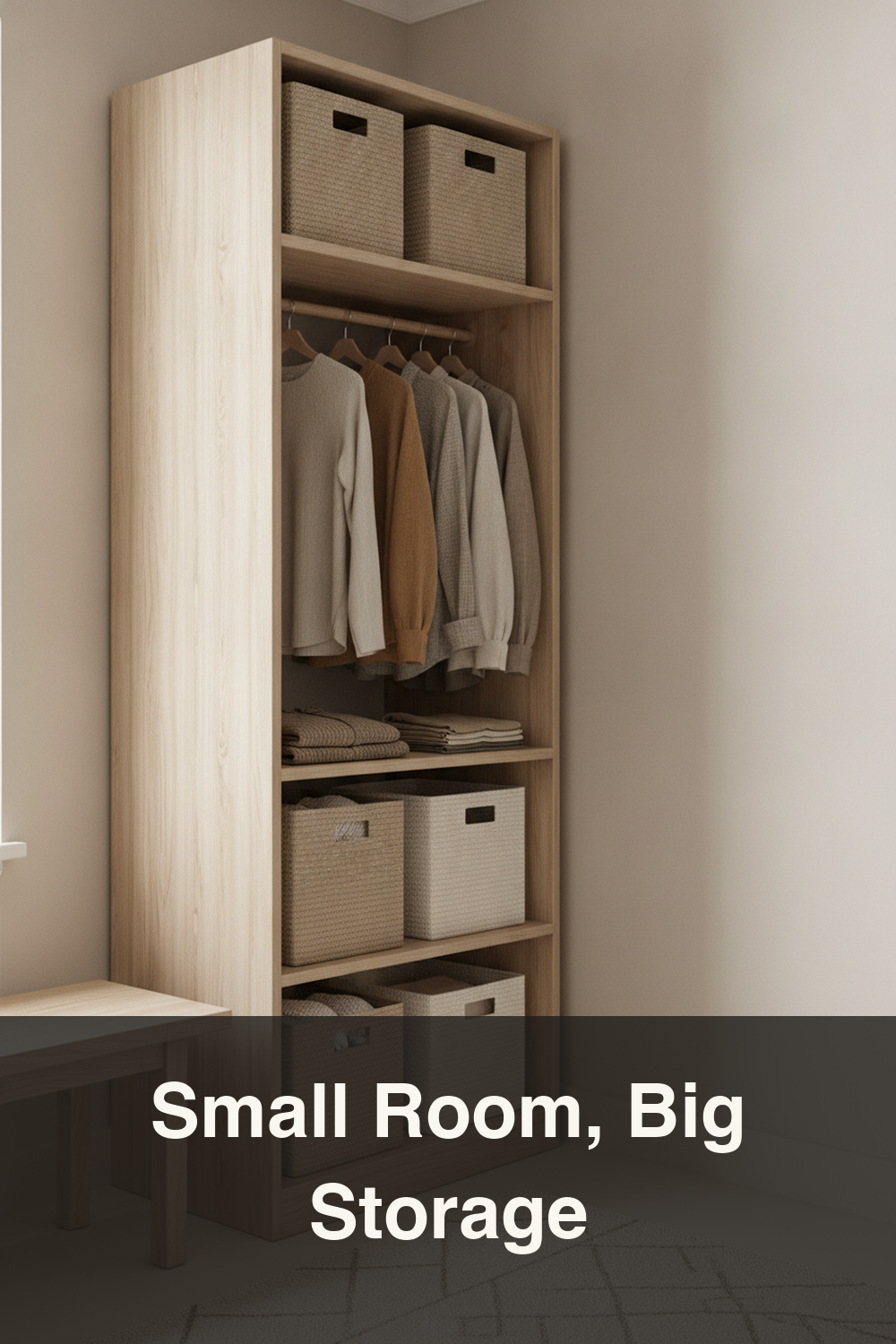
Closets in tiny bedrooms are often deep but poorly used, with a single rod and one shelf leaving a lot of wasted air above and below. Add stackable closet bins to build a second and third storage layer, and label each one by category — winter layers, bedding, accessories. This mirrors the Japanese habit of giving every item a designated “home,” which makes both putting things away and finding them later much faster.
9. Use the Back of Every Door
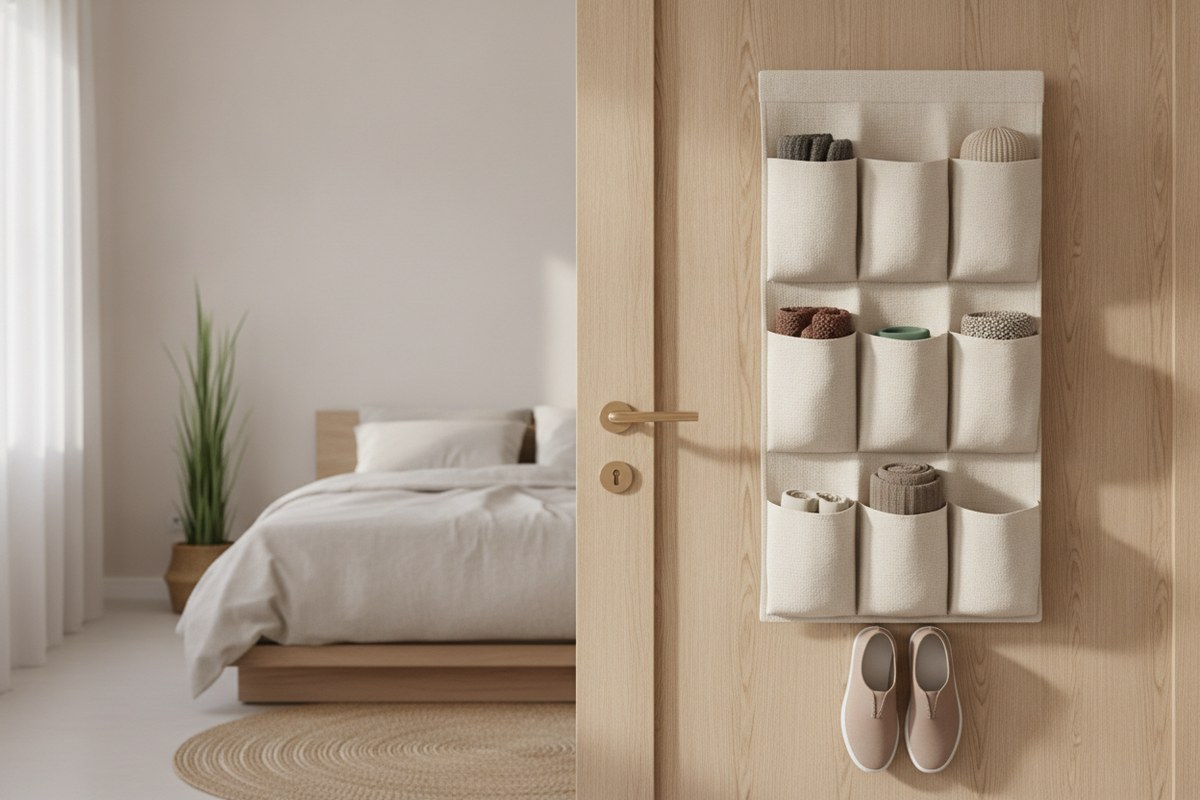
Doors are one of the most overlooked storage surfaces in a small bedroom. An over-the-door hanging organizer on your bedroom or closet door can hold shoes, folded accessories, or grooming supplies without taking up any floor or wall space you’d otherwise use. Because it disappears when the door is closed, it keeps the room looking uncluttered even though it’s doing a lot of storage work.
10. Build a Small Capsule Wardrobe
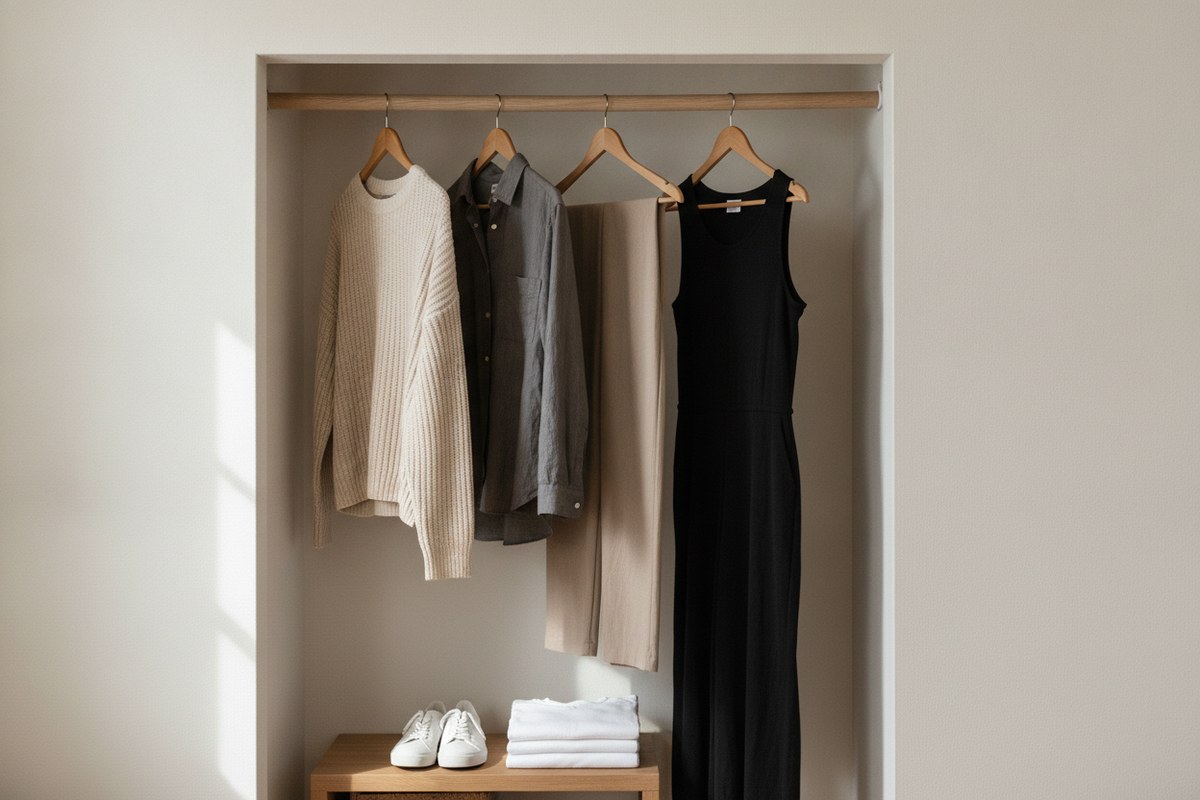
Sometimes the best storage solution is simply owning less. A capsule wardrobe — a smaller, intentional collection of clothes that mix and match easily — naturally fits a tiny closet without feeling cramped. This isn’t about deprivation; it’s the same philosophy behind Japandi design overall: fewer, better things, chosen with care, given enough room to breathe. When your wardrobe shrinks to match your space, storage stops being a daily struggle.
Small bedrooms don’t need big renovations to feel organized and calm. A handful of intentional changes — vertical shelving, smarter folding, furniture that pulls double duty, and a lighter overall wardrobe — can transform a cramped room into a space that feels quietly put-together every single day.