This post may contain affiliate links. If you buy through them, we may earn a small commission at no extra cost to you.
If your entryway is basically a hallway with a door, you already know the shoe pile problem. Shoes creep from the mat onto the floor, into the hallway, and suddenly your welcome zone feels like a lost-and-found bin. Japanese homes have been solving this exact problem for centuries with the genkan — a small transition space designed around one rule: shoes have a home, and that home is not the floor. Borrowing this mindset, paired with a few smart small-space products, can turn even a two-foot-wide entry into something calm and Japandi-pretty. Here are ten ideas that actually work in real apartments.
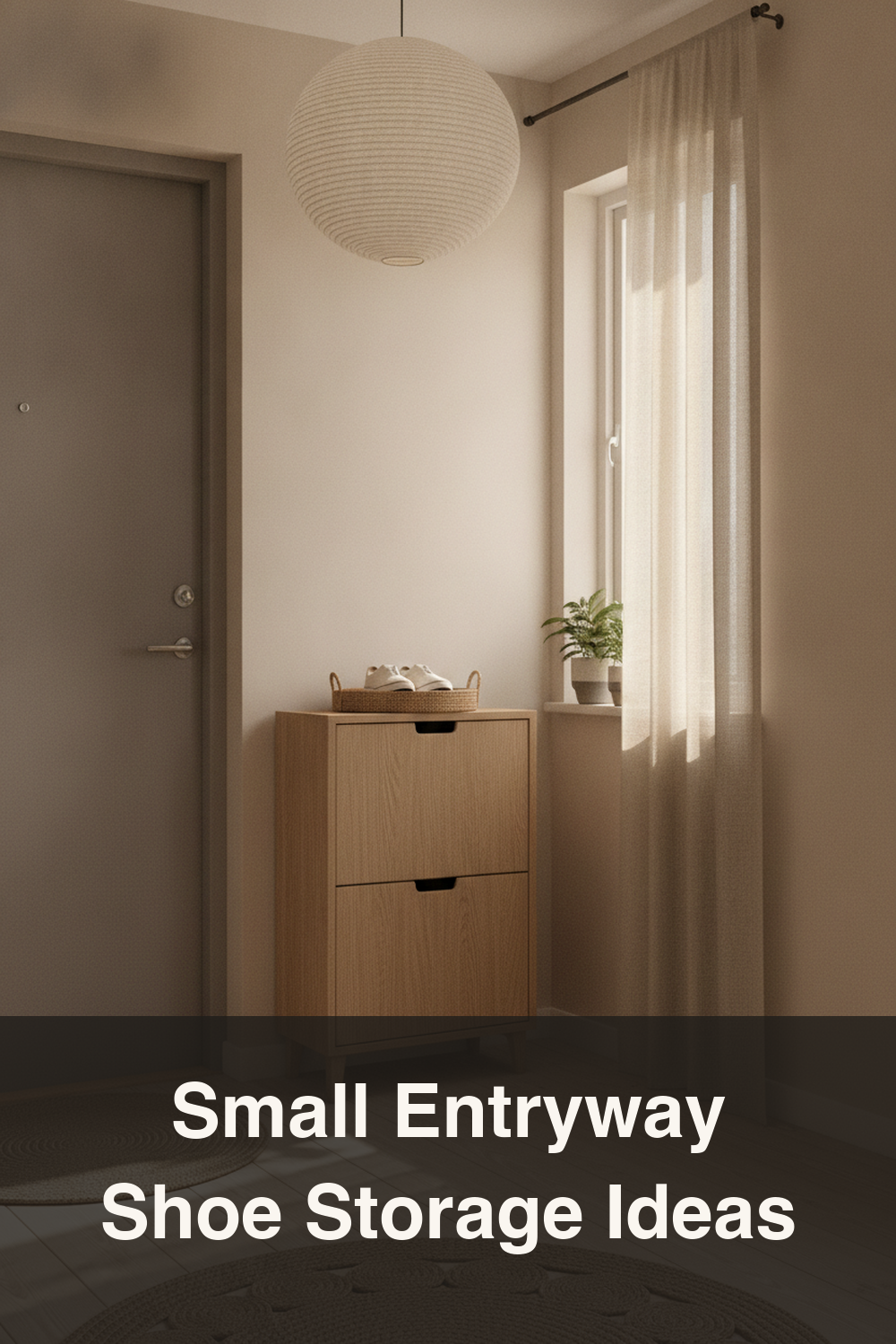
1. Slim Shoe Cabinet Against the Wall
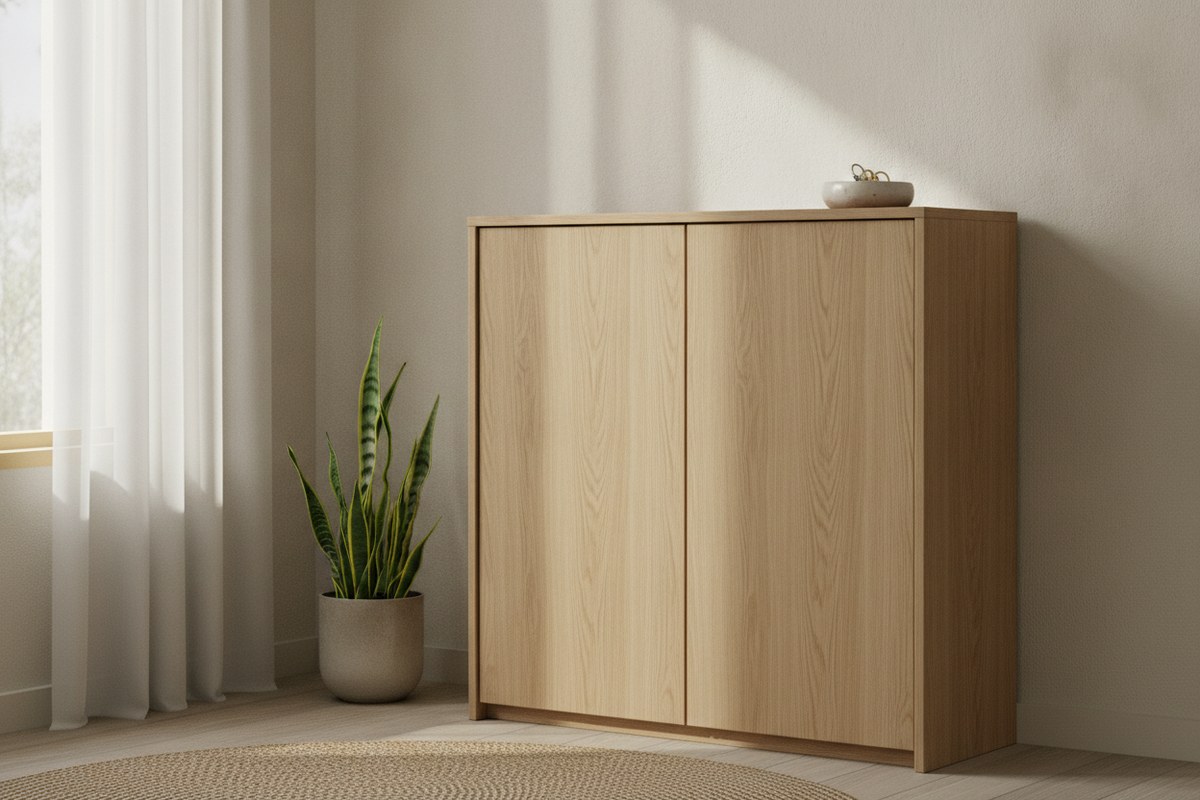
A narrow cabinet, even one just 6-8 inches deep, can hold two to three rows of shoes standing on their sides. Look for a slim shoe cabinet with doors that fully close, since visually sealed storage is the fastest way to make a small entry feel uncluttered. Choose a light oak or white finish to keep the space feeling open rather than boxed in, and place it directly beside the door so shoes get put away in one motion, not carried through the house first.
2. Entryway Bench With Hidden Storage
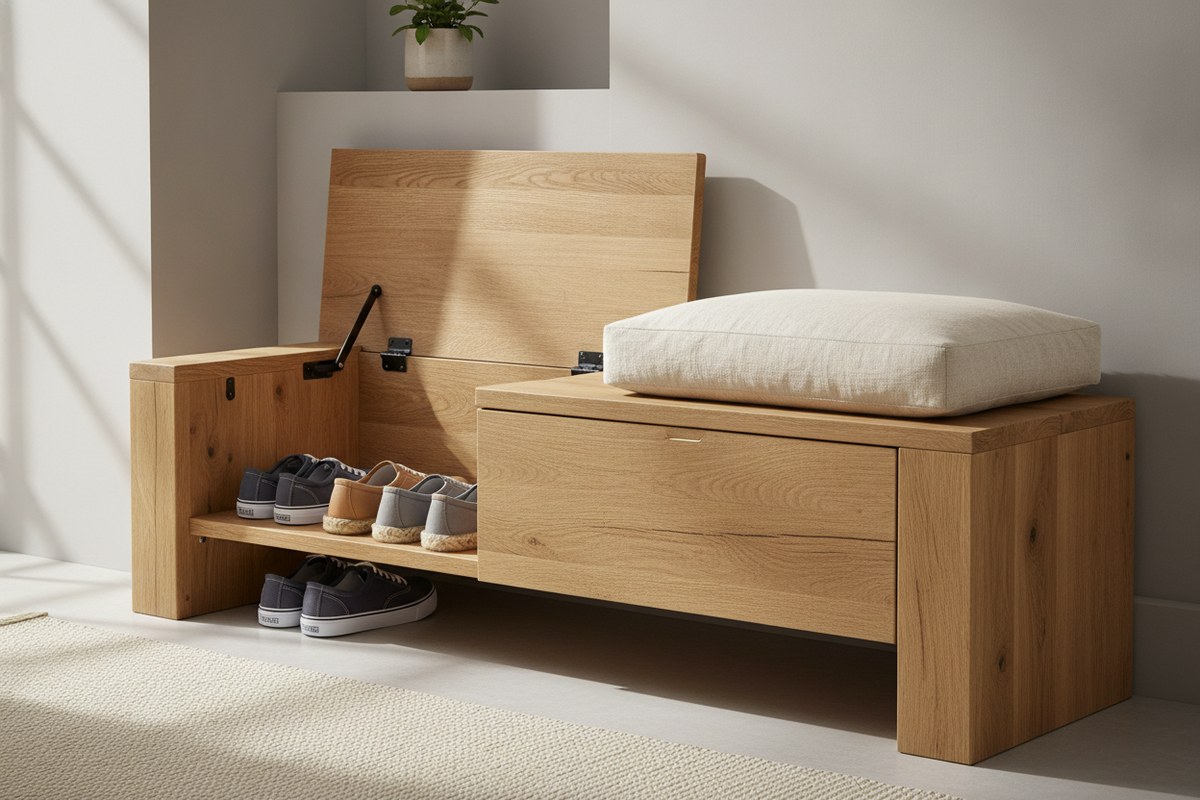
A bench does double duty: somewhere to sit while you tie laces, and a lid or drawer that hides shoes from view. An entryway storage bench with a flip-top seat works especially well in apartments with almost no floor space, since it replaces a chair and a shoe rack in one footprint. This mirrors the genkan bench many Japanese homes use, where sitting and storing happen in the same small gesture.
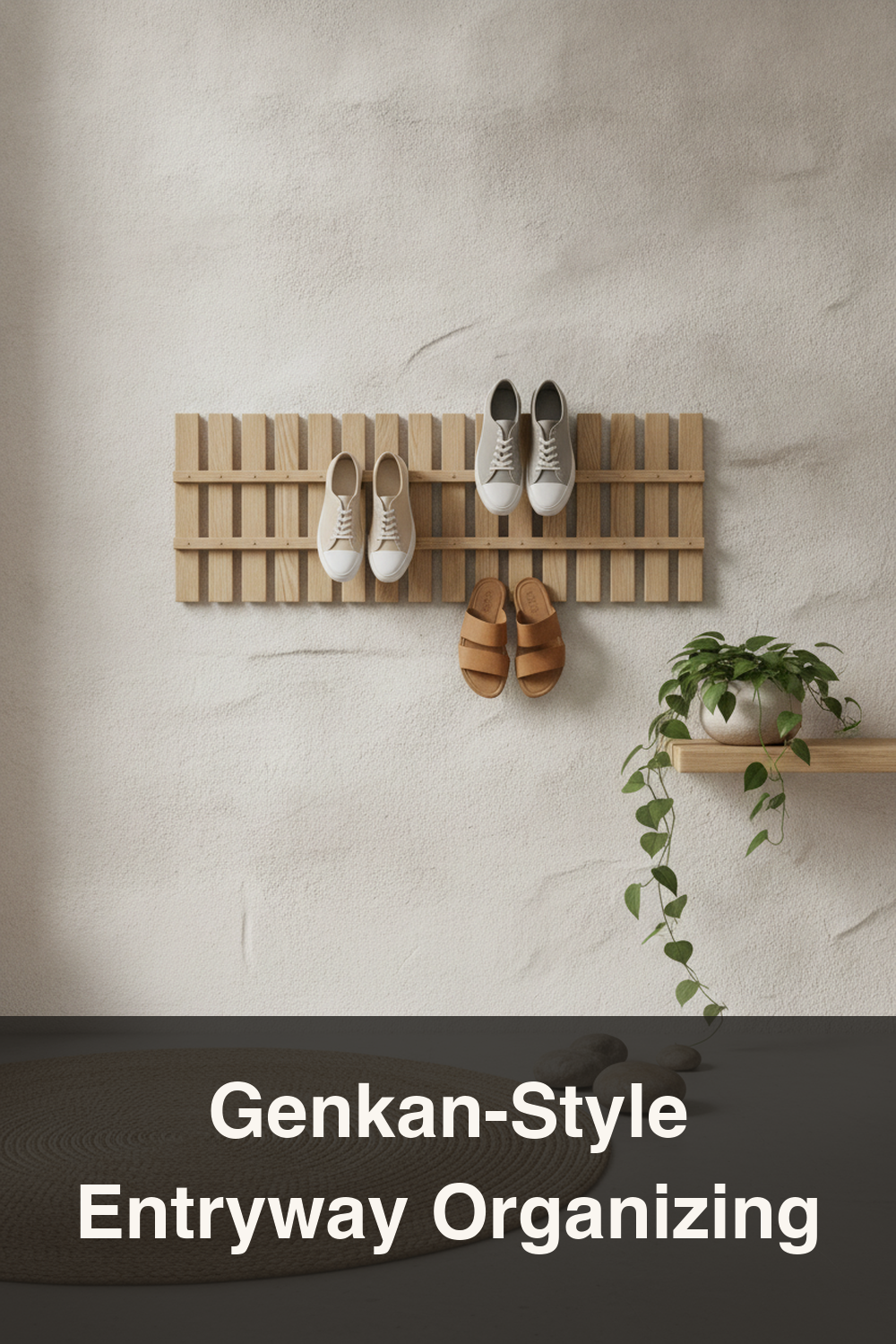
3. Wall-Mounted Vertical Shoe Rack
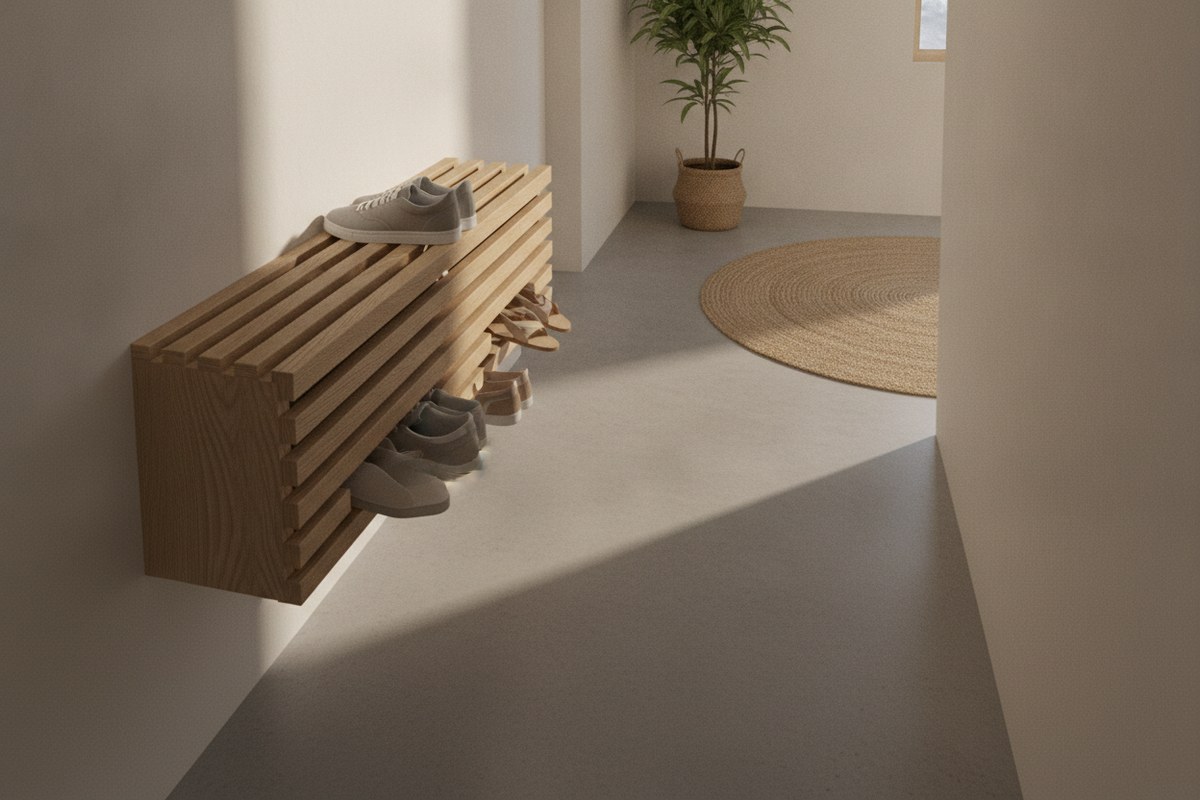
When floor space is truly zero, go up. A wall-mounted shoe rack holds pairs at a slight downward angle so shoes don’t slide off, and it keeps the entry floor completely clear for sweeping. This is ideal for narrow hallway entries where every inch of floor matters for walking through. Mount it at a height where the lowest shoe sits above ankle level so nothing gets kicked loose.
4. A Genkan-Style Shoe Tray at the Door
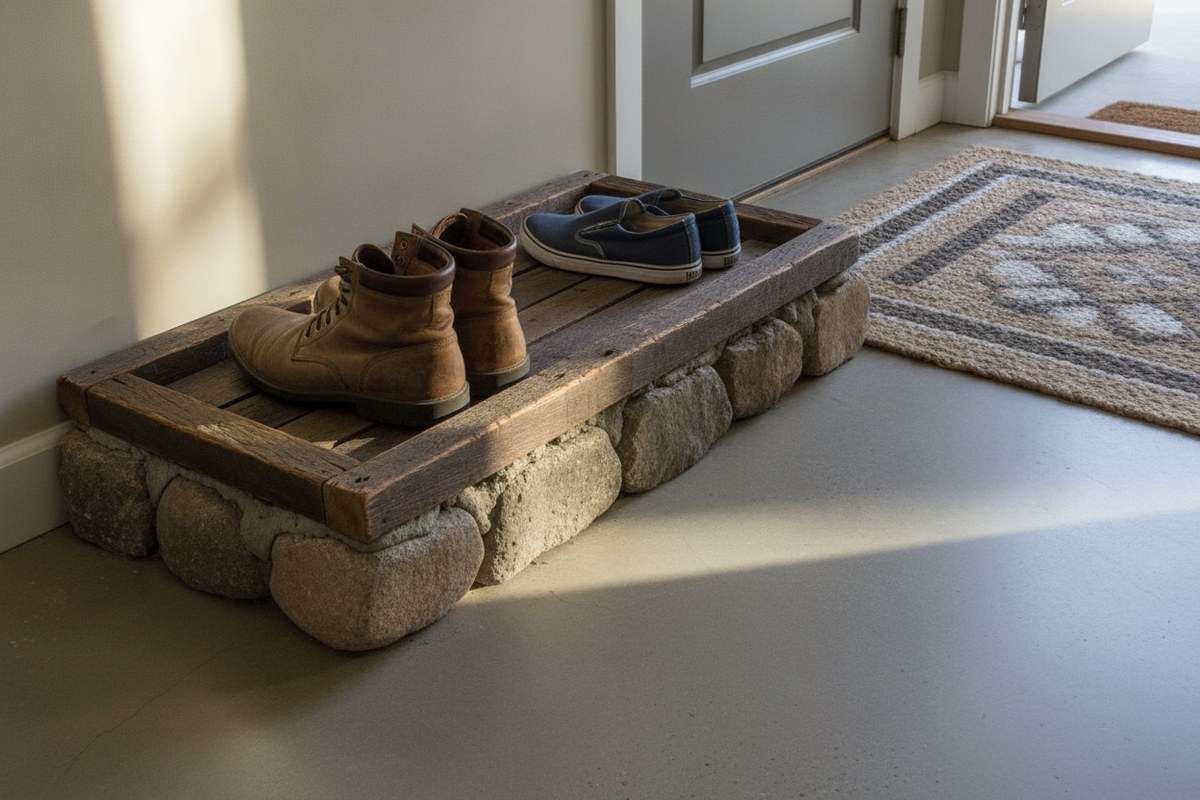
Even without a full cabinet, a simple shallow tray by the door creates a designated “shoes off here” zone, exactly like a genkan step. This one small boundary does a surprising amount of psychological work: it tells everyone, including guests, where shoes belong the second they walk in. Choose a tray in stone, wood, or a low-profile rubber mat so it reads as intentional decor rather than an afterthought.
5. Stackable Clear Shoe Boxes for a Closet Corner
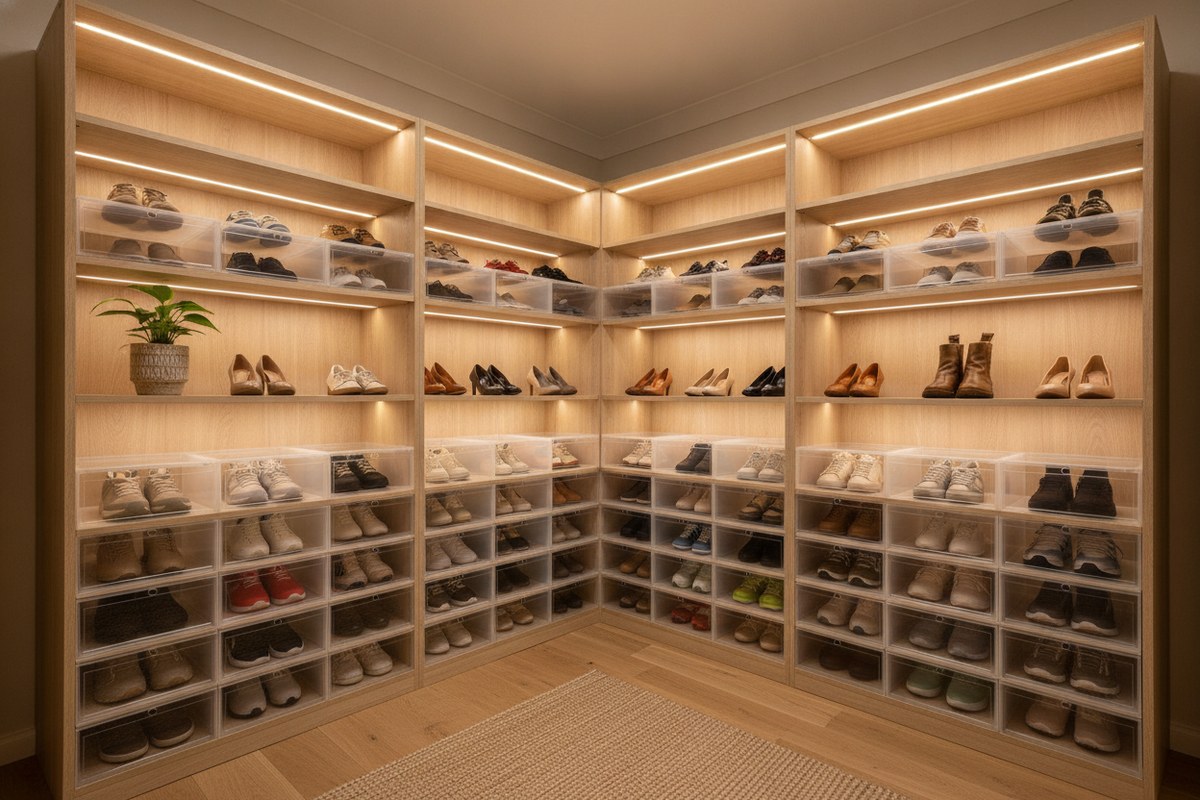
If you have even a sliver of closet space near the door, stackable shoe boxes let you store shoes vertically instead of side by side, tripling your storage in the same square footage. Clear boxes mean you can see what’s inside without opening each one, which matters when you’re grabbing sneakers on your way out the door in a hurry.
6. Over-the-Door Shoe Organizer
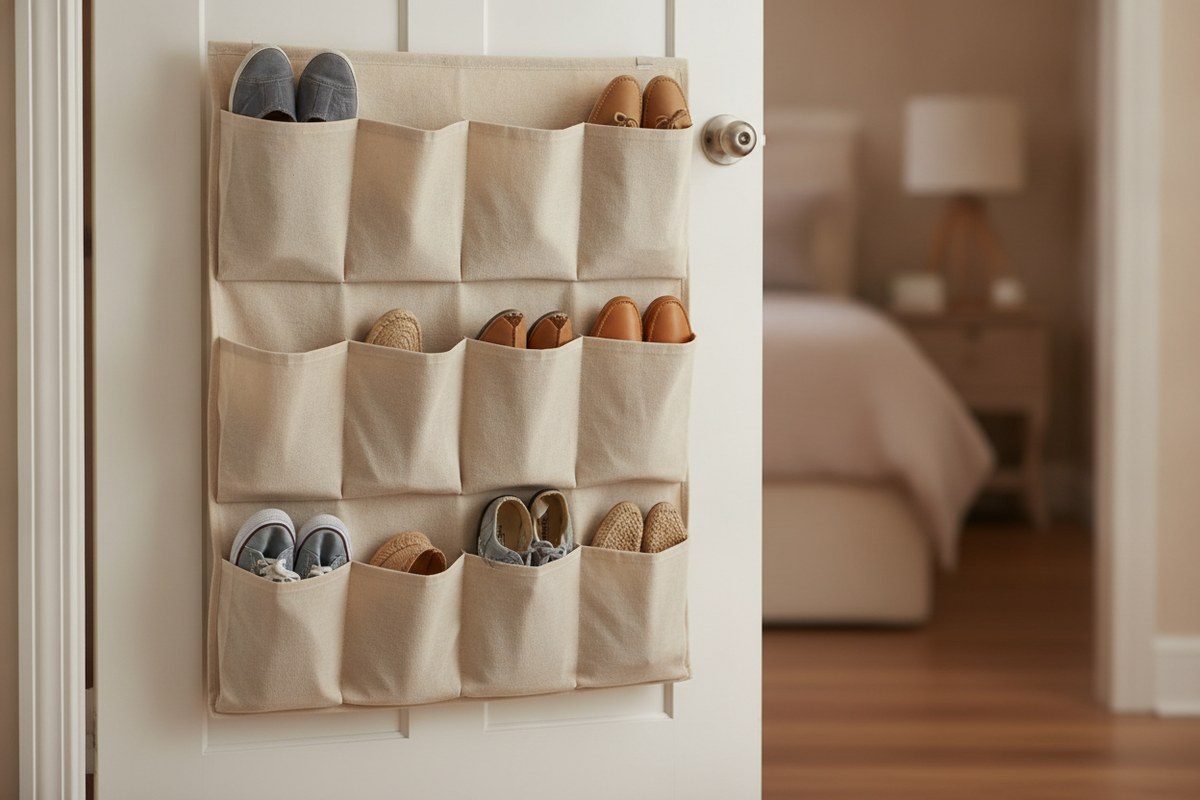
The back of a coat closet door or even the entry door itself is prime real estate that most small apartments waste. An over-the-door shoe organizer with fabric pockets holds several pairs without a single inch of floor or wall space used. Pick a neutral canvas version rather than bright vinyl so it blends into a Japandi palette instead of standing out.
7. A Rotating Corner Shoe Rack
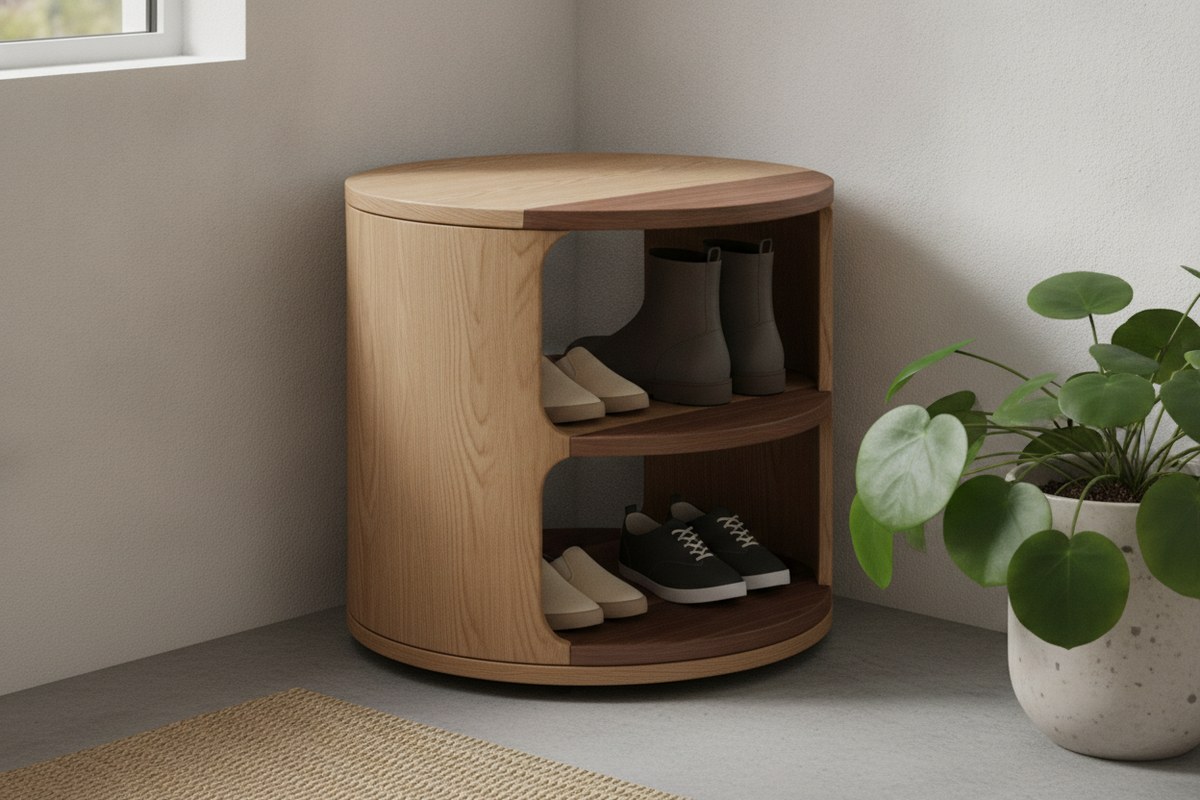
Corners are almost always wasted in small entryways. A rotating shoe rack tucks into that dead corner and spins so you can reach every pair without bending or shuffling boxes. This is a good option for entries that are more of an awkward nook than a proper hallway, since it works with an L-shaped footprint other racks can’t use.
8. Seasonal Shoe Rotation With Under-Bed Storage
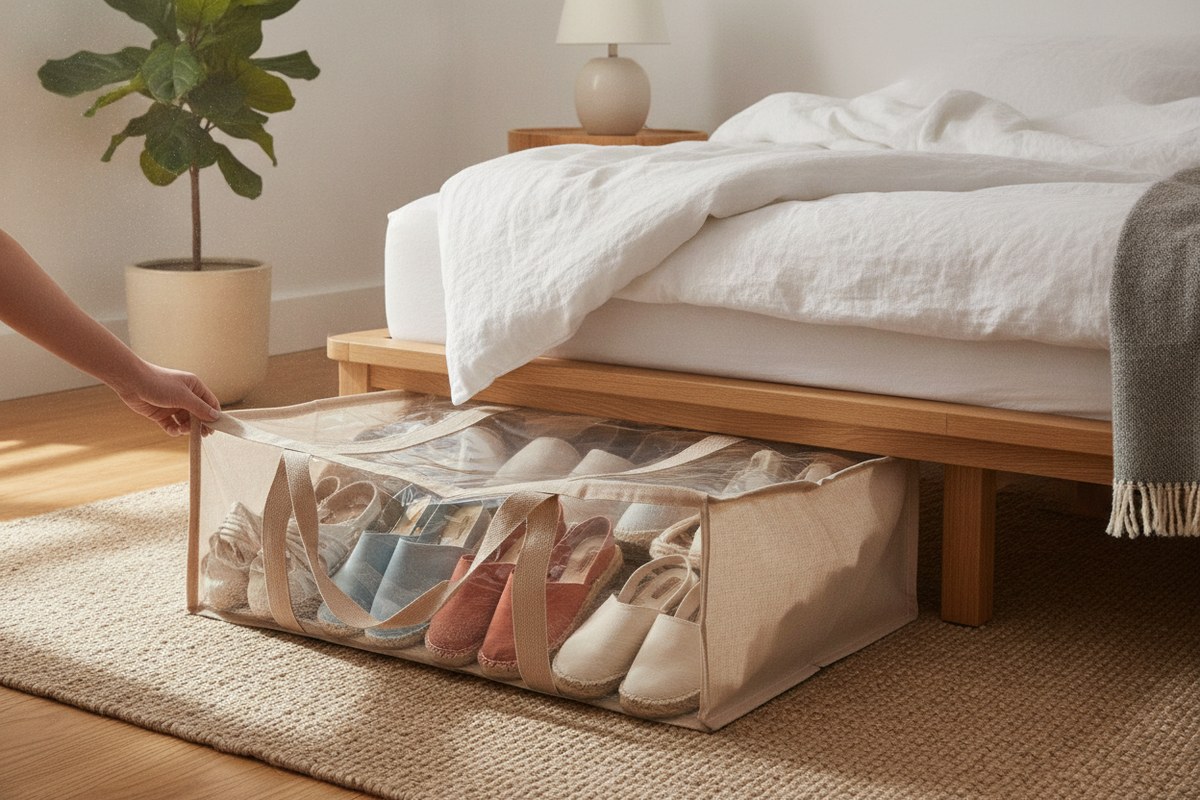
Not every shoe needs to live by the door year-round. Japanese organizing philosophy leans heavily on rotating items by season rather than storing everything at once, which is exactly why under-bed storage bags are so useful here. Move winter boots or off-season sandals under the bed, and your entryway only has to hold what you’re actually wearing this month. Swap the bins every few months and your small cabinet never feels overstuffed.
9. A Slim Rolling Shoe Cart
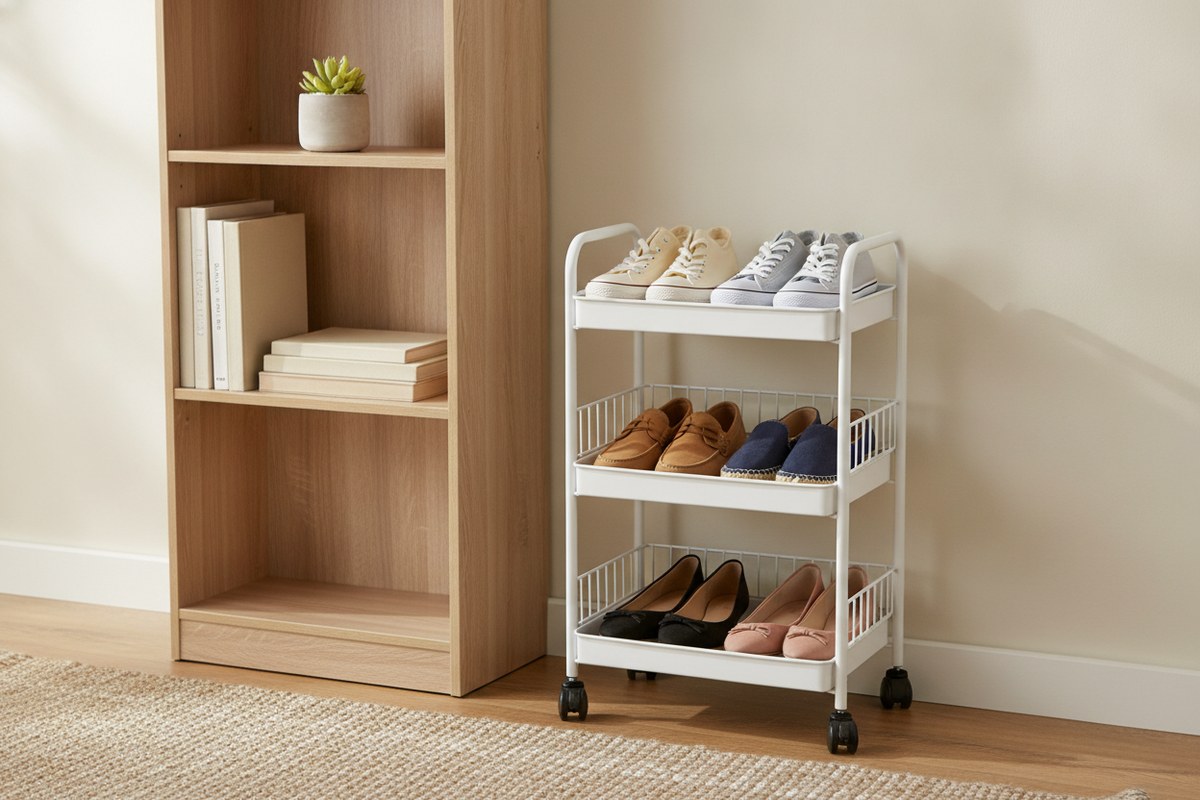
For renters who can’t mount anything to the wall, a narrow rolling cart offers flexible, damage-free storage. Look for a narrow rolling storage cart that fits in the gap beside a bookshelf or coat rack, and roll it out only when you need to grab or return a pair. Because it moves, it also makes cleaning the entry floor far easier than a fixed rack ever could.
10. Labeled Bins for Family Sorting
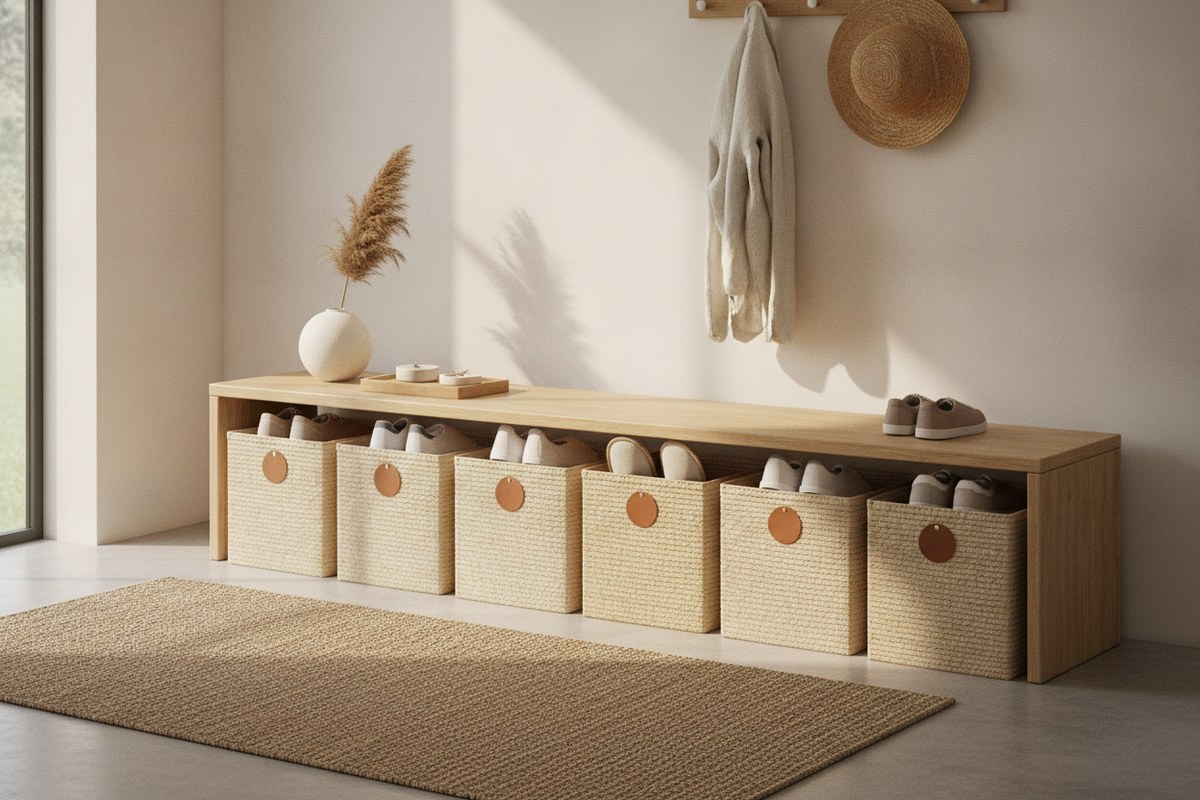
In a household with more than one person, an unlabeled shoe pile turns into a nightly hunt for the right size. Simple labeled storage bins, one per family member, keep pairs sorted without anyone needing to think about it. This small labeling habit, borrowed from Japanese household systems that assign every item a specific place, removes the guesswork that usually causes entryway clutter in the first place.
Keep It Working: A Few Habits That Matter More Than the Furniture
No storage piece fixes a shoe pile on its own — the real fix is a habit loop. Keep the number of shoes stored at the door limited to what’s currently in rotation, and box or bag the rest away seasonally. Wipe down trays and cabinet shelves monthly, since entryways collect more dust and grit than almost any other room. And resist the urge to add “just one more pair” to an already full rack; in small-space living, one in, one out is what keeps a system from quietly turning back into a pile.
Start with just one or two of these ideas rather than overhauling your whole entry at once. A single slim cabinet or a wall rack, used consistently, will do more for a calm, Japandi-style entryway than a full remodel ever could.