This post may contain affiliate links. If you buy through them, we may earn a small commission at no extra cost to you.
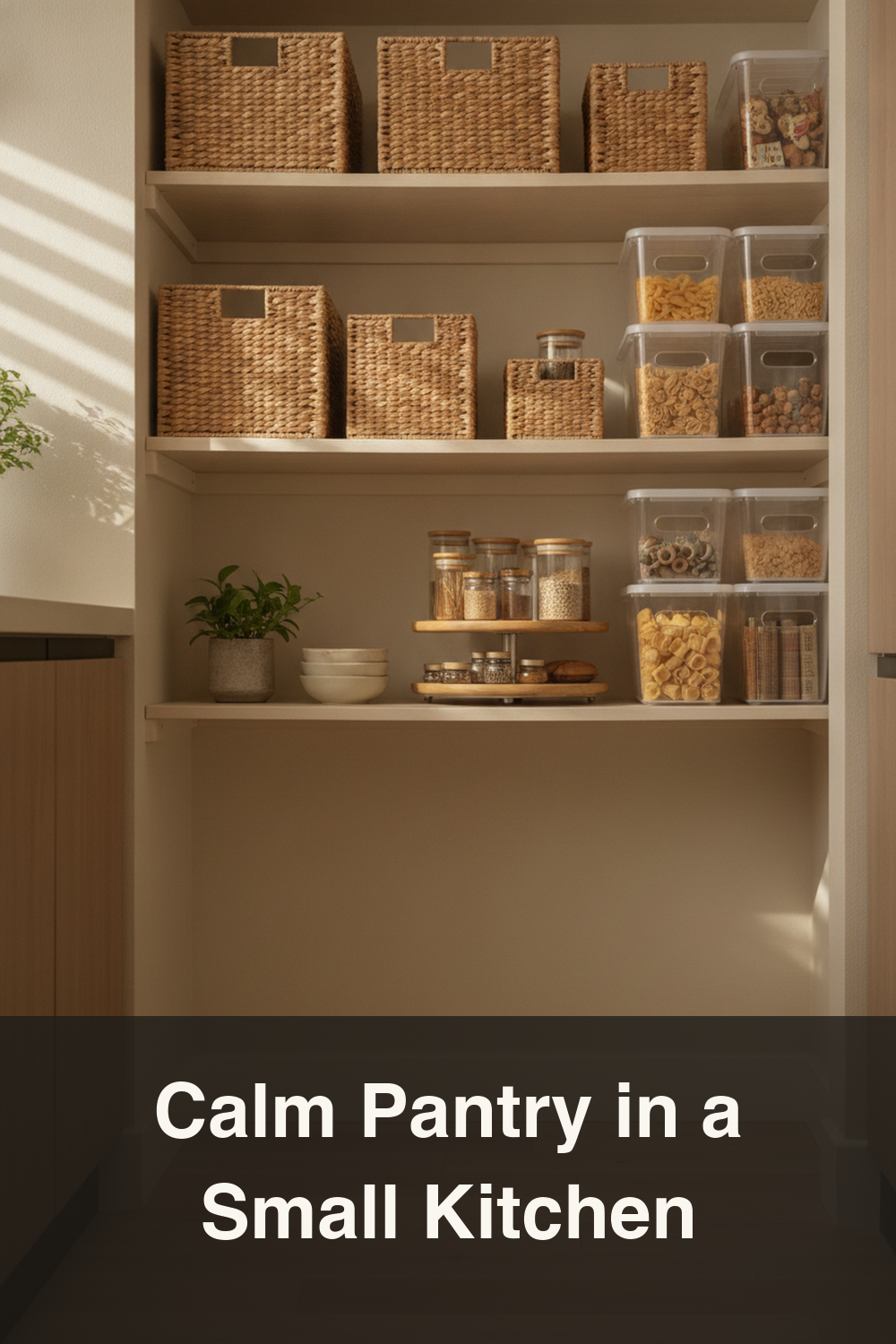
If your pantry is more “junk drawer” than “calm corner,” you’re not alone. Small kitchens rarely come with generous storage, and cabinets fill up fast with mismatched boxes, half-used bags, and mystery cans. The good news is that a small pantry doesn’t need more space—it needs a better system. Borrowing from Japanese organizing principles (edit first, give everything a home, keep surfaces visually quiet) and the soft, neutral Japandi aesthetic, you can turn even a single cabinet into a pantry that feels calm and functions well. Here are twelve practical ideas to get you there.
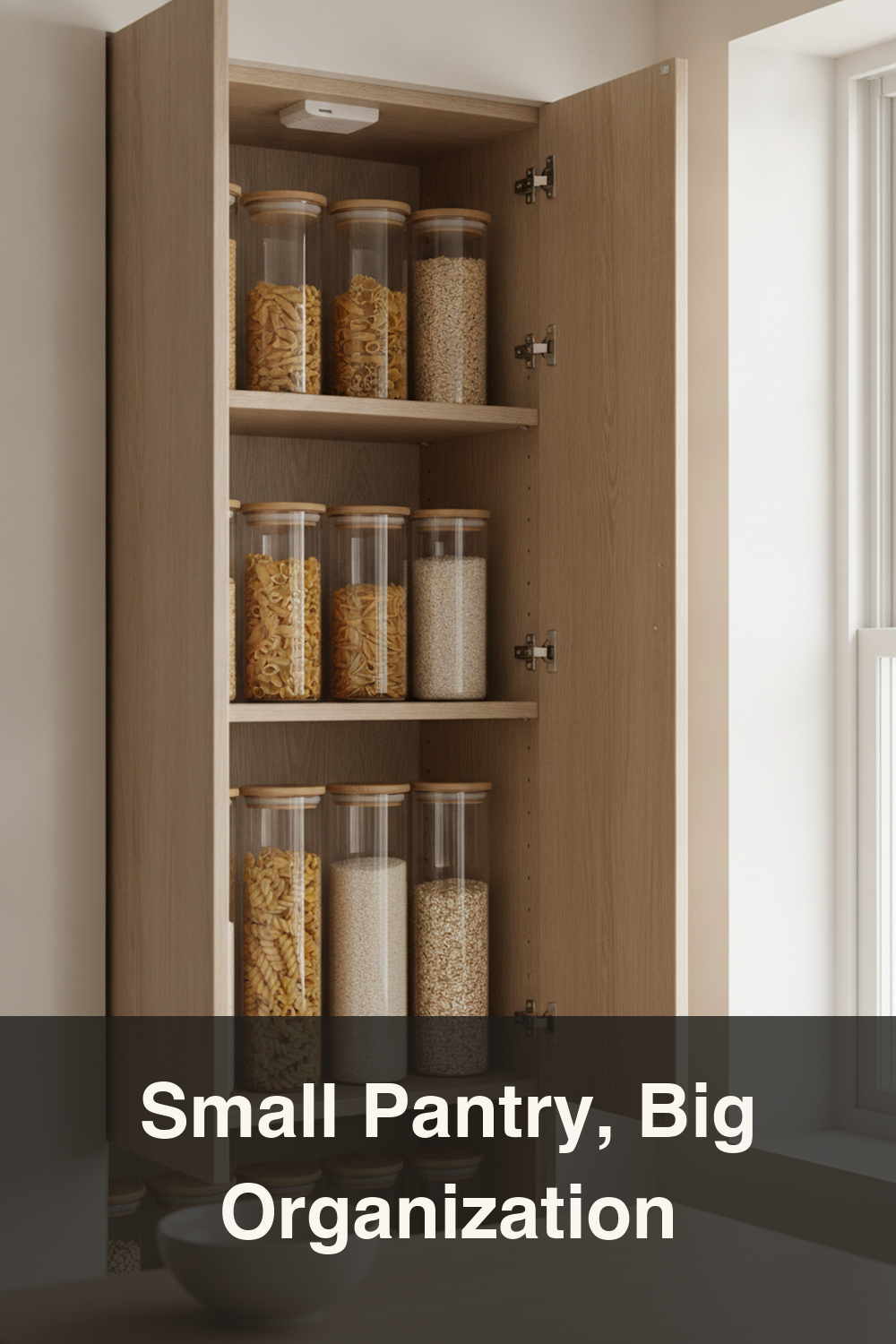
1. Edit Before You Organize
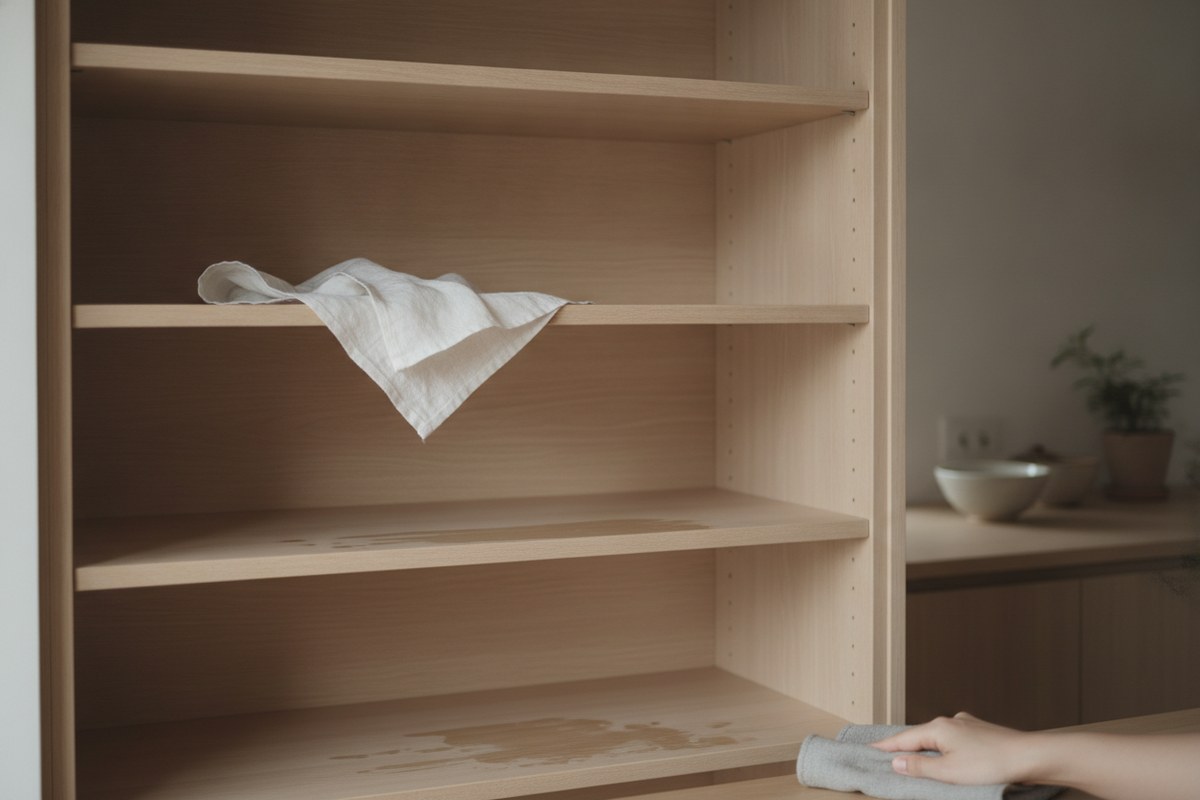
Before buying a single bin, empty your pantry completely and sort everything into three piles: keep, toss, and relocate. Check expiration dates honestly, and let go of duplicate condiments and stale spices. This step mirrors the Japanese approach to tidying: you can’t create order around clutter, only around what you actually need. Wipe down shelves while they’re bare, and you’ll immediately see how much space you’re really working with.
2. Choose Uniform Containers for Visual Calm
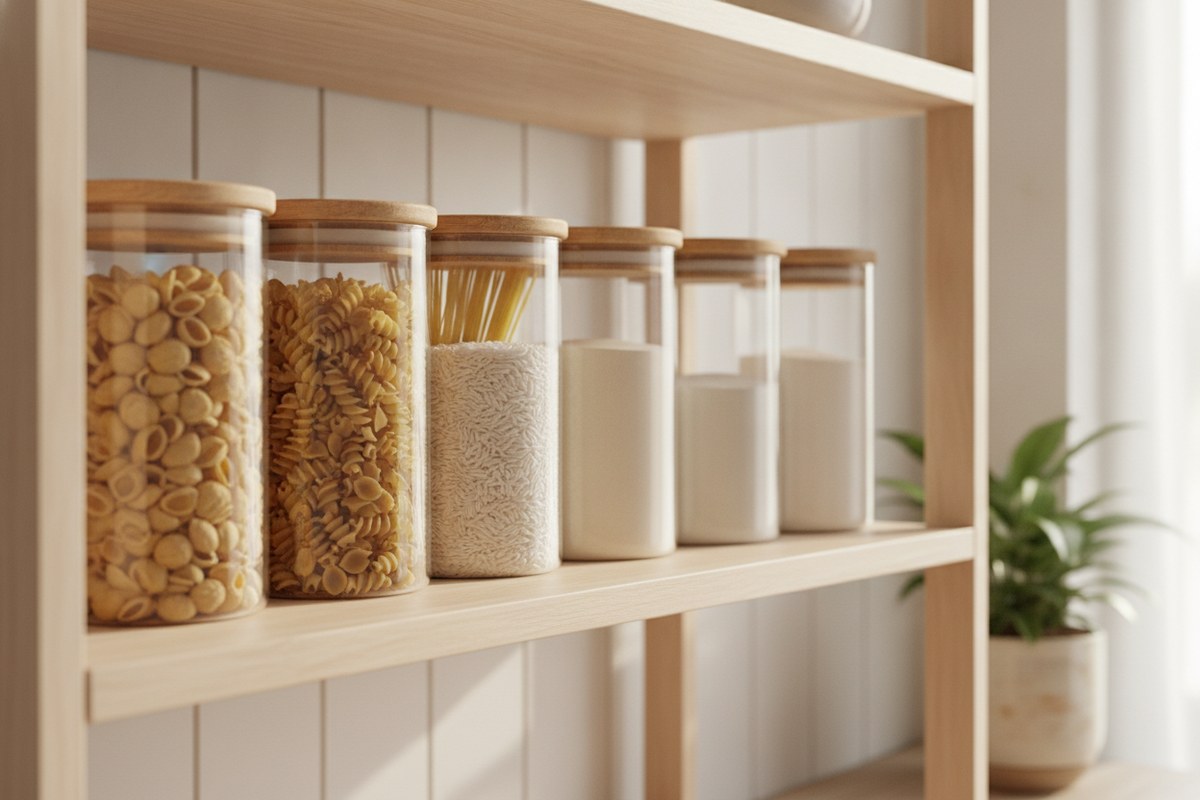
Mismatched boxes and bags are the biggest reason pantries feel chaotic, even when they’re technically organized. Transfer pasta, rice, flour, oats, and cereal into matching clear airtight food storage containers. Beyond looking tidy, uniform containers stack more efficiently and keep food fresher longer. Stick to a simple color palette—clear, white, or light wood tones—for that quiet Japandi feel.
3. Add Vertical Risers for Cans and Jars
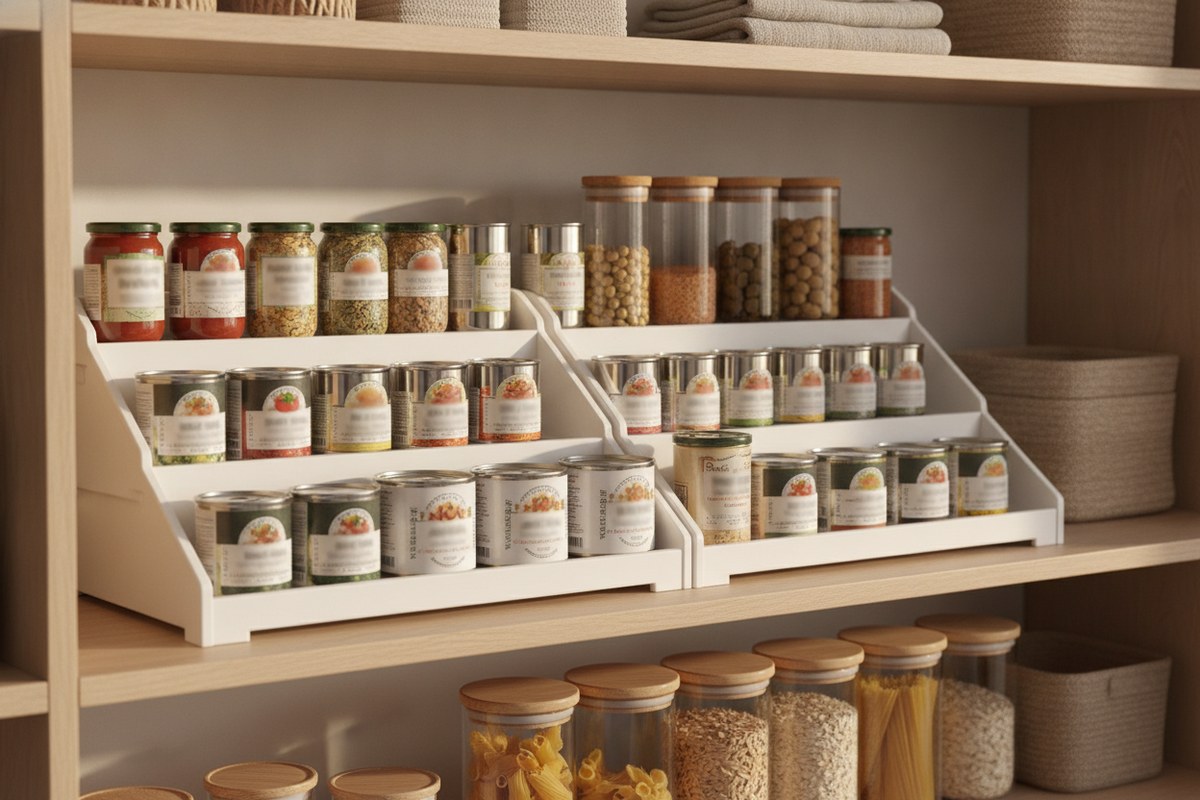
Small pantries waste a surprising amount of vertical space above short items like canned vegetables and jars. A set of tiered can organizer risers lets you see every label at a glance instead of digging through a deep, stacked pile. This is especially helpful on lower shelves where lighting is dim and items get lost toward the back.
4. Use Door-Mounted Storage for Small Items
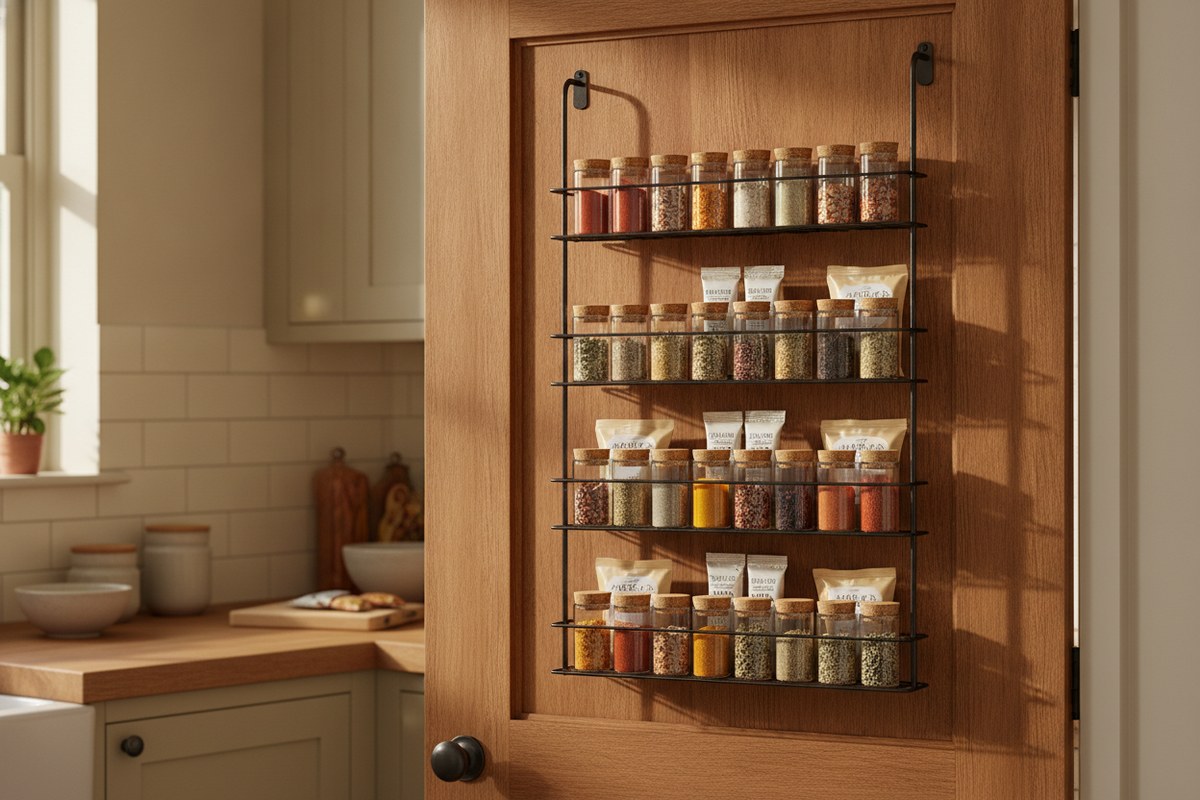
The back of your pantry door is prime real estate that’s easy to overlook. A slim door mounted spice rack or pocket organizer can hold spice jars, seasoning packets, snack bars, or foil and plastic wrap. It keeps small, fiddly items out of your main shelving so those shelves stay open for bulkier goods.
5. Group Items with Clear Bins
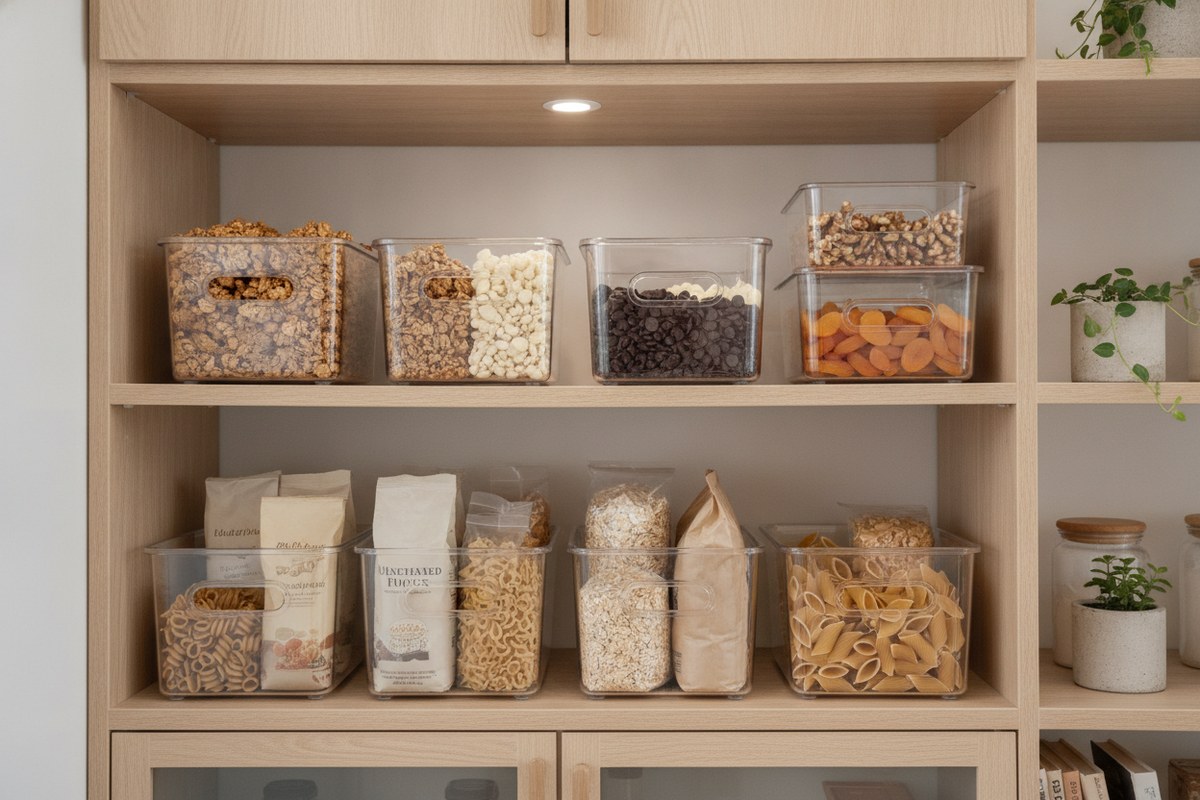
Rather than letting loose bags of chips, granola bars, and baking supplies roam free, corral them into stackable pantry bins sorted by category: baking, breakfast, snacks, canned goods. This zoning method is a small-space essential—when everything has a designated “home,” cleanup takes seconds instead of minutes, and you can pull one bin out to grab what you need without disturbing the rest.
6. Try a Lazy Susan for Deep or Corner Shelves
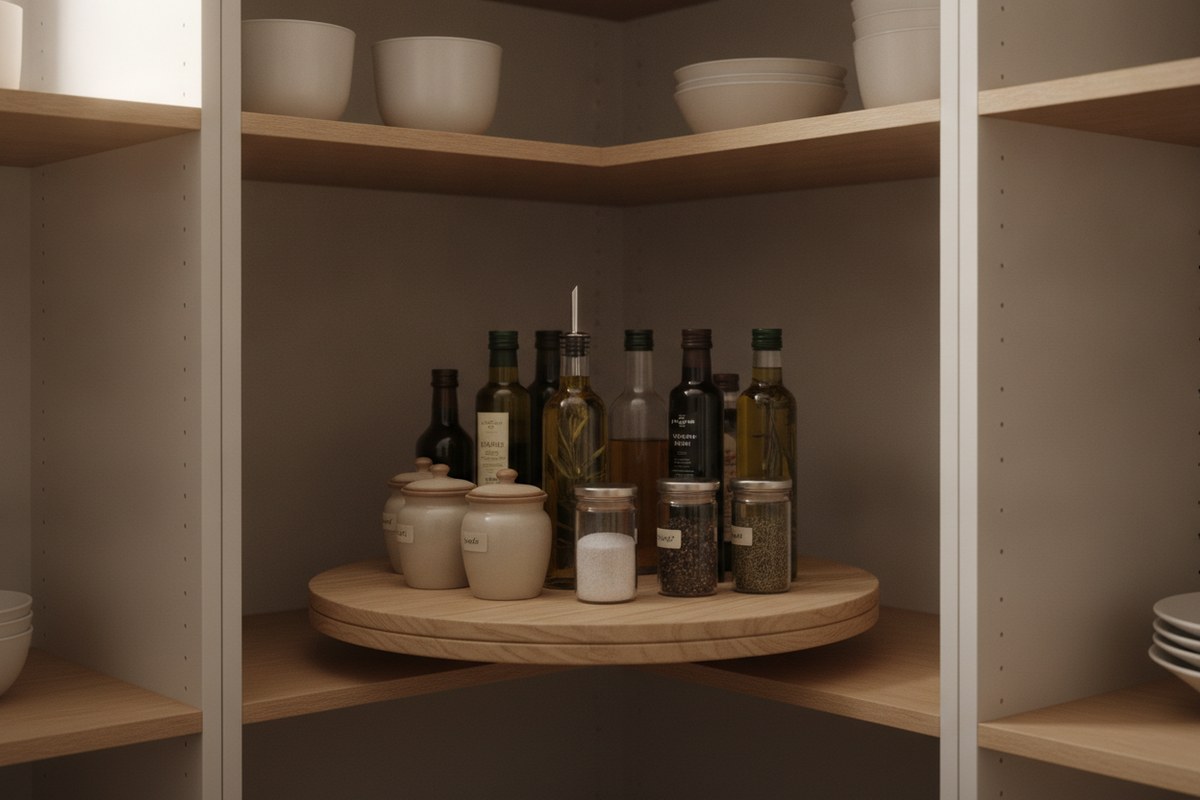
Deep shelves and awkward corners are notorious black holes in small pantries. A lazy susan turntable solves this instantly—just spin to access oils, sauces, or jars stored toward the back instead of reaching over rows of other items. They work especially well for awkward corner cabinets that are otherwise hard to use efficiently.
7. Label Everything in a Consistent Style
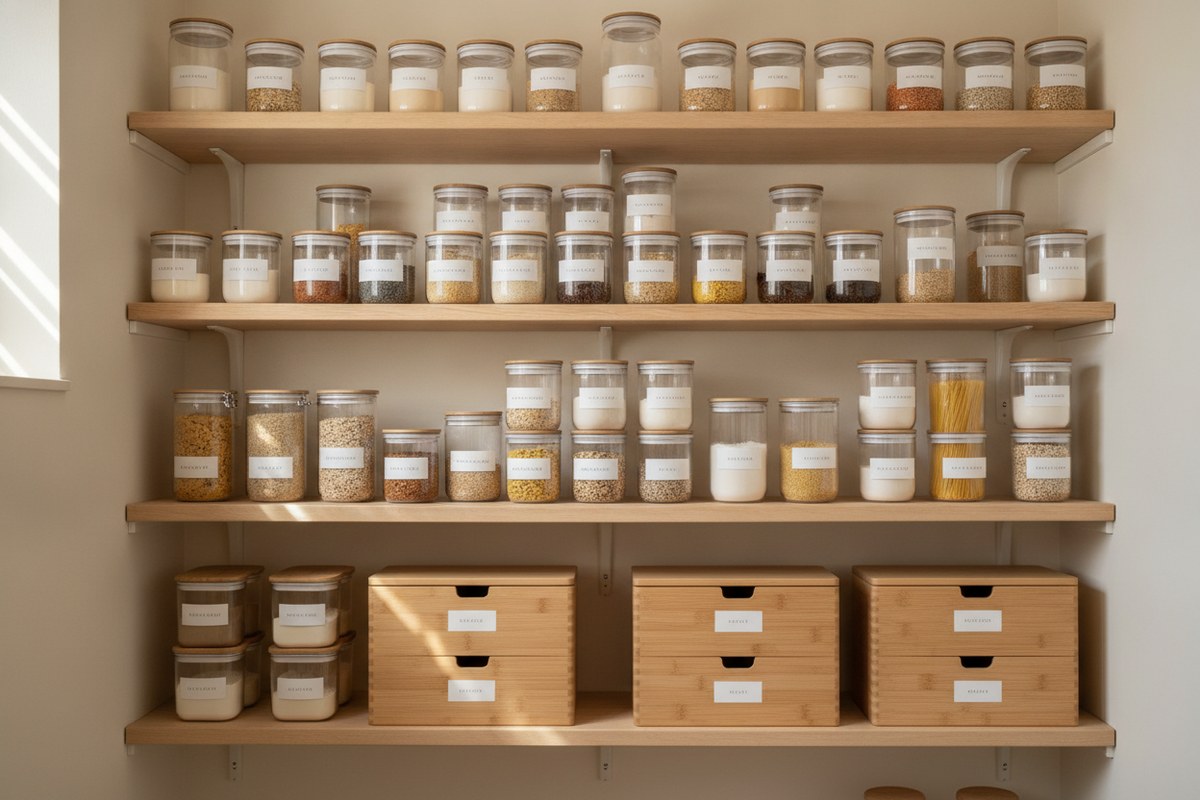
Labels aren’t just decorative—they’re what keeps a system working after the initial organizing burst fades. Use a simple label maker for pantry organization to mark bins and containers with clear, minimal text. Choosing one font style and placement throughout keeps things looking intentional rather than like a garage sale, echoing the clean, understated lines of Japandi design.
8. Use Baskets for Snacks and Loose Items
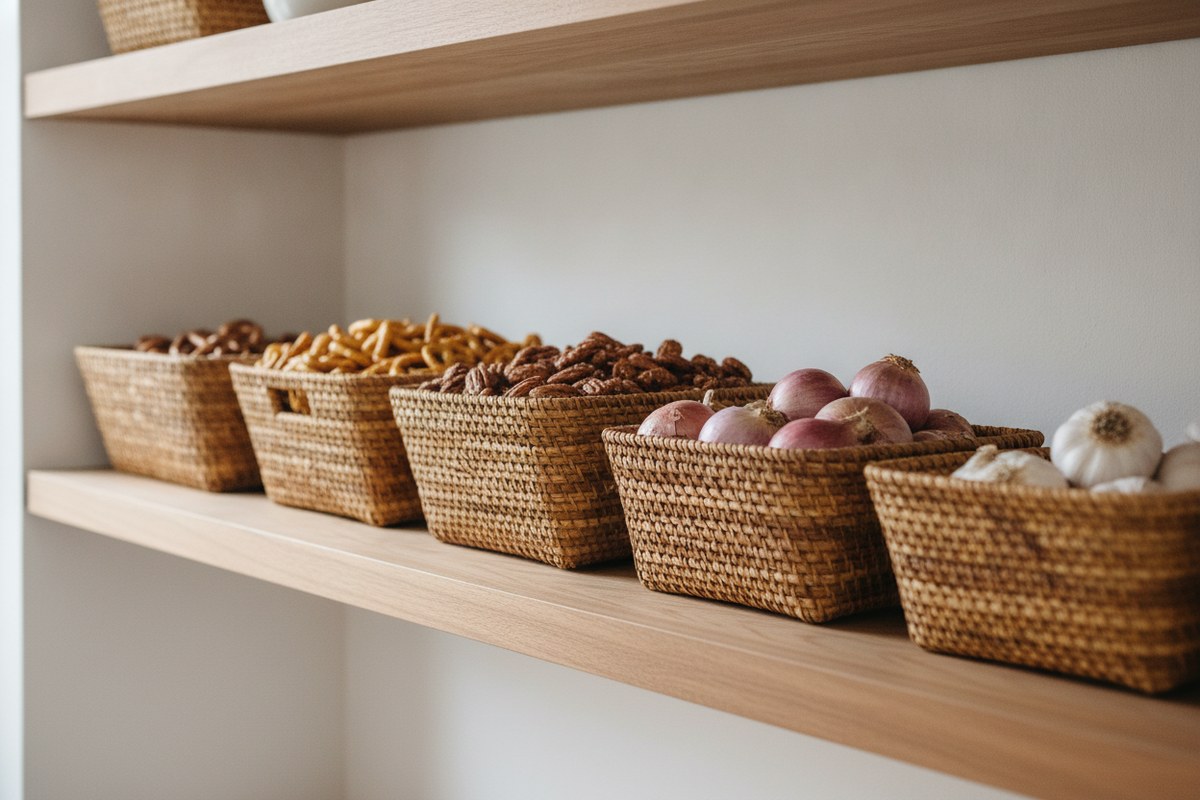
Not everything needs a rigid container. Woven or fabric pantry storage baskets are perfect for loose snack packets, produce like onions and potatoes, or kids’ grab-and-go items. The natural texture also softens a small pantry visually, adding warmth in the understated way Japandi spaces tend to favor over shiny plastic bins.
9. Add Stackable Shelves to Double Your Space
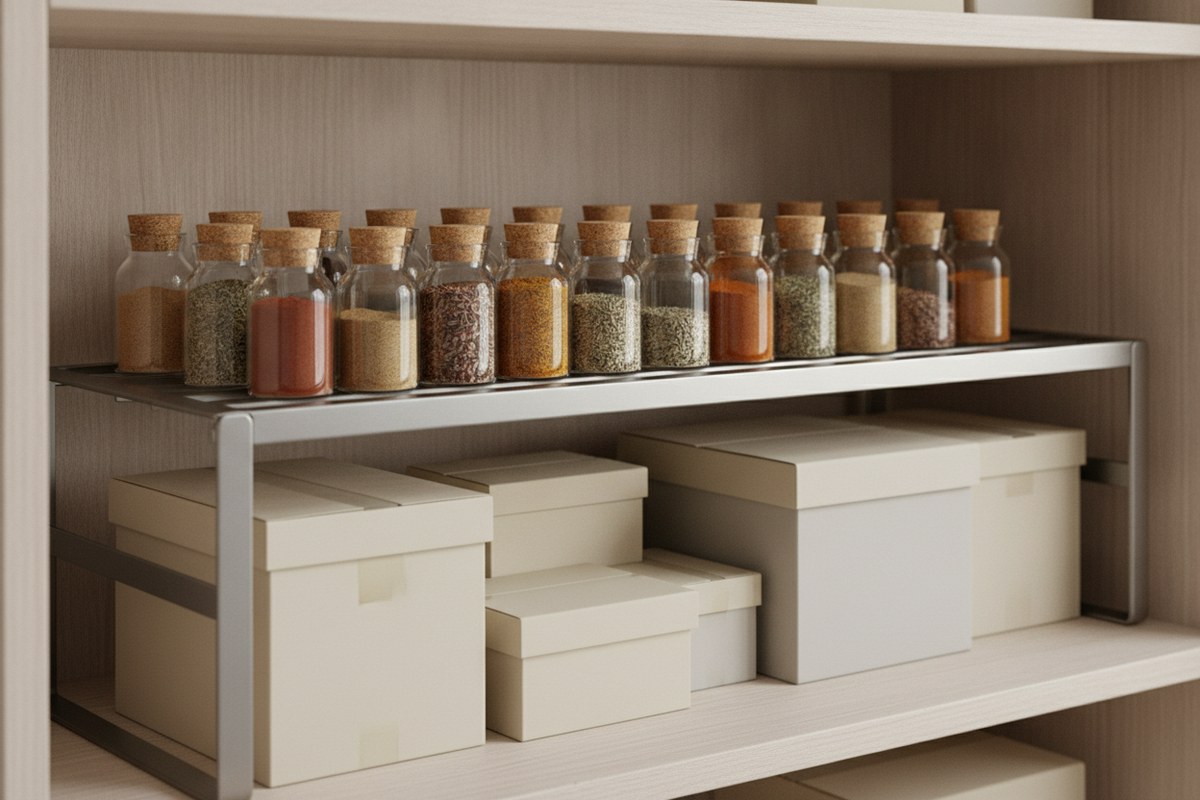
If your pantry has tall gaps between shelves, you’re likely losing usable space above shorter items. A stackable shelf organizer creates an instant second tier, letting you store spice jars or small cans on top while keeping taller boxes below. It’s one of the simplest ways to increase capacity without any renovation.
10. Use Under-Shelf Baskets for Hidden Space
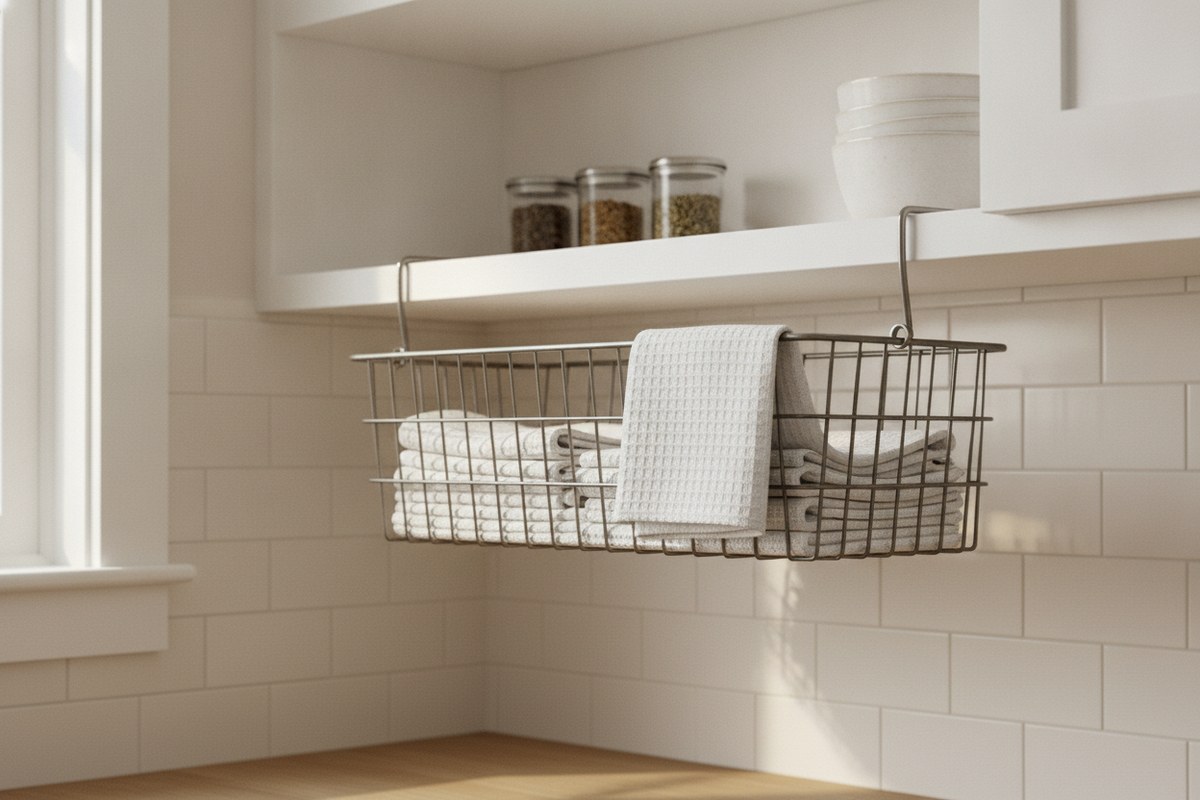
The few inches directly beneath a shelf often go completely unused. Slide-on under-shelf baskets hang from the shelf above, creating an extra layer of storage for flat items like tortillas, dish towels, or snack pouches—all without taking up any additional footprint. It’s a favorite trick in Japanese kitchen organizing, where every inch is treated as usable.
11. Create Zones Instead of Random Piles
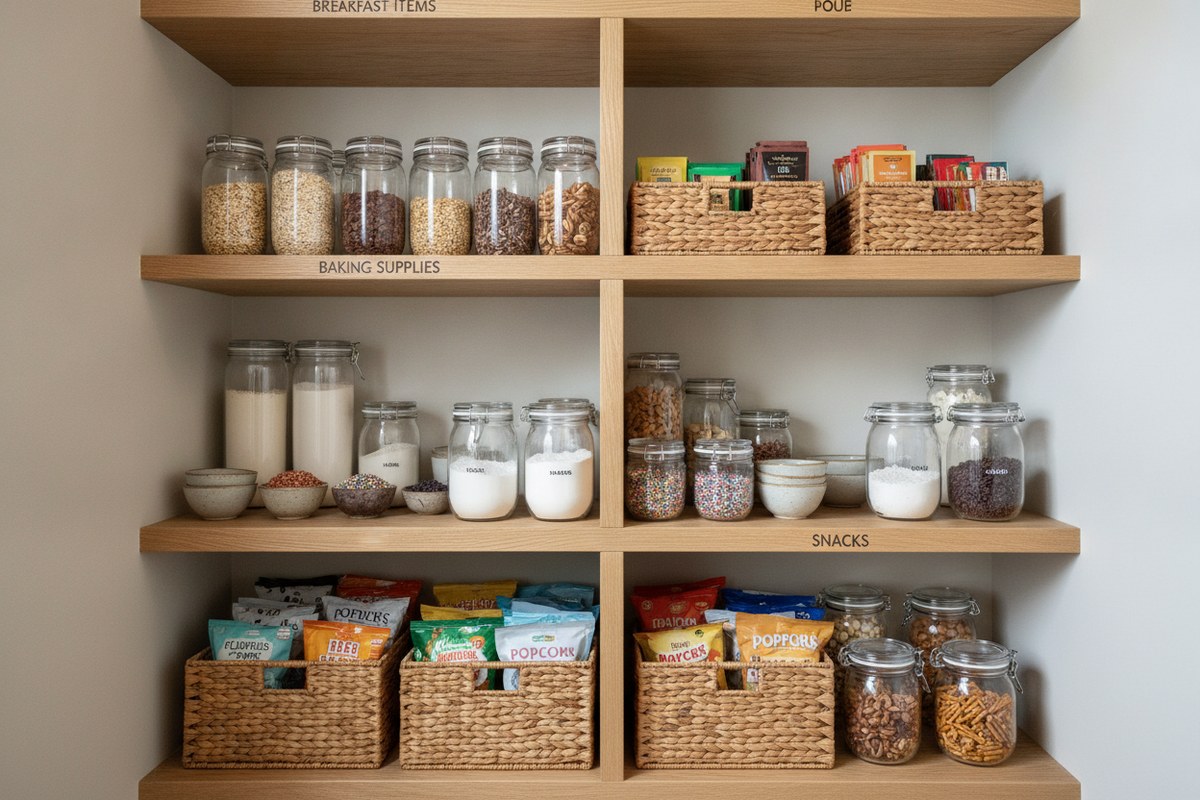
Rather than organizing by container type alone, think in zones: breakfast zone, baking zone, snack zone, canned goods zone. Keep everyday items at eye level and less-used items like holiday baking supplies higher up or toward the back. Zoning mirrors how Japanese kitchens are often arranged—by frequency of use—so your hands find what they need almost automatically, even in a tiny space.
12. Maintain It With a Weekly Reset
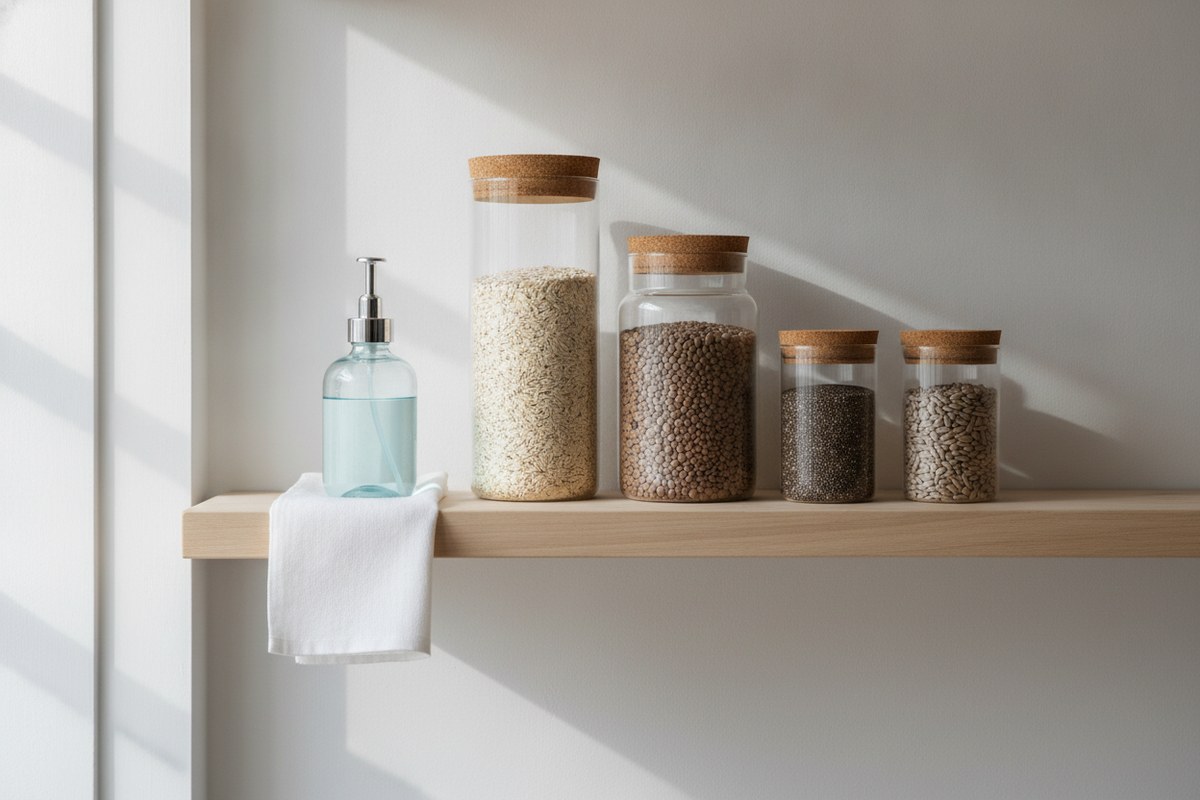
Even the best system slips without light upkeep. Spend five minutes each week returning stray items to their zone, wiping up spills, and doing a quick check for anything expired. This small habit—similar to the Japanese practice of tidying a little each day rather than overhauling everything at once—keeps your pantry from sliding back into chaos and makes the next big declutter session unnecessary.
A well-organized pantry doesn’t require a big kitchen or a big budget—just a system that fits how you actually cook and shop. Start with one or two of these ideas, and let the calm, considered feel build shelf by shelf.