This post may contain affiliate links. If you buy through them, we may earn a small commission at no extra cost to you.
If your desk has become a dumping ground for mail, chargers, and half-finished projects, you’re not alone. Small spaces make clutter feel even more overwhelming because there’s nowhere for the mess to hide. The Japanese approach to organization isn’t about buying more bins — it’s about keeping only what you use, giving everything a home, and letting empty space do some of the visual work. Pair that philosophy with Japandi’s warm, natural aesthetic and you get a desk setup that feels calm instead of chaotic, even in 20 square feet. Here are 11 ways to build a minimalist desk that actually works for small-space living.
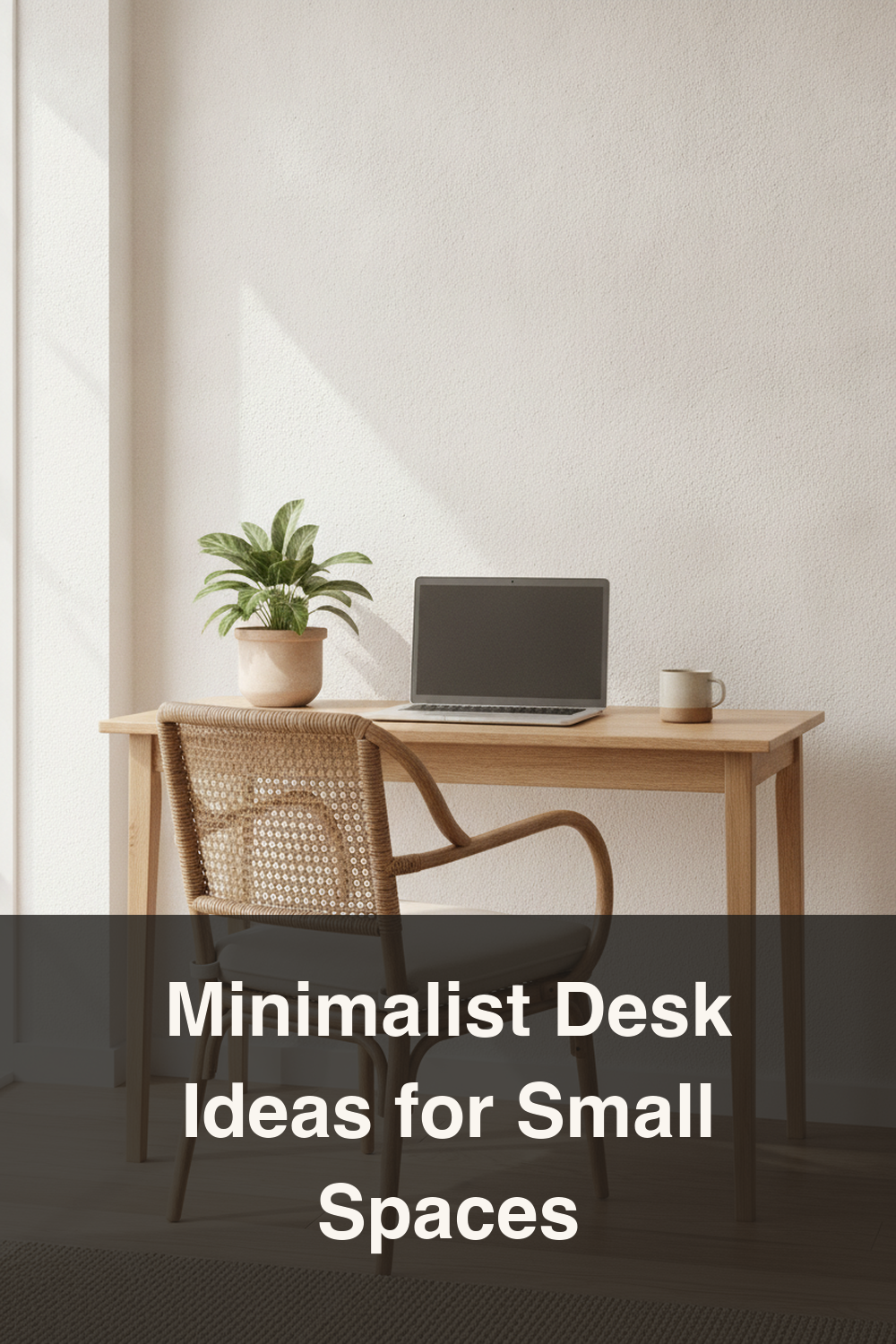
1. Choose a Desk That’s Scaled to the Room, Not the Store Display
Furniture showrooms make desks look smaller than they are. Before buying anything, measure your actual space and leave at least 30 inches of clearance behind the chair so you’re not squeezing past it daily. A slim small writing desk with drawer in a light wood tone keeps the footprint minimal while still offering a little concealed storage. In Japandi design, furniture should feel like it’s floating in the room, not crowding it — so avoid anything with bulky legs or a heavy dark finish that visually shrinks the space.
2. Let Wall-Mounted Options Free Up Floor Space
If you’re working with a true micro-apartment or dorm room, consider a fold-down or wall-mounted desk. These attach directly to the wall and can be tucked away when not in use, which is especially handy in studio apartments where the “office” and “living room” are the same 10 feet of space. This is essentially the Japanese concept of shumi — designing furniture to serve a purpose only when needed, then disappearing. Look for one with a simple, unadorned front panel so it blends into the wall rather than announcing itself.
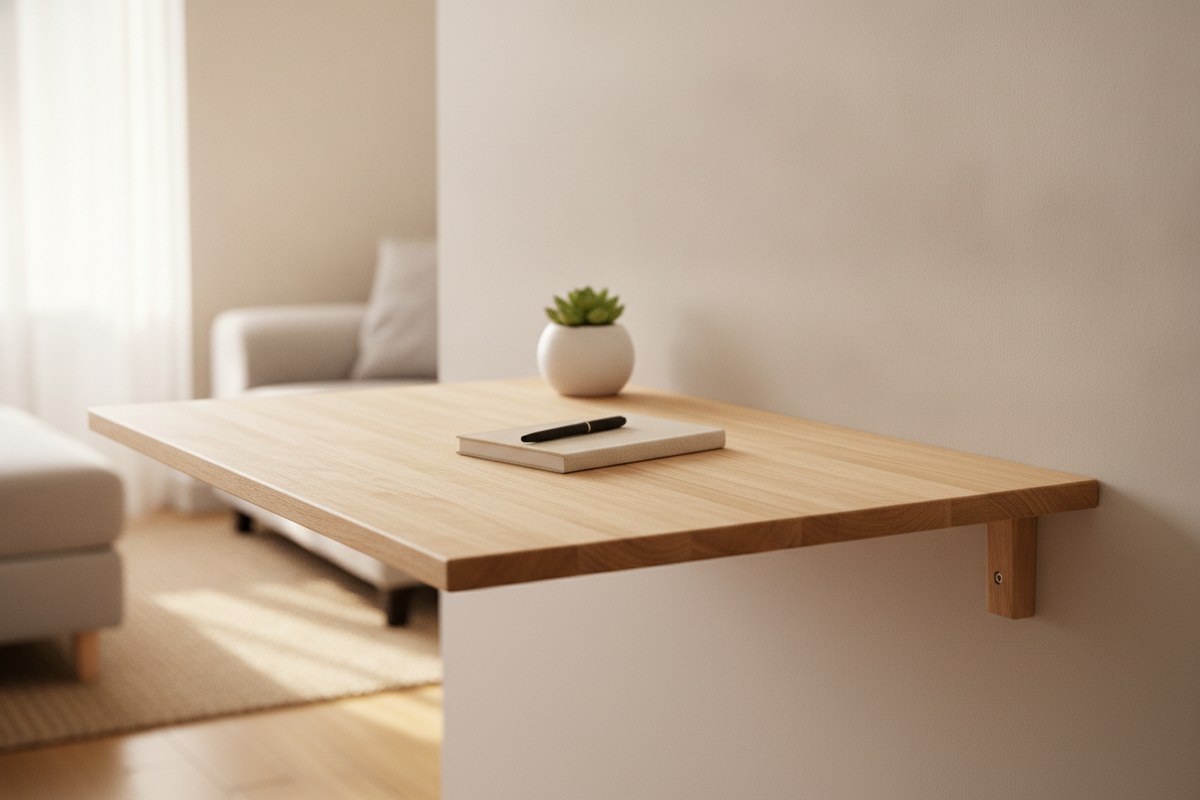
3. Anchor the Space With a Neutral Color Palette
A cohesive palette makes small spaces feel larger and calmer. Stick to two or three tones — think warm oak, soft white, and charcoal or black accents. Avoid mixing more than one wood tone at the desk itself, since contrasting wood grains can make a small area feel busy. If your existing furniture doesn’t match, a set of desk organizer wood trays can visually tie mismatched pieces together without replacing anything.
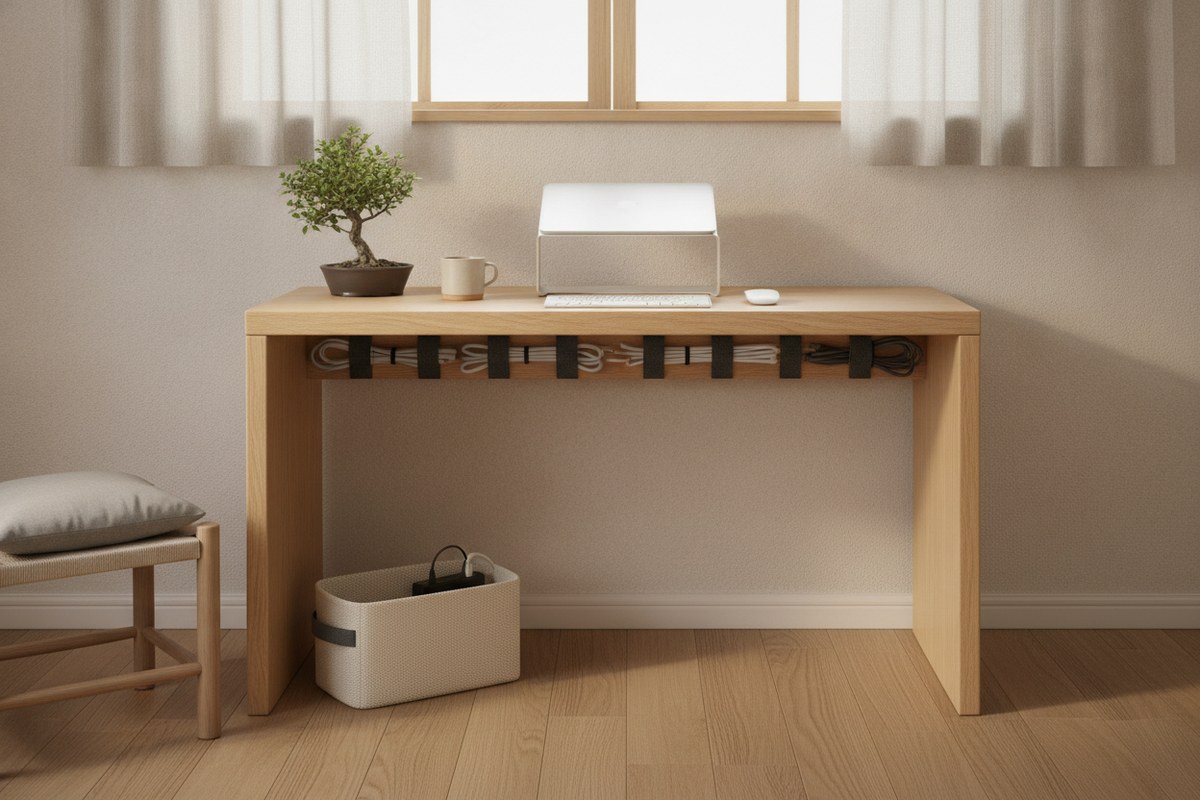
4. Get Cords Off the Desktop Entirely
Cord clutter is one of the fastest ways to make a minimalist desk look chaotic. Run cables underneath the desk using adhesive clips, or better yet, bundle them into a cord management box that sits on the floor or a shelf out of sight. In Japanese home organization, this is sometimes called “mieru ka” thinking in reverse — instead of making things visible for accountability, you’re intentionally hiding the functional-but-ugly items so only the calming elements remain visible.
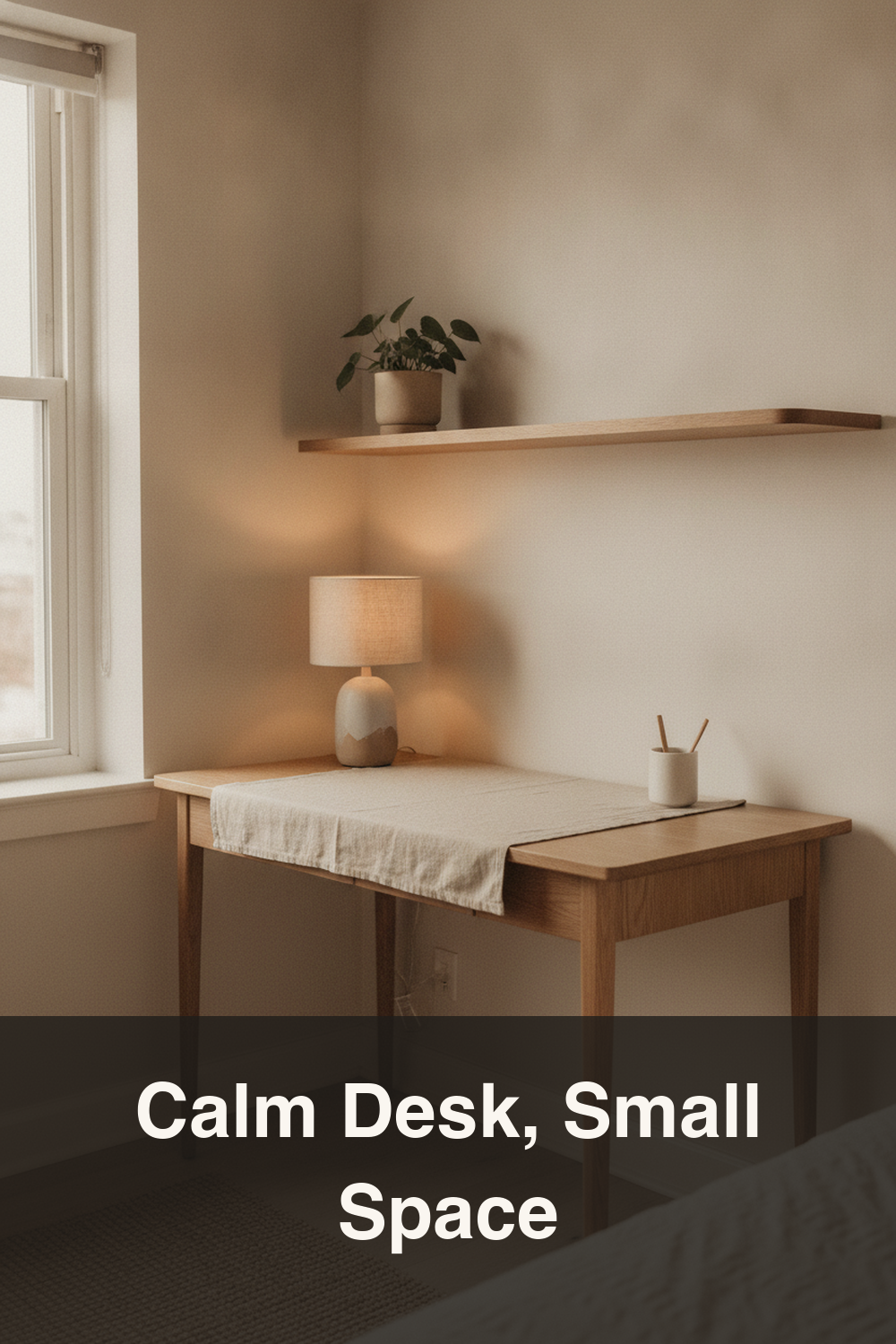
5. Use Vertical Space Instead of Widening the Desk
When floor space is tight, the solution is almost always to build upward. A slim floating shelf mounted above the desk can hold books, a small plant, or a lamp without eating into your work surface. Two shelves stacked with even spacing between them read as intentional and tidy, while a single crowded shelf feels like an afterthought. Keep whatever you place there to a maximum of five to seven objects, leaving breathing room between each one.
6. Assign Every Item a Designated Home
This is the heart of Japanese-style organization: nothing sits out unless it has an assigned spot. Before adding anything to your desk permanently, ask whether it’s used daily. If not, it belongs in a drawer, not on display. A shallow drawer organizer tray set keeps pens, sticky notes, and chargers separated so you’re not rifling through a junk drawer every time you sit down to work.
7. Keep the Desktop to Three Objects or Fewer
A genuinely minimalist desk setup usually has no more than three things visible at any time: your laptop, a small plant or lamp, and maybe a notebook. Everything else should be put away between uses. This isn’t about deprivation — it’s about making the few objects you do keep out feel intentional rather than incidental. If you work from home daily, rotate what stays out based on the season or your current project instead of letting items accumulate indefinitely.
8. Add One Natural Texture for Warmth
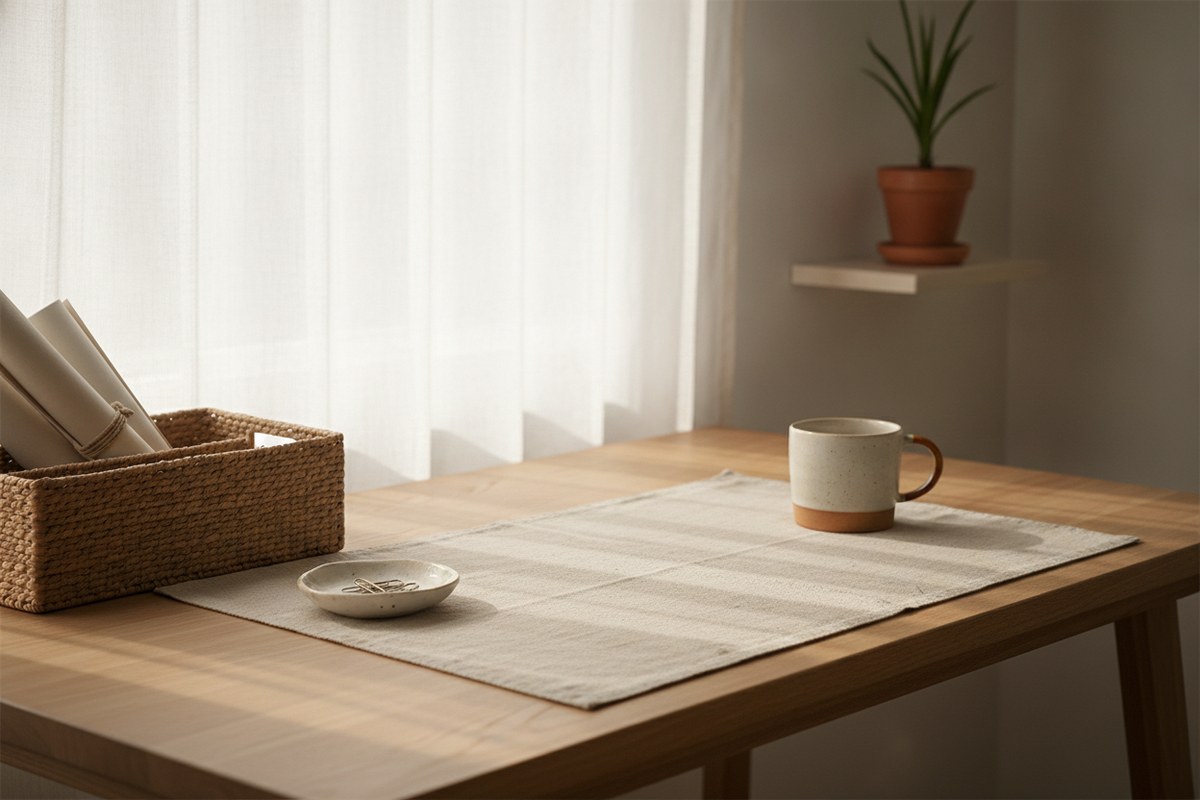
Minimalism can tip into feeling sterile if everything is hard-edged and glossy. Japandi design solves this by introducing one soft, natural texture — a woven basket, a linen desk mat, or a small ceramic dish for paperclips. A woven storage basket tucked on a shelf or under the desk adds warmth while still hiding loose supplies from view.
9. Let Natural Light Do the Heavy Lifting
Position your desk near a window if at all possible — natural light makes small rooms feel more open and reduces the need for multiple lamps, which in turn reduces visual clutter. If your space doesn’t have great natural light, a single slim desk lamp with a warm bulb can mimic that softness. Skip anything with a bulky base or an overly industrial look, since it will compete with the calm tone you’re going for.
10. Use Under-Desk Space for Hidden Storage
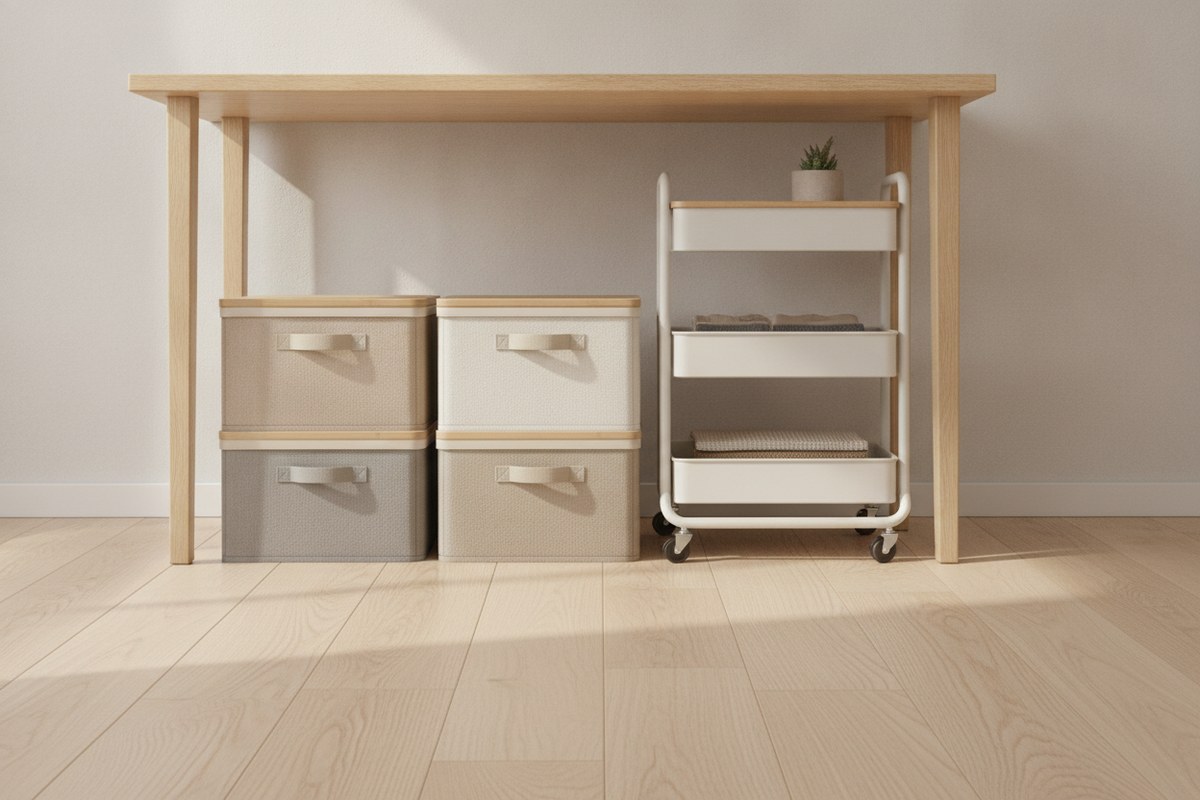
The area beneath your desk is often wasted space in small rooms. A slim rolling cart or a set of stackable under-desk storage bins can hold notebooks, cables, or off-season supplies without taking up visual real estate. Just be sure whatever you choose fits the width of your kneehole so it doesn’t interfere with sitting comfortably.
11. Do a Weekly Five-Minute Reset
Even the most thoughtfully designed minimalist desk will drift toward clutter without a little upkeep. Borrowing from the Japanese practice of daily small resets, spend five minutes at the end of each week returning items to their designated homes, wiping down the surface, and clearing anything that doesn’t belong. This tiny habit prevents the slow creep of stray papers and forgotten mugs that eventually overwhelms a small space.
Small Space, Clear Mind
A minimalist desk setup isn’t about owning less for the sake of it — it’s about making sure everything you keep earns its spot. In a small apartment or dorm room, that clarity matters even more, since your workspace often shares square footage with the rest of your life. Start with just one or two of these ideas, whether it’s clearing your desktop down to three objects or finally corralling those cords, and let the rest follow naturally.