This post may contain affiliate links. If you buy through them, we may earn a small commission at no extra cost to you.
The entryway sets the tone for your entire home, but in a small apartment it’s often the first spot to become a pile-up of shoes, mail, and jackets. In Japan, the genkan—the small entry area where shoes come off—is treated as a sacred transition zone between outside and inside, kept intentionally tidy no matter how small the space. Borrowing that mindset, here are 10 practical, Japandi-friendly ways to organize even the tiniest entryway so it feels calm the moment you walk in.
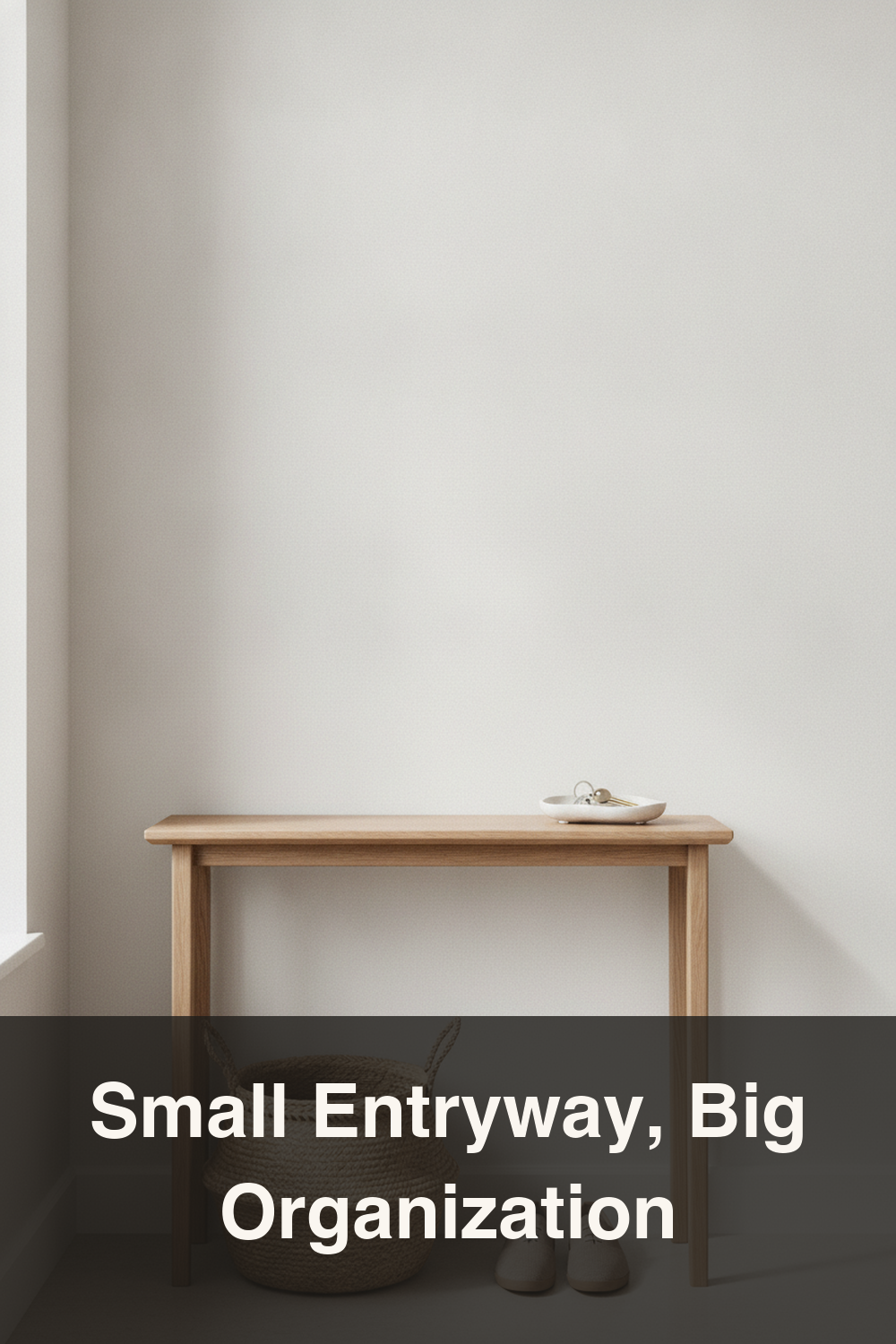
1. Install a Slim Entry Shelf or Console
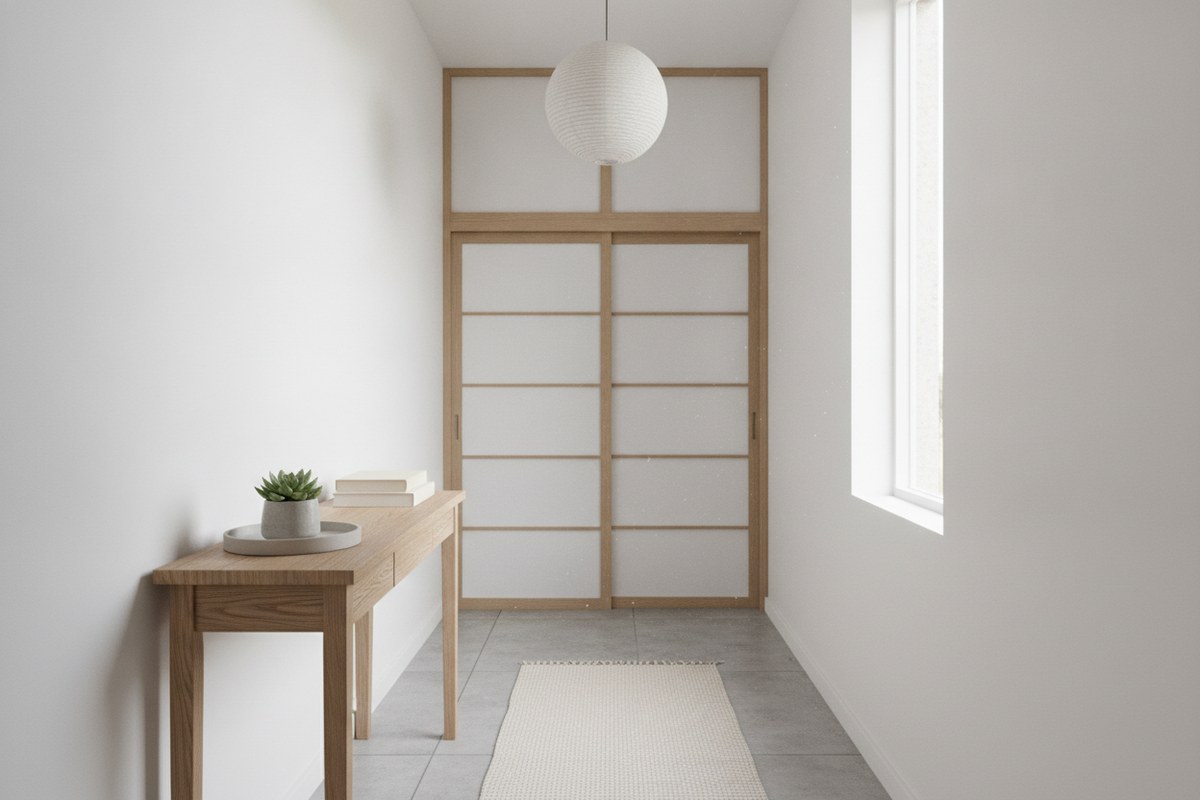
Even a hallway just a few feet wide can fit a narrow surface for keys, sunglasses, and mail. Look for a slim entryway console table in a light wood tone to keep the space feeling open rather than boxed in. Choose one with a lower shelf so shoes have a designated home instead of scattering across the floor.
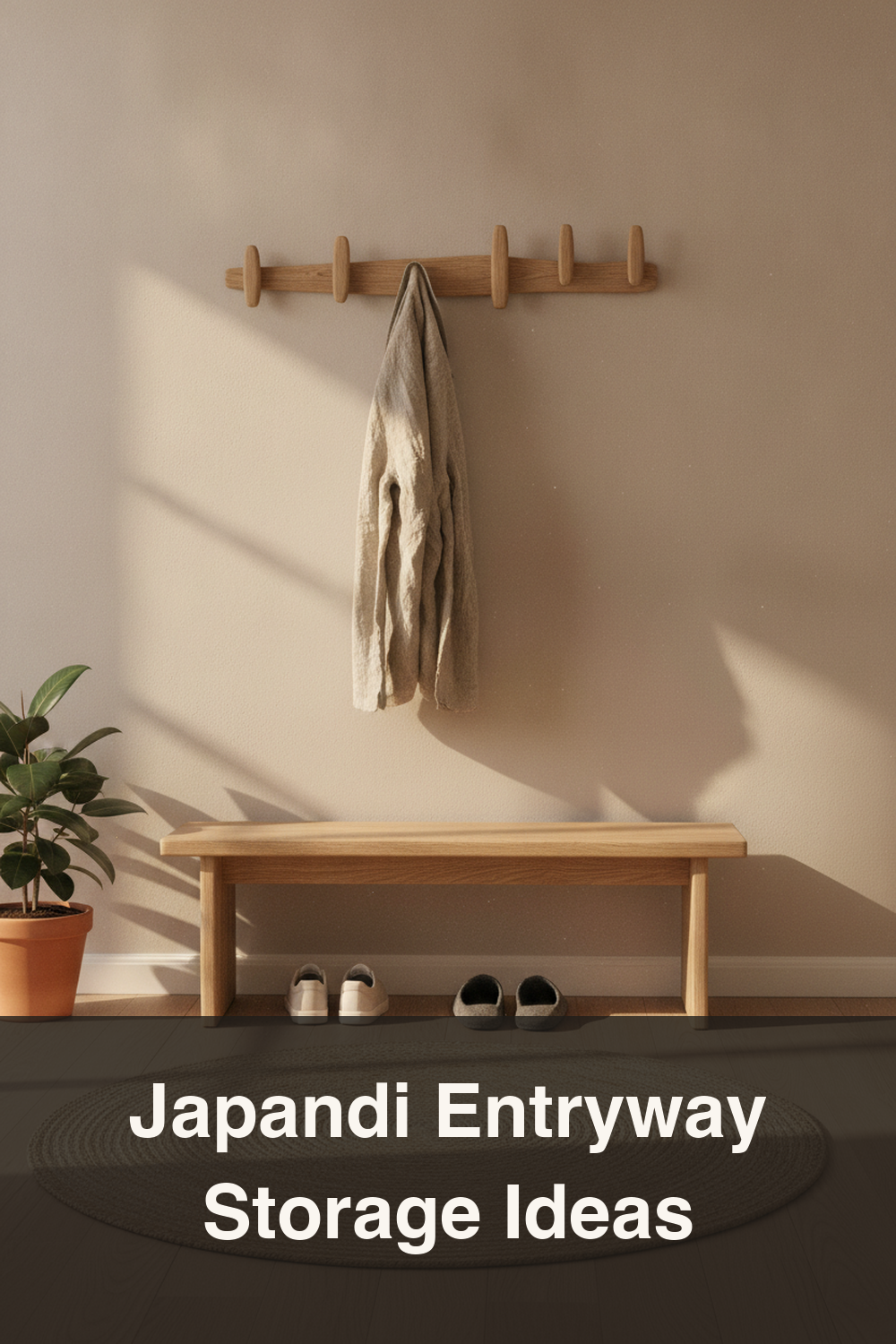
2. Use Vertical Wall Hooks Instead of a Coat Rack
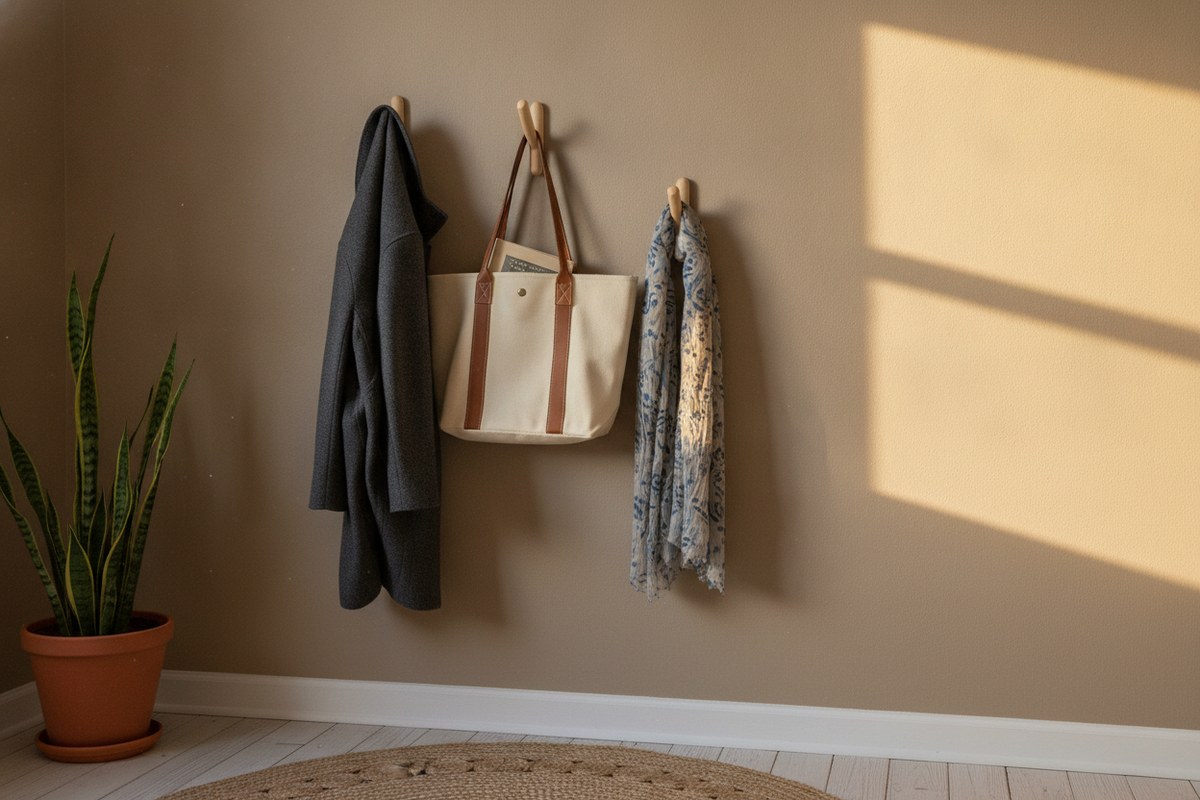
Floor space is precious, so let your walls do the work. A row of wall-mounted coat hooks installed at two heights—one for jackets, one for bags or scarves—mimics the Japanese habit of hanging rather than piling. Keep the number of hooks limited to what you actually use daily; anything more just invites clutter to creep back in.
3. Create a Shoe-Removal Zone
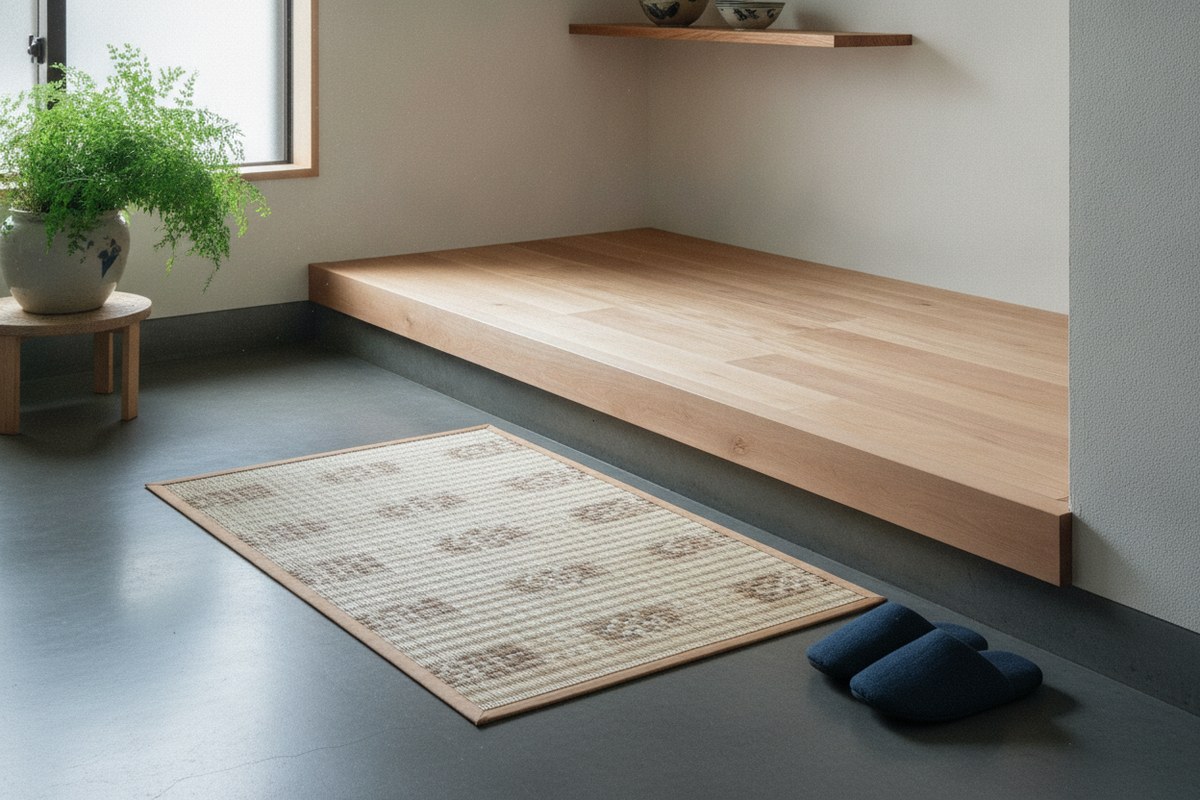
Even without a full genkan, you can mark a shoe-off zone with a low-profile mat or a slightly raised threshold piece. This simple visual cue trains everyone in the household (and guests) to leave outdoor shoes at the door, which cuts down on tracked-in dirt and keeps your main living area cleaner without any extra effort.
4. Add a Narrow Shoe Cabinet
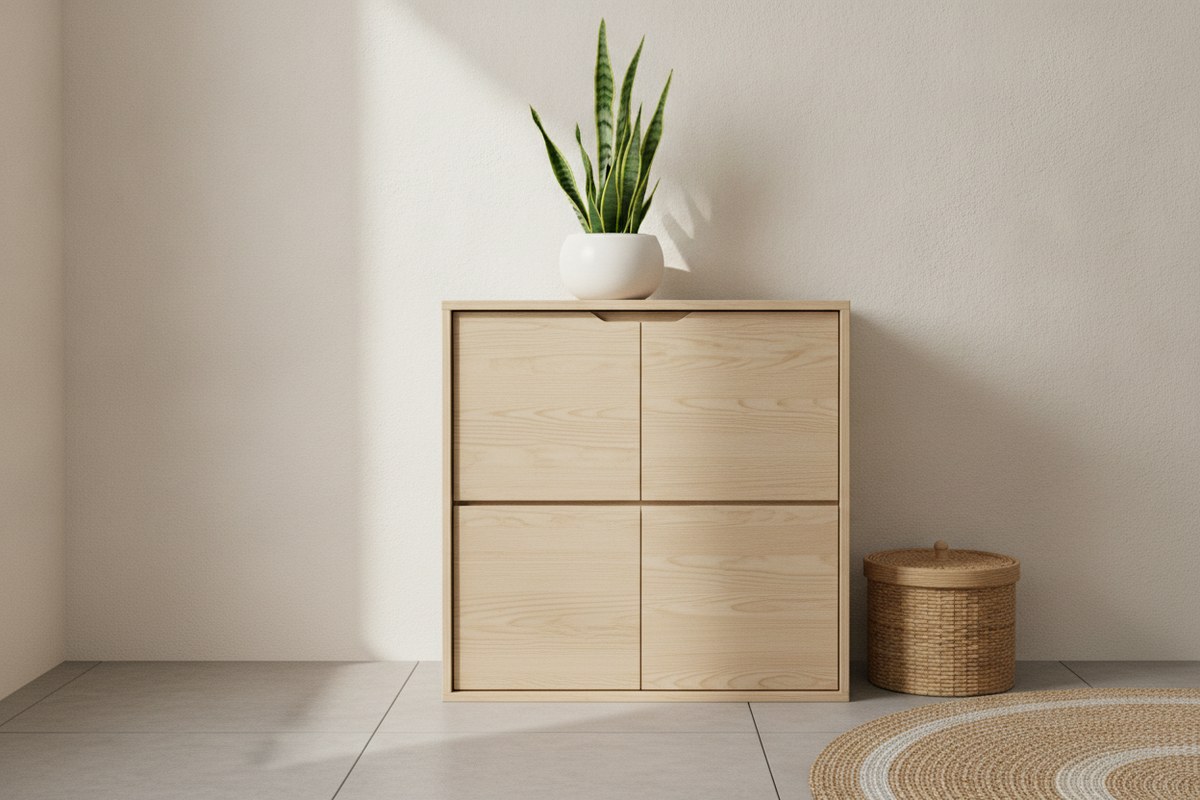
If floor space allows even eight inches, a narrow shoe storage cabinet can hold several pairs behind closed doors, which keeps the entryway visually calm—an important Japandi principle. Choose a cabinet with a flat top so it doubles as extra surface space for bags or a small tray.
5. Corral Loose Items with Woven Baskets
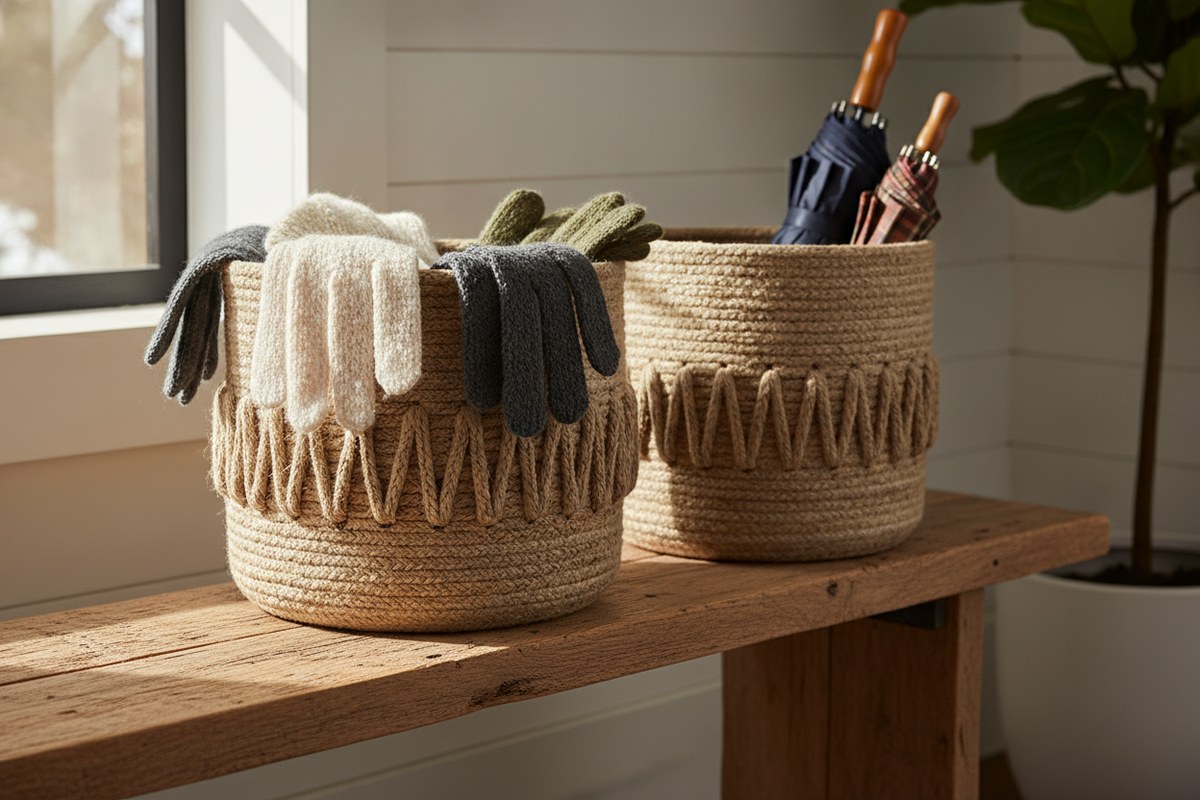
Not every item needs a permanent shelf. Soft-sided woven storage baskets are perfect catch-alls for umbrellas, gloves, or extra masks. Their natural texture also adds warmth and softness, both hallmarks of Japandi style, while keeping loose items from ending up on the floor.
6. Mount a Fold-Down Bench or Shelf
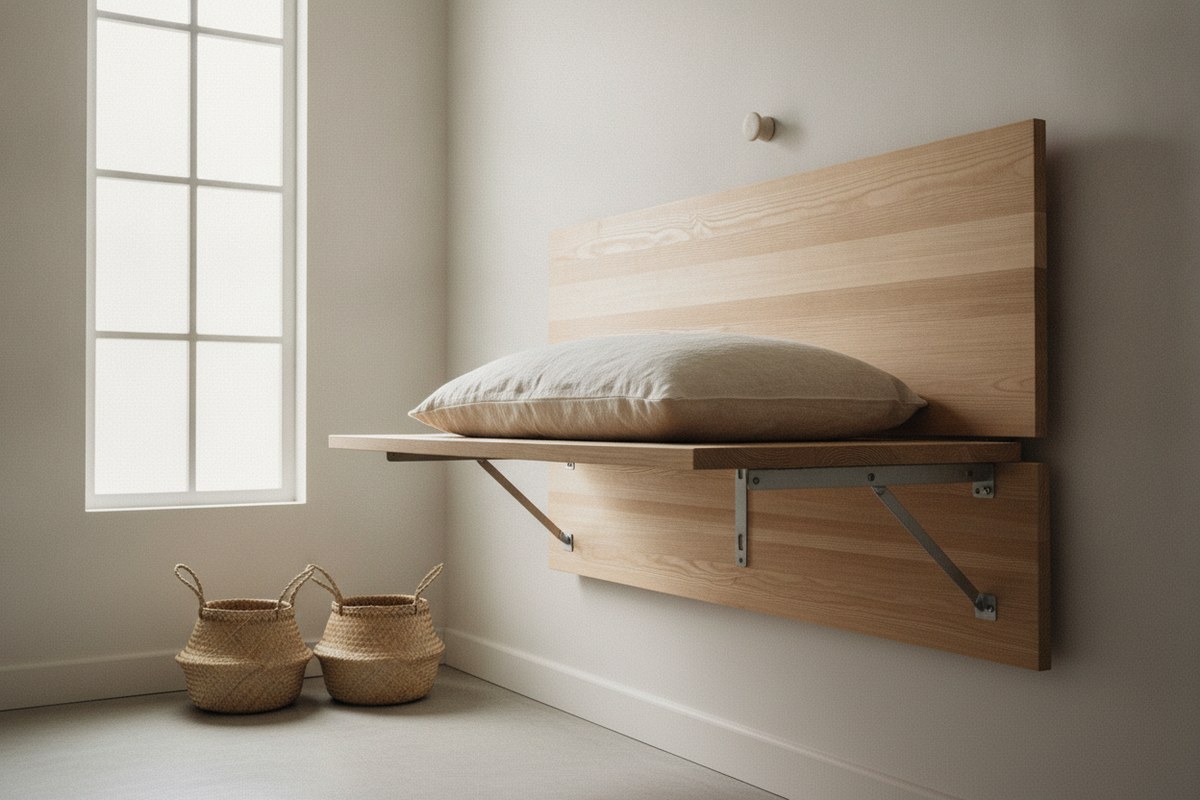
In apartments where every square inch is multi-purpose, a wall-mounted fold-down bench gives you a spot to sit while putting on shoes, then folds flat when not in use. This kind of dual-function furniture is a cornerstone of small-space Japanese design, where nothing is allowed to sit idle taking up room it doesn’t need.
7. Use the Back of the Door
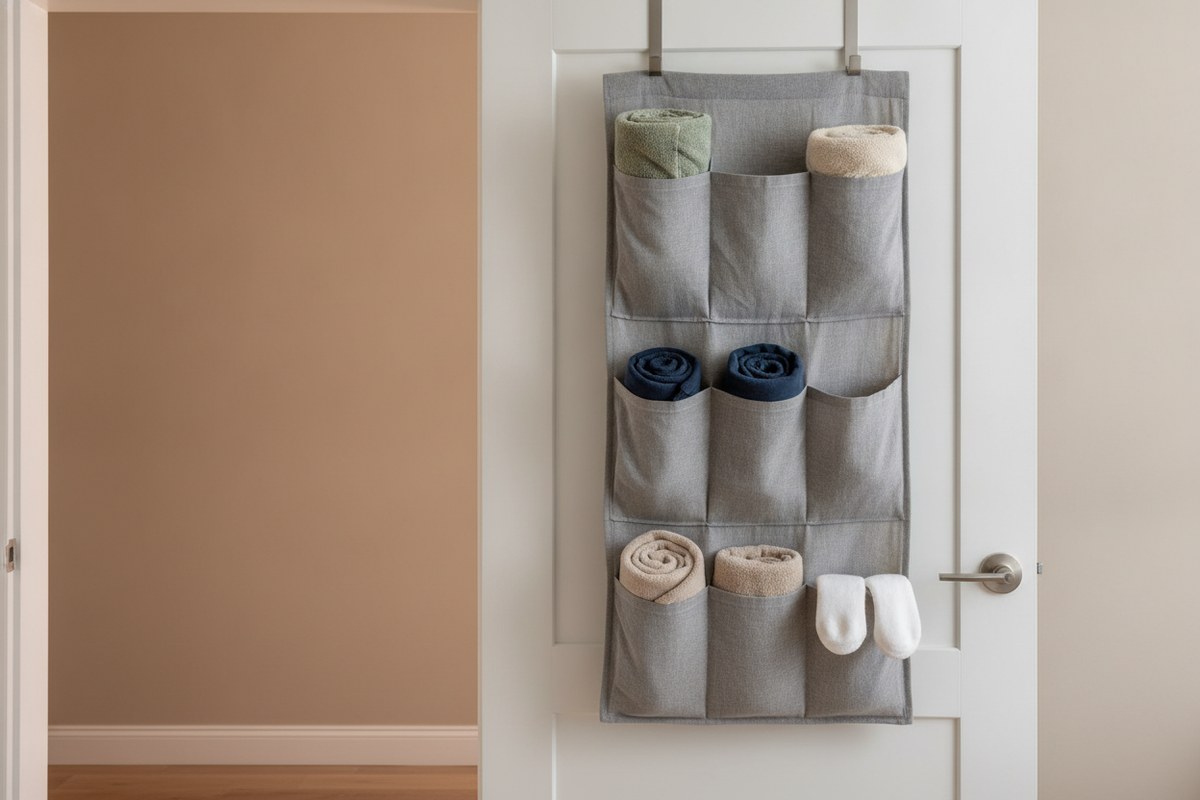
The inside of your entry closet or apartment door is often wasted space. An over-the-door organizer with fabric pockets can hold sunscreen, dog leashes, or reusable bags, freeing up your shelves and hooks for the items you reach for every single day.
8. Give Everything a Labeled Home
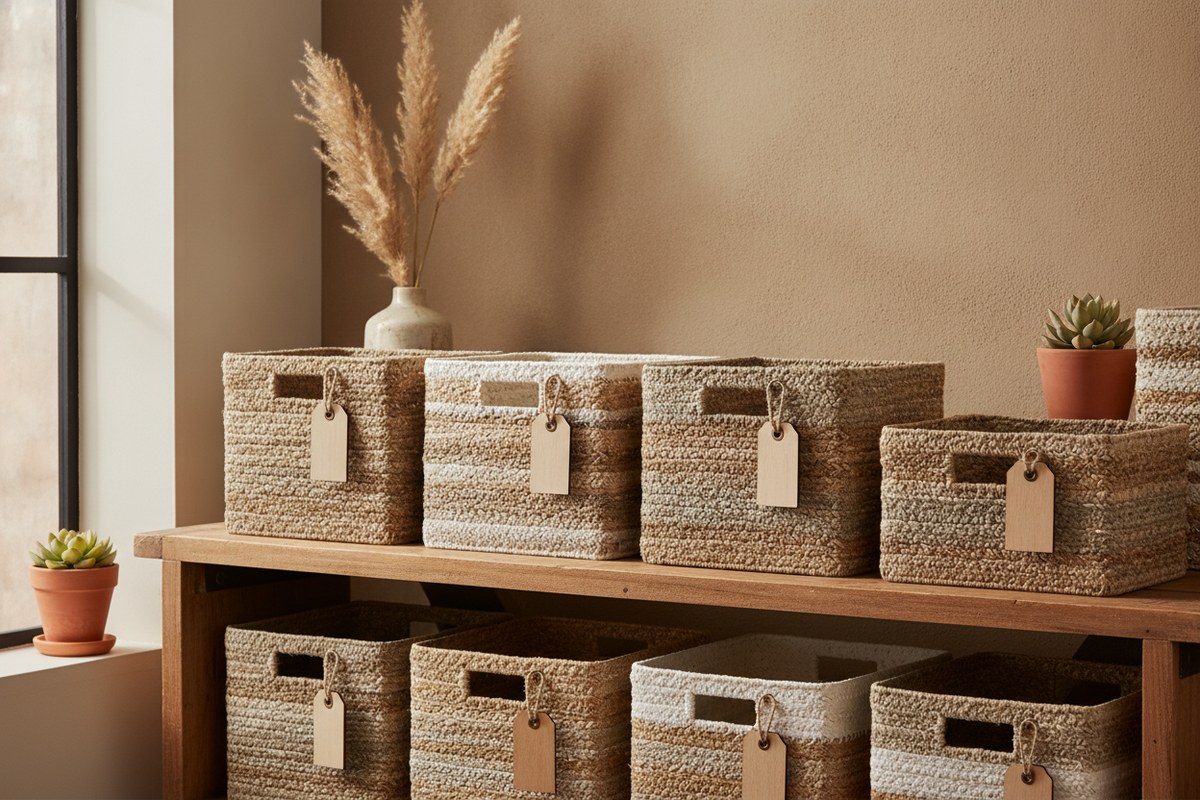
Japanese organizing philosophy relies heavily on giving every object one specific spot, so it’s obvious when something is out of place. Try labeling baskets or cabinet sections—”gloves,” “masks,” “dog walk”—so returning items takes no thought at all. This small habit prevents the slow clutter creep that small entryways are especially prone to.
9. Keep a Small Tray for Keys and Mail
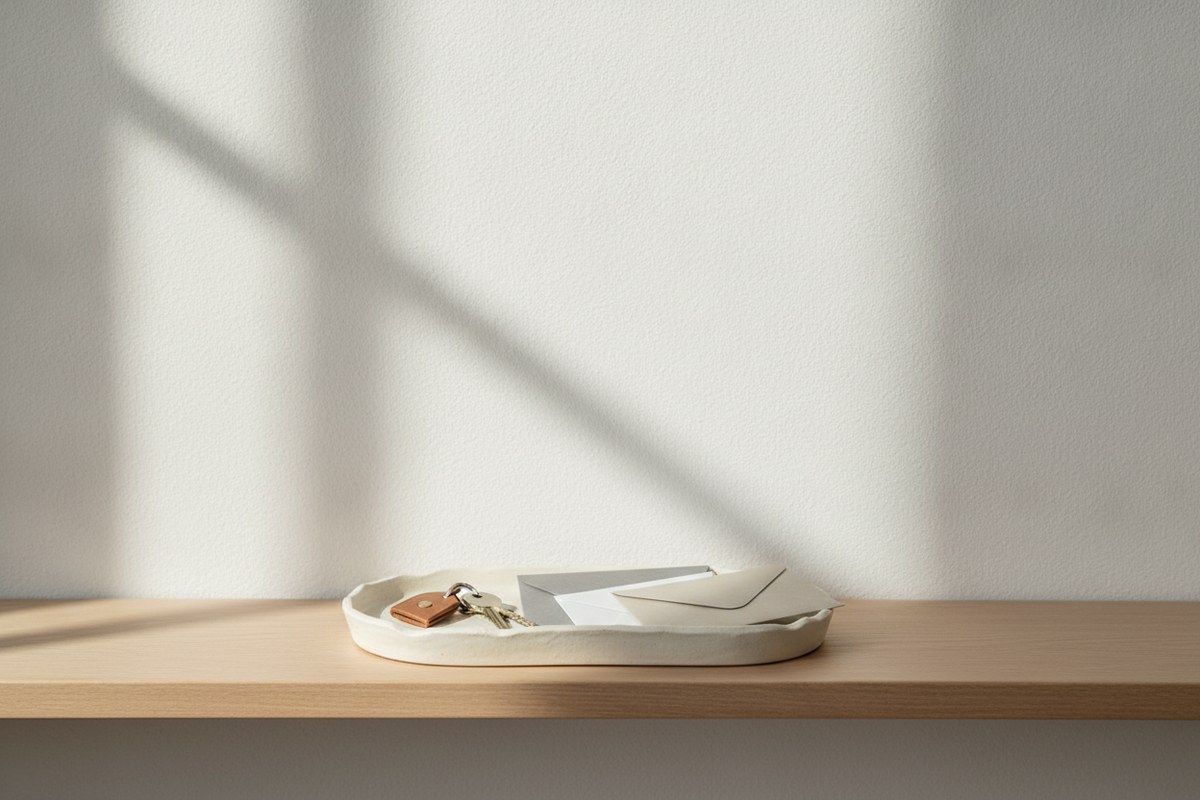
A simple key and mail tray placed right by the door stops loose paper and keys from spreading across your counter or console. Choose a shallow, natural-material tray in wood or ceramic to keep the look understated rather than cluttered.
10. Rotate Items Seasonally
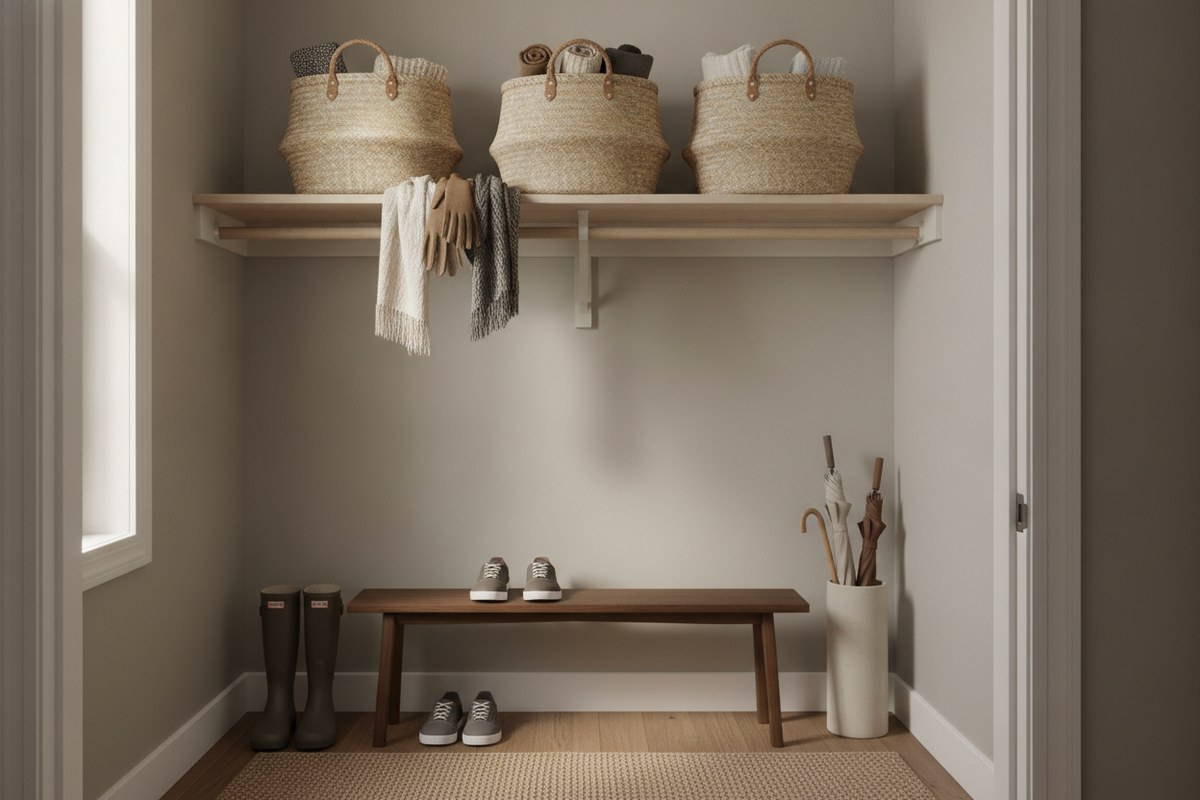
Not everything needs to live in your entryway year-round. Store off-season gear—like heavy winter boots or beach totes—elsewhere in your apartment and rotate them in as needed. This keeps your entry storage lean and functional, reflecting the Japanese idea that a space should only hold what truly belongs there right now.
Small entryways don’t have to feel chaotic. By borrowing a few genkan-inspired habits—designated shoe zones, hooks instead of piles, and a home for every object—you can turn even a narrow hallway into a calm, welcoming transition space you’ll actually enjoy walking through every day.