This post may contain affiliate links. If you buy through them, we may earn a small commission at no extra cost to you.
A crowded bookshelf can make even a tidy small room feel chaotic. But a bookshelf doesn’t have to be an afterthought—it can be one of the most calming, functional spots in your apartment or dorm. Borrowing from Japanese organizing principles (keep only what you love and use, give everything a home, leave breathing room) and the soft, natural warmth of Japandi style, you can turn a cramped shelf into a peaceful little display that also does real storage work. Here are ten practical ideas to style and organize your bookshelf without adding more furniture or square footage.
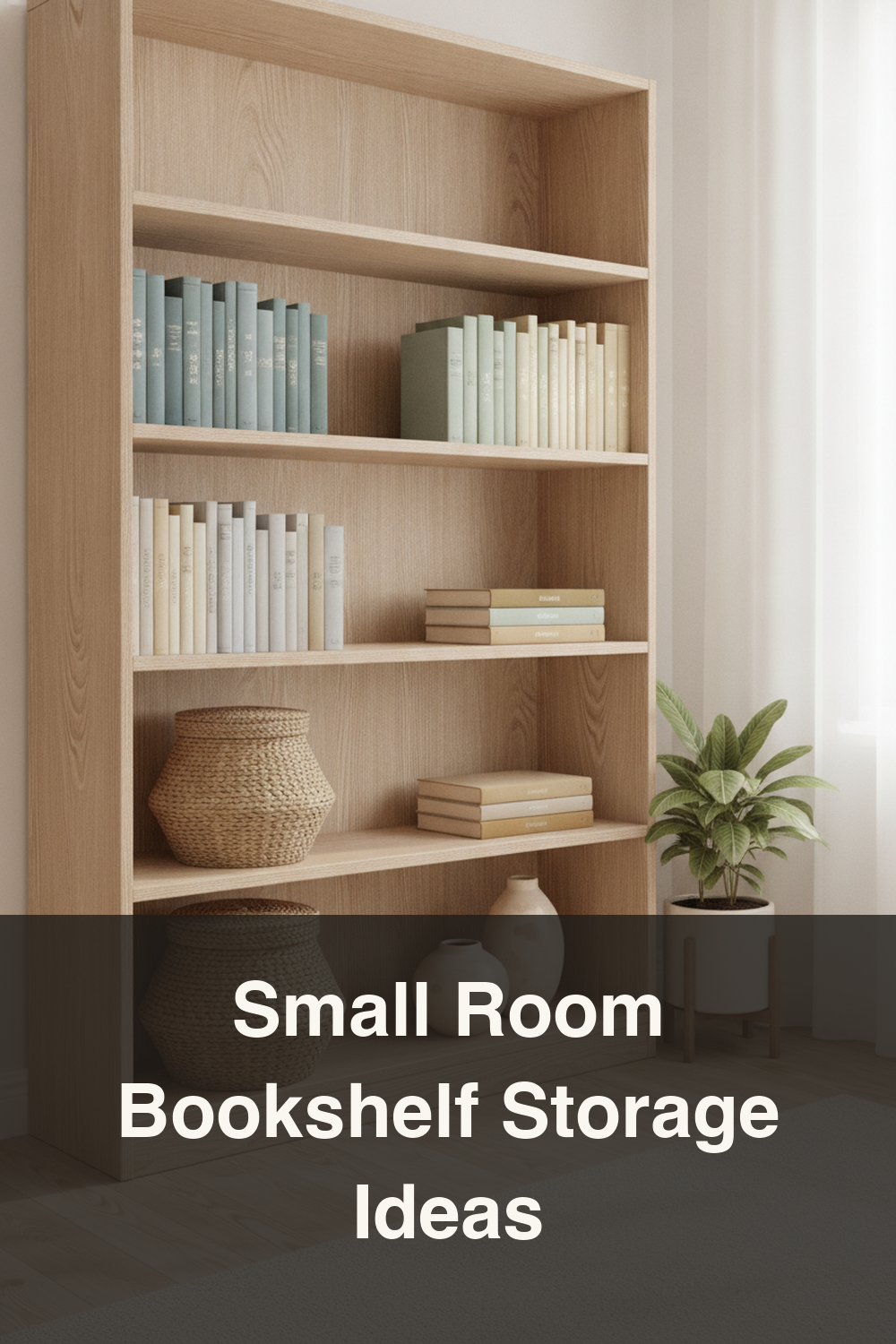
1. Edit Before You Organize
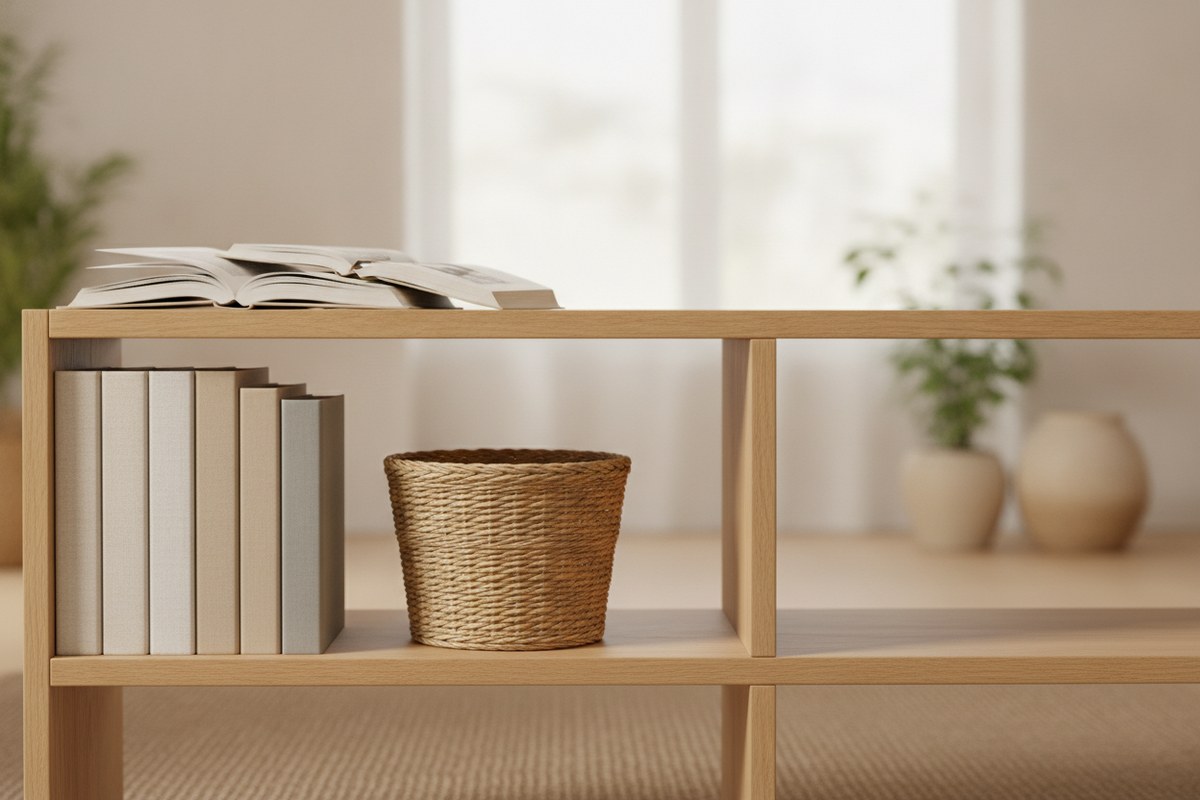
Before buying a single bin or basket, take everything off the shelf. Sort books and objects into three piles: keep and display, keep but store elsewhere, and let go. This mirrors the Japanese approach to organizing—reduce the volume first, then find a home for what remains. A shelf edited down to your true favorites will always look calmer than one stuffed with everything you own, no matter how nice the containers are.
2. Group Books by Color for Visual Calm
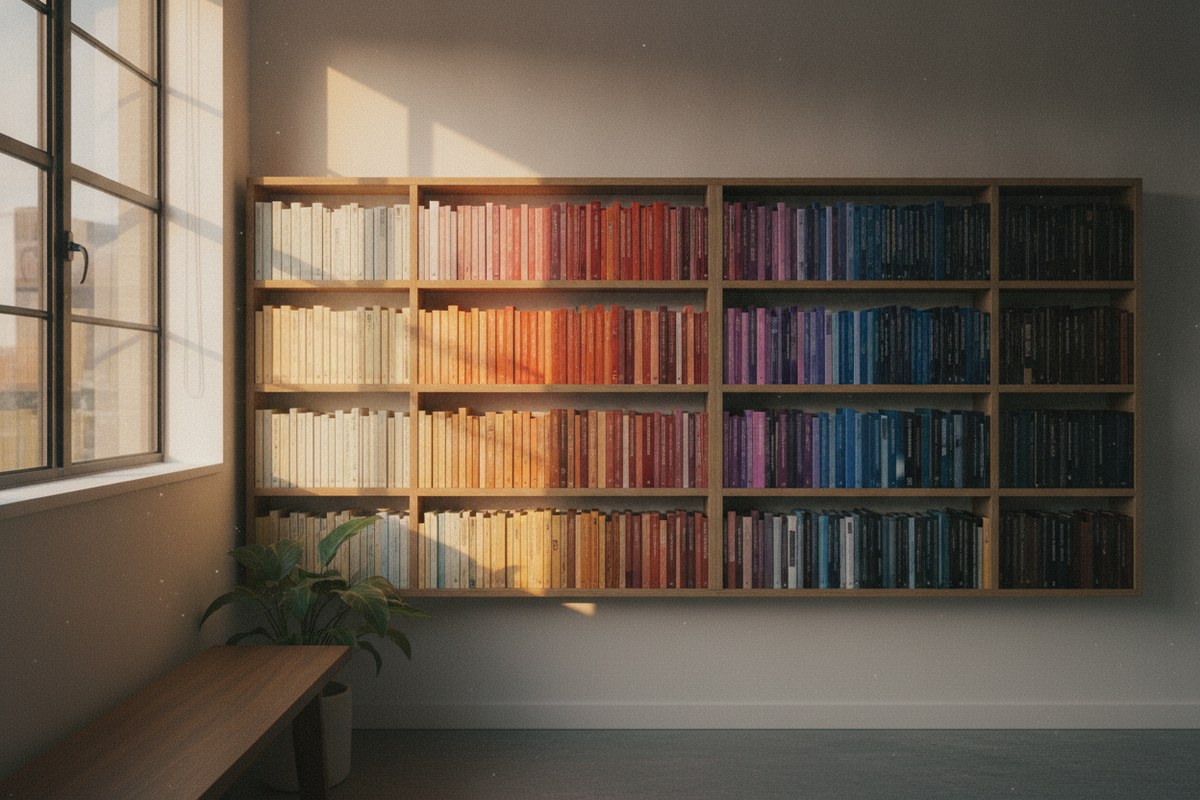
Color-grouping isn’t just a design trick, it’s a way to quiet visual noise in a small room. Arrange spines from light to dark, or cluster neutral tones together and let one or two bold colors stand out as accents. This soft gradient effect reads as intentional rather than random, and it’s especially effective in Japandi spaces where a muted, earthy palette is the goal.
3. Hide Clutter in Storage Boxes
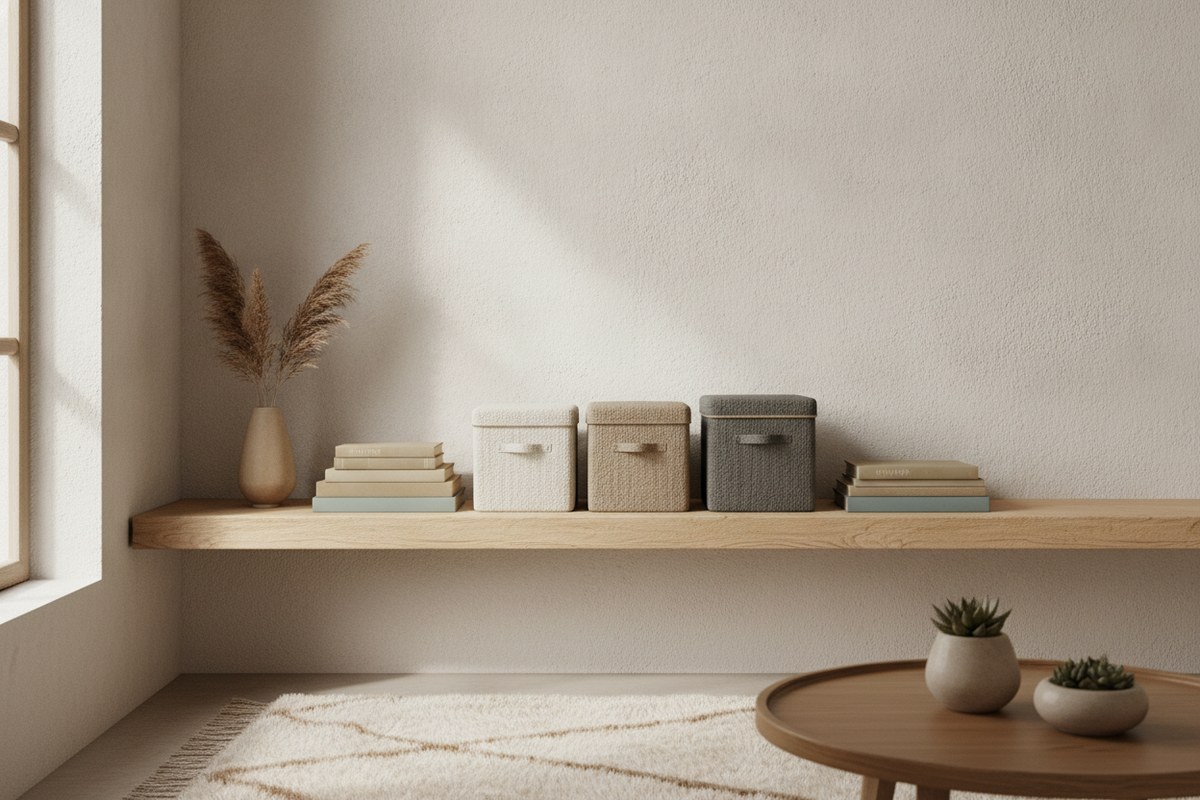
Not everything on a shelf needs to be visible. Chargers, spare batteries, loose papers, and small electronics can disappear into fabric storage boxes with lids that match your shelf’s tone. Choose linen or canvas textures in oatmeal, gray, or charcoal to keep the look soft and unified rather than office-supply chaotic.
4. Use Woven Baskets for Everyday Odds and Ends
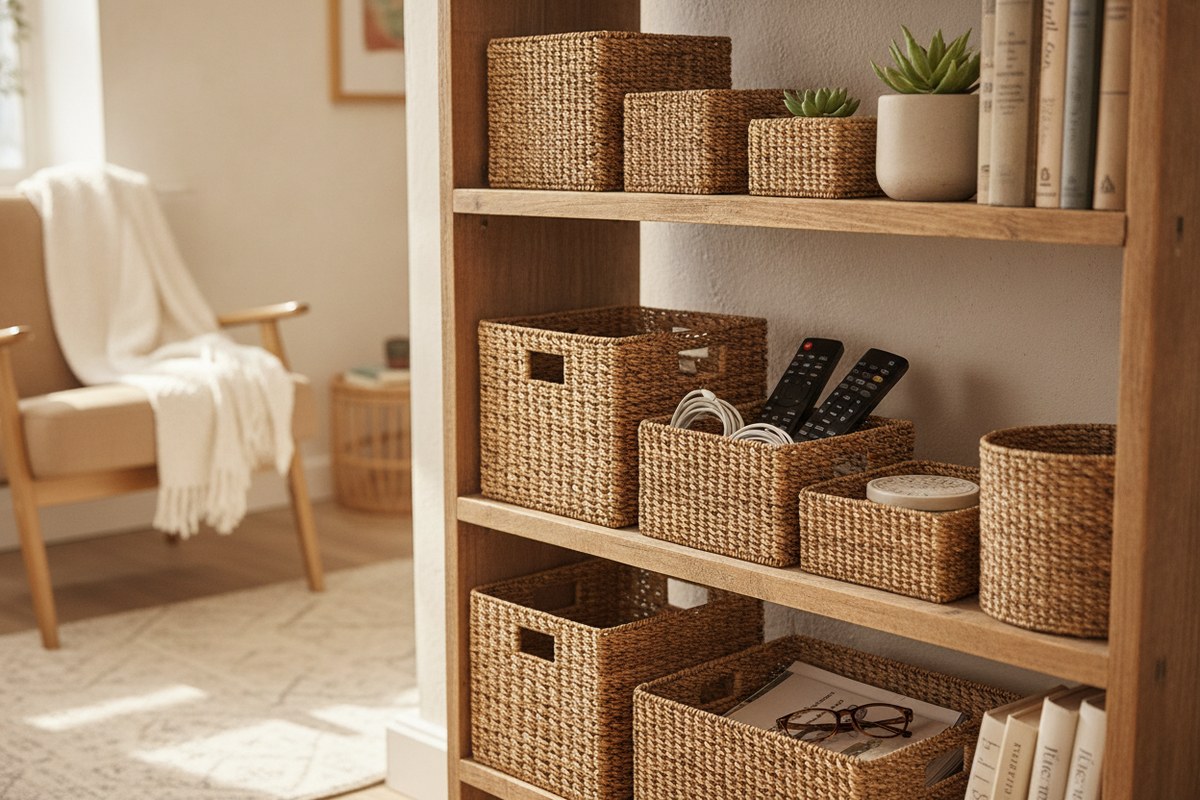
Woven baskets bring natural texture that’s core to the Japandi look while giving you a landing spot for remotes, mail, or reading glasses. A few woven storage baskets for shelves tucked on a lower level keep small items corralled without needing a label on every single thing—just a consistent spot you return them to each time.
5. Let Negative Space Do the Work
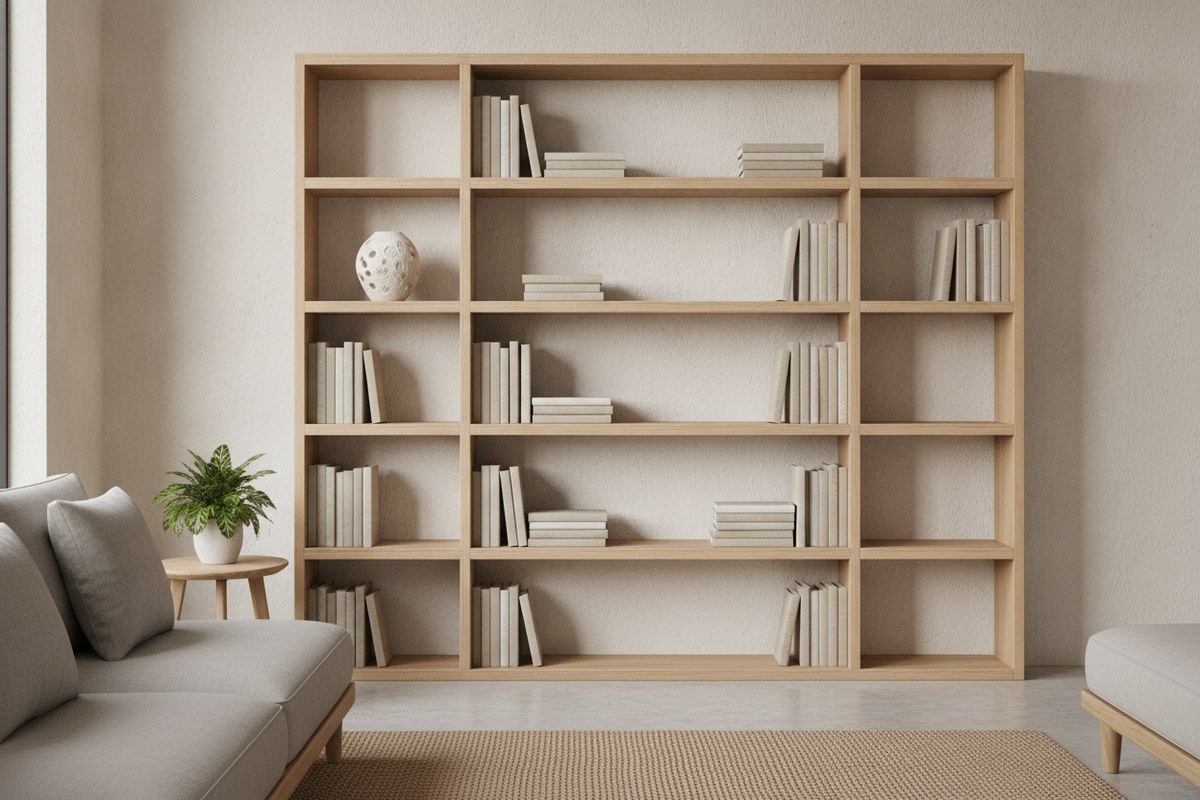
In Japanese design, empty space (often called ma) is treated as an active part of a composition, not wasted room. Resist the urge to fill every inch of your shelf. Leave a few open sections between book stacks and objects so the eye has somewhere to rest. A shelf that’s 70-80% full often feels more luxurious than one packed edge to edge.
6. Mix Vertical and Horizontal Stacks for Rhythm
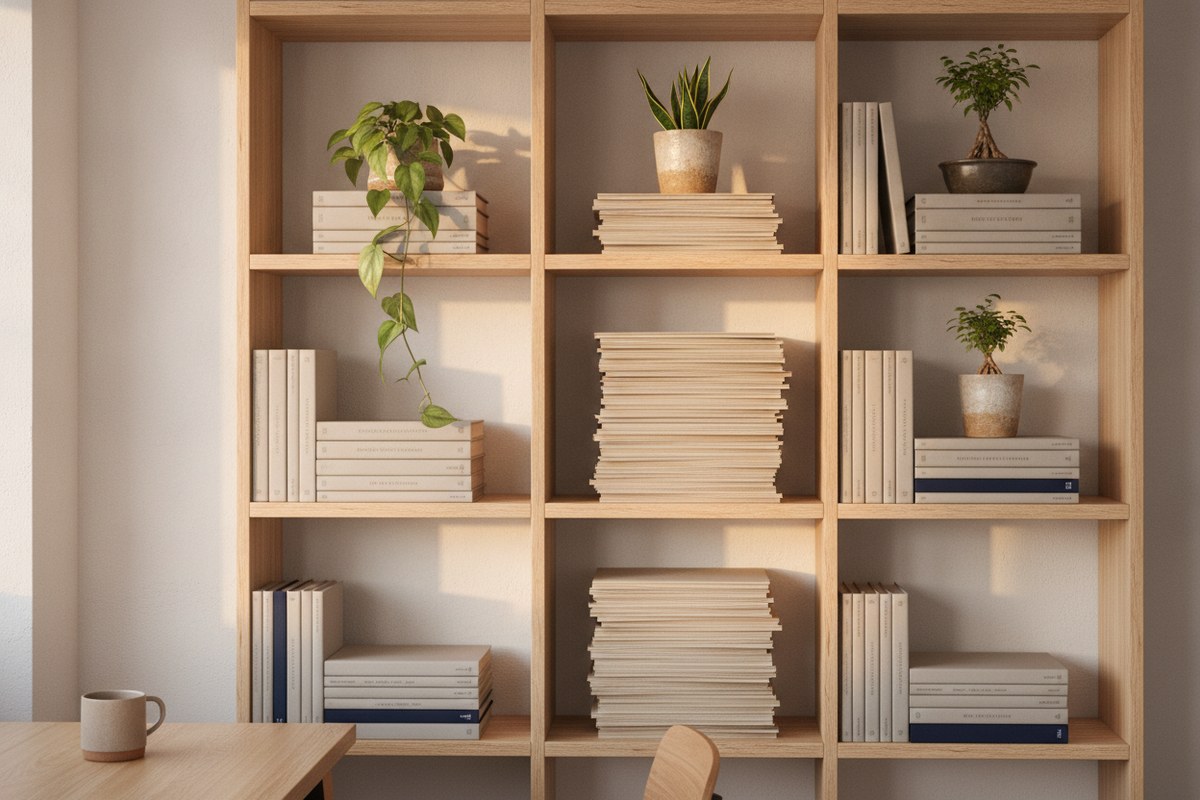
Standing every book upright can feel monotonous, while stacking everything flat looks messy. Instead, alternate: a vertical row of books on one section, then a low horizontal stack topped with a small plant or ceramic bowl on the next. This rhythm creates visual interest and doubles as a subtle height marker between rows, which helps a small shelf feel more curated.
7. Choose Bookends That Blend In
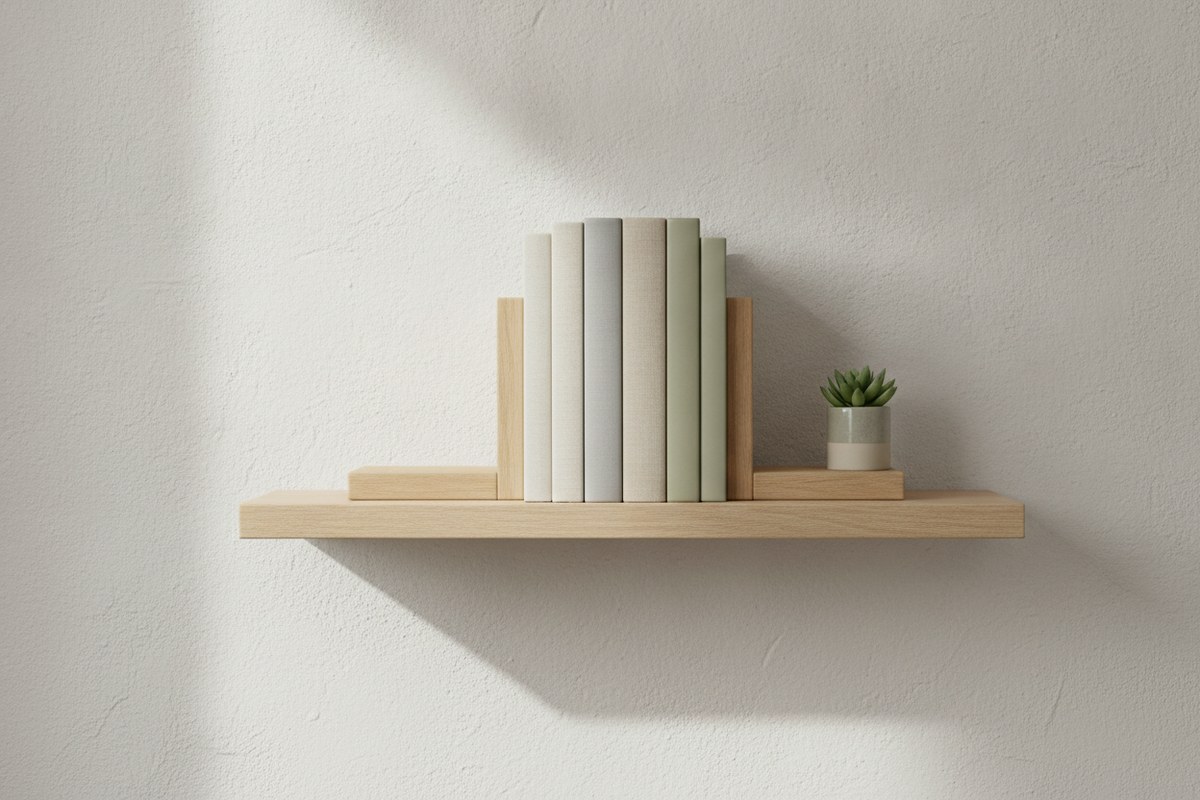
Bulky, mismatched bookends can make a shelf look cluttered fast. Swap them for simple minimalist wood bookends in a tone that matches your shelf frame. The goal is function without visual competition—your books and objects should be the focal point, not the hardware holding them up.
8. Reserve Lower Shelves for Bins, Not Books
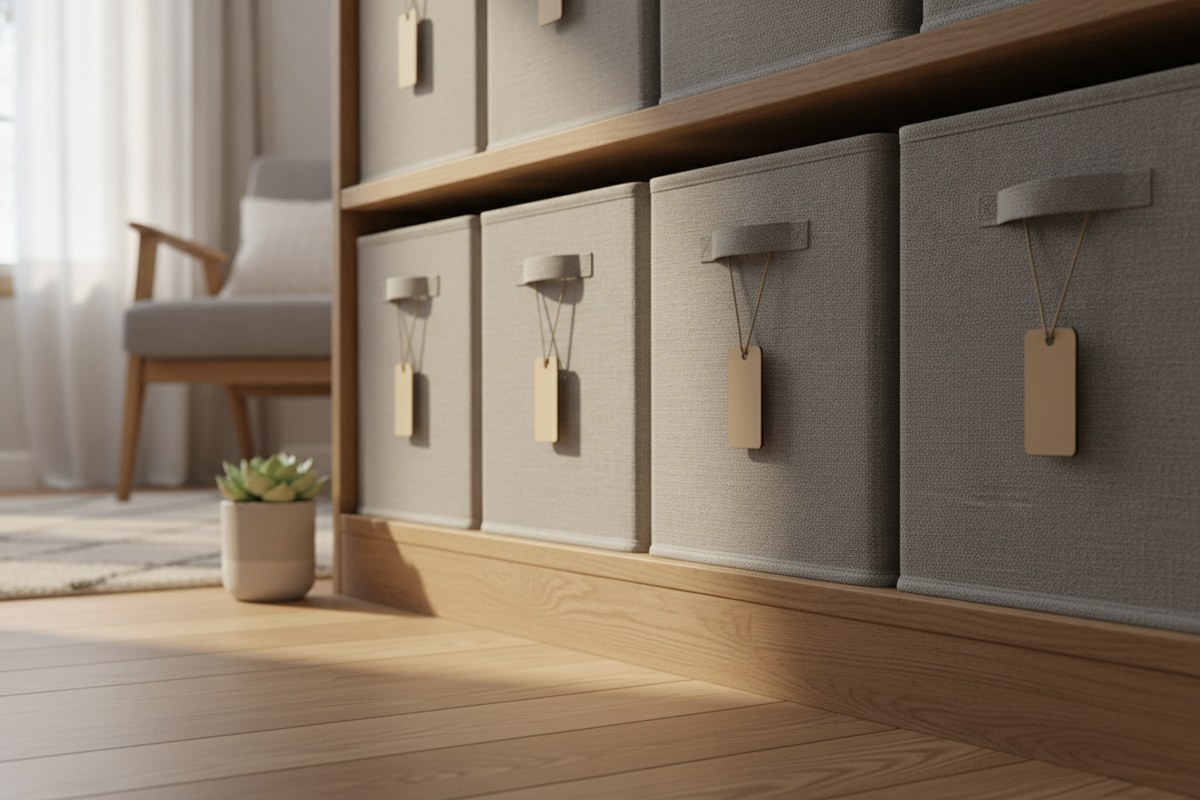
Lower shelves are harder to browse and easier to bump with a vacuum or foot, so use them for storage rather than display. Slide in a few labeled bins for seasonal items, craft supplies, or paperwork you don’t need daily. Keeping the bottom shelf purely functional frees up your eye-level shelves for the styling moments you actually want to show off.
9. Add Shelf Dividers to Keep Categories Tidy
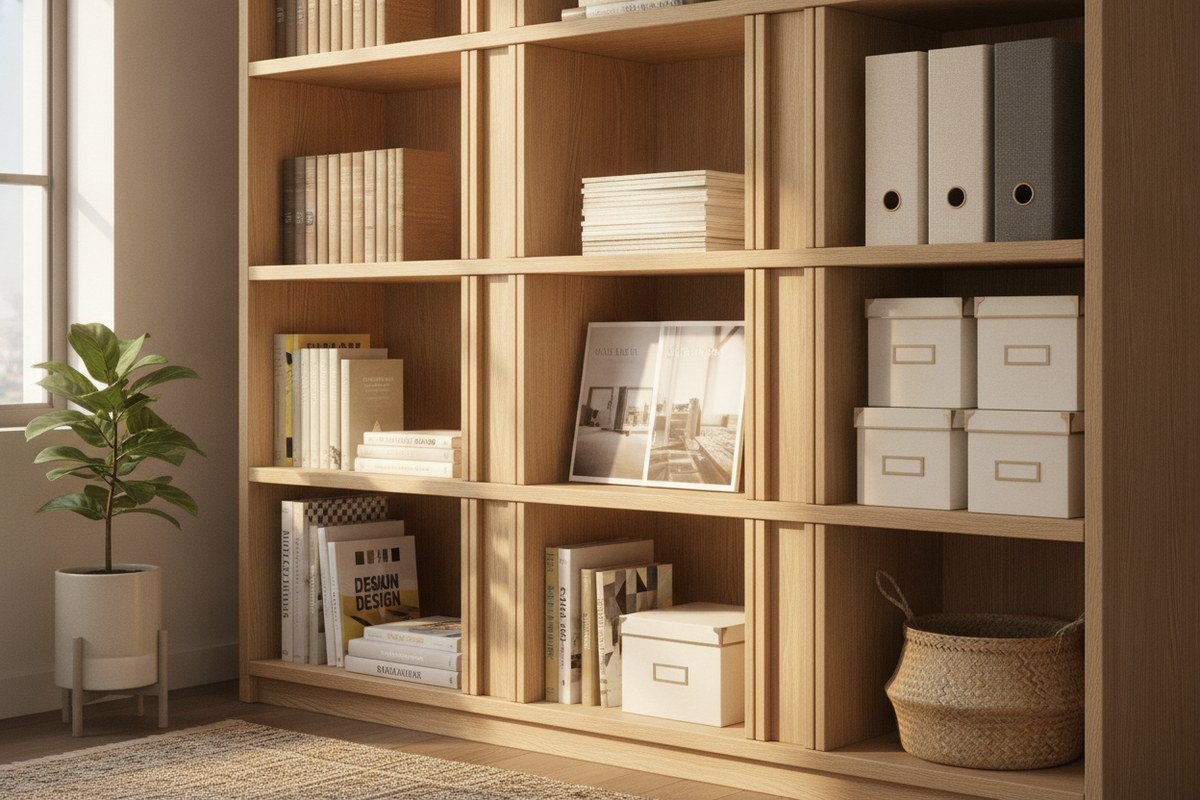
If your shelf holds a mix of books, magazines, and binders, things can slump sideways and look disorganized fast. A few adjustable shelf dividers keep each category upright and separated, which is especially helpful in a small room where the shelf might double as a home office or study nook.
10. Rotate Your Collection Seasonally
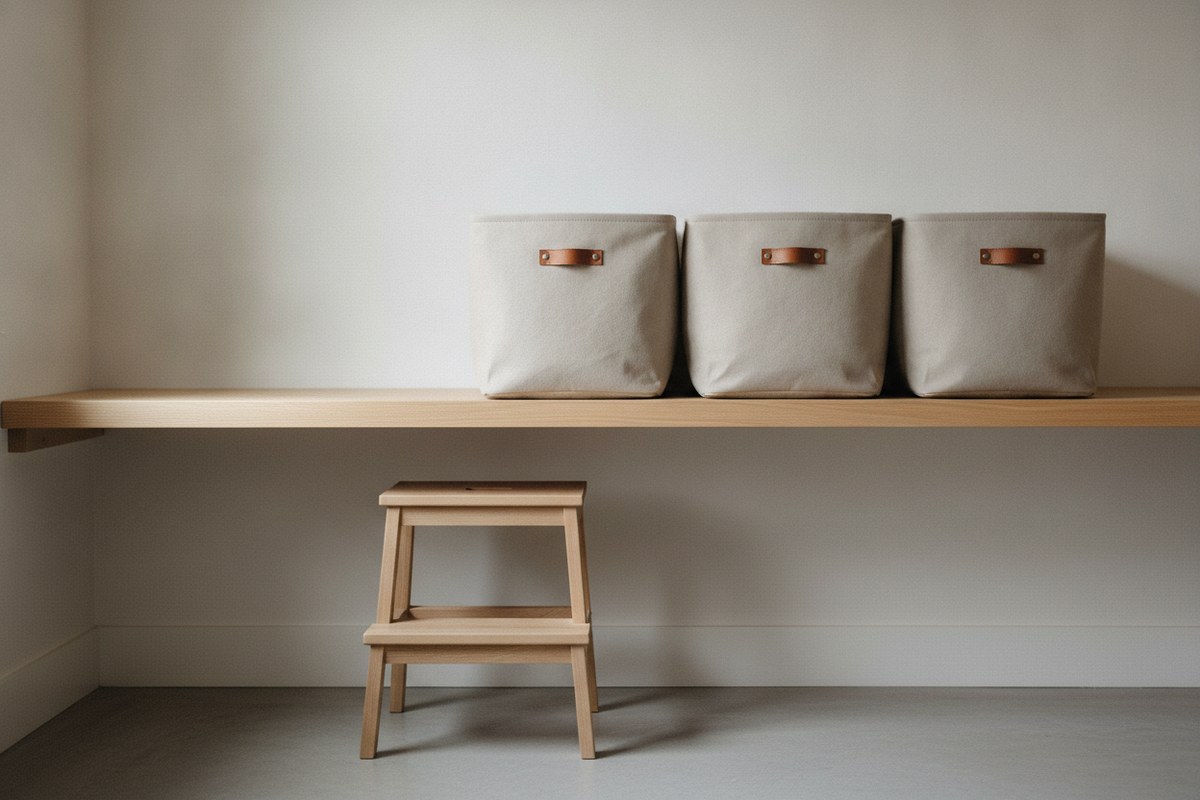
You don’t need to own more books or objects to keep your shelf feeling fresh—just rotate what’s on display. Store extra books, seasonal decor, or off-rotation items in a bin on your closet shelf or under the bed, and swap them in every few months. This is a simple habit borrowed from Japanese seasonal living, and it keeps a small shelf feeling new without adding clutter. A small step stool for closet storage makes it easy to reach bins on a high closet shelf when it’s time to rotate.
Bonus: Label Your Storage for Long-Term Ease
Once your bins and boxes have a system, a simple label maker for storage bins keeps that system working long after the initial organizing burst of energy fades. Clear labels mean everyone in your home puts things back where they belong, which is really the whole point of Japanese-style organizing—not perfection, just a system simple enough to maintain.
A small bookshelf can hold a lot more than books—it can hold your calm. Start with one shelf, edit down to what you truly love, and let the rest follow from there.