This post may contain affiliate links. If you buy through them, we may earn a small commission at no extra cost to you.
If your closet floor has become a landing zone for slouching totes and your shelf is a leaning tower of purses, you’re not alone. Bags are one of the hardest things to store neatly—they’re floppy, oddly shaped, and easy to forget about once they’re shoved in a corner. The good news is that a few Japanese-inspired organizing principles, like giving every item a dedicated ‘home’ and storing things upright so you can see them at a glance, solve this problem beautifully. Below are ten small-closet-friendly ideas that keep your bag collection tidy, protected, and actually easy to use.
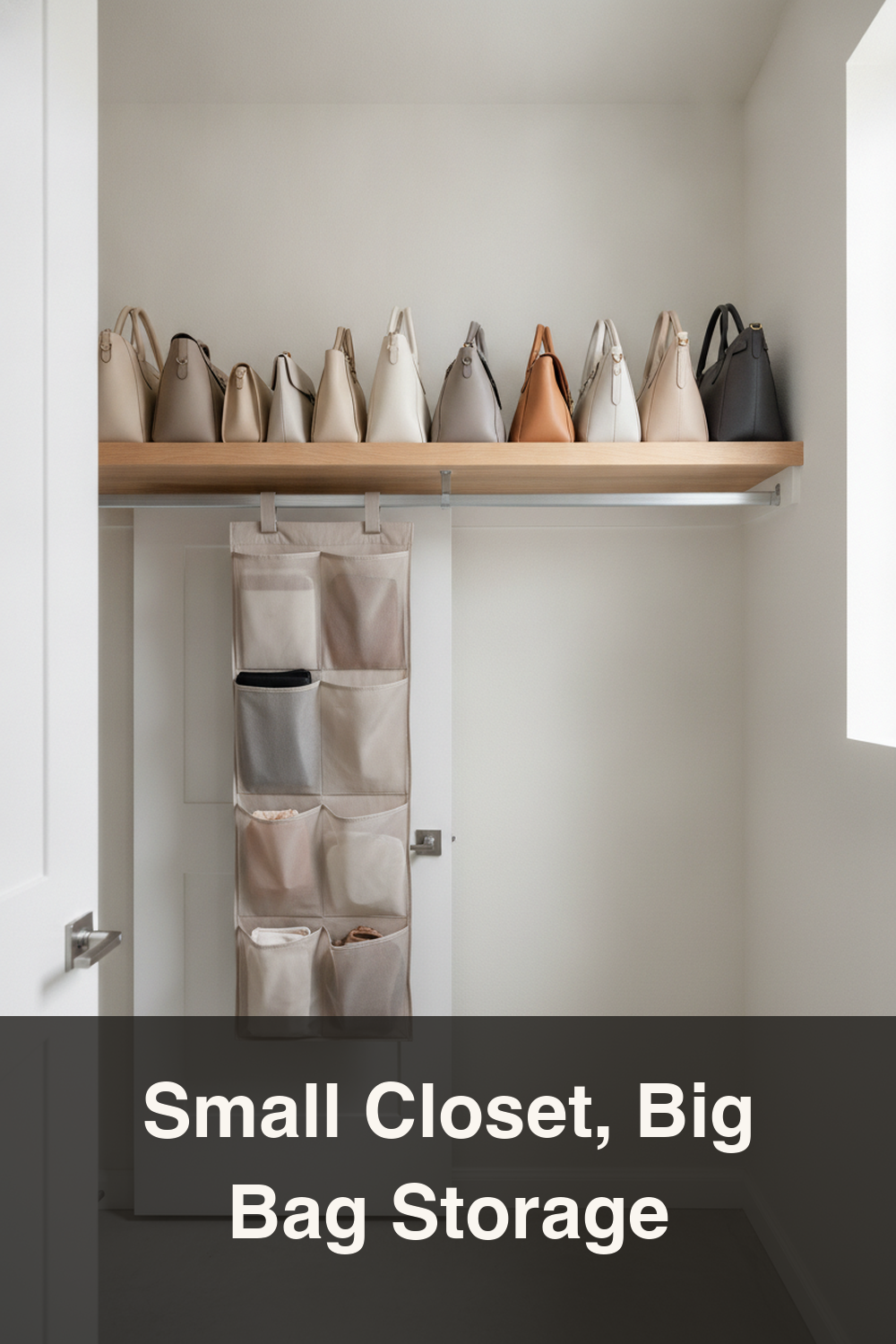
1. Hang Bags on the Back of the Door
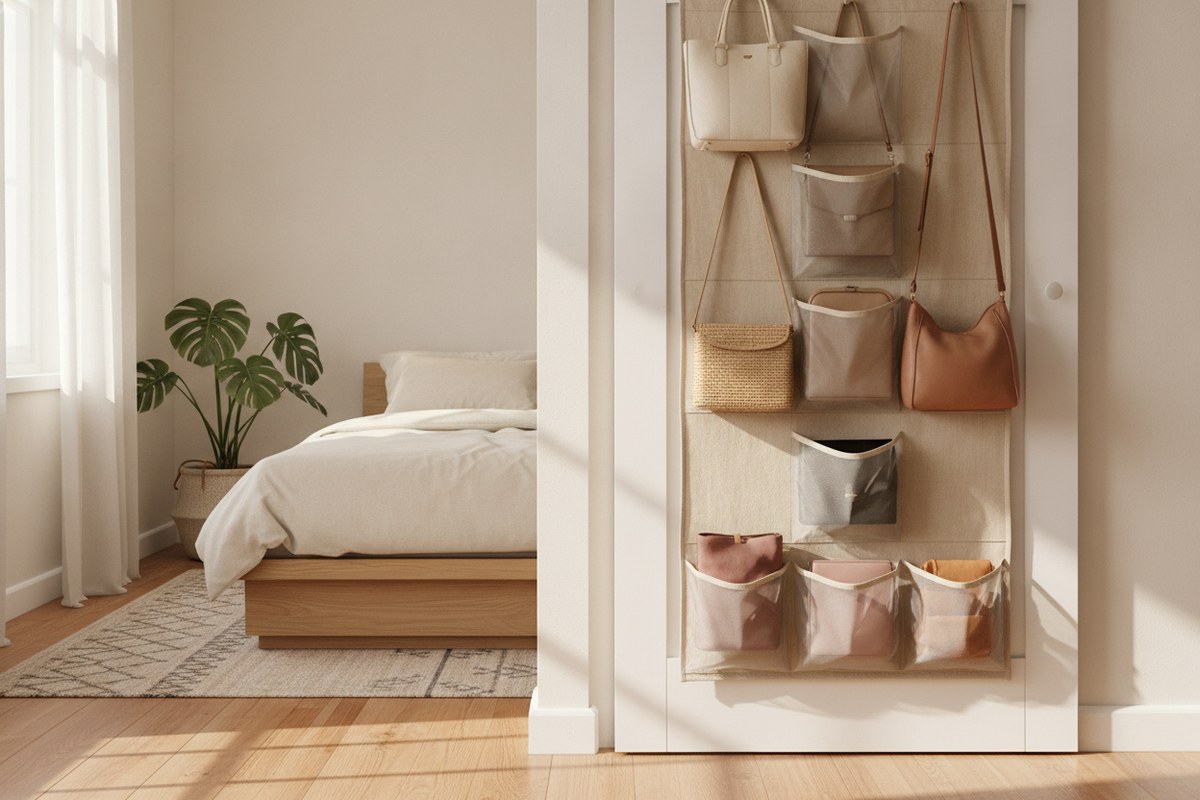
The back of your closet door is prime real estate that most people leave empty. An over-the-door hanging organizer with individual pockets or hooks lets you store bags vertically without eating into shelf or floor space. This method also follows a core idea in Japanese organizing: keep frequently used items visible and within easy reach, so you’re not digging through a pile every morning.
2. Add Shelf Dividers to Stop the Leaning Tower
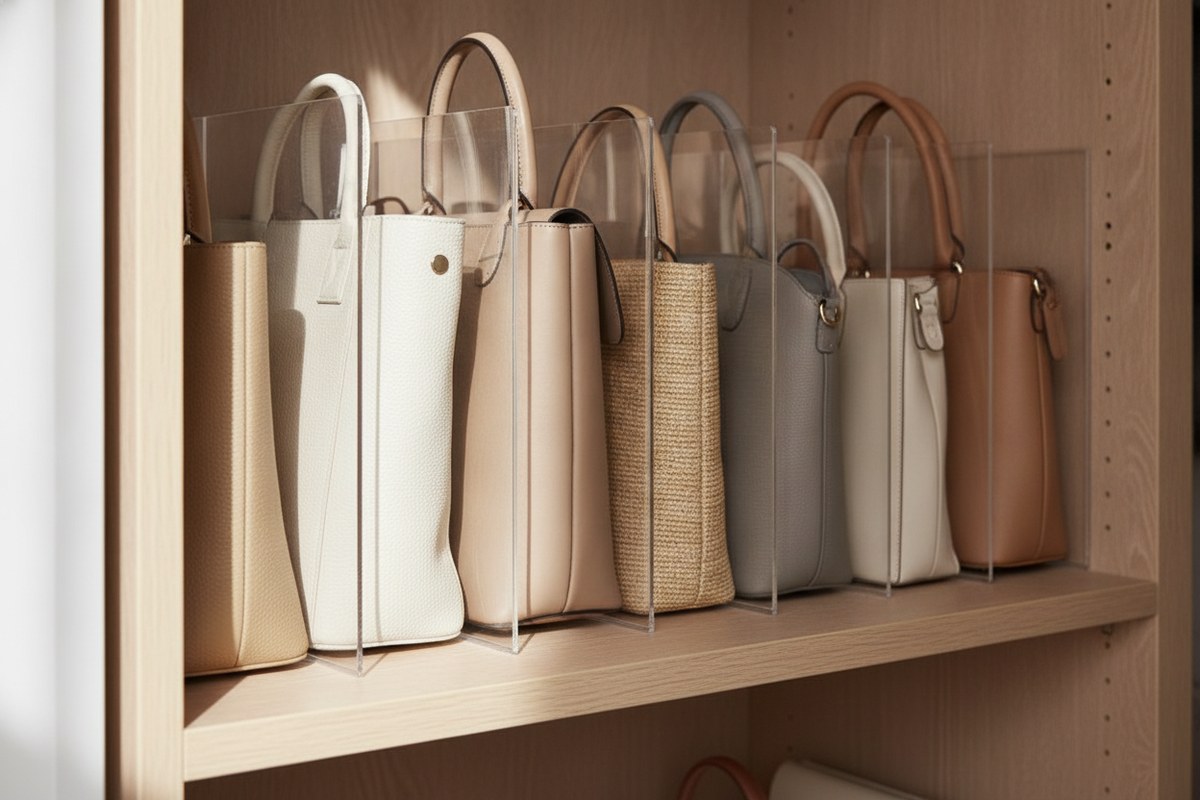
If your bags currently topple sideways every time you pull one out, simple adjustable shelf dividers can fix that instantly. They create narrow, upright slots so each bag stands on its own instead of leaning on its neighbors. This keeps structured bags from getting misshapen and makes it much easier to see what you own—a small change that makes a cluttered shelf feel instantly calmer.
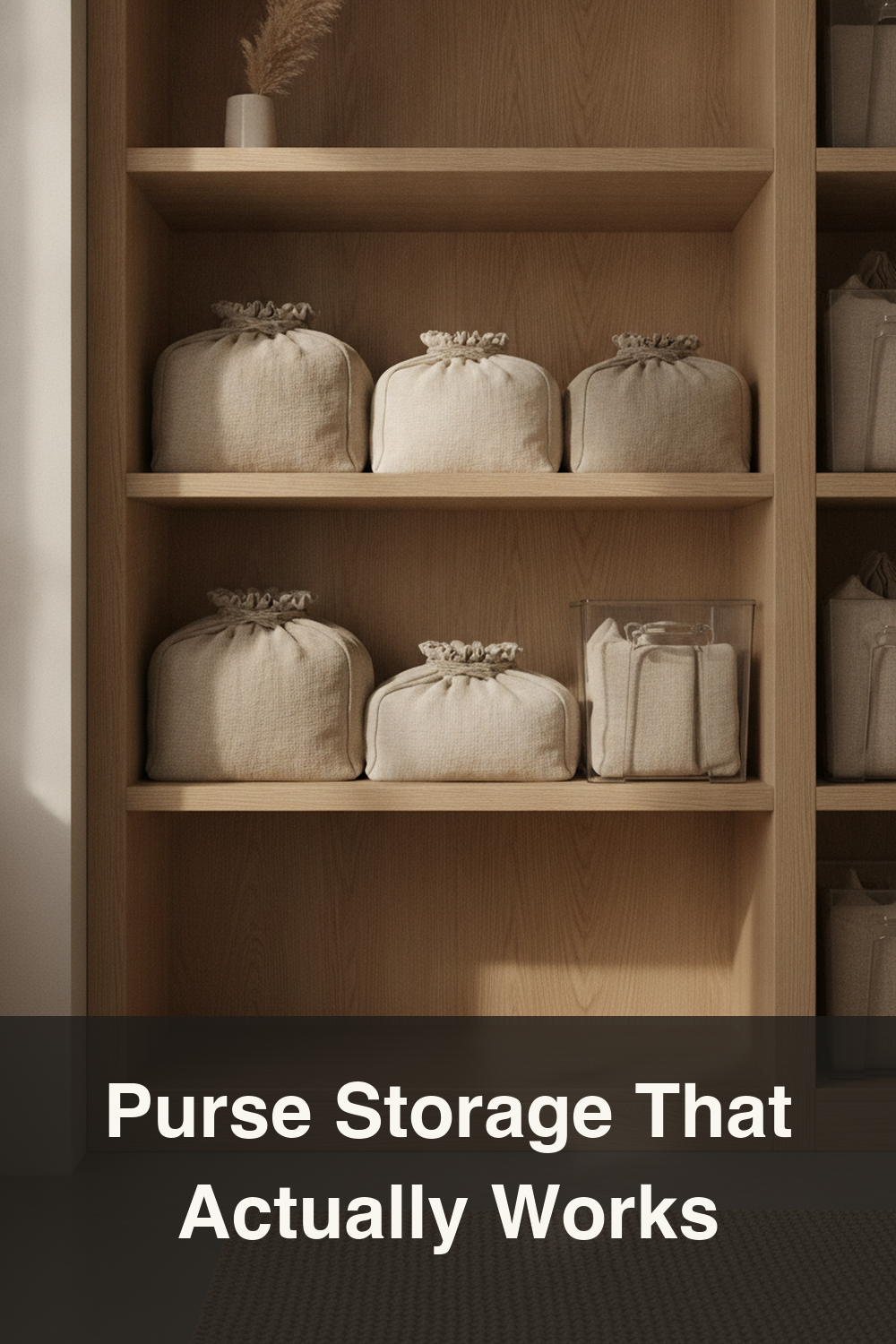
3. Use Clear Bins for Bags You Rotate Seasonally
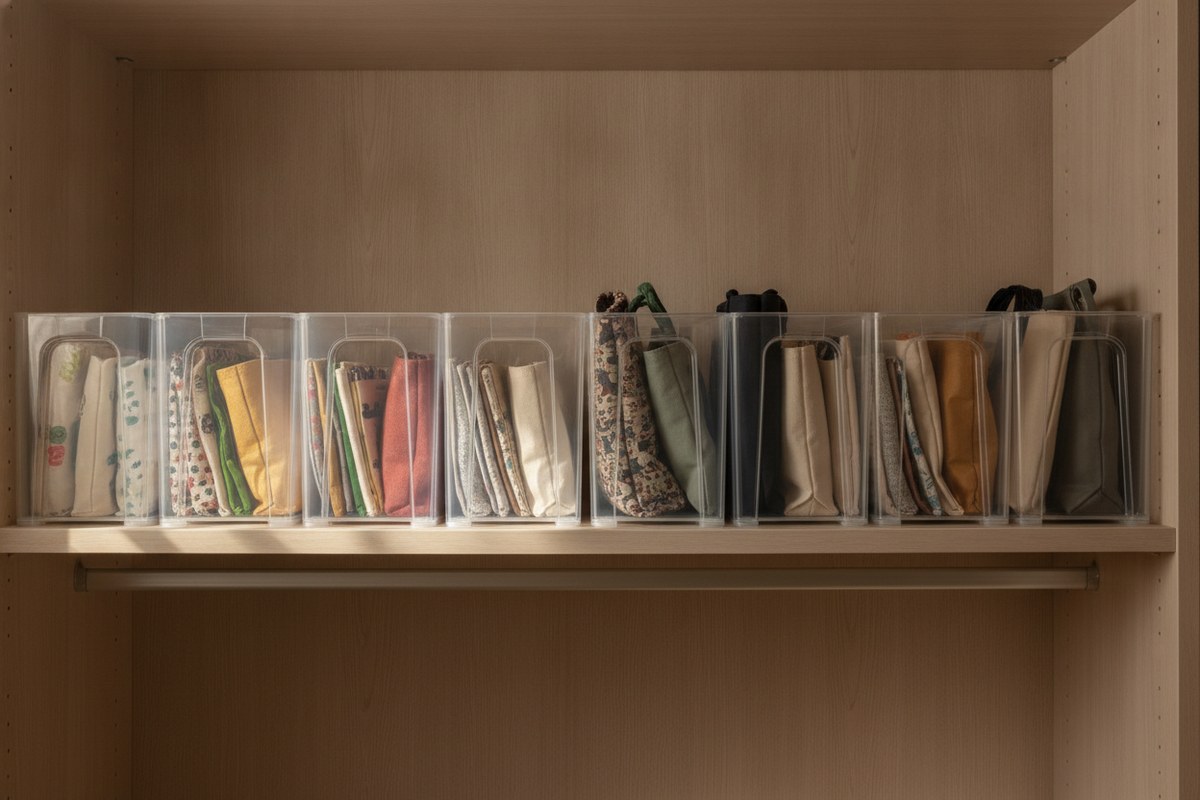
Not every bag needs to be front and center all year. Off-season totes, evening clutches, or beach bags can live in clear stackable storage bins on a high shelf. Clear sides mean you can identify contents without opening every box, which mirrors the Japanese preference for transparent, low-friction storage systems over sealed, mystery containers.
4. Install Purse Hooks Under a Shelf
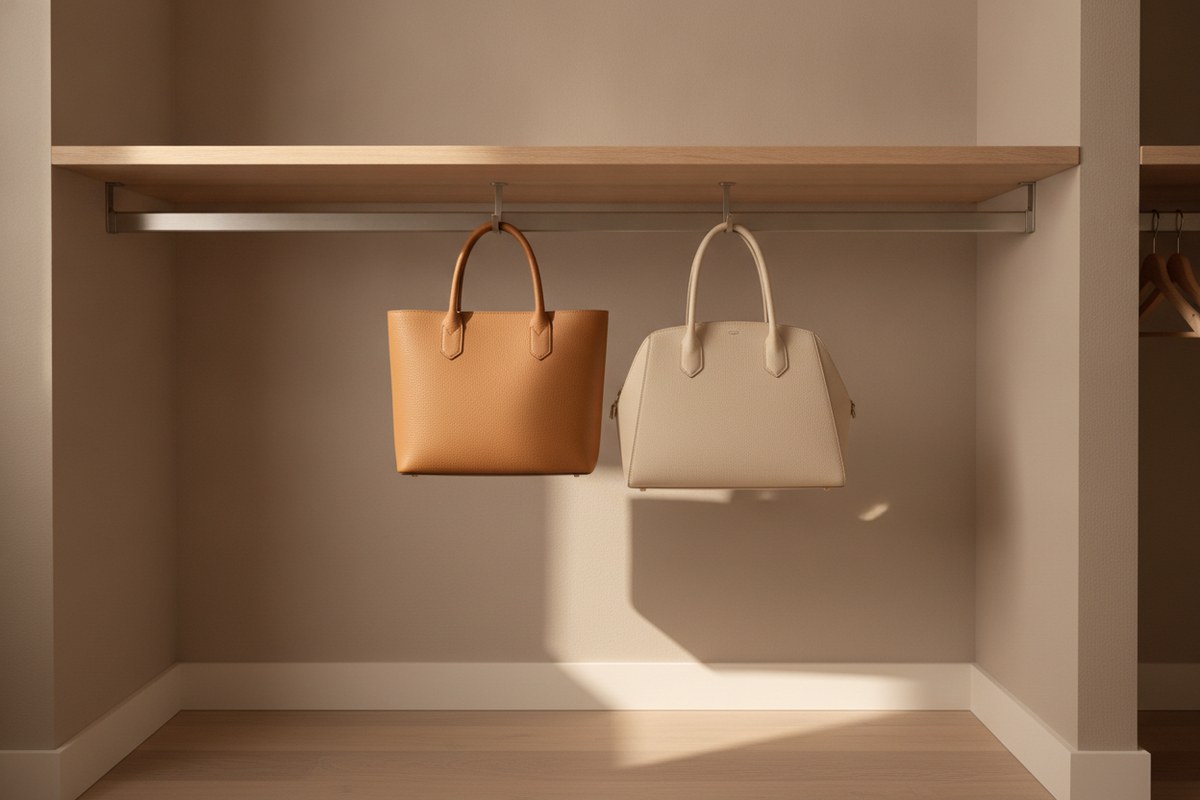
Unused vertical space under a closet shelf is often wasted. A row of small purse hooks for closet mounted underneath lets you hang two or three more bags without adding any new furniture. This works especially well for bags with sturdy handles that hold their shape better hanging than stacked flat.
5. Try a Tension Rod as a Mini Hanging Rail
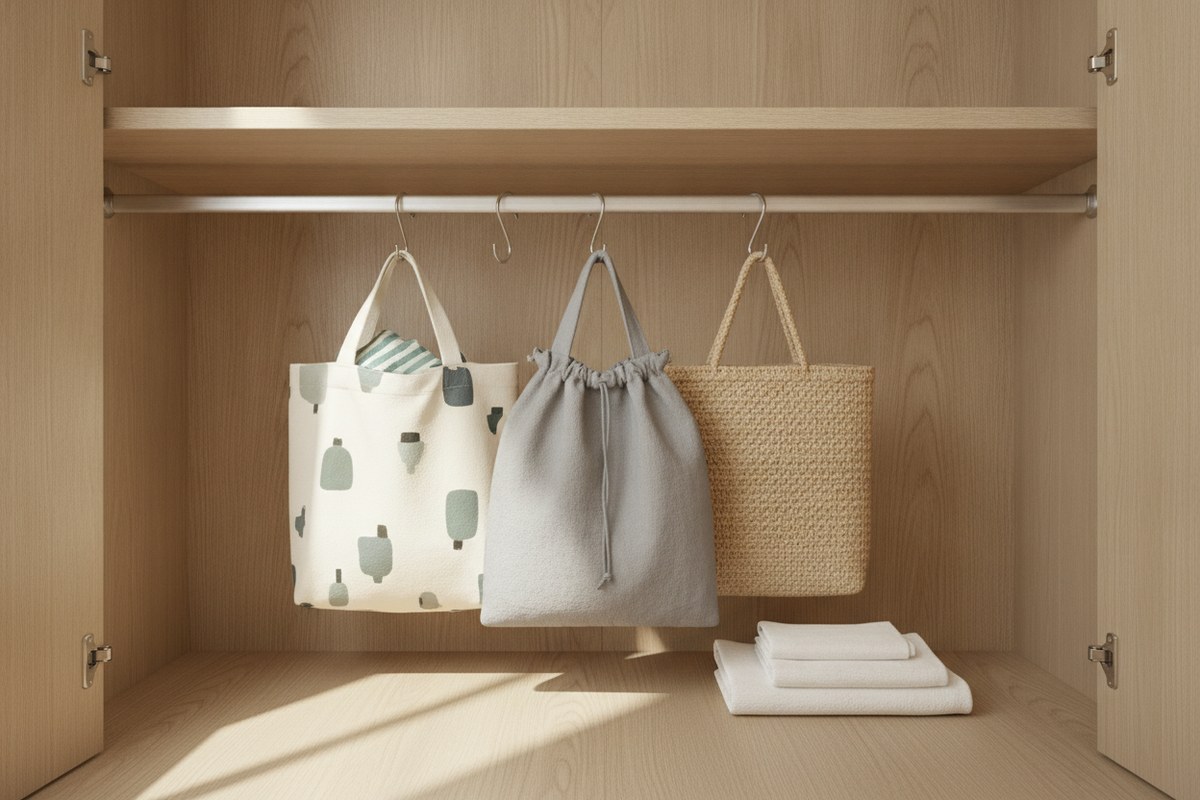
A slim tension rod for closet shelf spaces can be wedged into an awkward gap—above hanging clothes, inside a cabinet, or between two shelves—to create an instant bag rail using S-hooks. It’s a renter-friendly, no-drill solution that’s easy to remove if you move apartments, which makes it ideal for small rentals and dorms.
6. Stuff Bags to Help Them Hold Their Shape
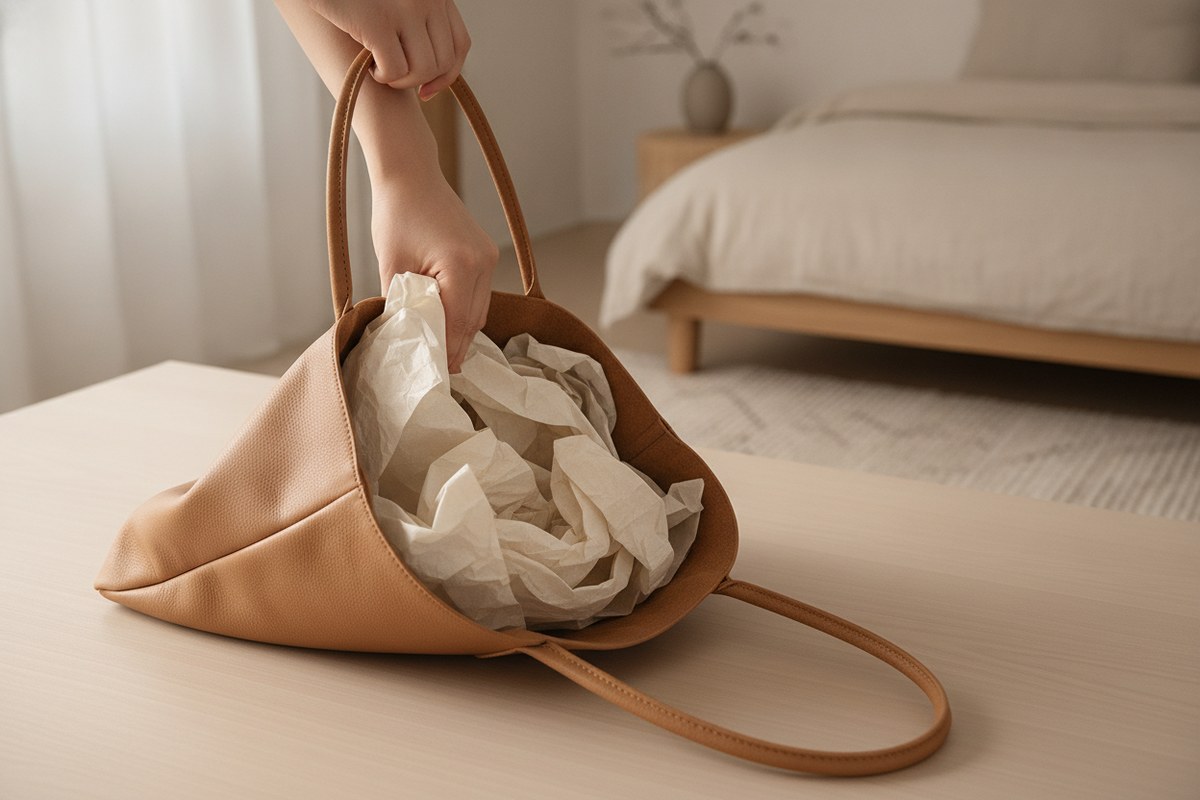
Slouchy bags take up more room than structured ones and are harder to stack neatly. Stuffing each bag lightly with acid-free tissue paper keeps the shape upright, prevents creasing, and actually makes bags easier to store shoulder-to-shoulder on a shelf. It’s a small step, but it noticeably reduces the visual clutter of a bag shelf.
7. Protect Special Bags with Dust Bags
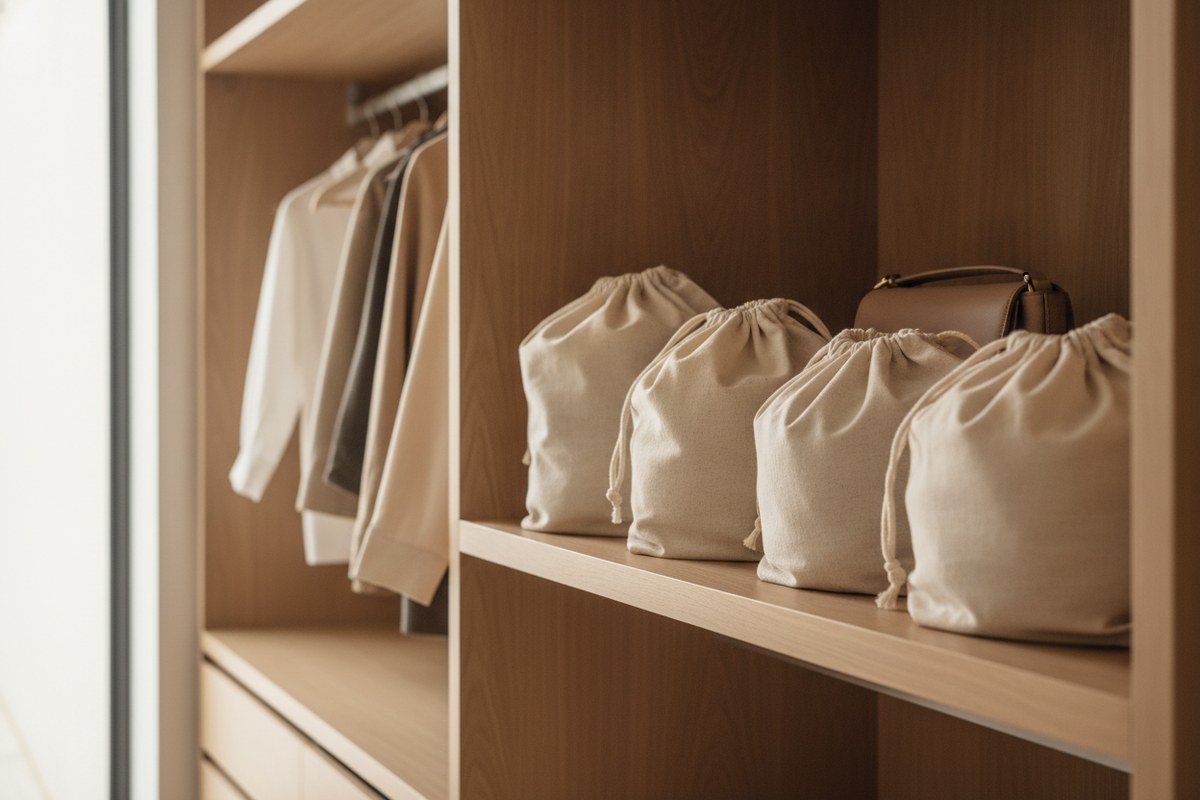
For bags you don’t use daily—special-occasion pieces, leather totes, or anything prone to dust and scuffing—slipping them into breathable cotton dust bags keeps them clean while still letting the material breathe. This protective habit reflects the Japanese approach of caring for fewer, better items so they last longer, rather than accumulating pieces that quickly wear out.
8. Label Zones So Everything Has a Home
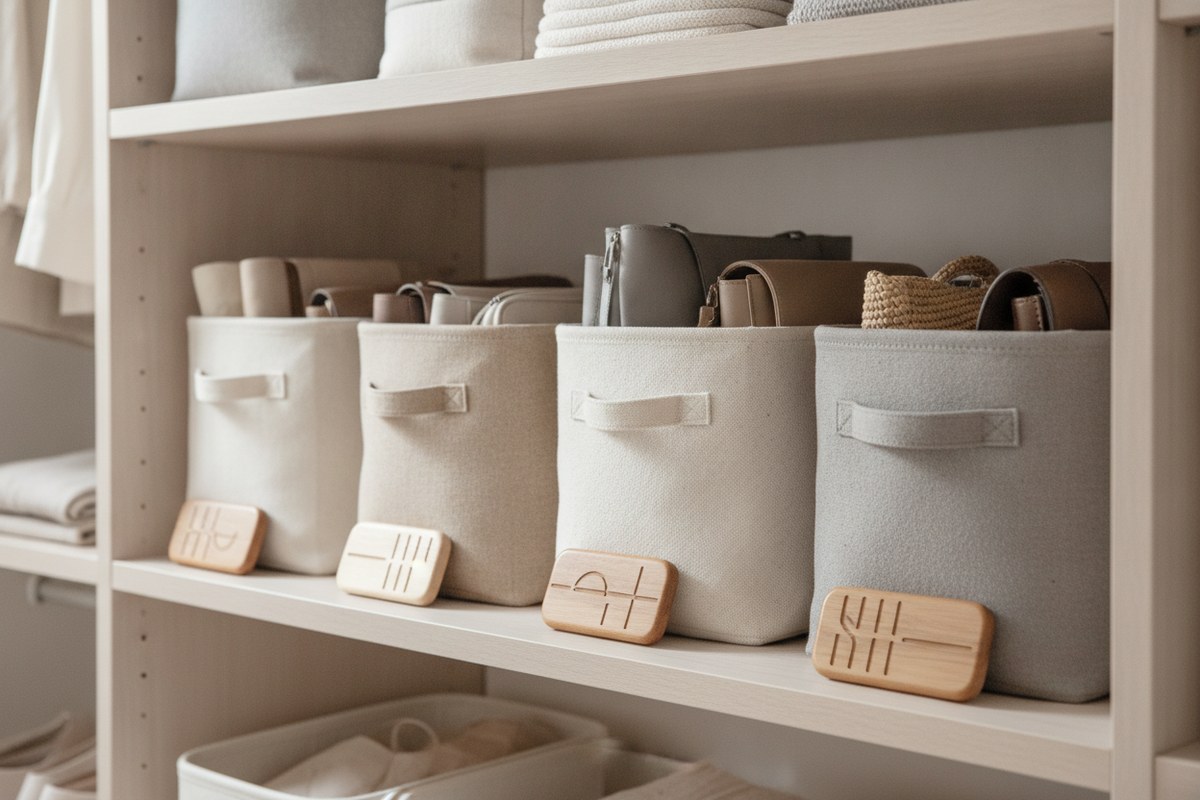
Once your bags have designated spots—hooks for everyday totes, a bin for seasonal ones, a shelf slot for clutches—add small labels to each zone. This is essentially the organizing principle of ‘a place for everything,’ borrowed from Japanese home systems, and it means anyone in your household can put a bag back correctly without you re-sorting the closet every week.
9. Rotate with a Furoshiki-Style Fabric Wrap
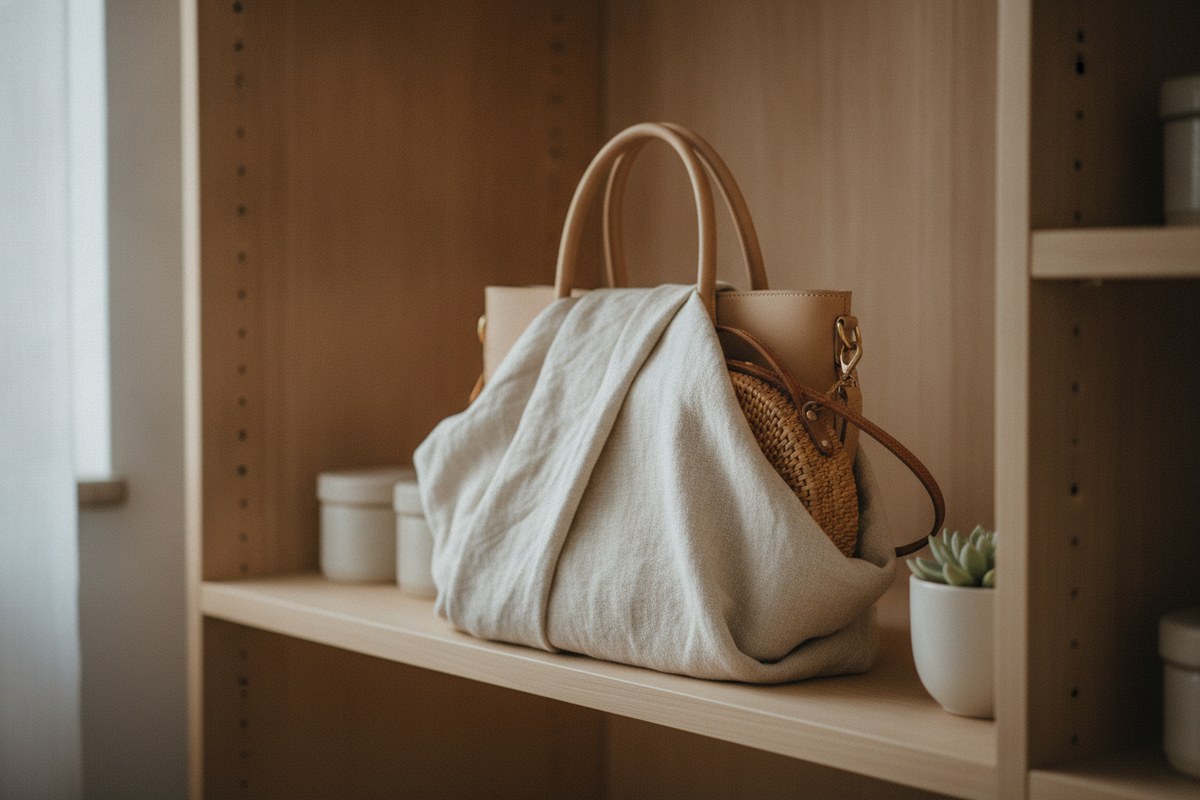
Instead of another plastic bin, consider wrapping rarely used bags in a large square of fabric, inspired by the traditional Japanese furoshiki wrapping cloth. It’s a soft, cushioned way to bundle two or three bags together for storage on a high shelf, and it adds a warm, textile touch to an otherwise plastic-heavy closet system.
10. Add a Slim Rolling Cart for Overflow
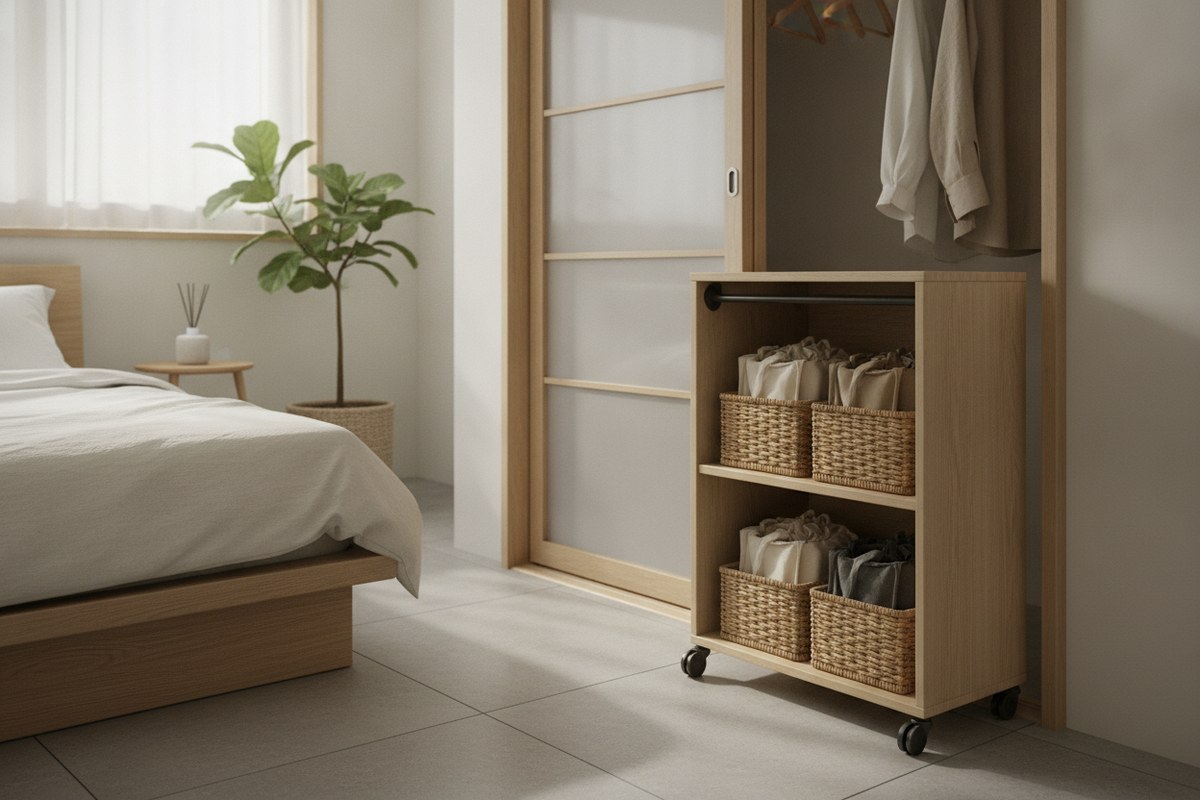
If your closet is simply too small for your whole collection, a narrow slim rolling storage cart can live just outside the closet or tucked into a corner. Use it for bags in current rotation so your closet holds only what’s out of season—keeping the main space calm while your everyday bags stay accessible.
You don’t need a walk-in closet to store bags well—you need a system where every bag has one clear spot, is easy to see, and is protected from getting crushed or dusty. Start with just one or two of these ideas, like adding shelf dividers or a door organizer, and build from there. A small, intentional setup will always beat a bigger space with no system at all.