This post may contain affiliate links. If you buy through them, we may earn a small commission at no extra cost to you.
Renting doesn’t mean your tiny kitchen has to feel cramped or chaotic. Between weight limits on hooks, no-drill clauses, and cabinets that seem to shrink the moment you unpack your first grocery haul, small-space cooking can feel like a daily puzzle. The good news? Japanese-style organization was built for exactly this kind of constraint—small footprints, rental restrictions, and a philosophy that every item deserves one clear home. Borrowing that mindset (plus a few clever renter-friendly products) can turn even the tightest galley kitchen into a calm, functional space you actually enjoy cooking in. Here are ten ideas that require zero drilling, zero landlord permission, and very little time to set up.
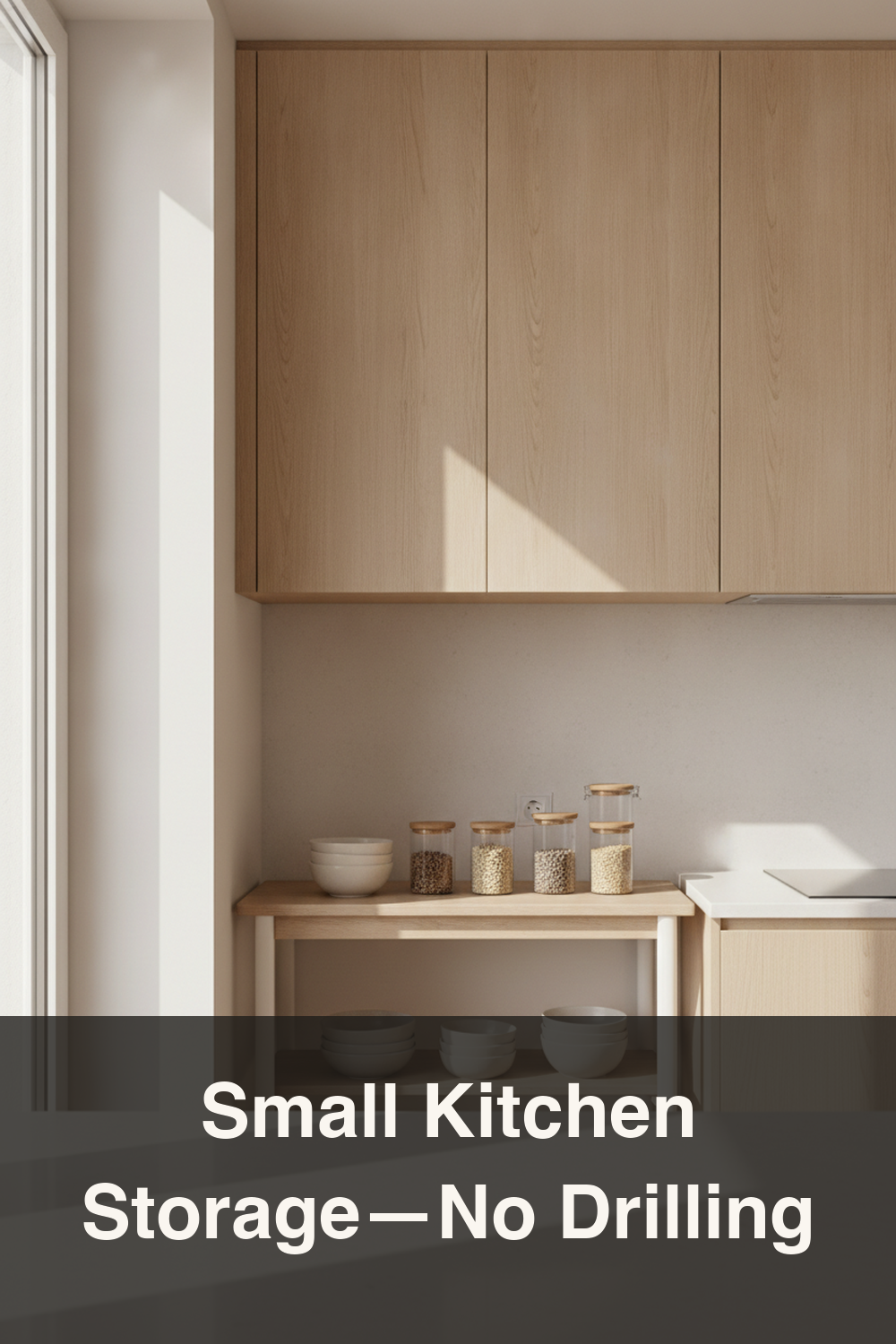
1. Swap Permanent Fixtures for Tension Rods and Rails
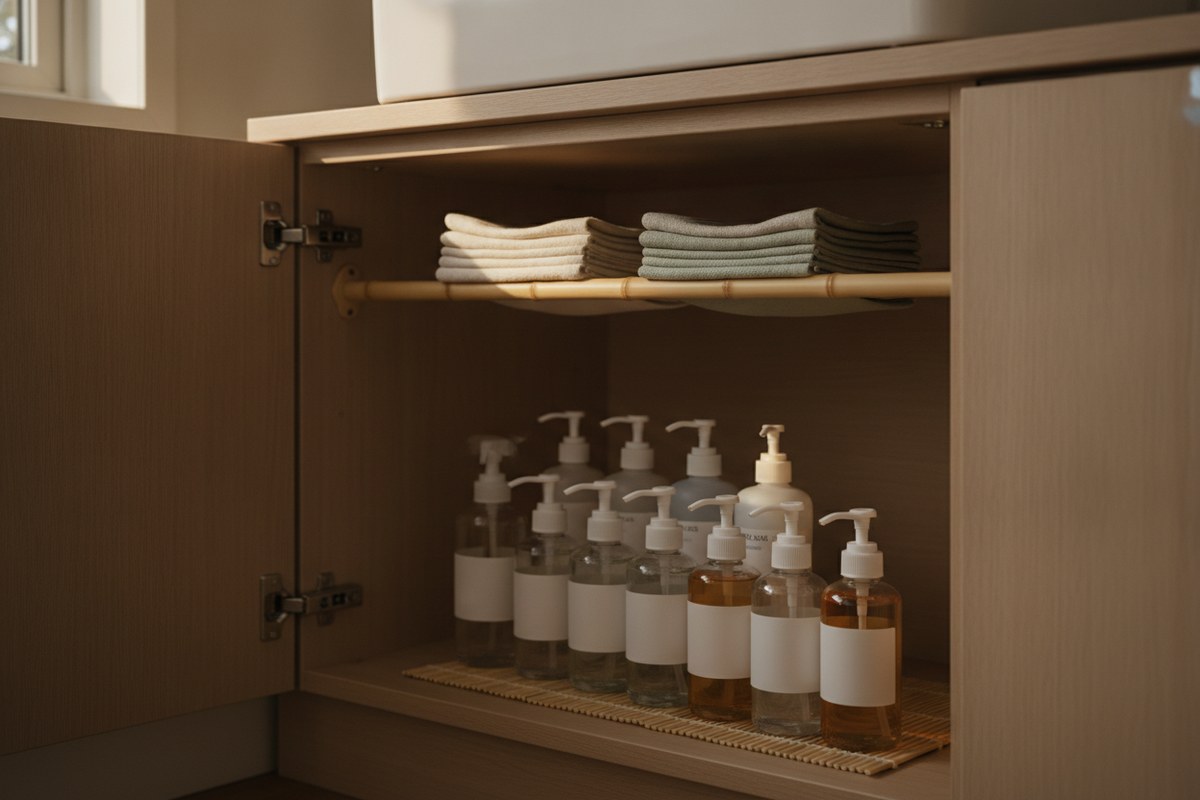
Before you reach for a drill you don’t have permission to use, try tension-mounted solutions instead. A tension shelf organizer wedges between your cabinet floor and ceiling to instantly double your storage without a single screw. Tension rods work the same way under the sink, creating a hidden shelf for spray bottles or a spot to hang cleaning cloths with S-hooks. This is the renter’s version of Japanese vertical storage thinking: when you can’t add square footage, you add layers instead.
2. Add Removable Wall Hooks for Vertical Storage
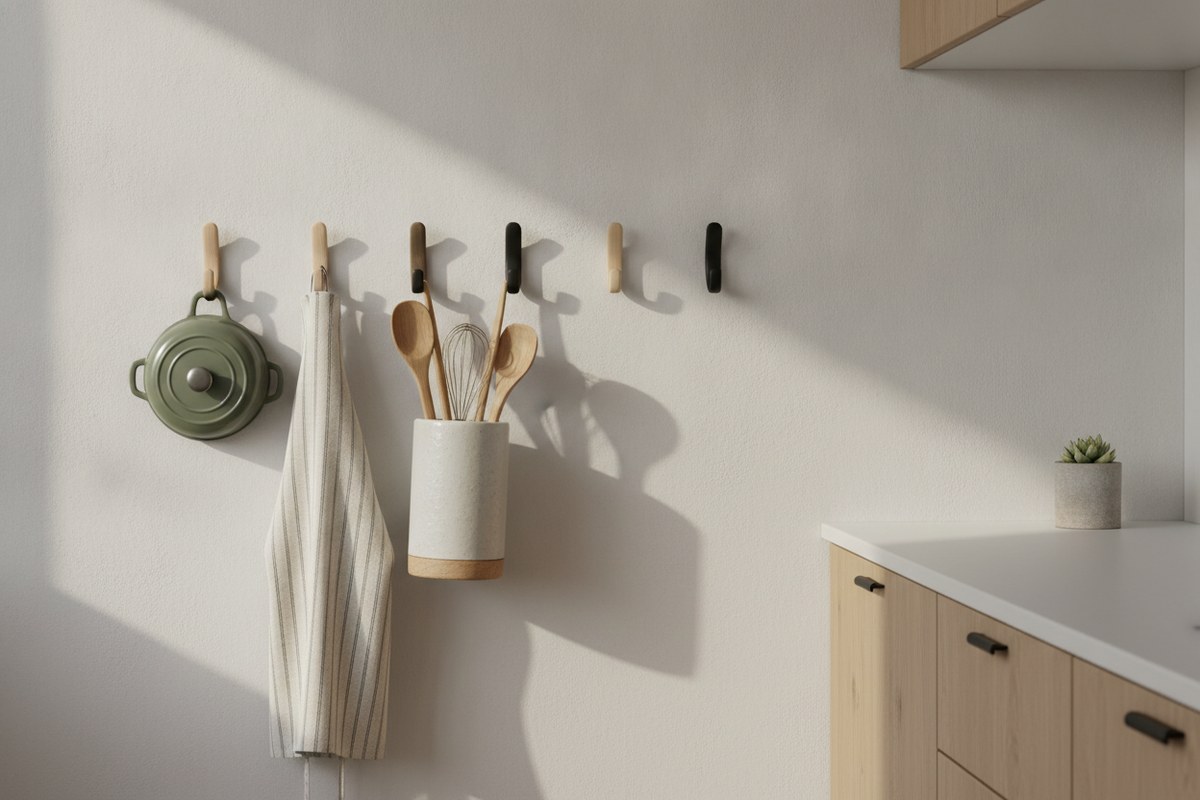
Empty wall space next to your stove or fridge is prime real estate. Strong adhesive wall hooks hold pots, oven mitts, or a small utensil crock without leaving marks when removed. In Japandi kitchens, tools that are used daily are kept visible and within arm’s reach, rather than buried in a drawer—it keeps the workflow simple and the counters clear. Stick a row of hooks at eye level for your most-used items and watch your counter clutter disappear.
3. Corral Drawer Chaos with Adjustable Dividers
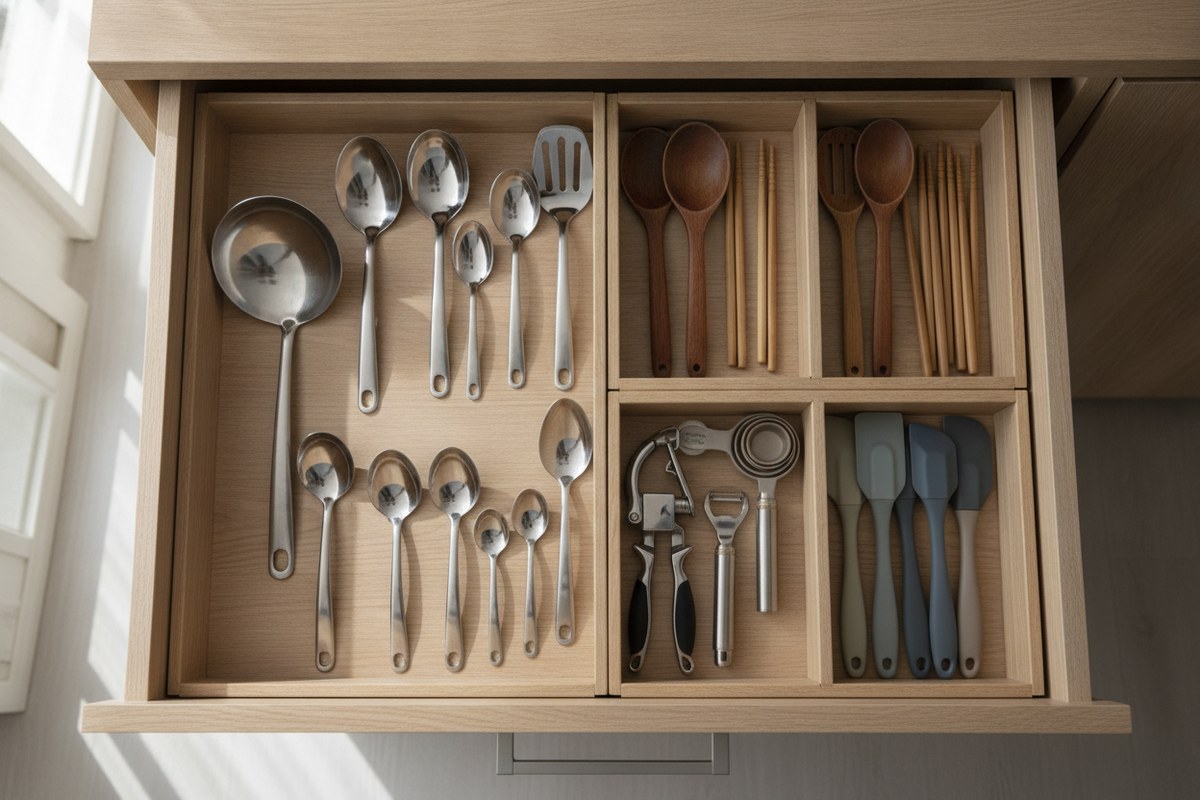
Junk drawers happen fast in small kitchens because there’s nowhere else to put the odds and ends. Instead of a designated chaos zone, use expandable drawer dividers to assign every utensil, gadget, and twist tie its own lane. This mirrors the Japanese principle of a fixed spot for every object—once each item has a home, cleanup takes seconds instead of minutes, and you’ll actually be able to find the can opener when you need it.
4. Maximize Under-Sink Space with Stackable Bins
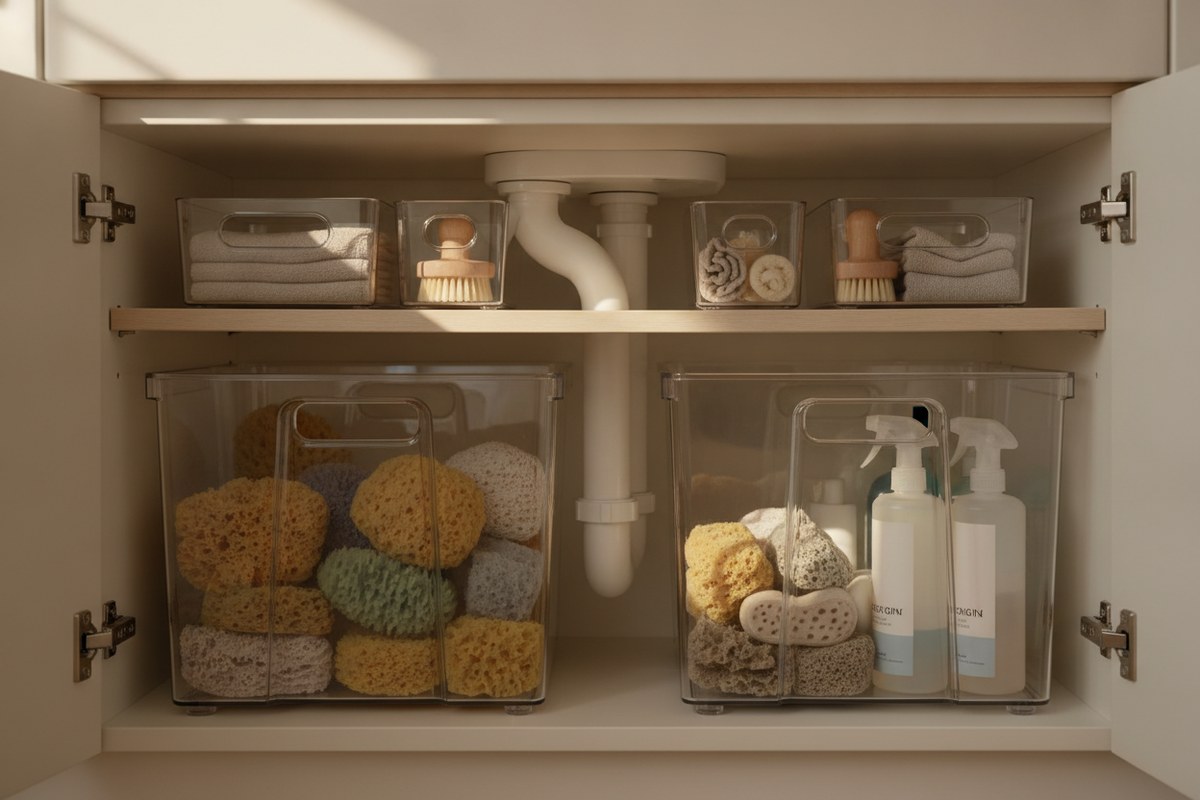
The area under the sink is often wasted on a jumble of sponges, sprays, and trash bags. A stackable under sink organizer works around the pipes and lets you use vertical space you’d otherwise lose. Group items by category—cleaning, dish care, trash liners—so you’re not digging through a pile every time you need one thing. Pull-out bins also make it easy to wipe down the cabinet floor without unloading everything first.
5. Roll in a Kitchen Cart for Extra Prep and Storage
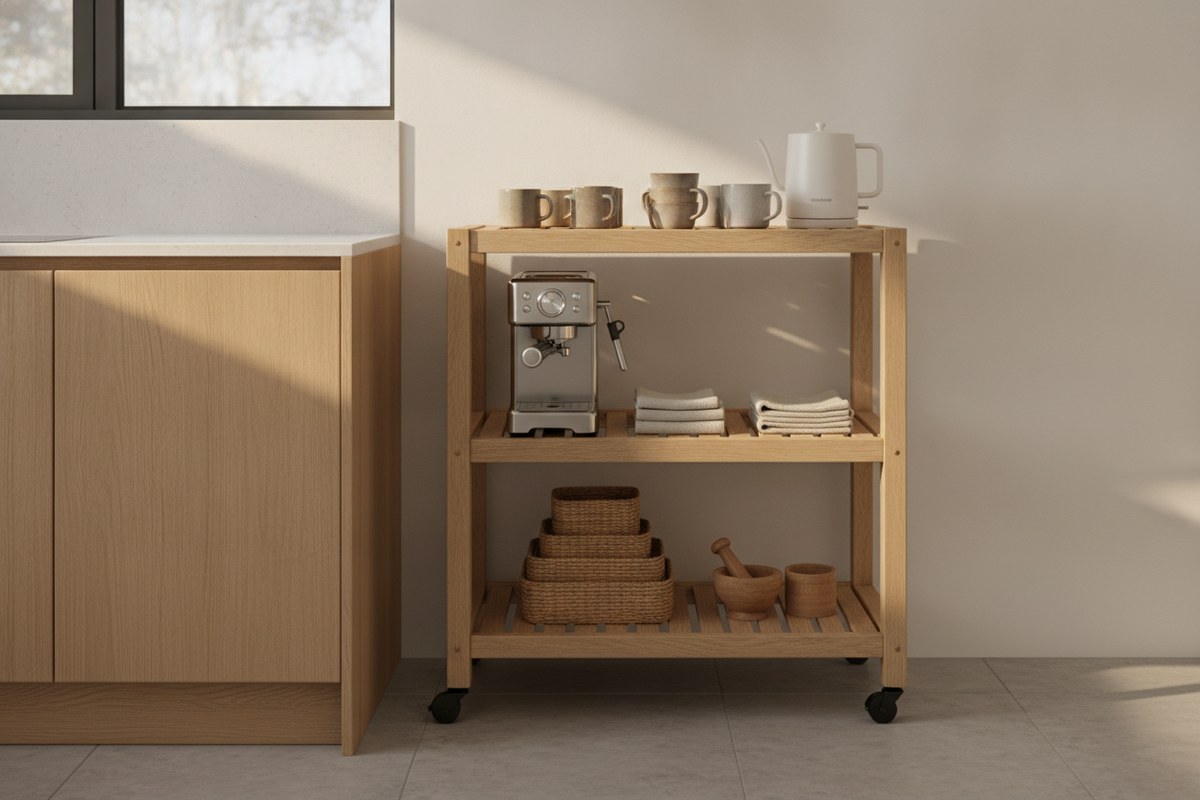
If your kitchen is missing counter space, storage, or both, a rolling kitchen cart solves both problems at once. Choose a slim model with open shelving to store pantry staples, small appliances, or your favorite mugs, then roll it wherever it’s needed—as a prep surface, a coffee station, or extra counter when you’re hosting. Because it’s freestanding, it moves with you when the lease ends, which is exactly the kind of flexible furniture renters should prioritize.
6. Use Shelf Risers to Double Your Cabinet Space
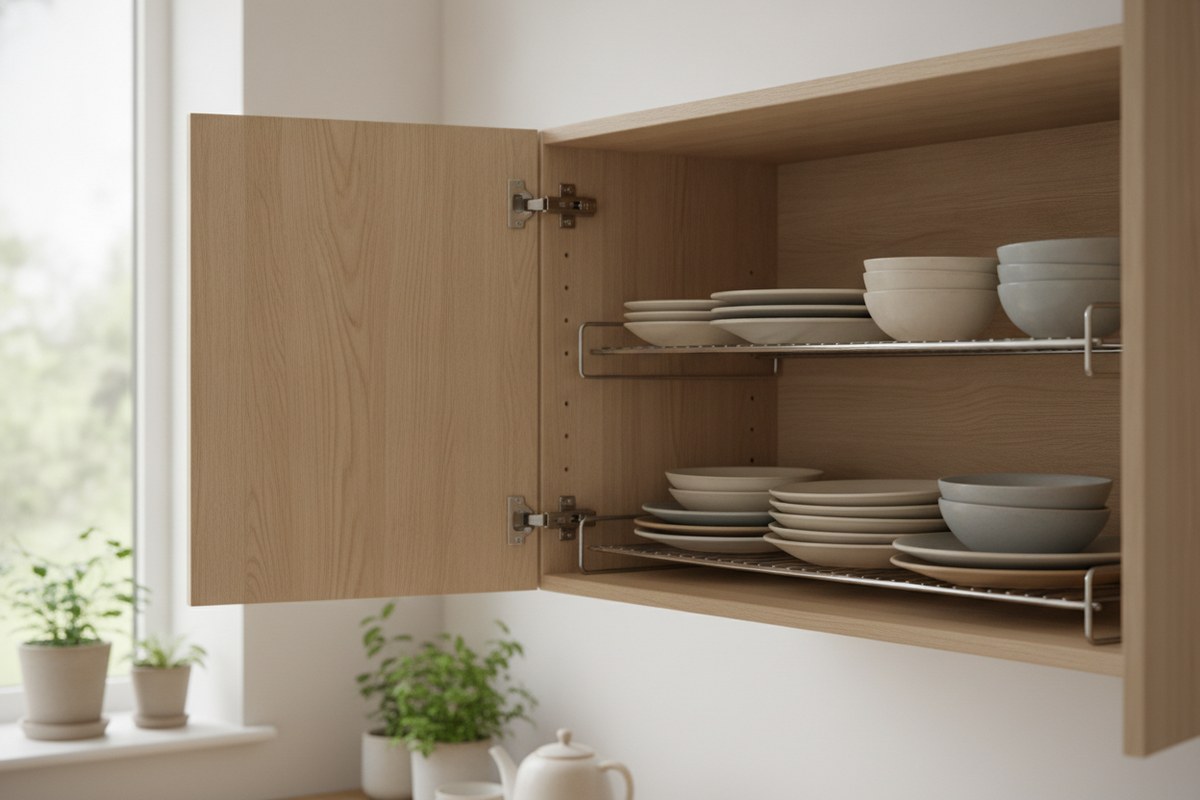
Most cabinets have several inches of dead air above your plates and mugs. Simple metal or bamboo shelf risers stack right on top of existing shelves, creating a second tier for lightweight items like bowls, spice jars, or snack containers. This small addition can meaningfully increase your usable storage without touching a single wall, and it keeps stacks from toppling every time you reach for the bottom plate.
7. Hang an Over-the-Cabinet-Door Organizer
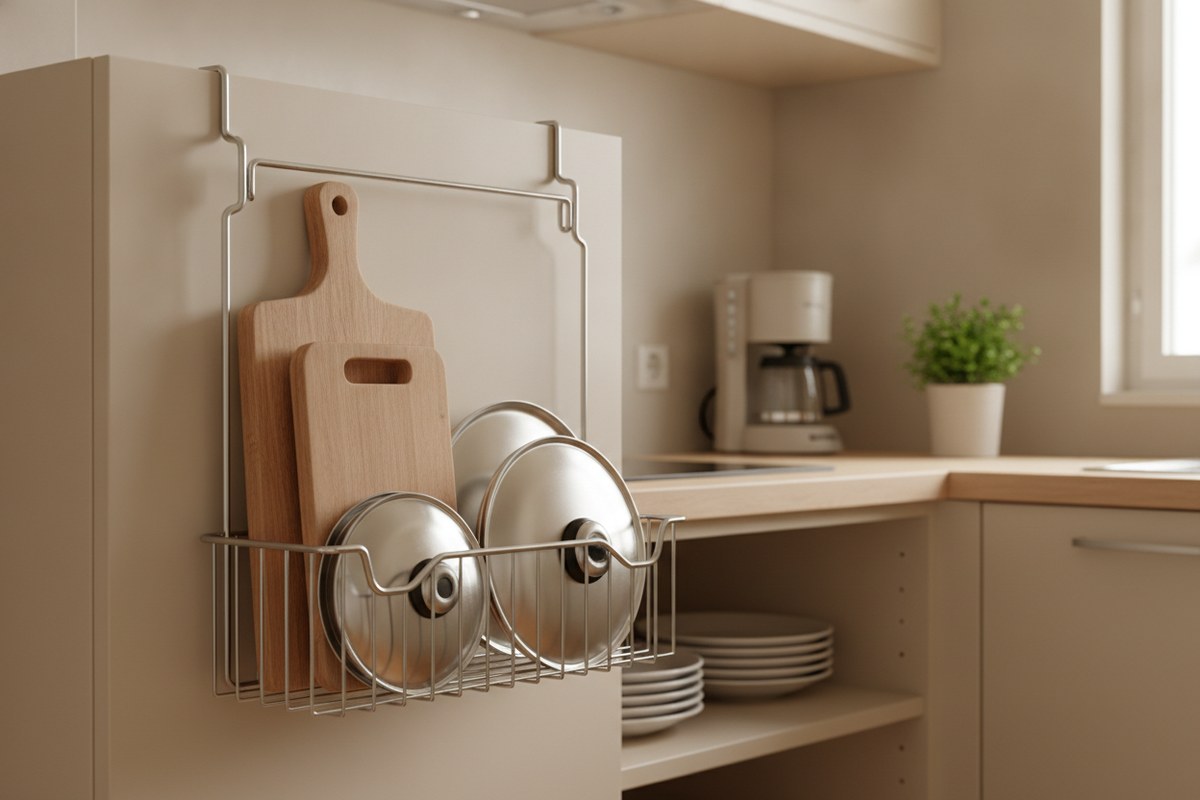
The inside of your cabinet doors is another overlooked spot. An over cabinet door organizer hangs over the top of the door with no hardware, giving you a spot for cutting boards, foil boxes, lids, or cleaning supplies. It’s a favorite trick in small Japanese apartments, where every door and drawer front is treated as potential storage rather than just an entry point.
8. Adopt the Japanese Habit of “One Container, One Category”
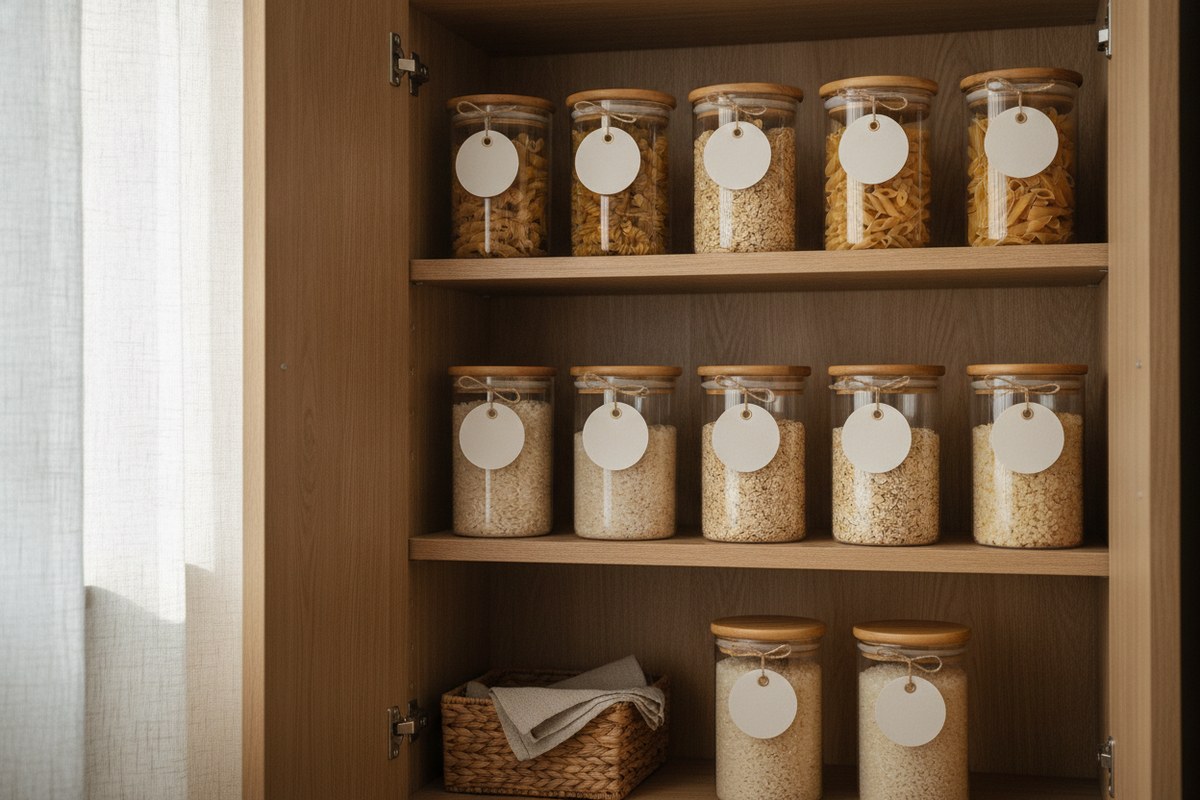
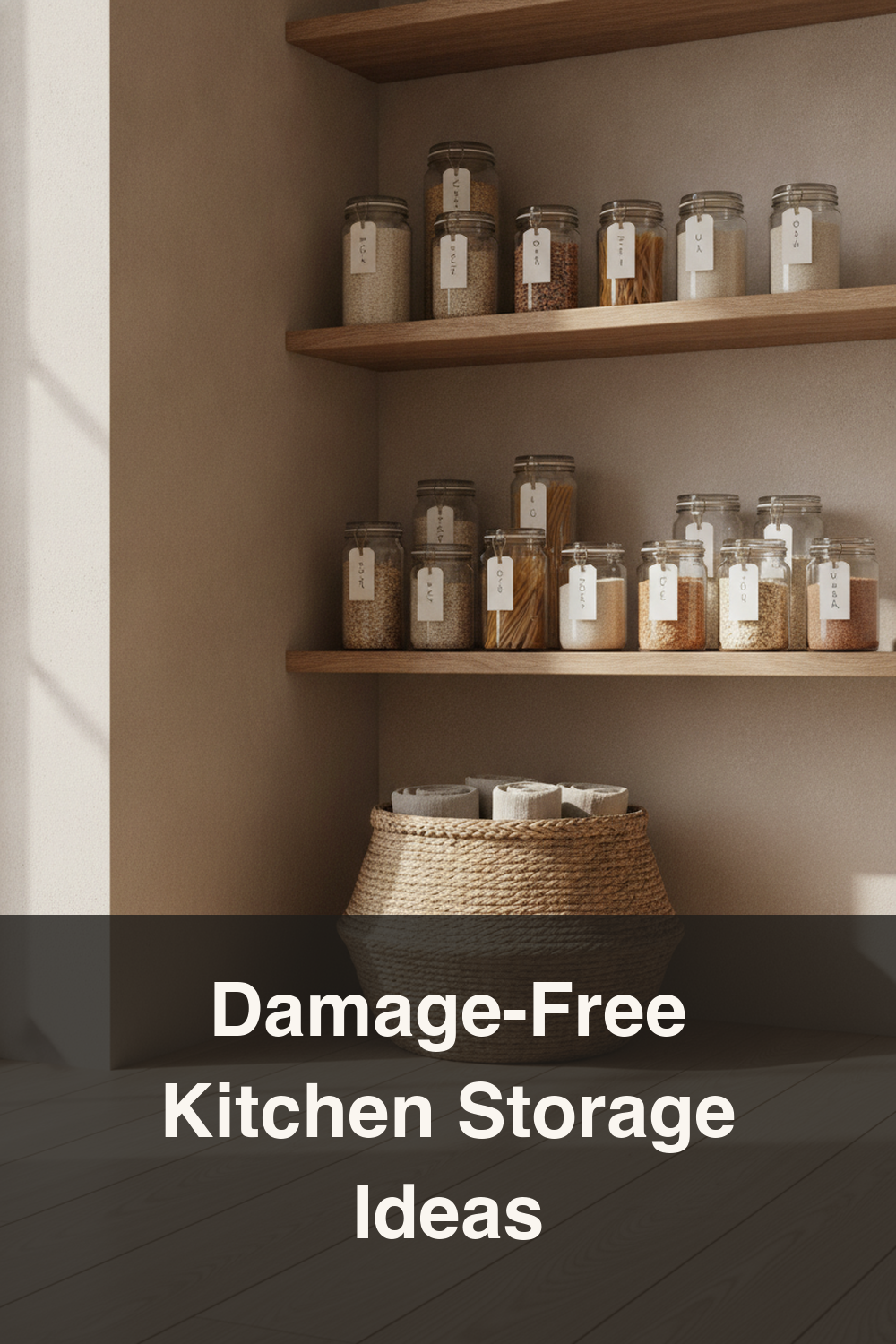
A core idea in Japanese home organization is grouping like items into a single labeled container rather than letting them scatter across shelves. Transfer dry goods like rice, oats, and pasta into clear pantry storage bins, then label each one. Not only does this look calmer, it also helps you see at a glance what you’re running low on—no more buying a third bag of flour because you couldn’t tell if you had one already.
9. Keep the Fridge Tidy with Clear Bins
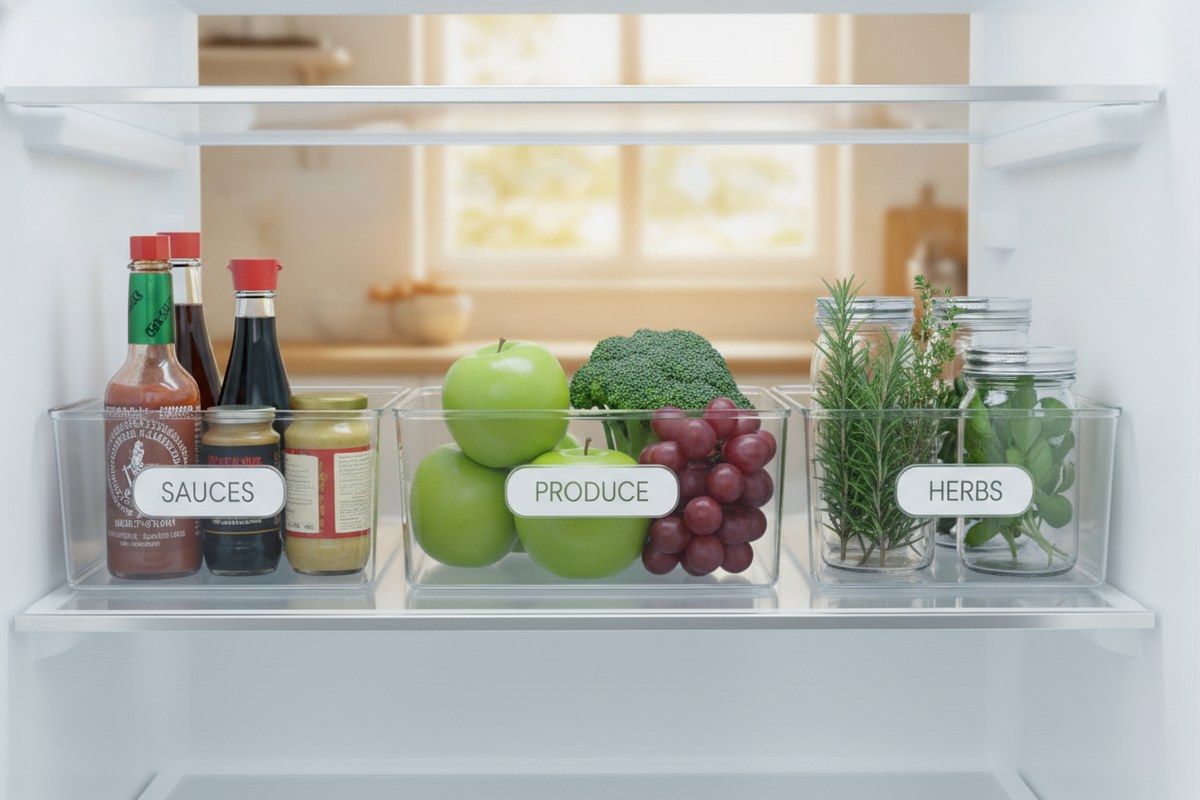
Refrigerators in rentals tend to be small and oddly shaped, which makes clutter build up fast. Sort condiments, snacks, and produce into clear fridge bins that you can slide in and out as a single unit. This keeps shelves easier to wipe down and stops small jars from getting lost in the back where they’re forgotten until well past their prime.
10. Choose Multi-Purpose Furniture Over Single-Use Pieces
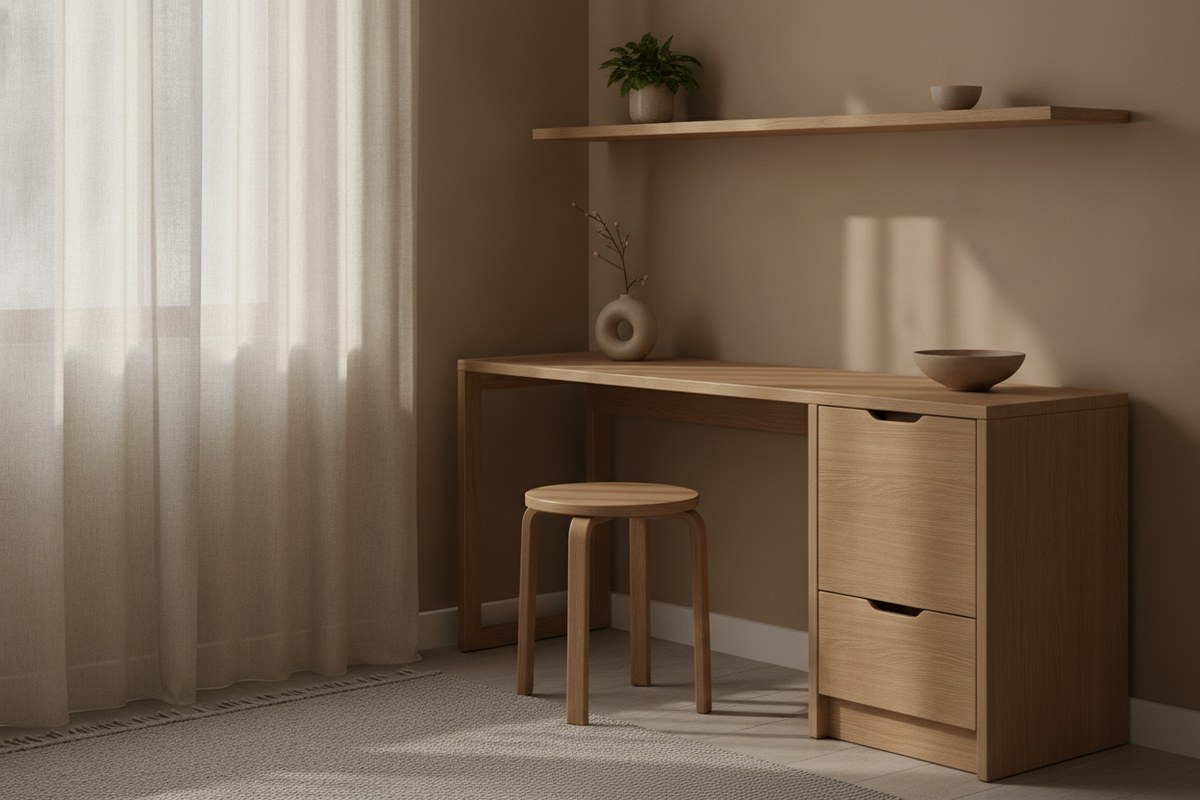
When square footage is limited, every piece of furniture should earn its keep. Look for a slim table that also offers drawer storage, a stool that doubles as a step for high shelves, or a cart that serves as both pantry and bar. This is the essence of Japandi design: nothing ornamental, everything intentional. Before buying anything new for your kitchen, ask whether it can serve at least two purposes—it’s the fastest way to keep a small space from feeling crowded.
Small kitchens and rental restrictions don’t have to mean permanent clutter. With a few renter-friendly products and a mindset borrowed from Japanese organizing—assign a home for everything, keep only what you use, and make the most of vertical space—you can create a kitchen that feels calm, spacious, and entirely your own, no matter how temporary the address.