This post may contain affiliate links. If you buy through them, we may earn a small commission at no extra cost to you.
Renting a small kitchen doesn’t mean you’re stuck with cluttered counters and jammed drawers. With a little Japandi-inspired thinking—where every item has a home and nothing sits out without a purpose—you can turn even the tiniest galley kitchen into a calm, functional space. Best of all, every idea below is completely damage-free, so you’ll get your security deposit back while still enjoying a kitchen that feels organized and serene. Here are 12 practical, rental-safe ways to maximize your small kitchen.
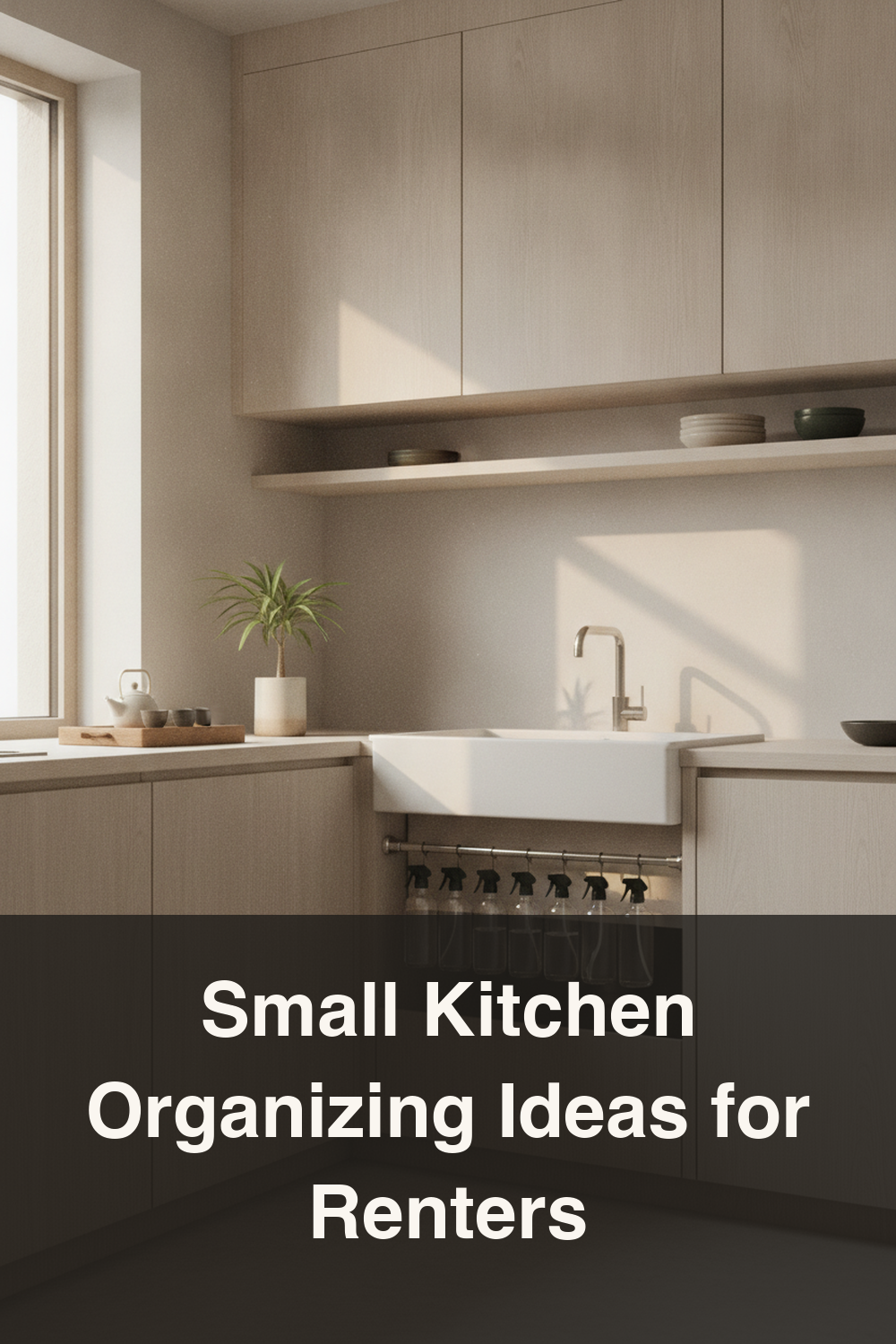
1. Use Tension Rods to Create Instant Shelves
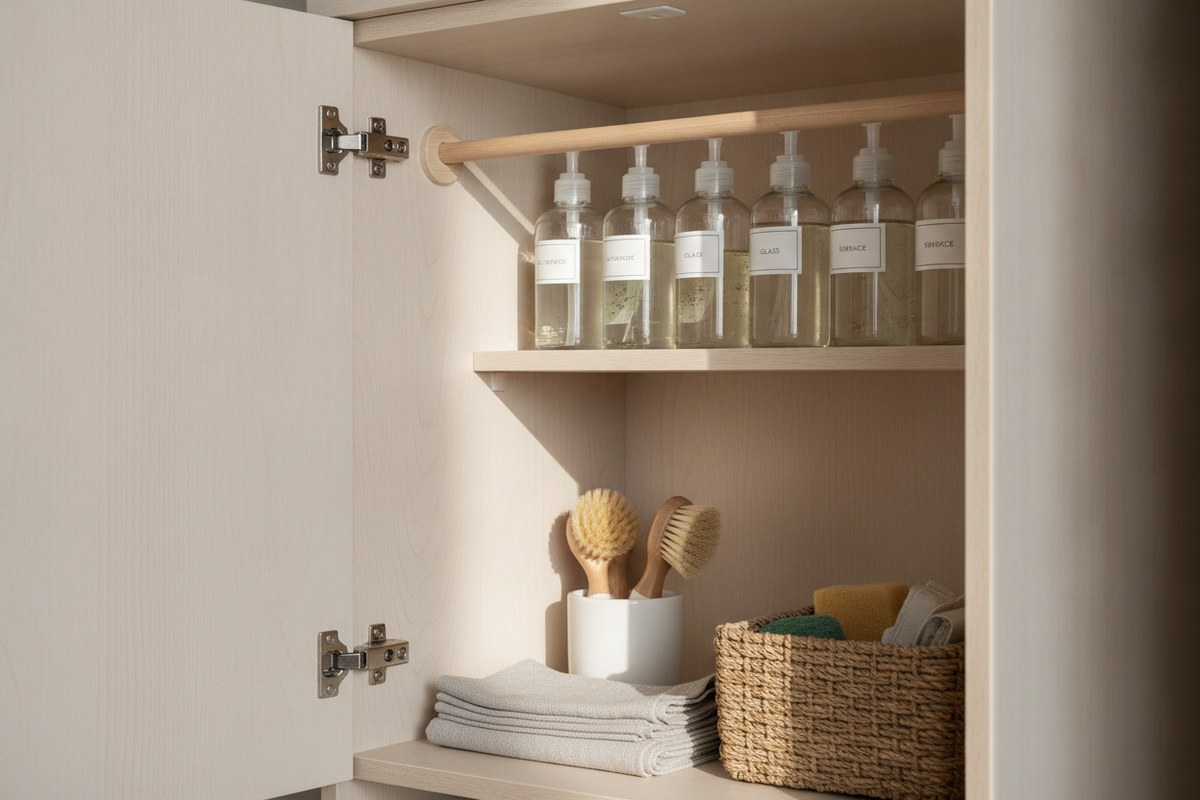
Tension rods are a renter’s best friend. Wedge one under the sink to hang spray bottles by their trigger handles, or use two side by side to create a flat surface for plates. A tension rod shelf requires zero screws and can be removed in seconds, making it perfect for cabinets with awkward, wasted vertical space.
2. Add a Rolling Kitchen Cart for Extra Counter Space
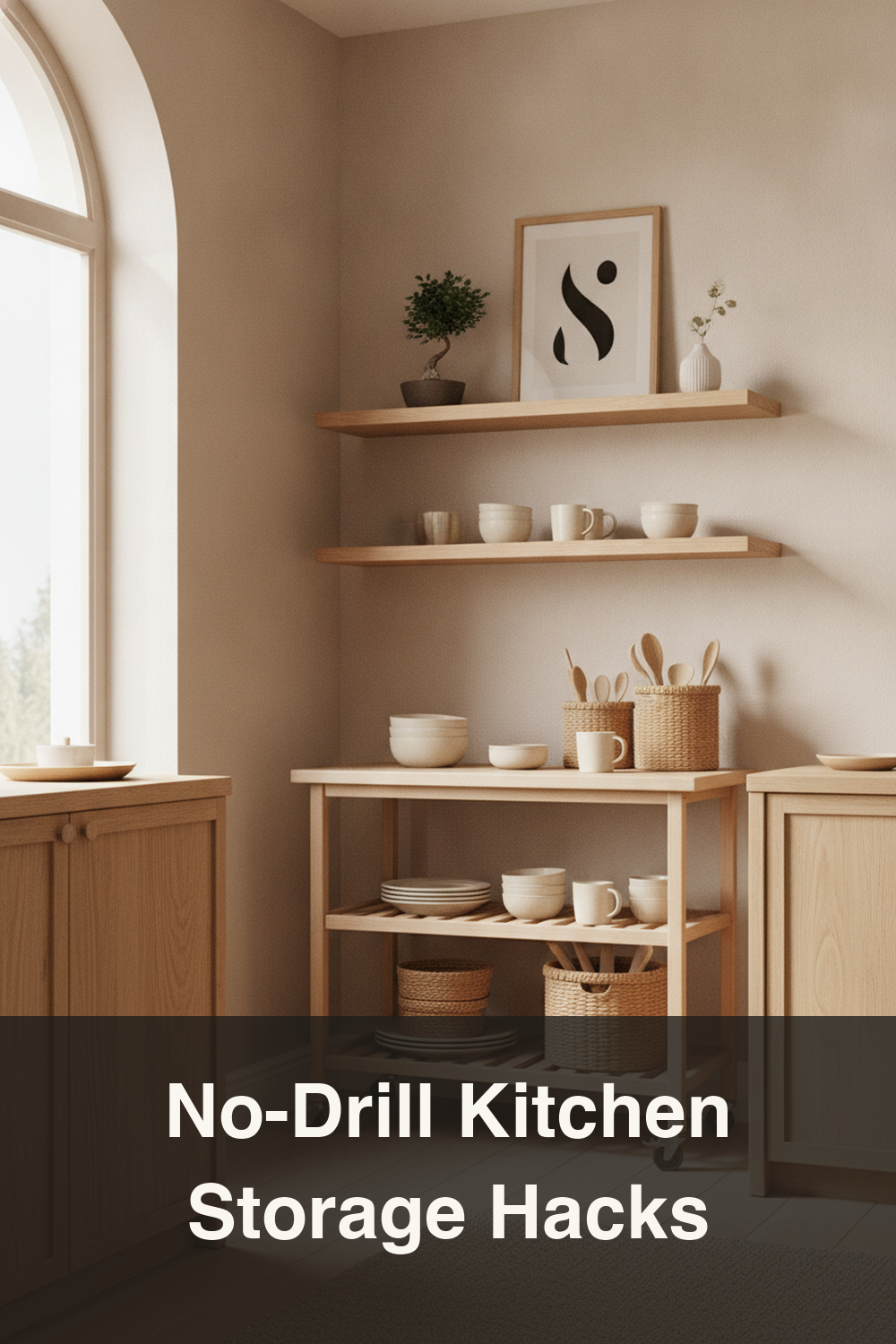
If your countertop space is limited, a slim rolling cart can act as extra prep space, a coffee station, or additional pantry storage. Because it’s freestanding, it moves with you when you move out—no installation required. Look for a cart with an open shelf design that keeps items visible, which aligns with the Japanese idea of keeping only what you need within easy reach.
3. Corral Drawers with Bamboo Dividers
A messy utensil drawer is one of the fastest ways for a small kitchen to feel chaotic. Adjustable bamboo drawer dividers let you create custom compartments without any adhesive or hardware. This mirrors the Japanese concept of ‘a place for everything,’ where each utensil has a designated spot, making cleanup almost automatic.
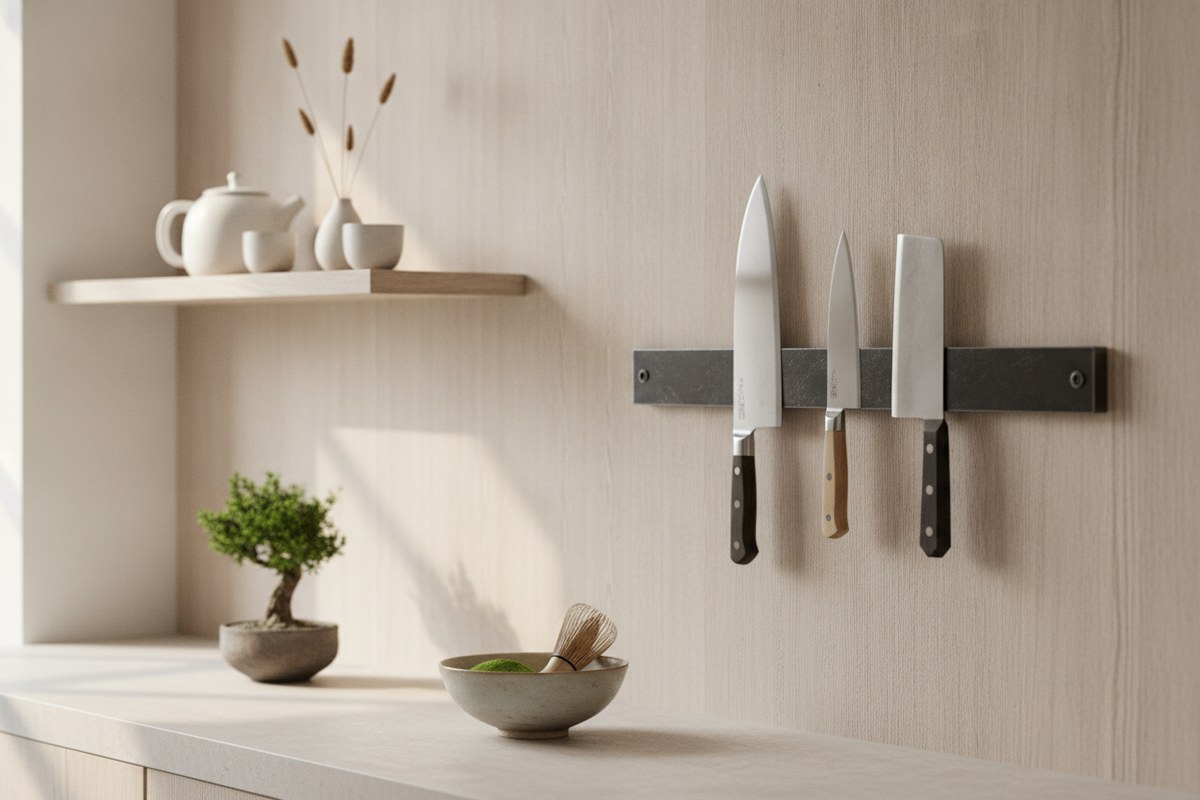
4. Hang a Magnetic Knife Strip (No Drill Needed)
Traditional magnetic knife strips require drilling into the wall, but many now come with strong adhesive backing designed for rentals. A adhesive magnetic knife strip frees up drawer space and keeps blades visible and safely stored, echoing the minimalist Japanese kitchen where tools are displayed with intention rather than hidden away in a jumble.
5. Use Adhesive Hooks for Utensils and Mugs
Command-style hooks are ideal for hanging mugs, oven mitts, or measuring cups on the inside of cabinet doors. A set of adhesive wall hooks can instantly clear clutter from your counters and drawers. Try grouping items by category—just mugs on one hook, just towels on another—to keep the look tidy rather than busy.
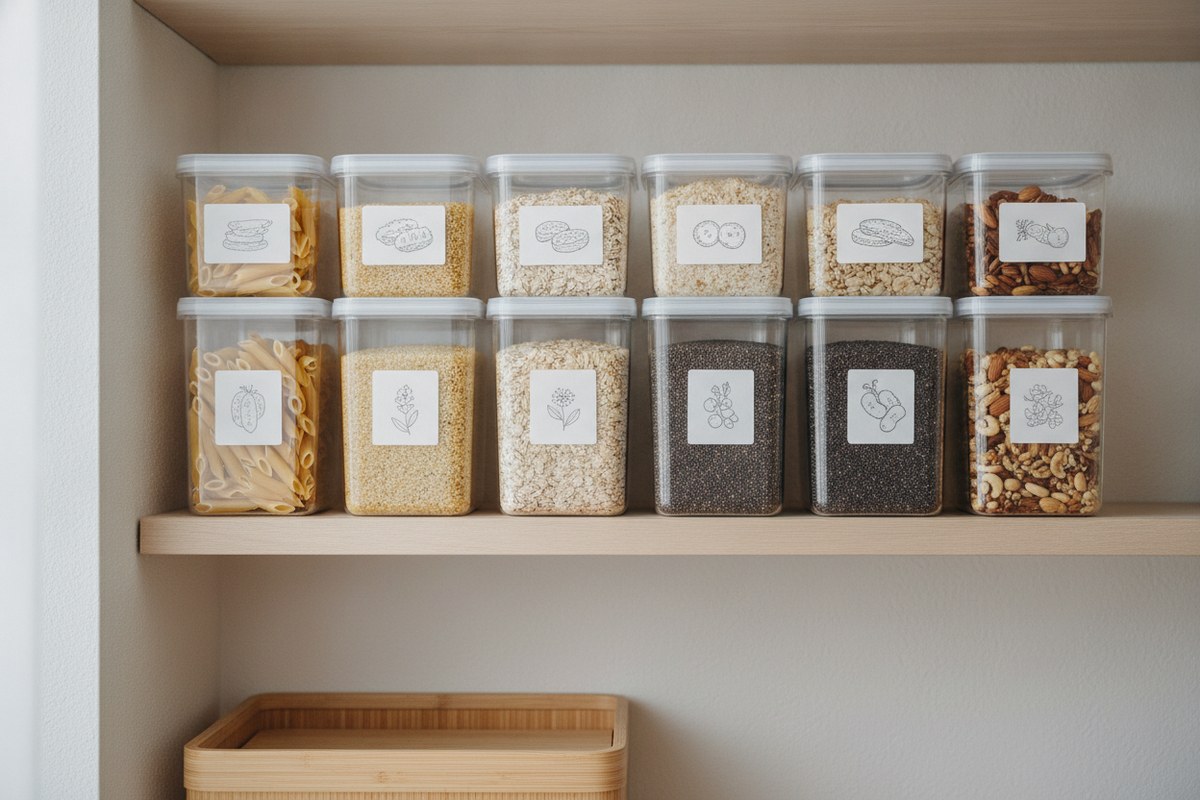
6. Try Stackable Clear Bins for Pantry Zoning
Even a small pantry shelf or cabinet can feel overwhelming without zones. Stackable clear stackable pantry containers let you group similar items—grains, snacks, baking supplies—so you can see what you have at a glance. This visual clarity is central to Japanese organizing methods, which prioritize being able to identify contents without opening every container.
7. Add a Turntable for Corner Cabinets
Deep corner cabinets are notorious for swallowing items whole. A lazy susan turntable solves this instantly, letting you spin to access oils, sauces, or spice jars stored toward the back. No installation is needed—just set it on the shelf and load it up.
8. Use Over-the-Cabinet-Door Organizers
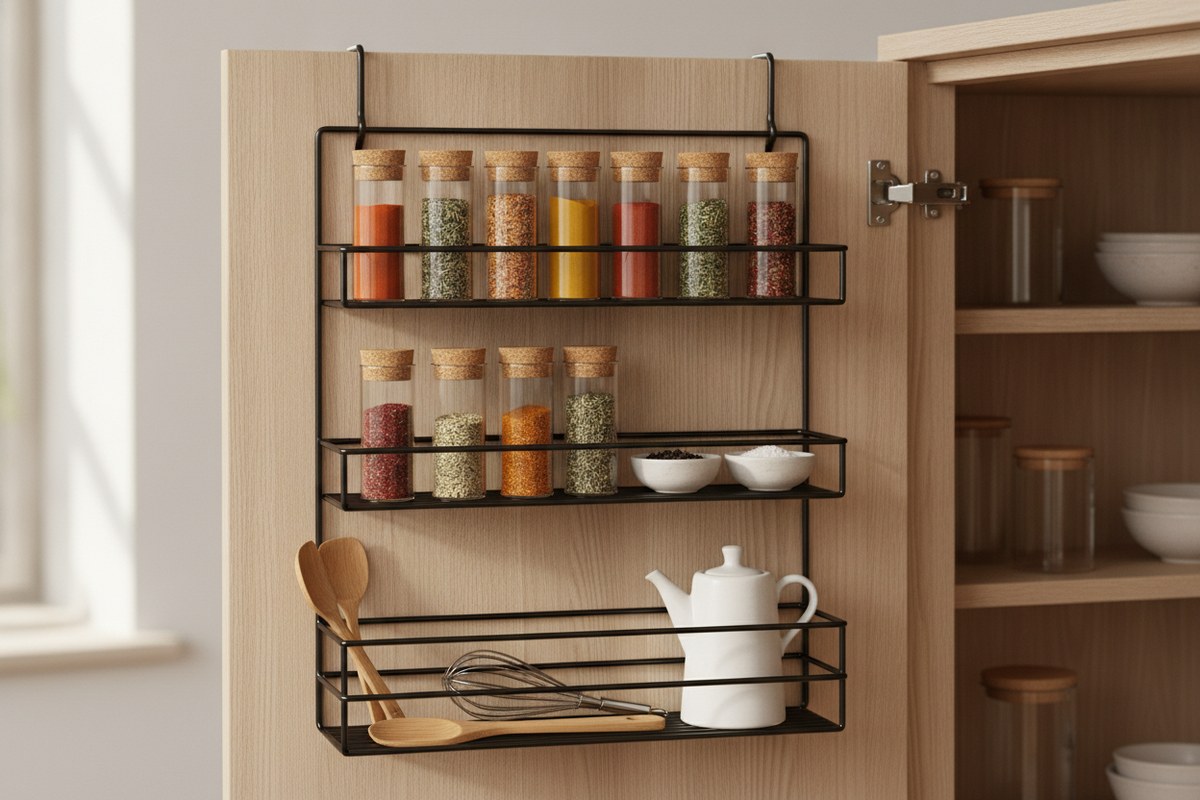
The inside of cabinet doors is often completely wasted space. An over-the-door organizer can hold spice jars, foil boxes, or cleaning supplies without a single screw. This is one of the easiest ways to instantly add storage capacity to a small rental kitchen.
9. Label Everything the Japanese Way
In Japanese organizing, labeling isn’t just about tidiness—it’s about reducing decision fatigue. When every container is clearly labeled, you (and anyone else in your household) instantly know where things belong. Use simple removable labels on bins and jars so returning items to their place becomes an unconscious habit rather than a chore.
10. Add Vertical Shelf Risers Inside Cabinets
Stacked plates and bowls often lead to precarious towers that are hard to access. A simple shelf riser doubles your usable space by creating a second tier inside a cabinet, so you can store two layers of dishes or cups without stacking them directly on top of each other. This keeps things easy to grab and reduces the temptation to leave items sitting out on the counter.
11. Embrace the ‘Ma’ Principle: Keep Counters Clear
The Japanese concept of ‘ma,’ or negative space, is about leaving room to breathe. In a small kitchen, this means resisting the urge to keep every appliance and gadget out on the counter. Store items you use only occasionally—like a waffle iron or blender—inside a cabinet, and keep just one or two daily essentials visible. The result is a kitchen that feels calmer and looks larger, even if the square footage hasn’t changed.
12. Use Fridge Bins to Create Zones
A small fridge can get chaotic fast, especially in a shared living situation. Clear bins help you group similar items—produce, condiments, snacks—so nothing gets lost or forgotten in the back. Pulling out one bin instead of digging through shelves also means less time with the fridge door open, keeping your kitchen efficient and organized in the same spirit as the rest of your rental-friendly system.
Small kitchen living doesn’t have to mean cluttered or chaotic. By borrowing a few principles from Japanese organization—give everything a home, keep counters clear, and use visual systems to reduce mental clutter—you can create a rental kitchen that feels intentional, calm, and easy to live in, no permanent changes required.