This post may contain affiliate links. If you buy through them, we may earn a small commission at no extra cost to you.
Japandi style is really about restraint, not spending. Think warm wood, soft linen, a few well-chosen objects, and lots of breathing room—which happens to be perfect news for anyone decorating a small apartment or dorm on a tight budget. Instead of buying a whole new living room, you can DIY your way to that quiet, uncluttered Japandi feeling with a paintbrush, some thrifted finds, and a Japanese approach to organizing what you already own. Here are ten low-cost projects to get you there.
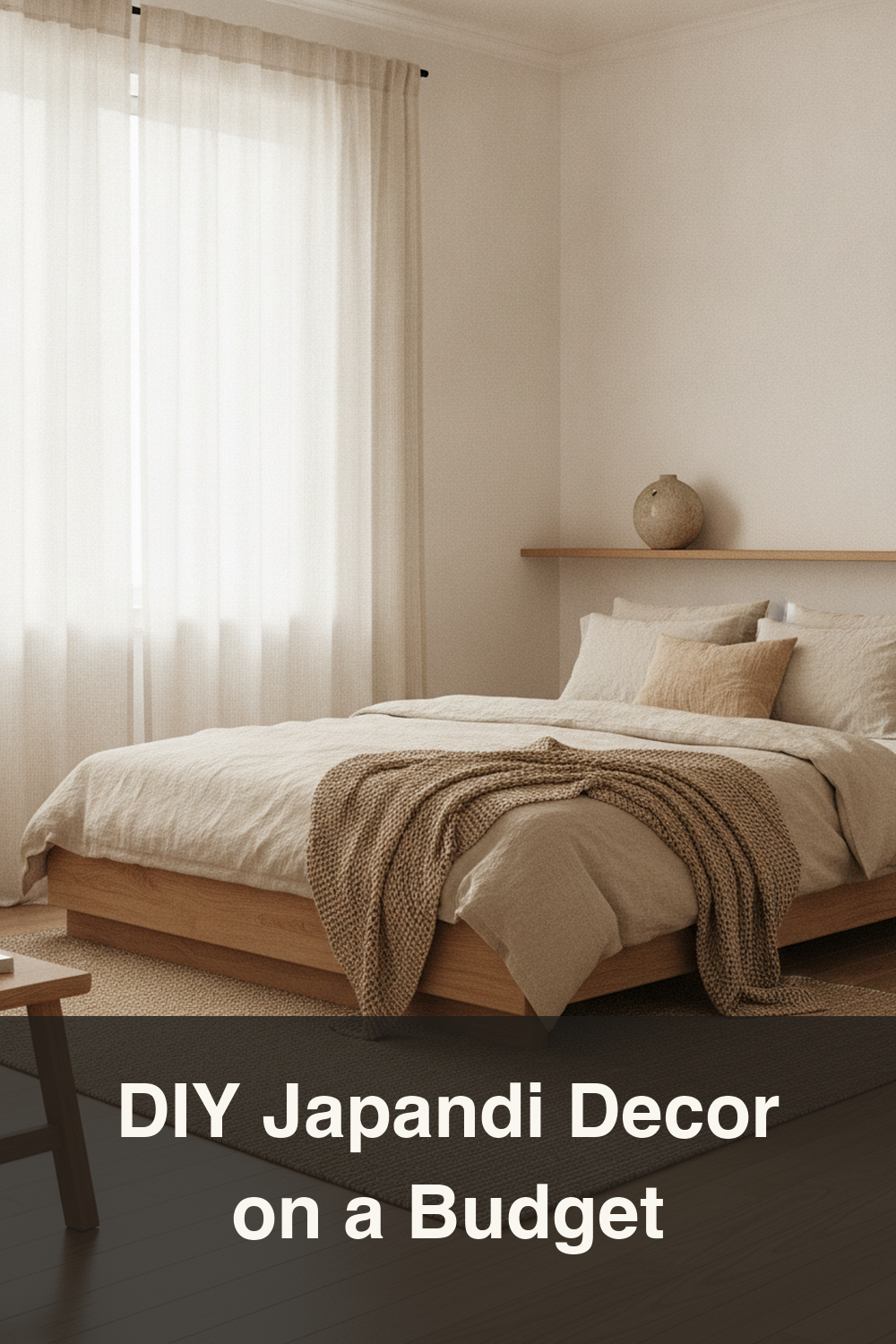
1. Start With a Ruthless (But Kind) Declutter
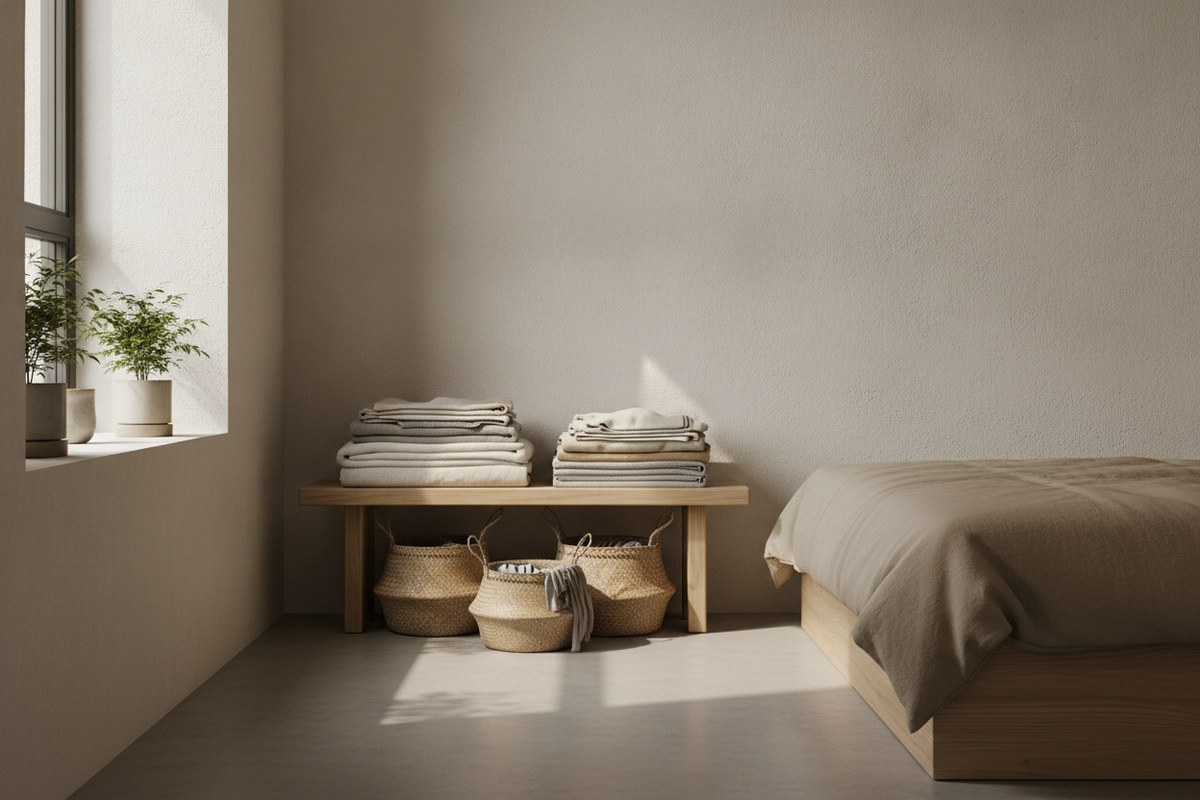
Before you buy or build anything, clear the decks. Japandi rooms feel spacious because there’s simply less in them—every object earns its place. Borrow the Japanese habit of keeping only what you use or genuinely love, and box up the rest. Sort belongings into keep, donate, and store piles, then tuck seasonal items away using under-bed storage bags so surfaces stay clear. This single free step does more for a Japandi look than any purchase ever could.
2. Sew (or No-Sew) Simple Linen Curtains
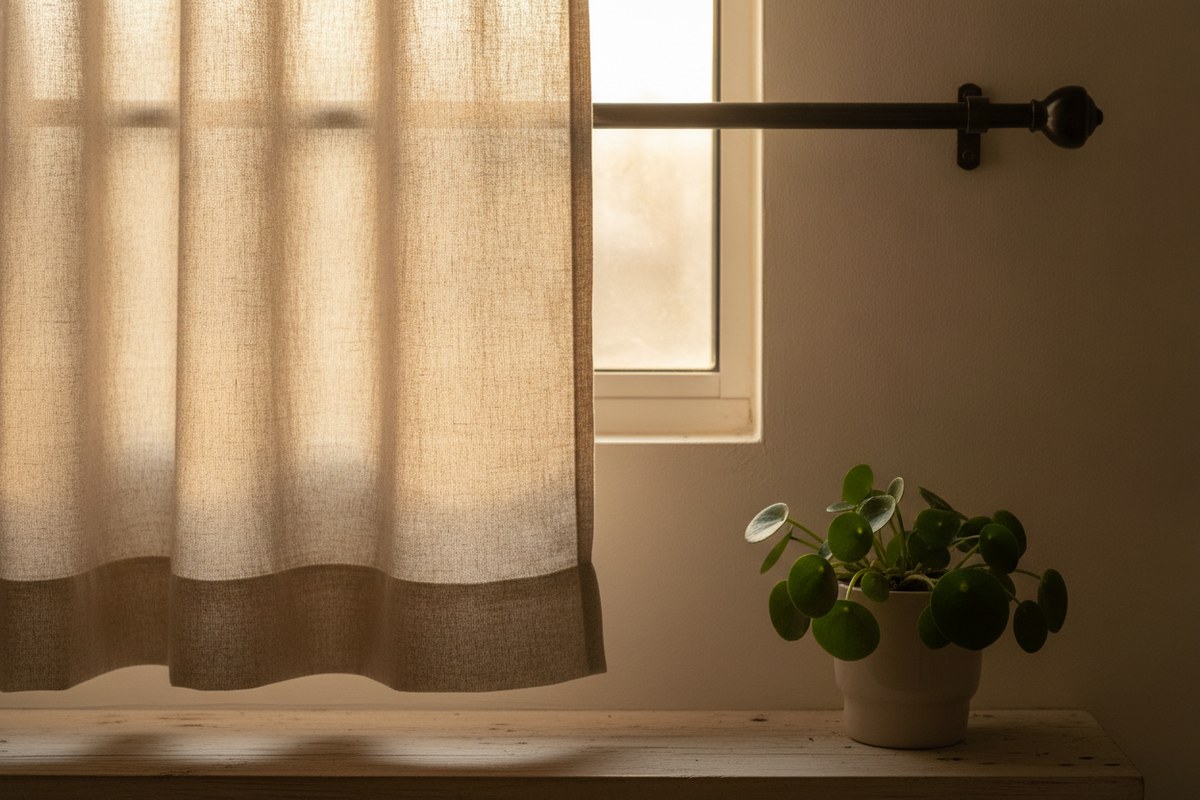
Swap heavy patterned curtains for loose, natural-fiber panels. Linen or linen-blend fabric from a discount bolt is inexpensive and drapes beautifully, letting soft light filter through the way it would through shoji screens. If sewing isn’t your thing, hem with fusible tape instead of thread. For an even faster fix, hang ready-made linen curtain panels on a slim tension rod—no drilling required, which is ideal for renters.
3. Paint One Wall a Warm, Earthy Neutral
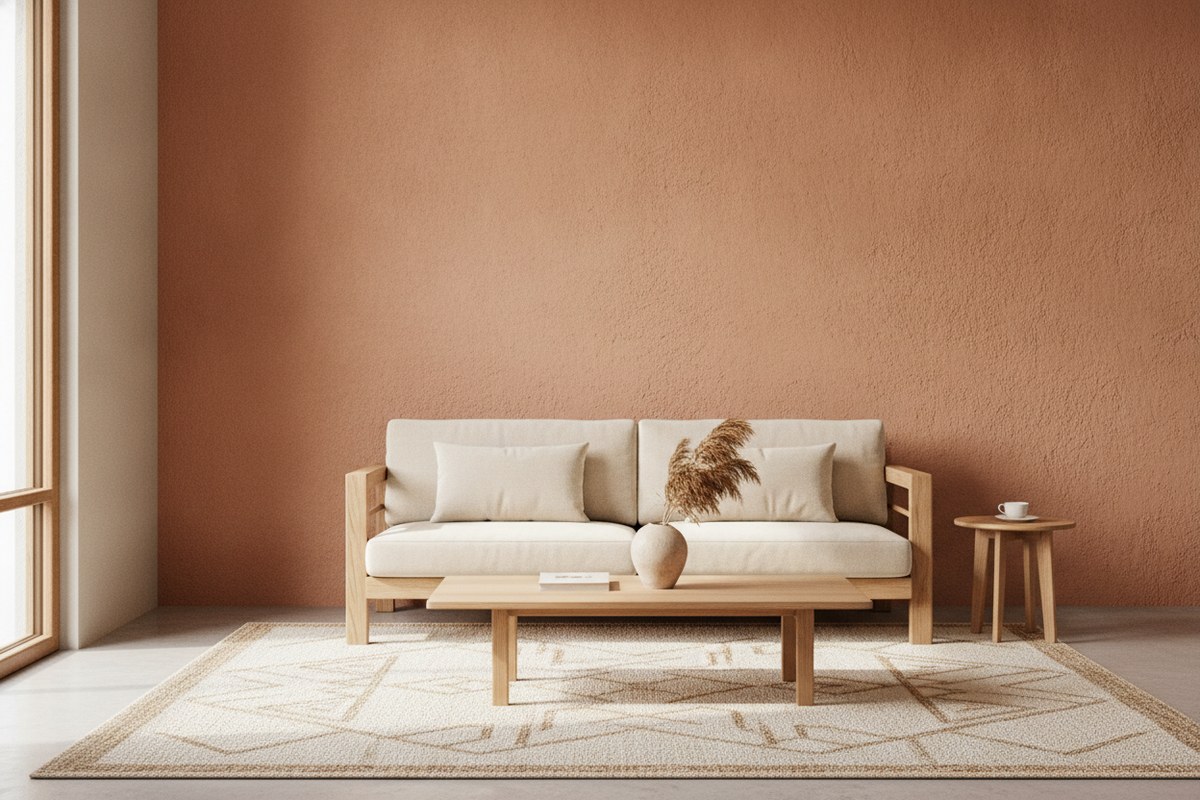
A gallon of paint is one of the cheapest transformations available. Skip stark white or cool gray in favor of warm clay, oat, or soft moss—colors pulled straight from nature that anchor a Japandi palette. Paint just one accent wall behind your bed or sofa to add depth without overwhelming a small room. Test swatches in different light before committing, since Japandi favors muted, slightly dusty tones over bright or saturated ones.
4. Build a Simple Floating Display Shelf
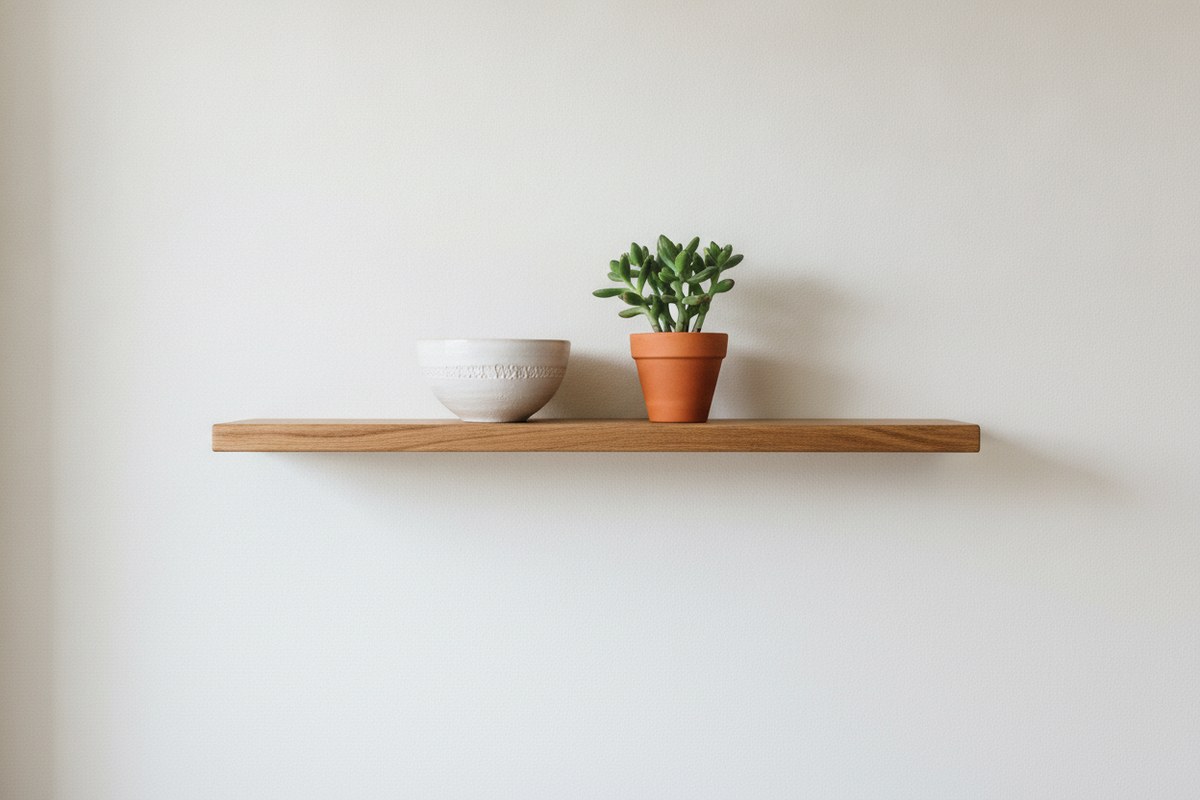
Traditional Japanese homes often include a small alcove, or tokonoma, for displaying one meaningful object at a time. You can recreate that spirit with a single floating shelf mounted at eye level. A basic pine board and an inexpensive bracket kit is all you need—no carpentry experience required. Style it with one plant, one ceramic piece, and negative space, resisting the urge to fill every inch. A ready-made floating wall shelf works just as well if you’d rather skip the sawing.
5. Repurpose Crates and Boxes as Low Storage
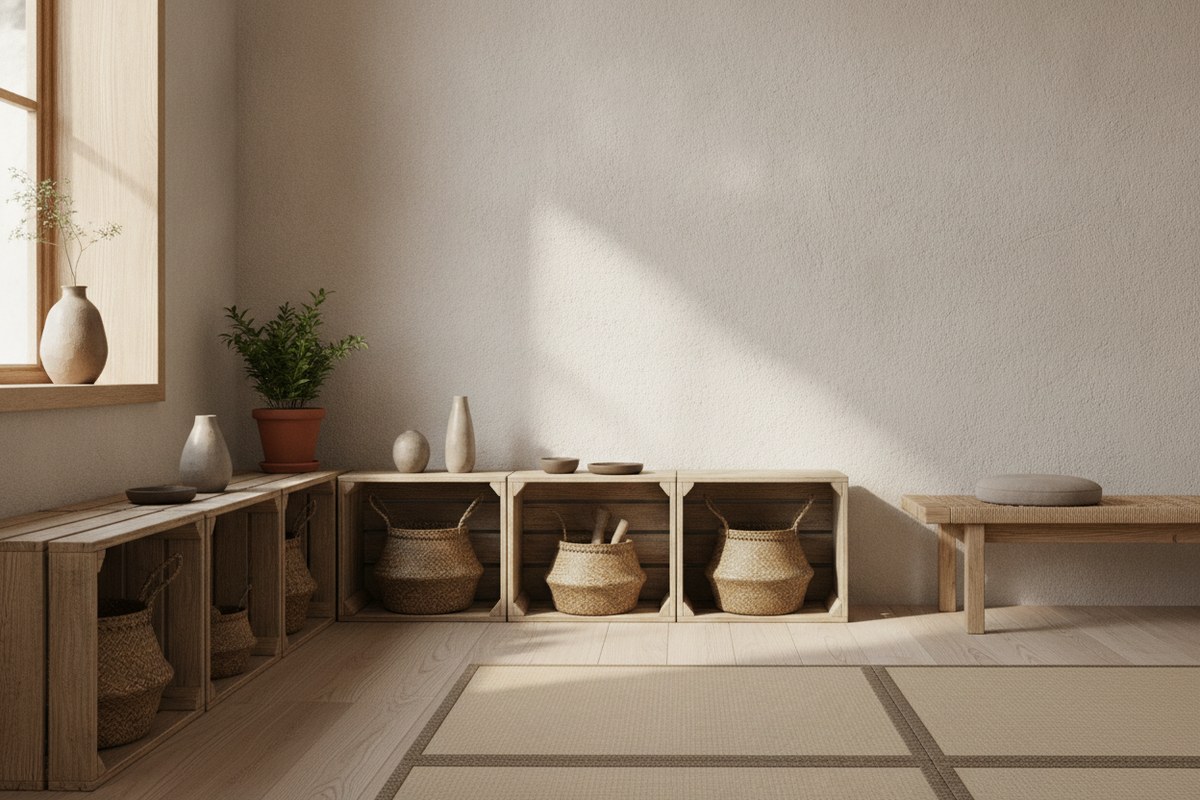
Japandi storage tends to sit low to the ground, echoing traditional Japanese furniture. Stack a couple of unfinished wooden crates on their sides for an instant low bookshelf or plant stand, and sand and oil them for a warmer finish. Line the inside with woven woven storage baskets to corral small items like remotes, mail, or charging cables out of sight, keeping surfaces calm and photo-ready.
6. Create a Floor Cushion Reading Nook
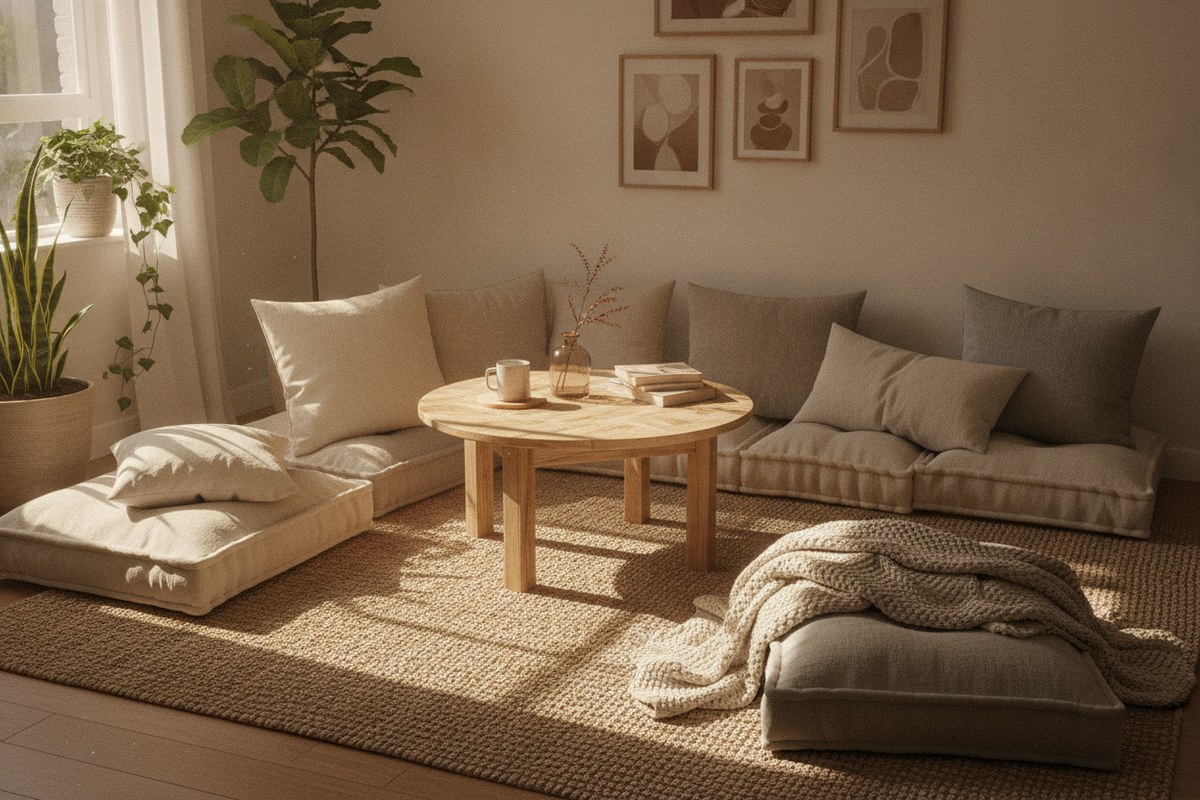
Skip the bulky armchair and carve out a cozy corner with floor seating instead—a nod to tatami-style living that also frees up square footage in a small room. Lay down a natural fiber rug, add a low side table, and pile on a couple of floor cushion seating pieces in linen or cotton. It’s an inexpensive way to add a dedicated relaxation spot without committing to new furniture.
7. Make a Paper or Rattan Pendant Shade
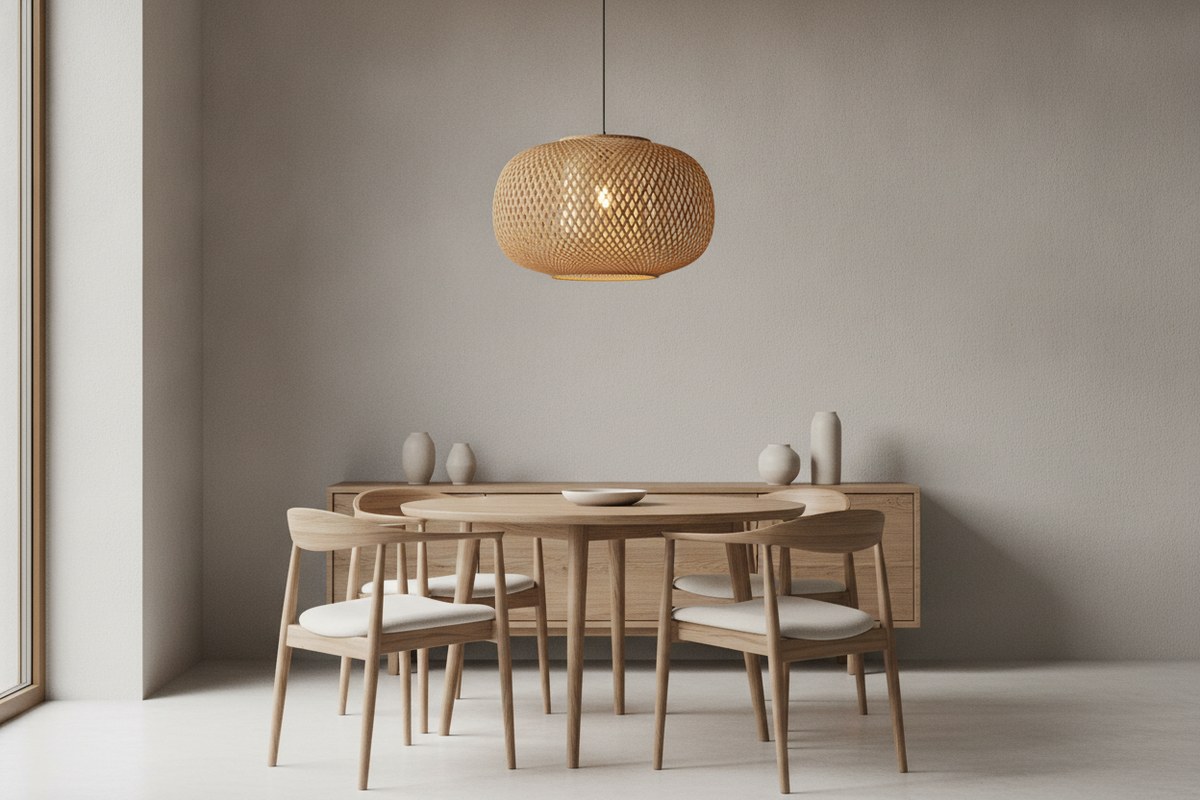
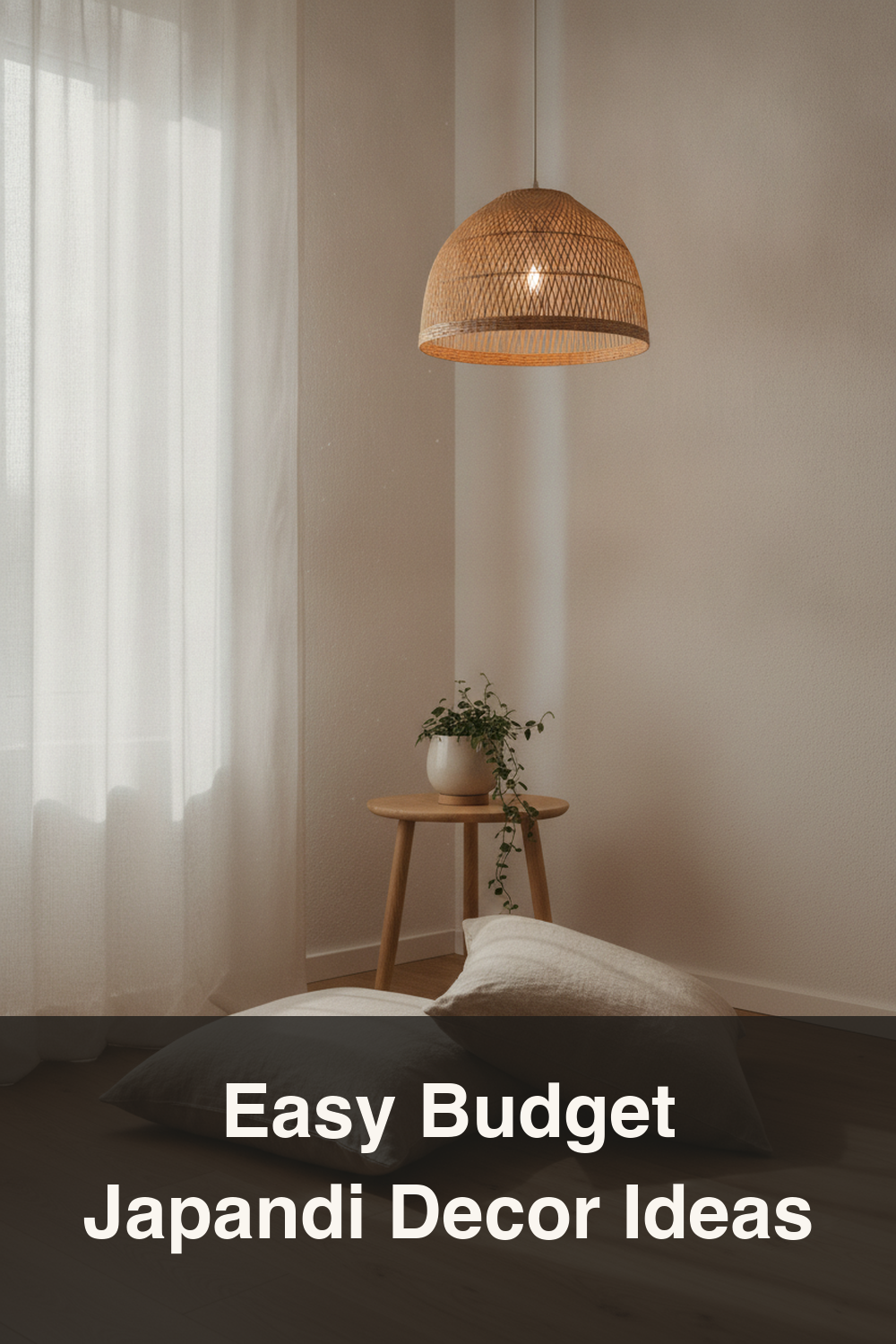
Harsh overhead lighting works against the soft, diffused glow Japandi spaces are known for. Cover an existing fixture with an inexpensive paper lantern shade, or swap in a woven rattan pendant cover that clips over your current bulb—no rewiring needed. A rattan pendant lamp shade instantly warms up a room’s lighting and adds natural texture overhead for very little cost.
8. Style a Shelf With Thrifted Ceramics
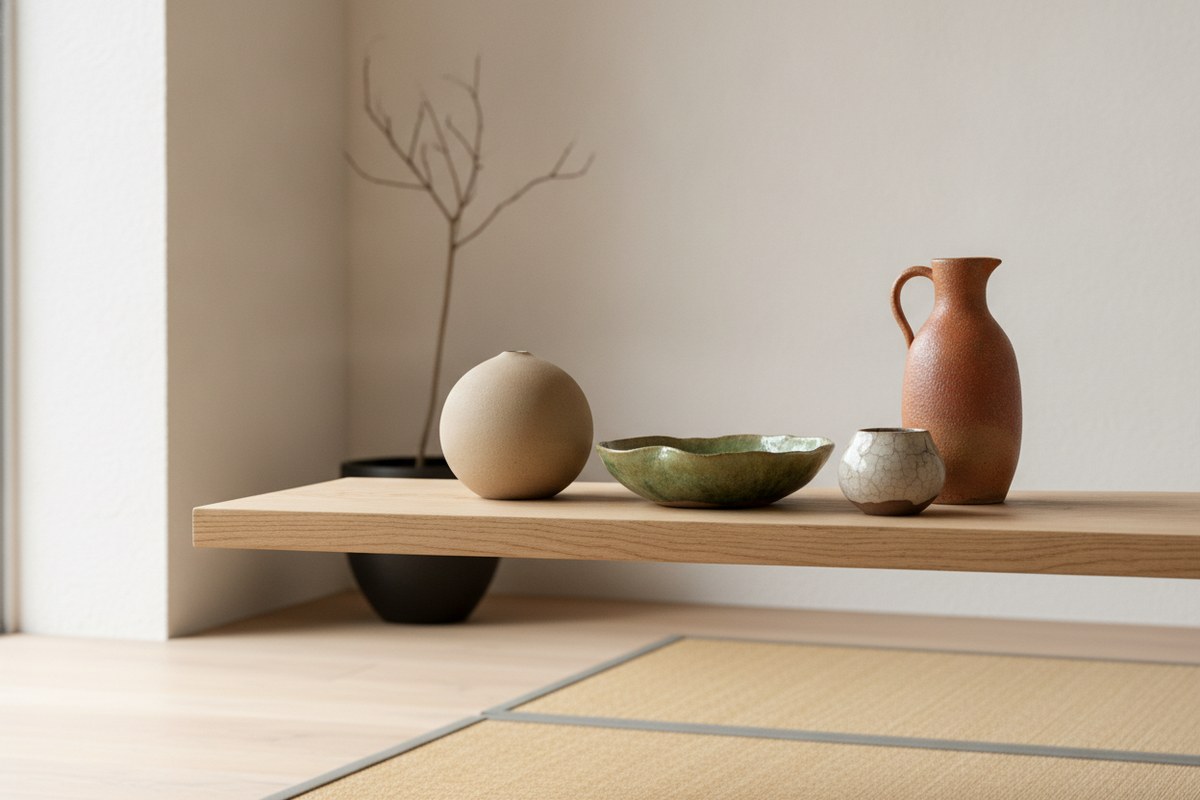
Secondhand shops are goldmines for Japandi accents—look for imperfect, handmade-looking bowls, vases, or mugs in muted glazes. Group two or three pieces of varying heights on your shelf or windowsill, leaving plenty of open space around them. The slightly uneven, organic quality of thrifted ceramics fits perfectly with the wabi-sabi philosophy of appreciating imperfection, and you’ll rarely pay more than a few dollars per piece.
9. Add Greenery With a Simple Ikebana-Style Arrangement
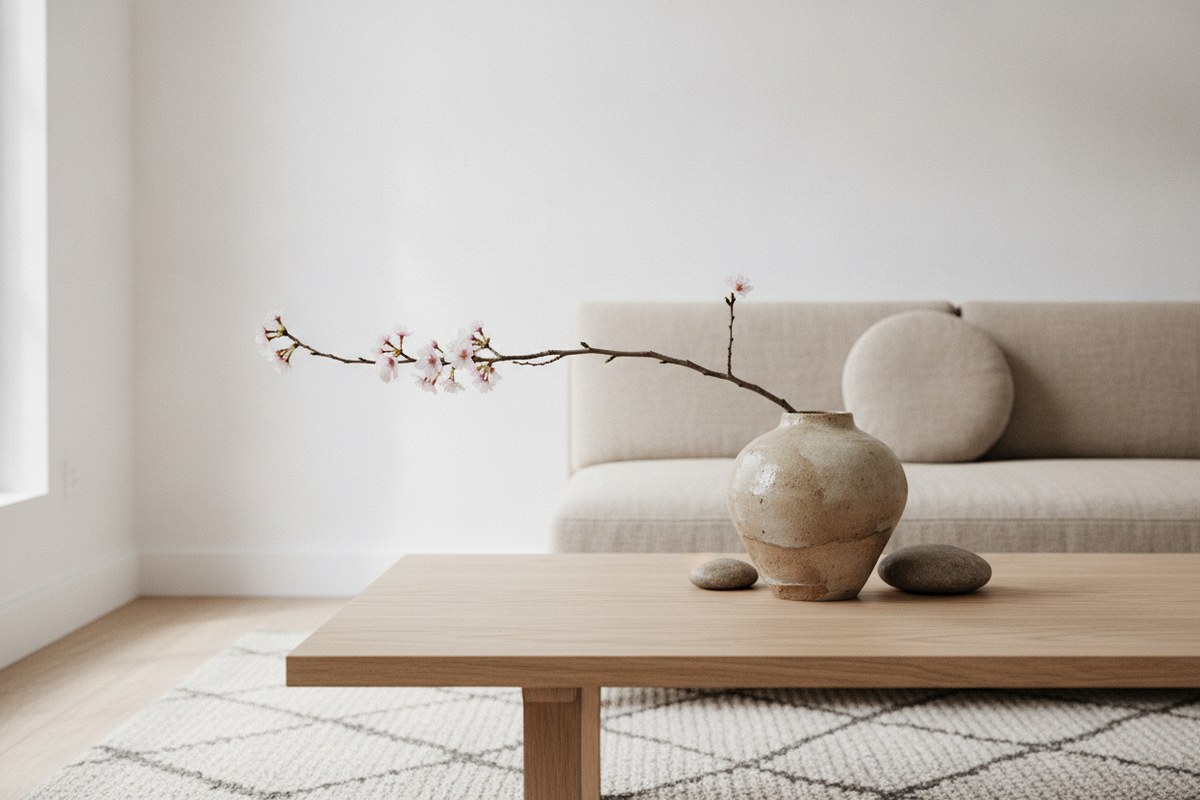
You don’t need a full houseplant collection to bring life into a room. Instead, try one or two stems—a eucalyptus branch, pampas grass, or a single flower—in a simple ceramic vase, inspired by the minimal, asymmetrical arrangements of ikebana. This costs almost nothing if you’re clipping from your yard or a grocery store bunch, yet it adds an intentional, gallery-like focal point to a side table or shelf.
10. Wrap and Store With Furoshiki Fabric
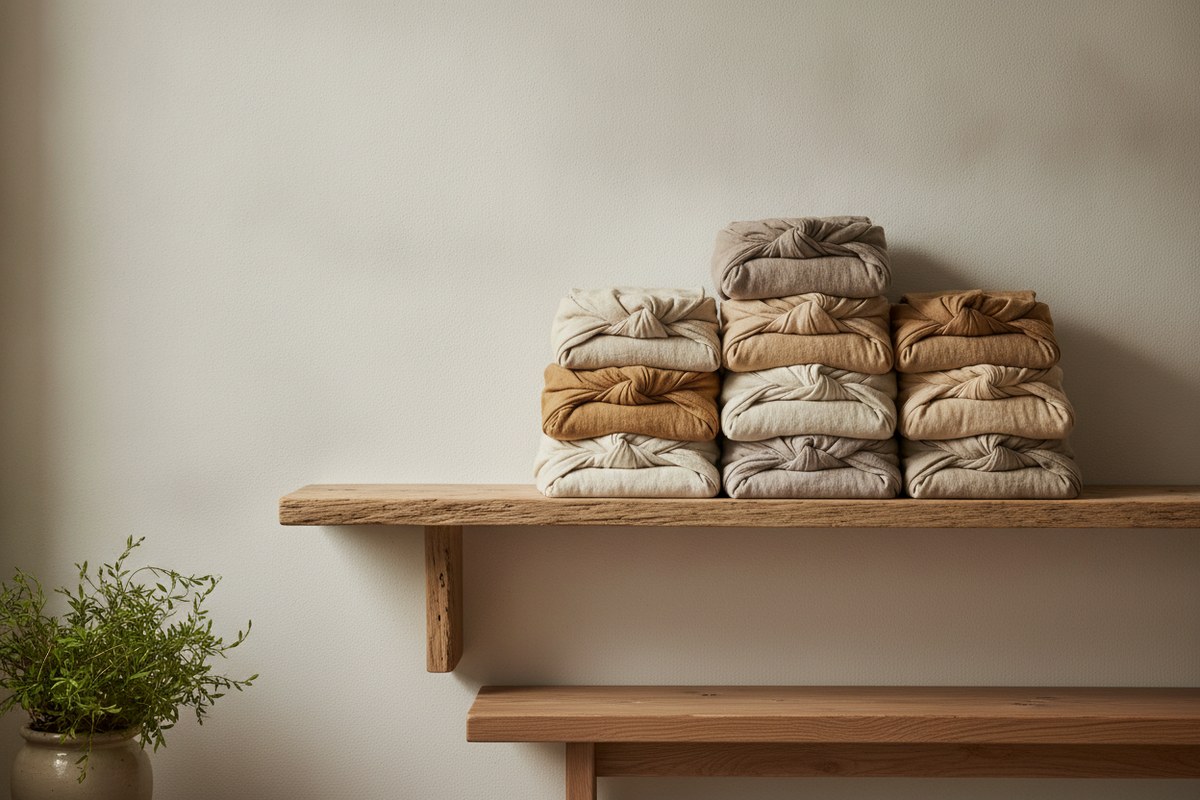
Furoshiki, the Japanese art of fabric wrapping, is a clever budget swap for baskets or bins. Use square scraps of linen or cotton to wrap books, blankets, or bathroom supplies into tidy bundles, then stack them on open shelving for a soft, textile-rich look. It’s a nearly free way to hide clutter while adding the layered, natural texture that makes Japandi interiors feel warm rather than sterile.
None of these projects require a big budget or serious DIY skill—just a willingness to slow down, edit what you own, and choose natural materials over trendy ones. Start with one or two ideas this weekend, and you’ll be surprised how quickly a small space can feel like a calm, considered Japandi retreat.