This post may contain affiliate links. If you buy through them, we may earn a small commission at no extra cost to you.
A bookshelf in a small room can quickly become a catch-all for everything you don’t know where to put — mail, chargers, half-read magazines, random knickknacks. But a shelf doesn’t have to be chaos. Japanese organizing principles like sorting by shape, embracing empty space (ma), and giving every item a designated ‘home’ pair beautifully with the calm, natural-material look of Japandi design. Here are ten practical ways to style and store on a small bookshelf without it feeling cramped or cluttered.
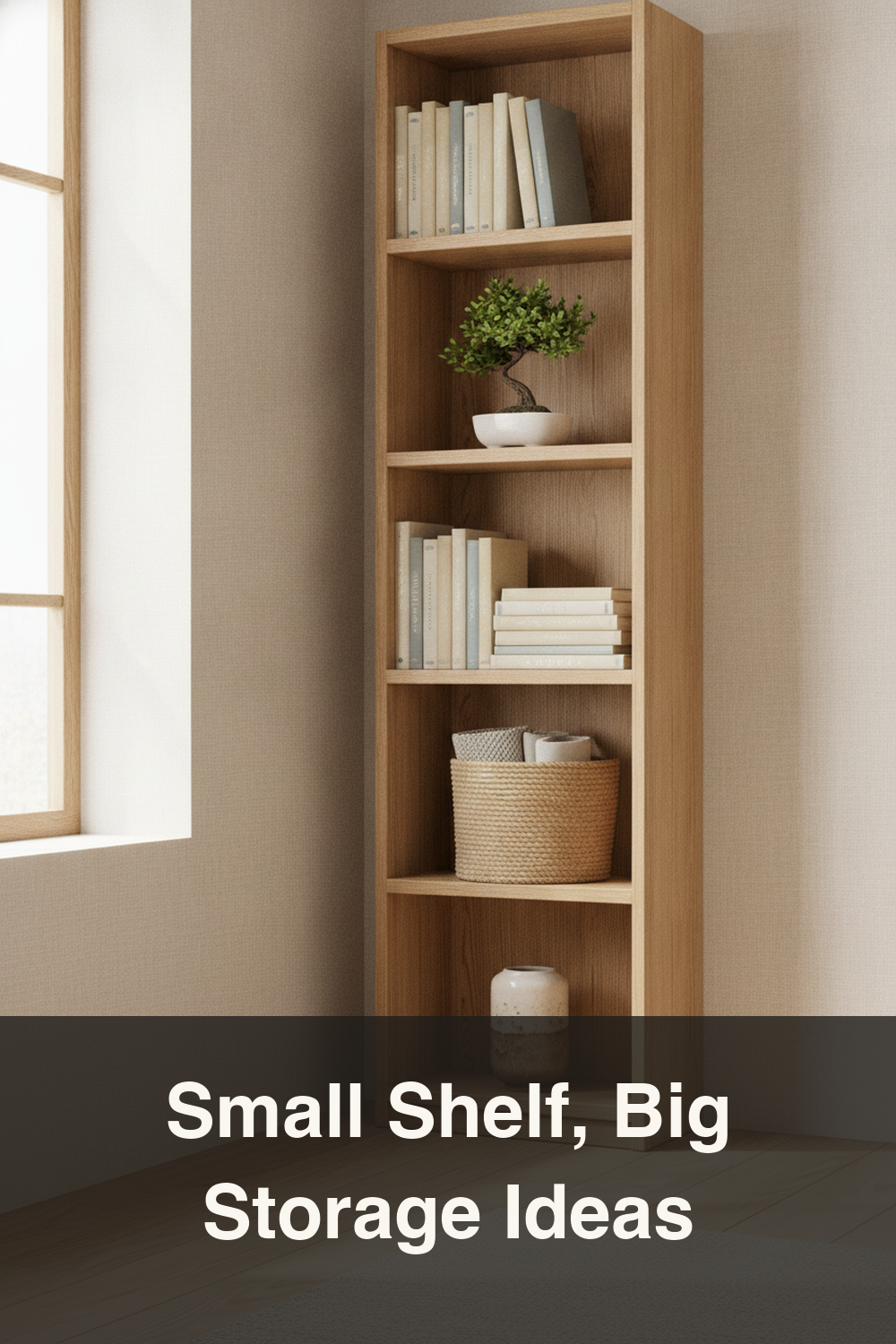
1. Sort by Height Before You Sort by Color
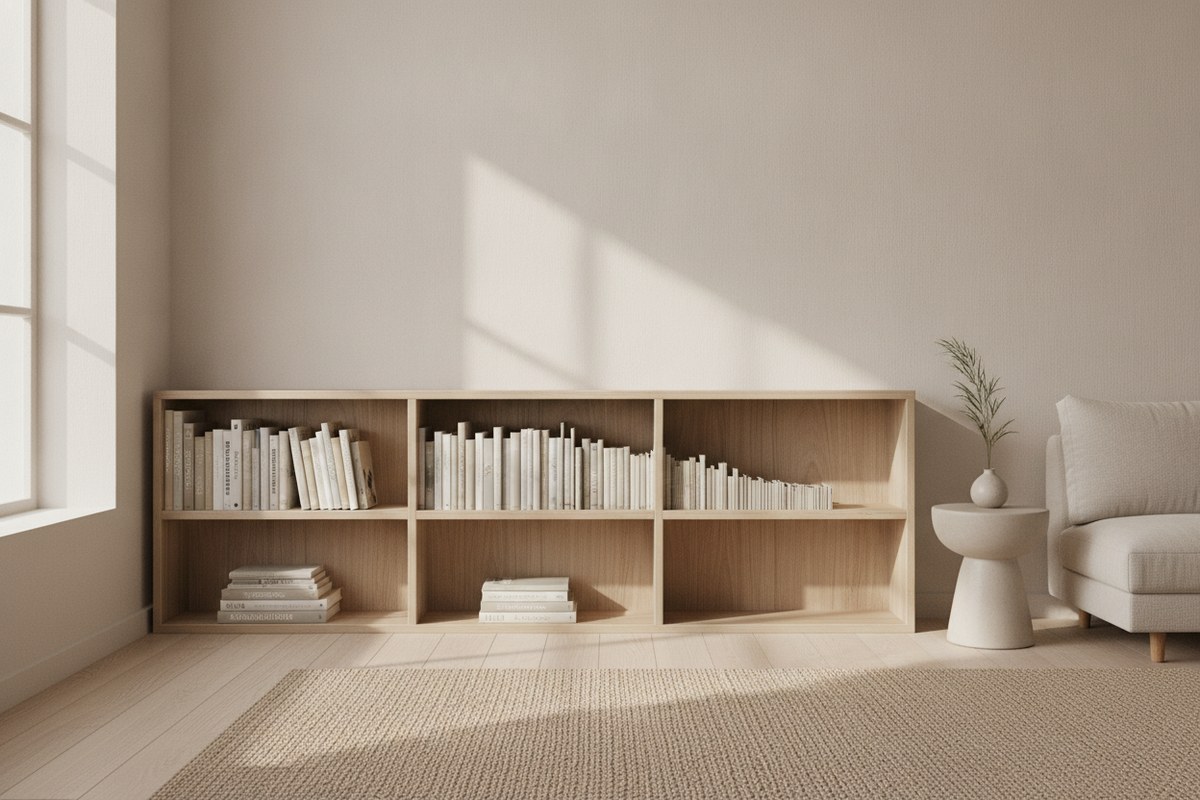
Rainbow-sorted shelves look pretty in photos, but in a small space they can actually make a shelf feel busier. Instead, try the quieter Japanese approach: group books by height and size first, then let color fall into place naturally. Tall spines anchor one end, shorter paperbacks nest toward the middle, and the overall silhouette reads calm instead of chaotic. This method also makes it easier to spot gaps where a basket or decor object could fill the space intentionally rather than by accident.
2. Go Vertical with Floating Shelves
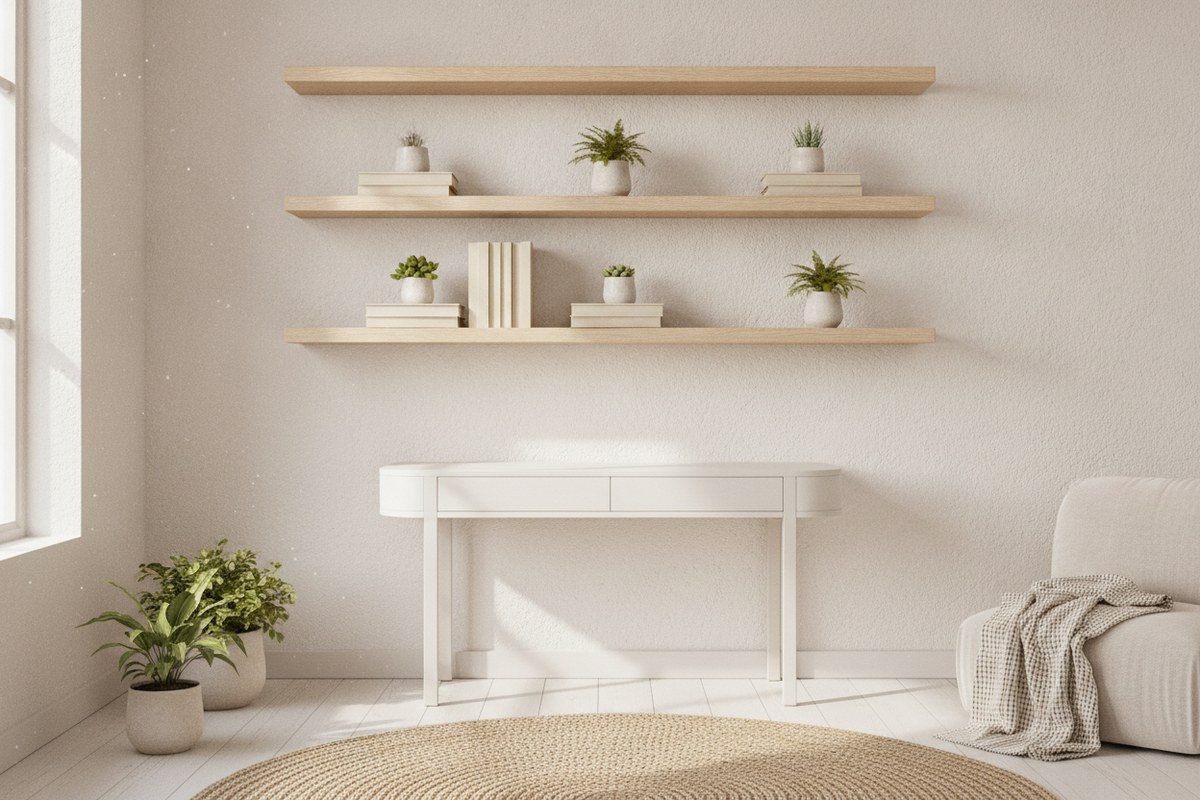
If your bookshelf is already full, look up. Adding a few floating wall shelves above or beside your existing unit gives you extra square footage without taking up floor space — a classic small-apartment trick. Keep the shelves shallow so they hug the wall and don’t visually crowd the room, and stick to one or two items per shelf so each one still has breathing room.
3. Corral Loose Items in Baskets, Not Piles
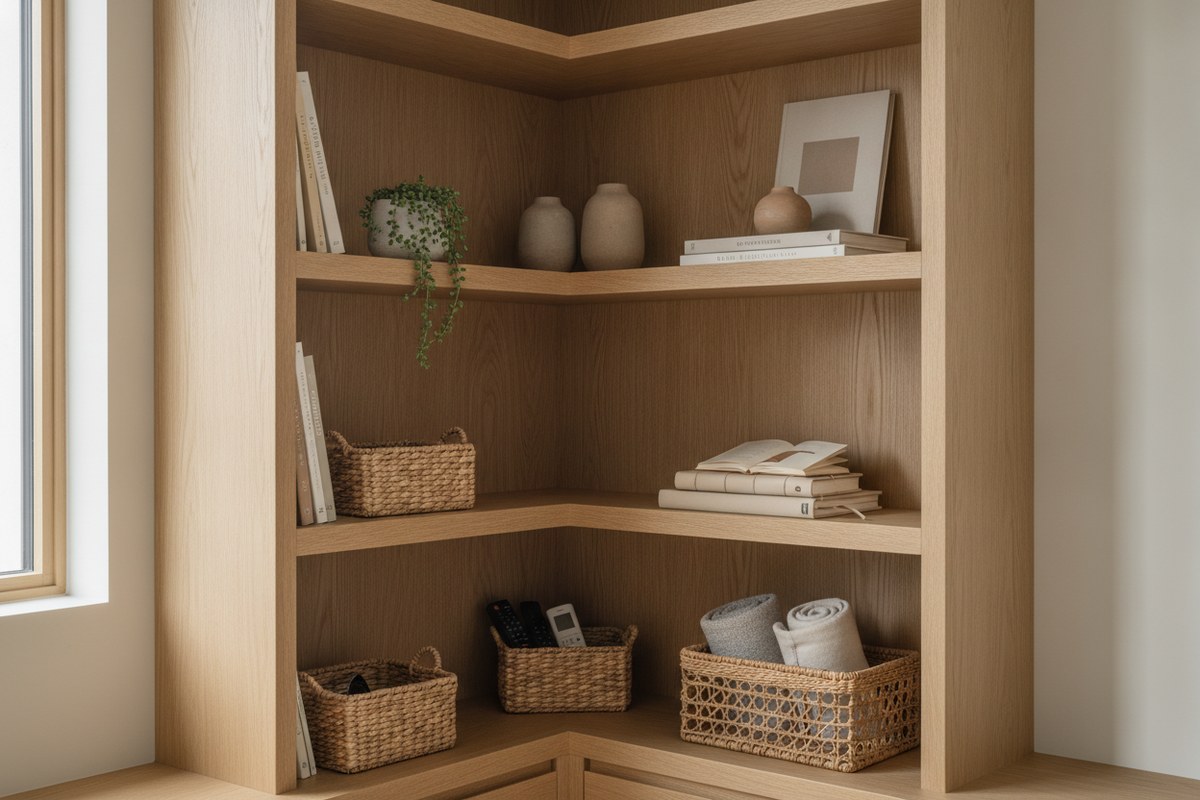
Every shelf tends to collect small orphaned items — remotes, coasters, spare cords. Rather than letting them pile up loose, give them a woven or fabric home. A few small woven storage baskets tucked into shelf corners hide the mess instantly while adding the natural texture Japandi spaces are known for. The rule of thumb: if it doesn’t have a basket, it doesn’t get to live on the shelf.
4. Use Bookends to Create Visual Zones
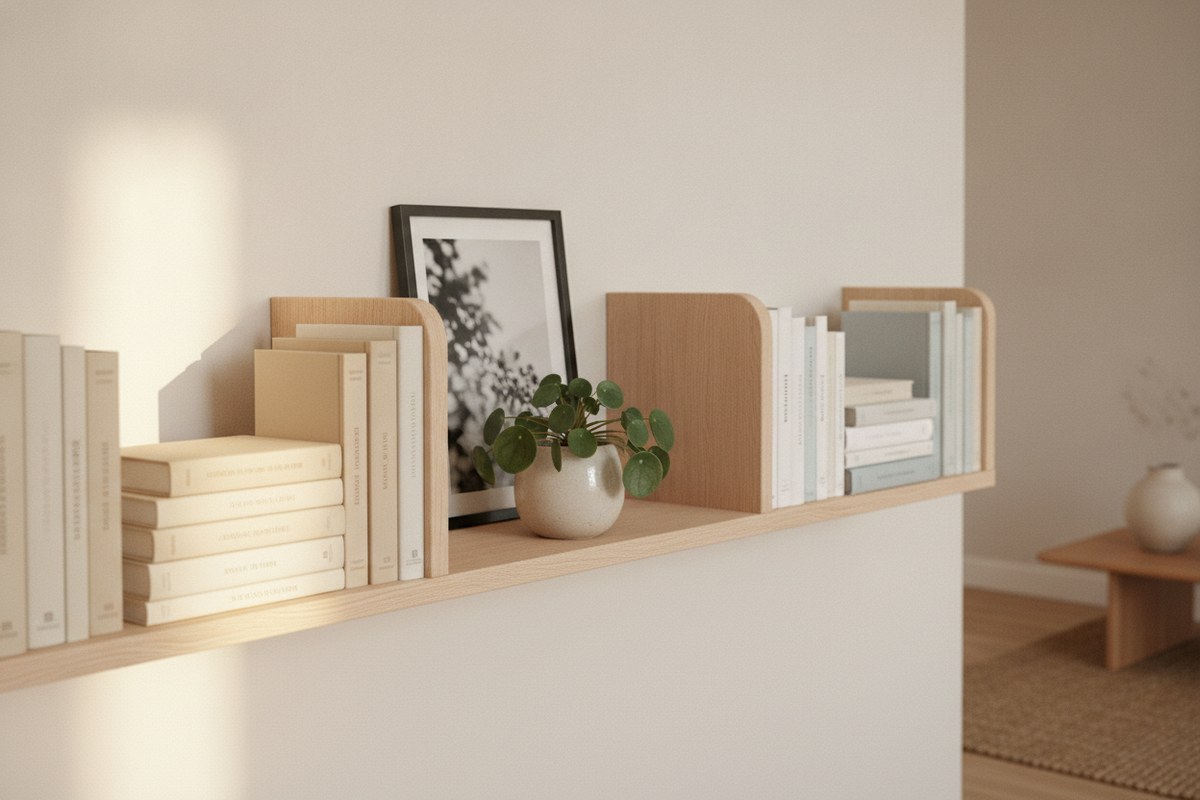
In a small room, a single bookshelf often has to serve multiple purposes — part library, part display, part storage. Simple minimalist wood bookends help divide the shelf into clear sections so each zone feels intentional instead of jumbled together. Try one section for books, one for a small plant and framed photo, and one for a woven catch-all basket.
5. Stack Books Horizontally to Save Height
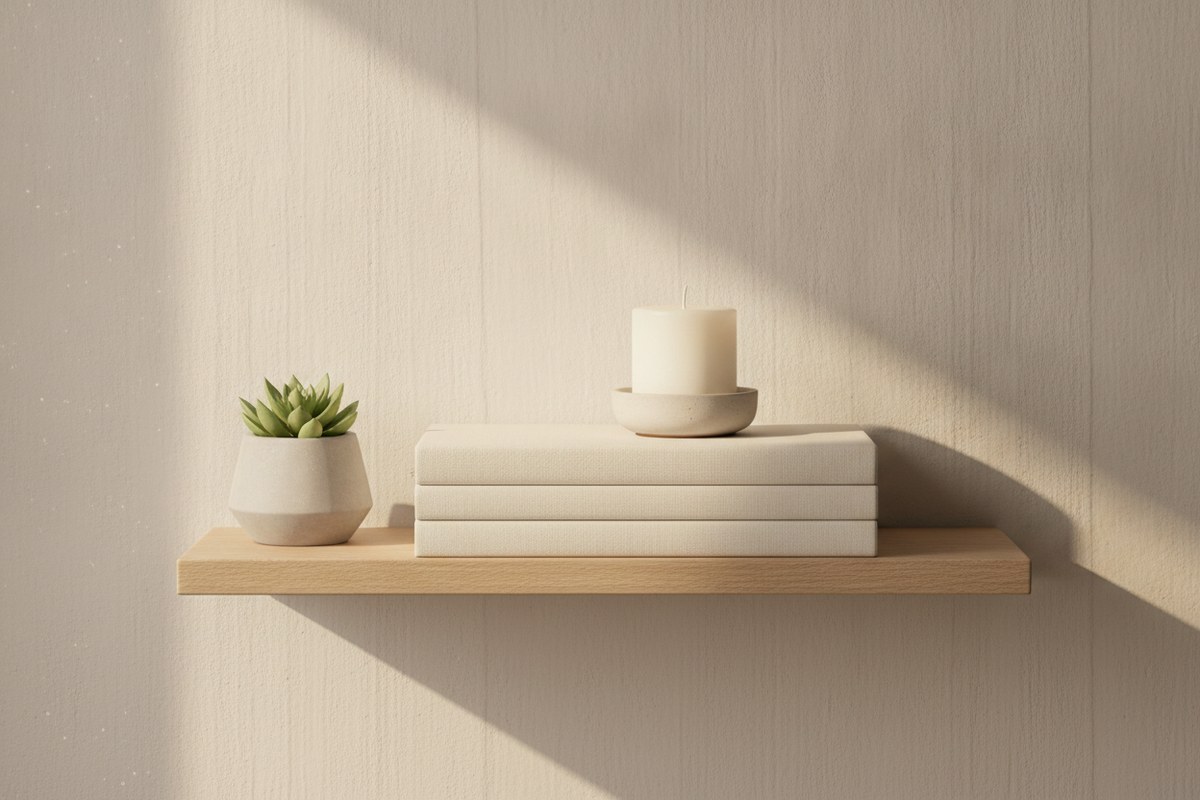
Standing every book upright can make a short shelf feel maxed out fast. Instead, lay a stack of four or five books flat and use the top as a mini display surface for a candle or small plant. This technique, common in compact Japanese apartments where every surface multitasks, instantly adds storage capacity and a designer-style layered look at the same time.
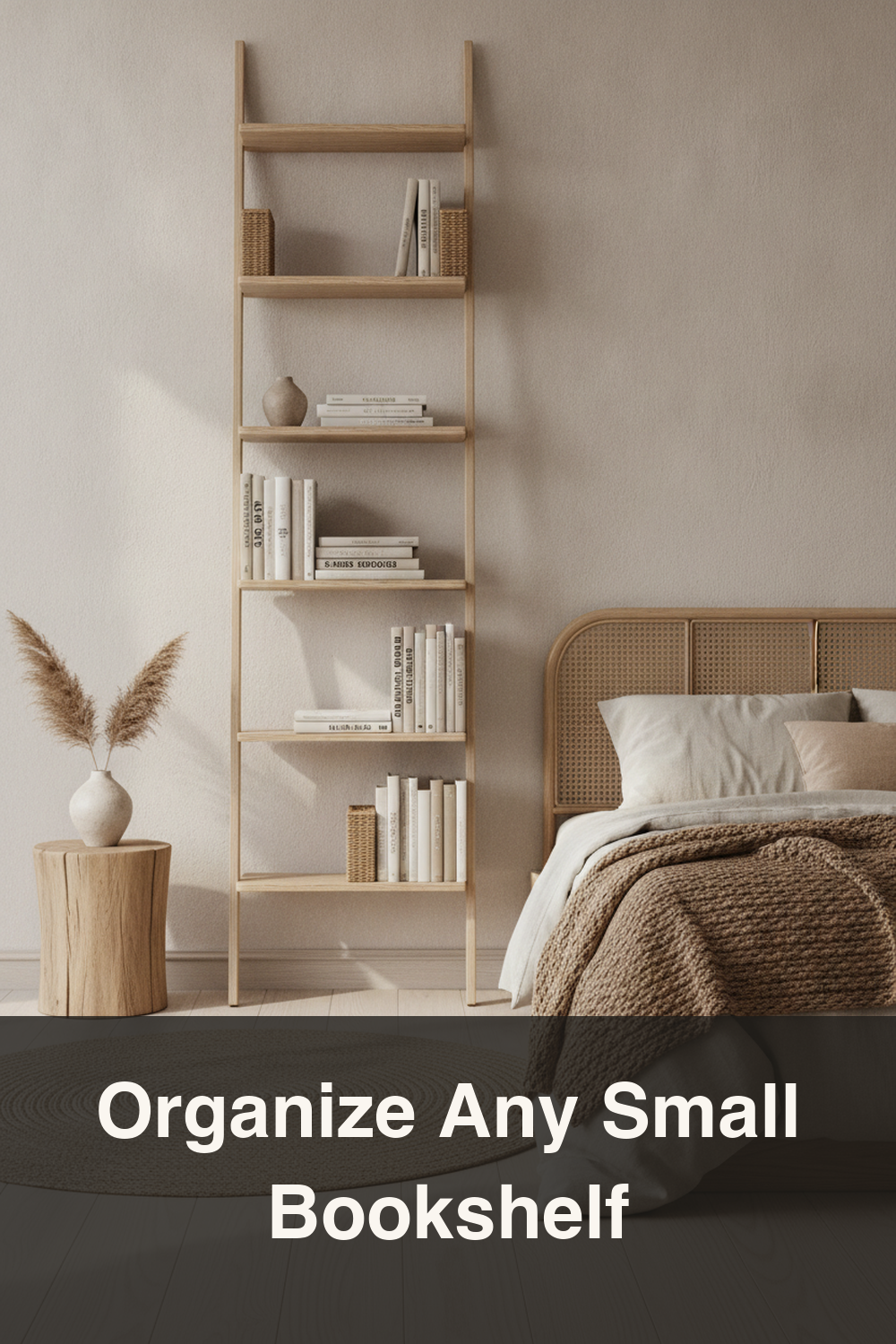
6. Add a Narrow Ladder Shelf for Tight Corners
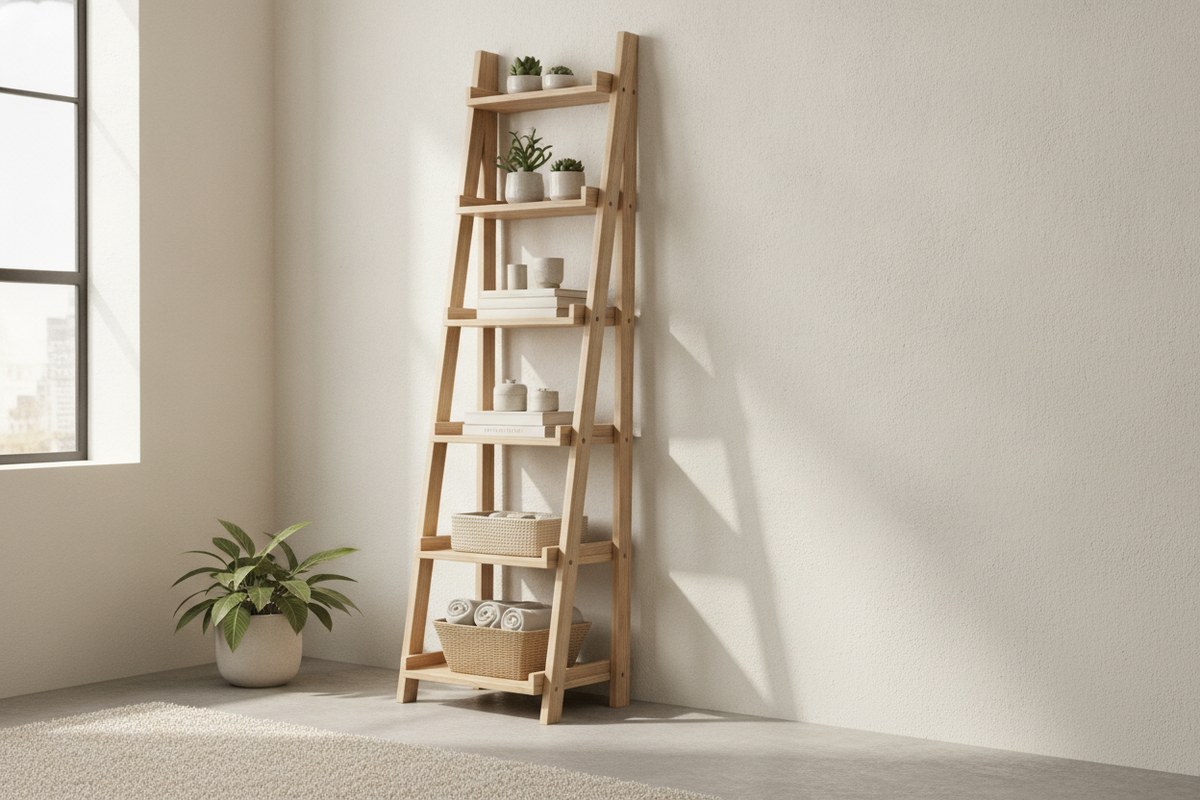
If your room can’t fit a traditional bookcase, a slim ladder-style bookshelf leans against the wall and takes up only a sliver of floor space. The open-back, angled design also lets light pass through, which keeps a small room from feeling boxed in — a key Japandi goal alongside storage.
7. Let a Bookshelf Double as a Room Divider
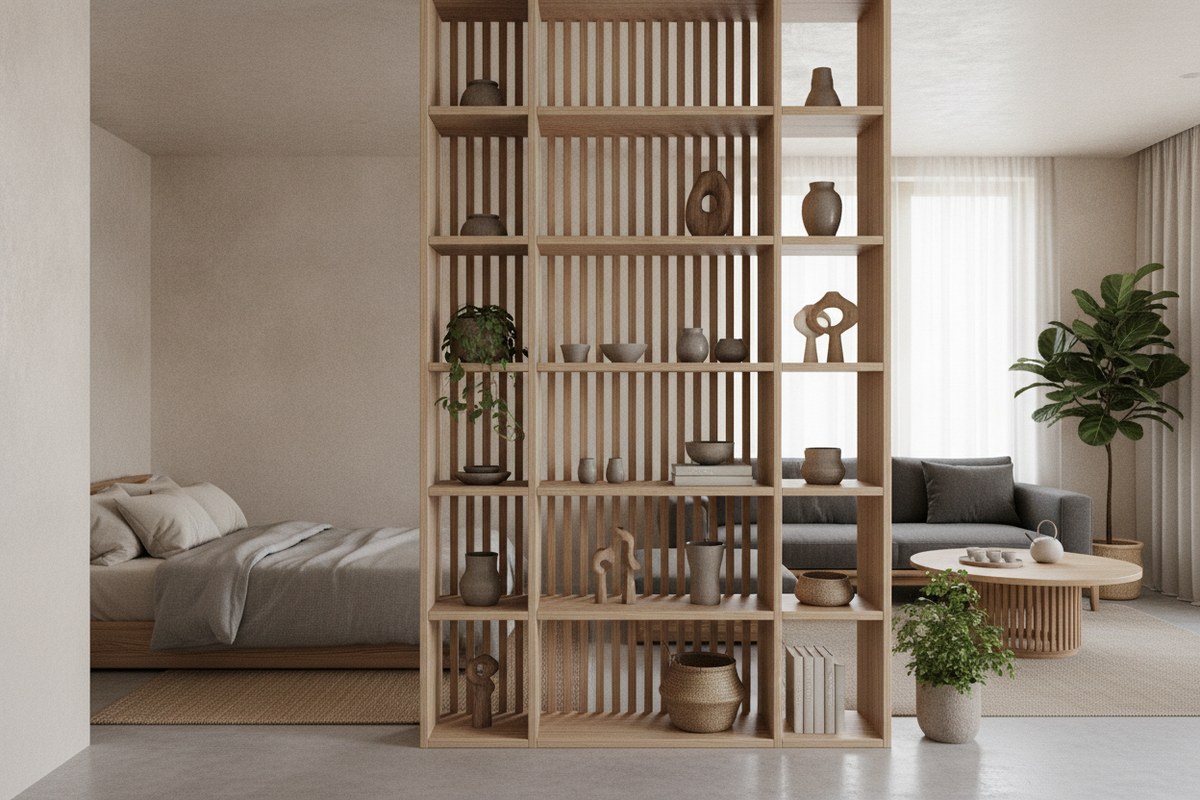
In studio apartments or shared rooms, an open bookshelf can quietly separate a sleeping area from a living area without blocking light the way a solid wall would. Style the side facing the ‘public’ area with tidy, symmetrical objects, and use the back or lower shelves facing your private zone for everyday storage. It’s one shelf doing two jobs — very much in the spirit of Japanese small-space efficiency.
8. Keep a Portion of Every Shelf Empty
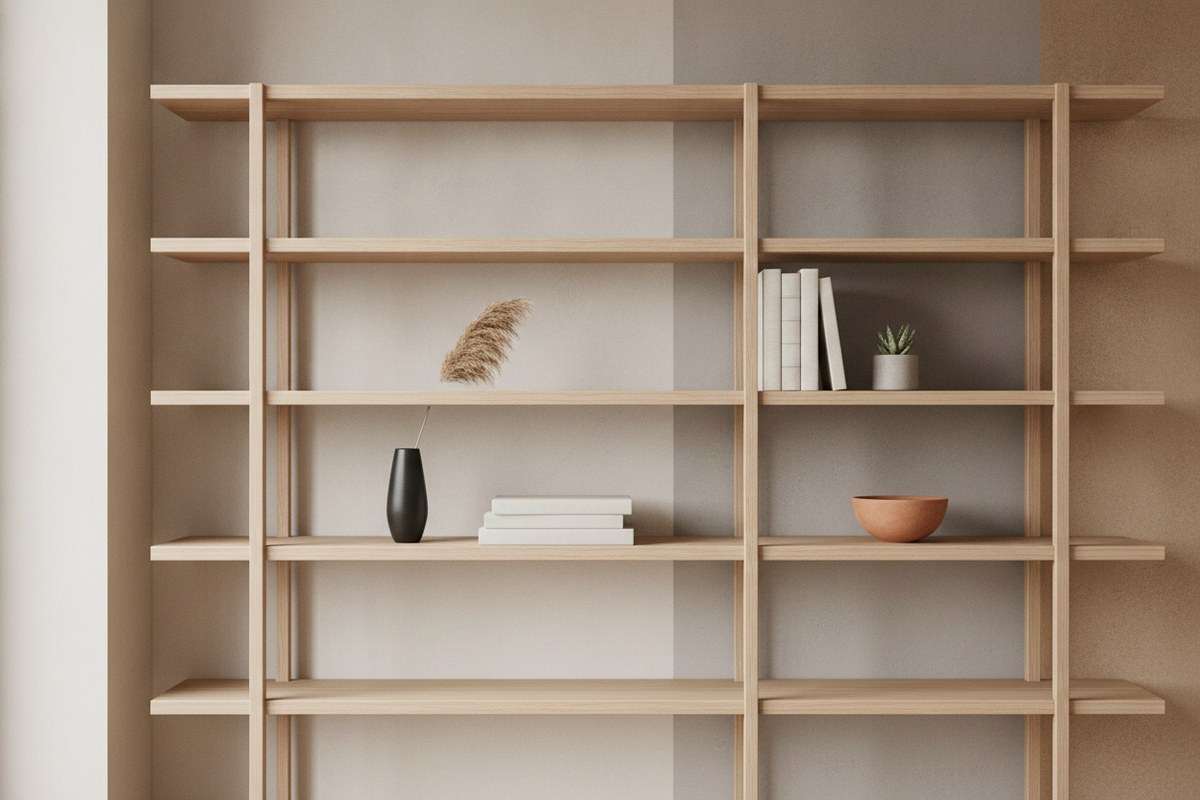
The Japanese concept of ‘ma’ refers to the intentional use of empty space, and it’s the secret ingredient most Pinterest-worthy shelves rely on. Resist the urge to fill every inch. Leaving roughly a quarter of each shelf open gives the eye a place to rest and makes the styled portions feel more curated, not crowded.
9. Add Under-Shelf Baskets for Hidden Extra Storage
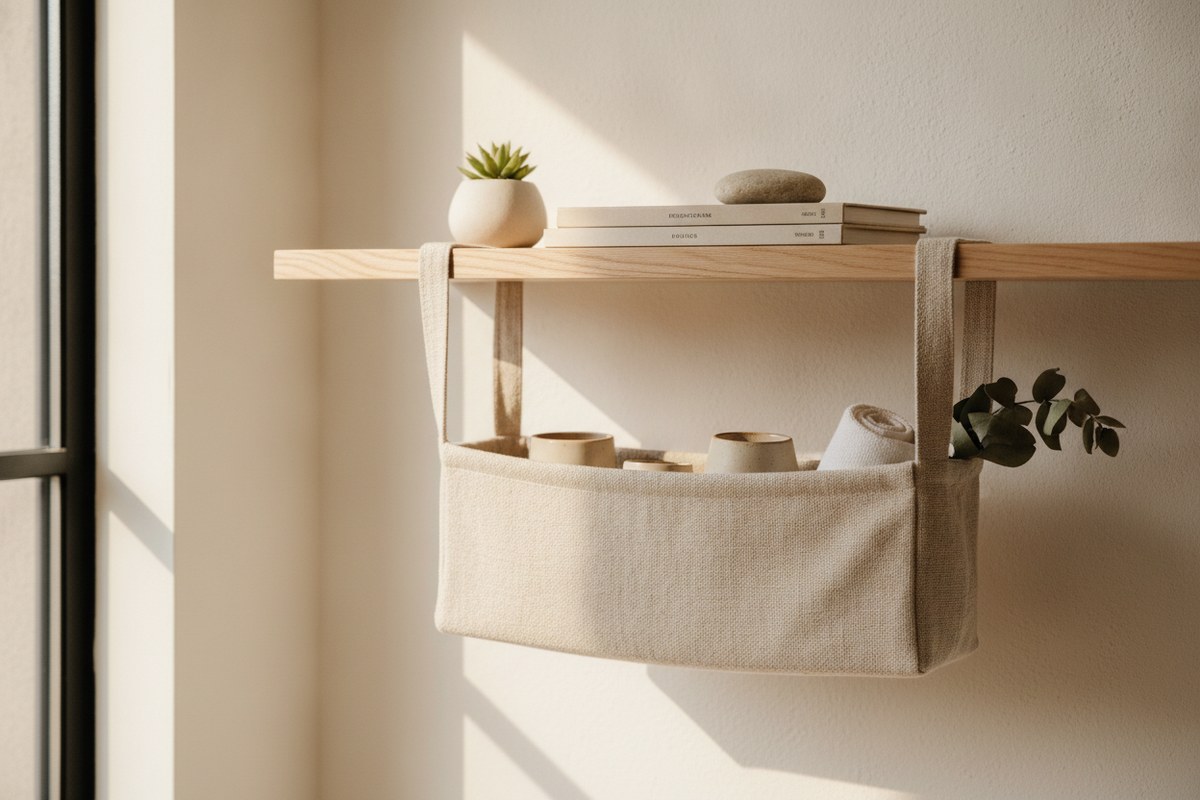
Don’t overlook the dead air between shelves. Slim under-shelf hanging baskets clip onto an existing shelf edge and create an entirely new storage layer for mail, notebooks, or reading glasses — all without adding a single new piece of furniture to the room.
10. Rotate and Edit Your Collection Seasonally
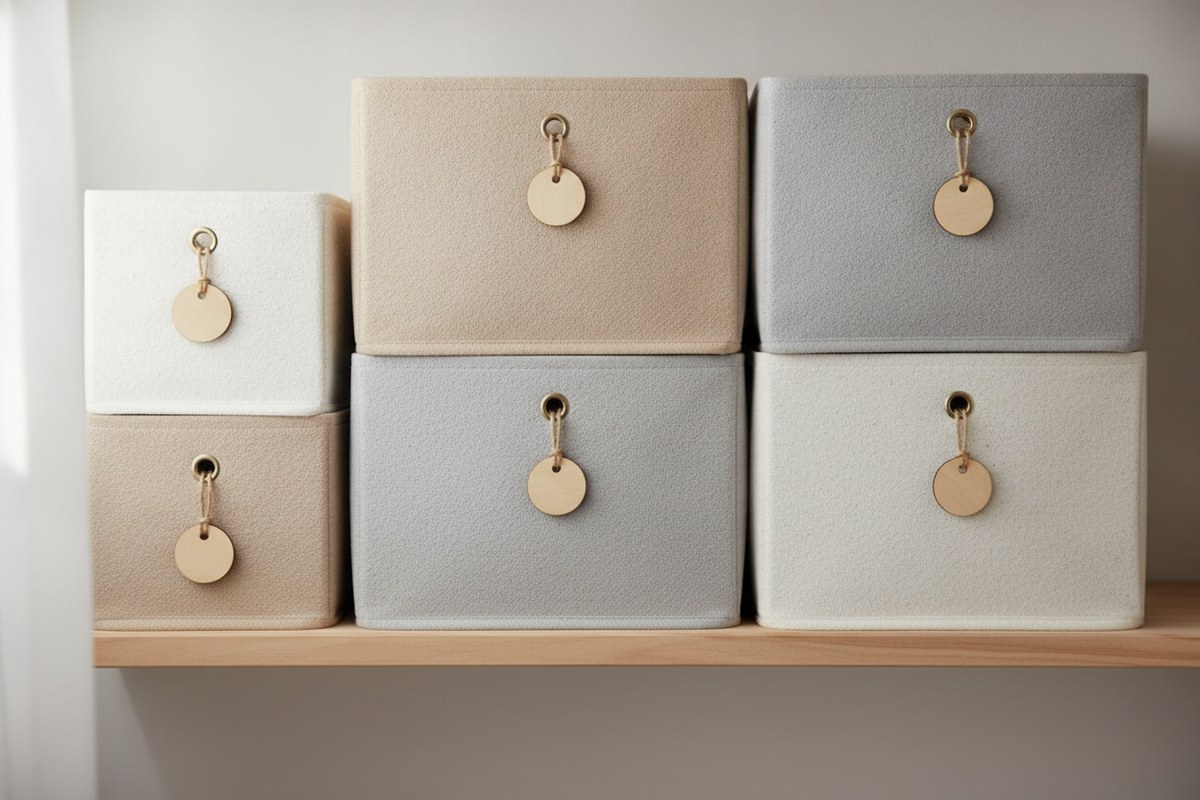
Small shelves stay small no matter how much you love your books and decor, so borrow the Japanese habit of seasonal rotation instead of constant accumulation. Every few months, box up titles or objects you’re not currently using with clearly labeled storage bins and tuck them in a closet, then swap in a fresh, lighter edit. Your shelf stays functional, styled, and never overwhelming.
Small-room bookshelves work best when every item earns its spot. Start with one or two ideas from this list — sorting by height, adding a basket, leaving some empty space — and you’ll notice your shelf feeling calmer within a single afternoon.