This post may contain affiliate links. If you buy through them, we may earn a small commission at no extra cost to you.
You don’t need a spare room to build a workout habit — you need a corner that respects the space around it. Japanese organizing principles like ma (meaningful empty space) and tatami-based footprints teach us to plan a zone before we fill it with stuff. Apply that thinking to a home gym corner and you get a layout that feels calm, functional, and never in the way of daily life. Here are 12 layout-first ideas for carving out a small space home gym that actually gets used.
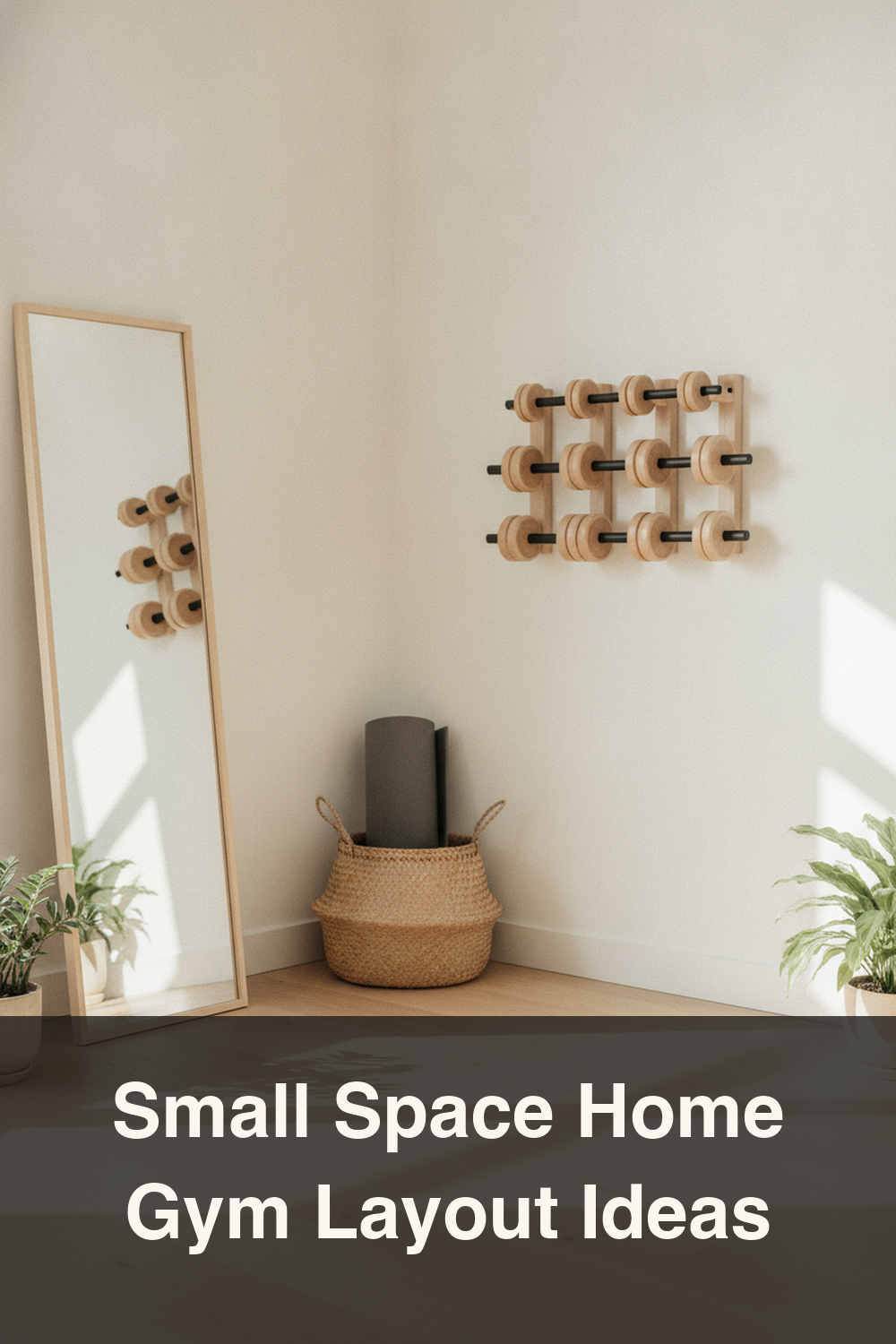
1. Choose a Dedicated Corner, Not a Multi-Purpose Zone
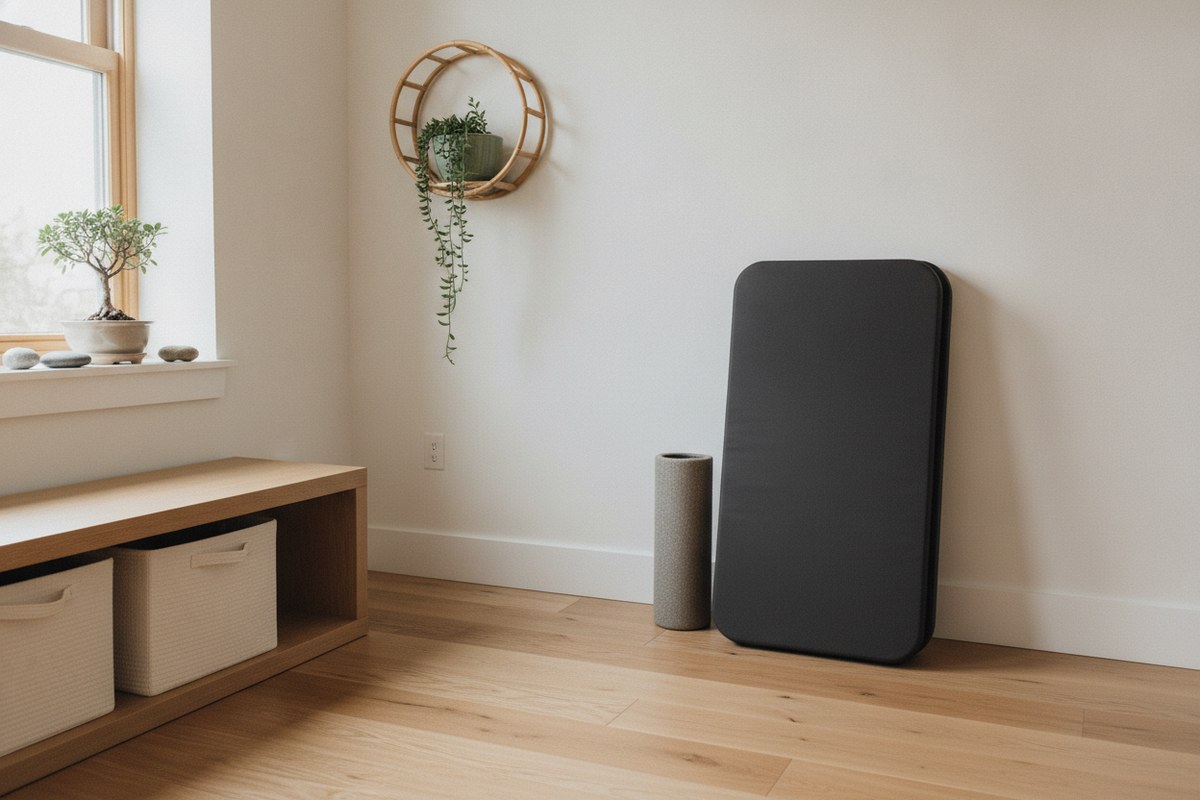
Before buying anything, walk your apartment and pick one corner that can be visually and physically claimed as “workout only.” It doesn’t need to be large — a 4×4 foot pocket near a window or against a blank wall works. The Japanese approach to small rooms is to assign each zone a single clear purpose so your brain doesn’t have to negotiate function every time you enter it. Avoid corners that double as a dumping ground for mail or laundry; that visual clutter quietly kills motivation.
2. Measure Before You Buy: The Tatami-Inspired Footprint
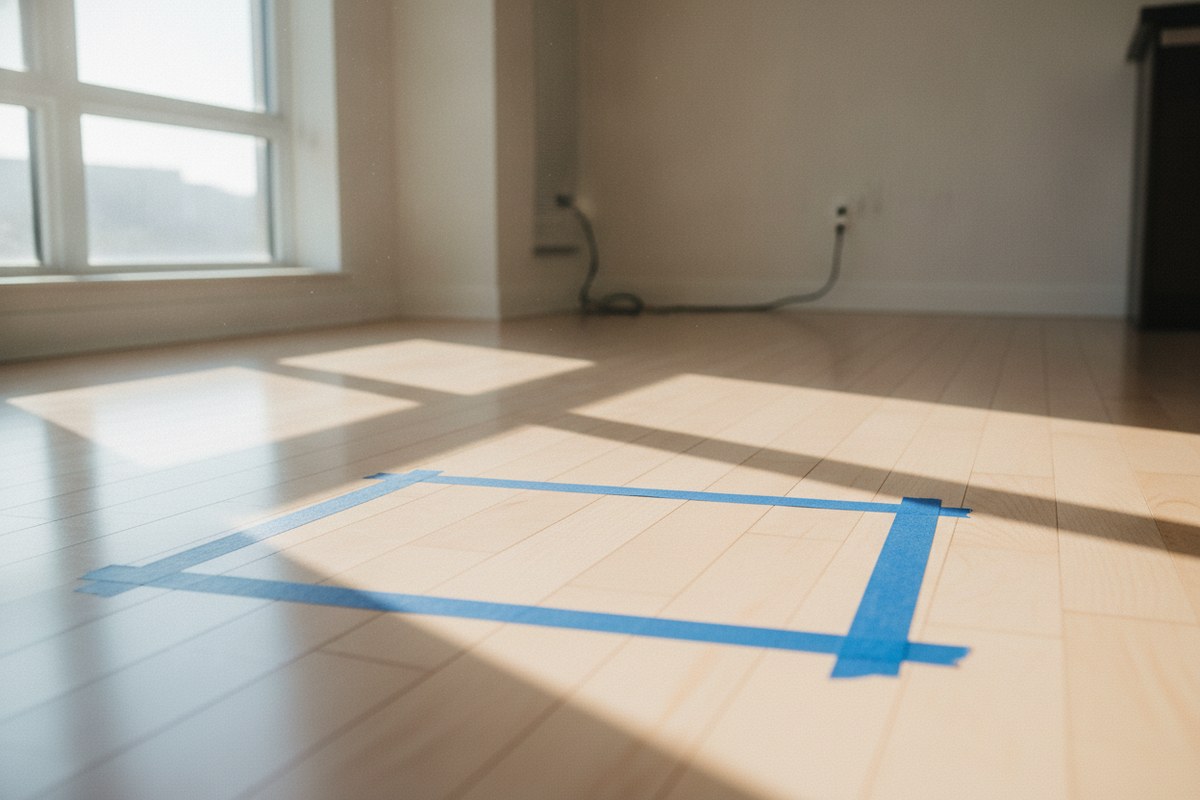
Traditional tatami mats standardized room planning in Japan by giving every space a predictable unit of measurement. Borrow that idea by measuring your corner’s exact footprint and taping it out on the floor with painter’s tape. Then hold that footprint in mind as you shop for a mat, so you know precisely how much a foldable exercise mat needs to cover without spilling into walkways.
3. Stack Storage Vertically for Weights and Bands
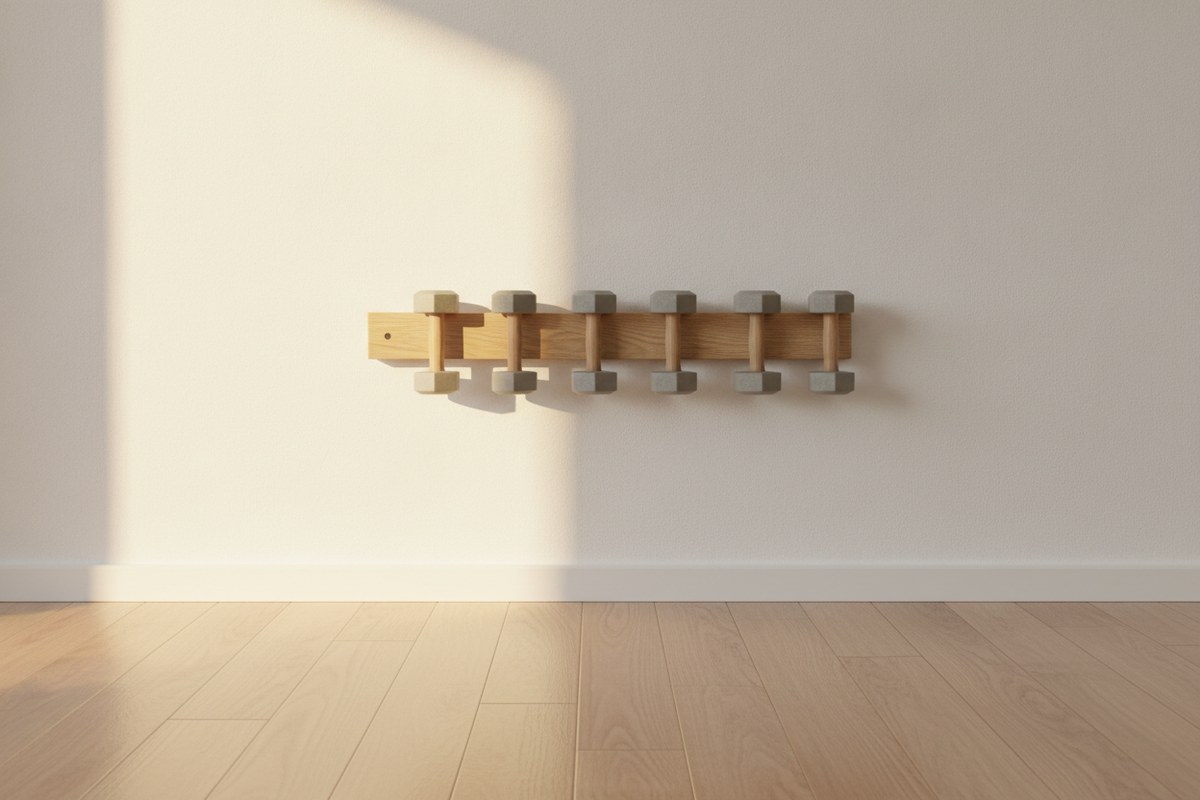
Small gym corners fail when equipment lives on the floor. Go up instead of out. A slim wall-mounted dumbbell rack keeps weights organized at eye level and frees the floor for movement. Vertical storage is a classic small-space Japanese solution — think of how compact kitchens stack everything upward rather than outward.
4. Favor Fold-Flat and Stackable Equipment
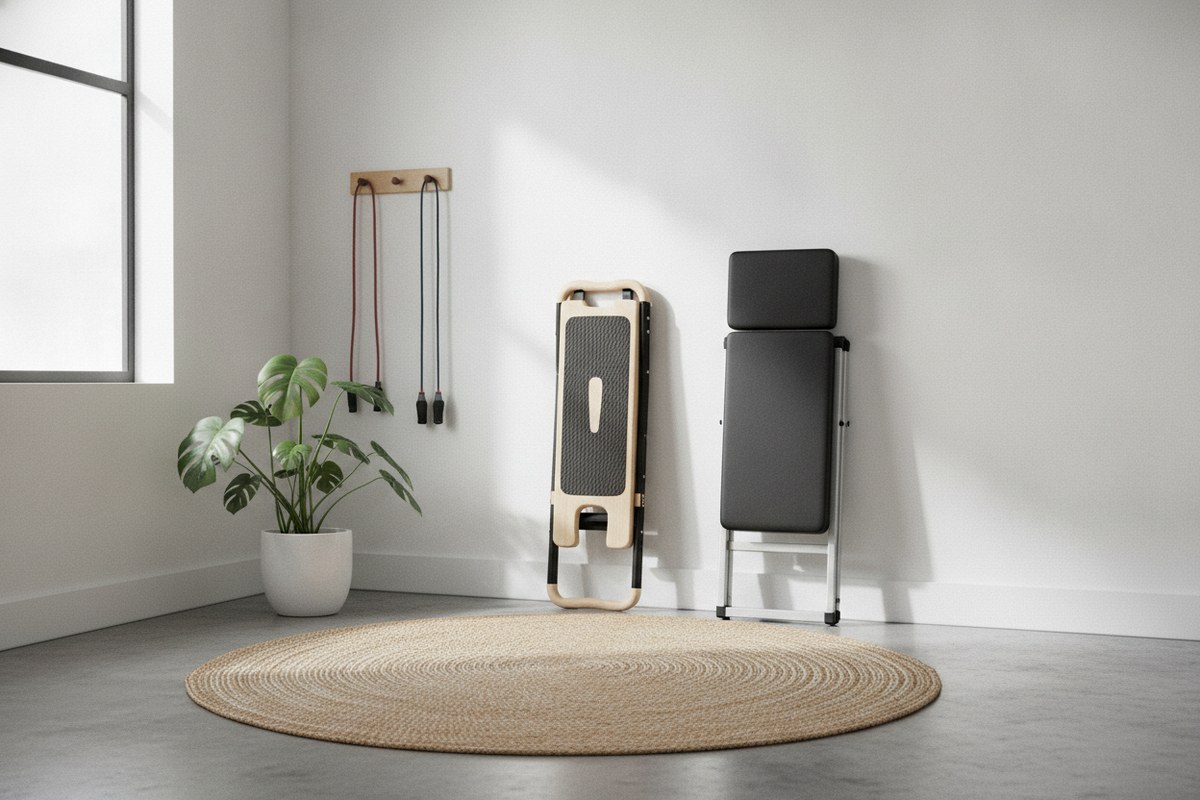
Every piece of gear in a tiny gym corner should be able to disappear when not in use. Look for a step platform that folds flat, a bench that collapses, or resistance bands that store in a small pouch. A set of stackable resistance bands gives you a full-body workout without needing a single square foot of permanent floor space.
5. Roll and Store Mats Like a Futon
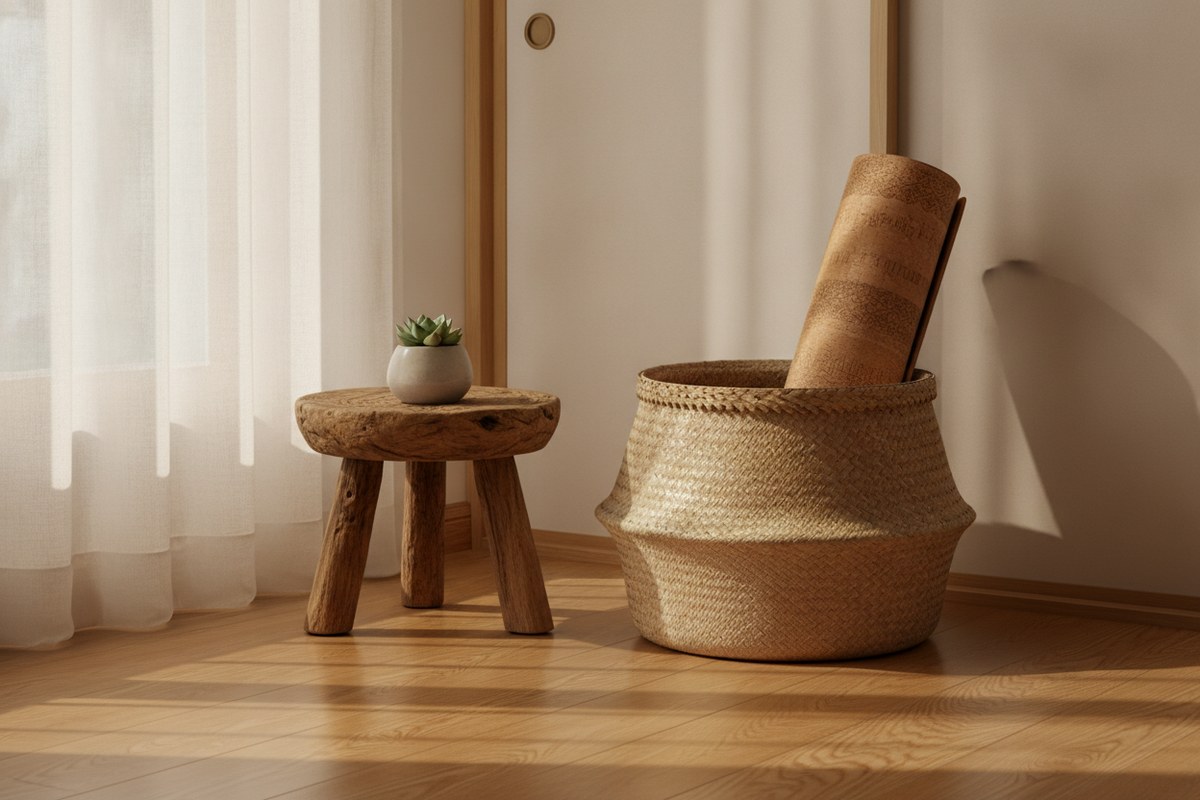
Japanese futons are folded and tucked away each morning to free the room for other uses during the day. Apply the same logic to your yoga or exercise mat: roll it, stand it in a corner basket, or slide it behind a door instead of leaving it unrolled on the floor permanently. This one habit alone makes a gym corner feel like part of the room again once your workout ends.
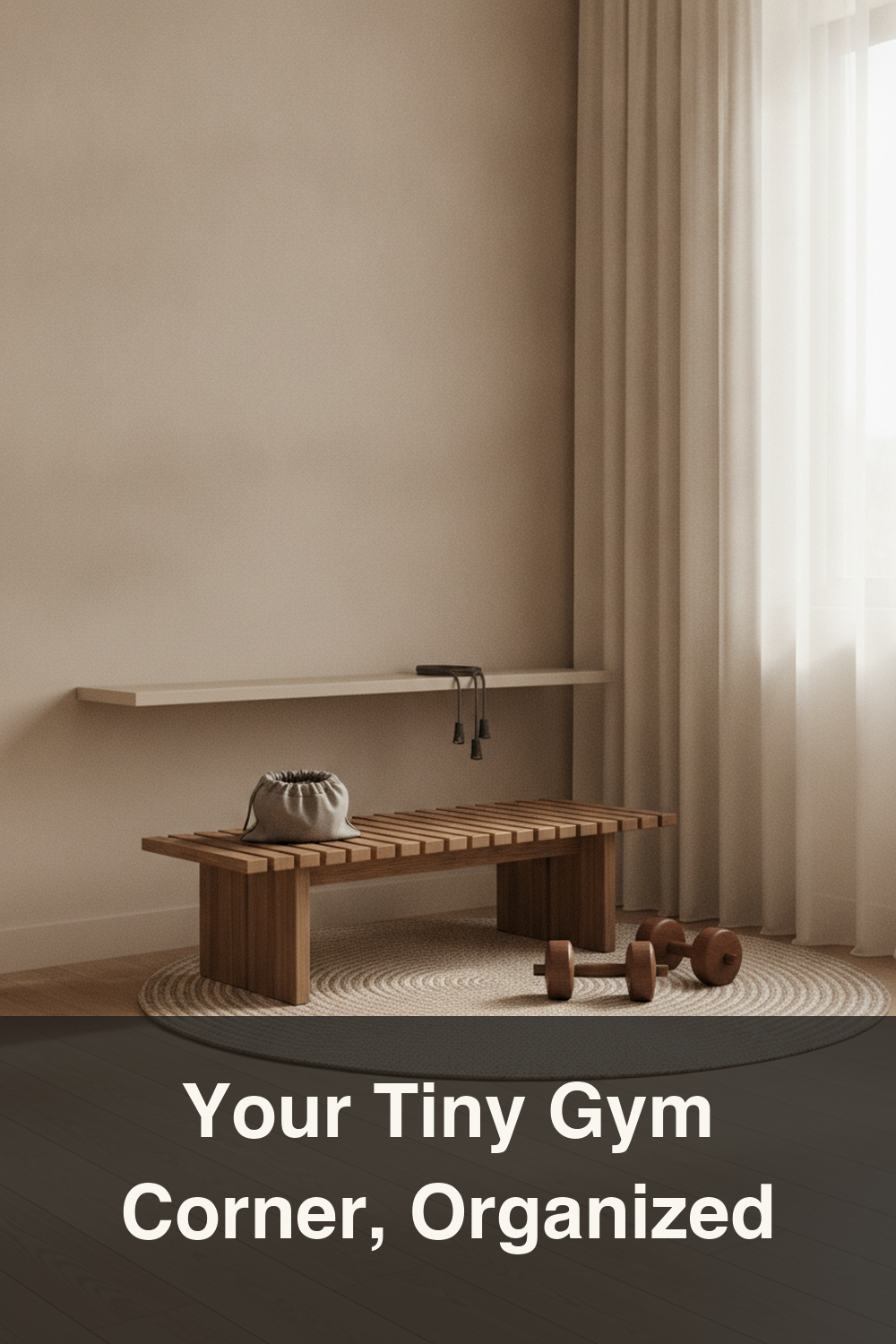
6. Define the Zone With a Rug or Floor Marking
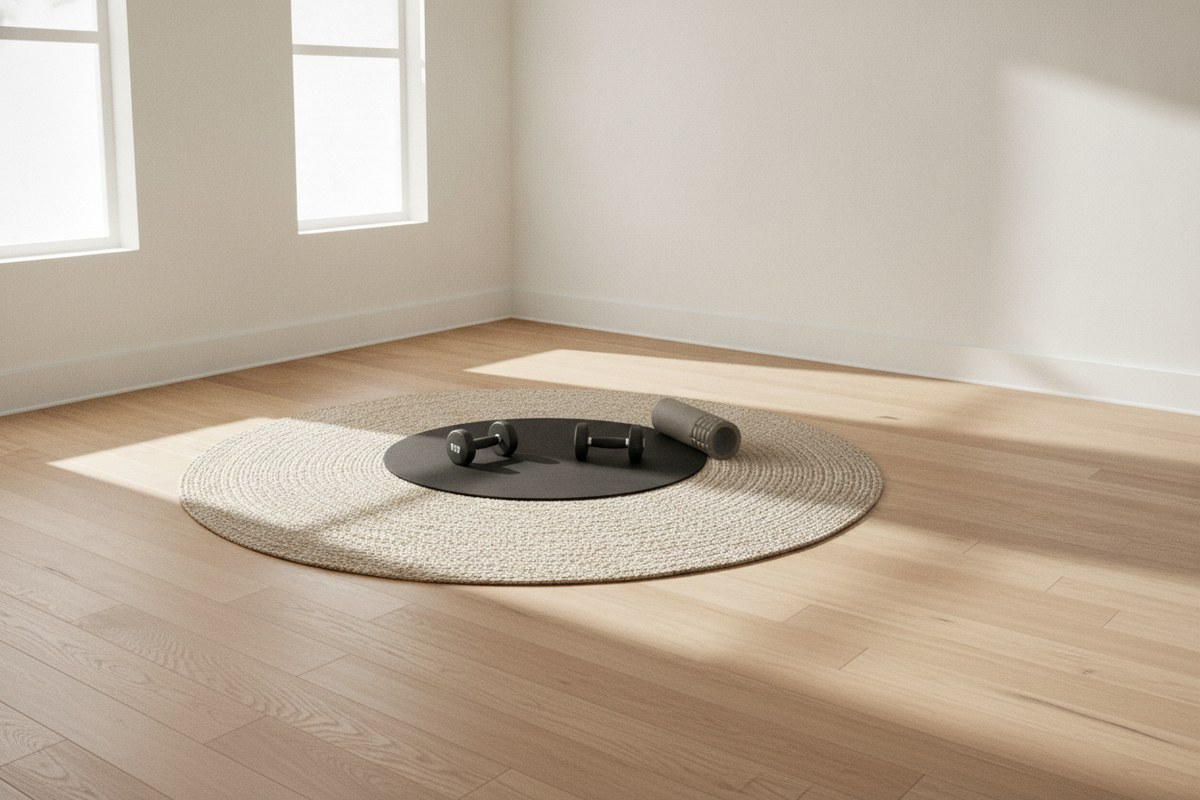
A low-pile rug or a simple strip of tape can visually separate your workout corner from the rest of the room without adding a physical wall. This kind of soft zoning is common in Japandi layouts, where flooring changes or rugs quietly signal a shift in function. It also gives you a consistent spot to return your mat and equipment to after each session.
7. Use a Mirror to Expand the Visual Footprint
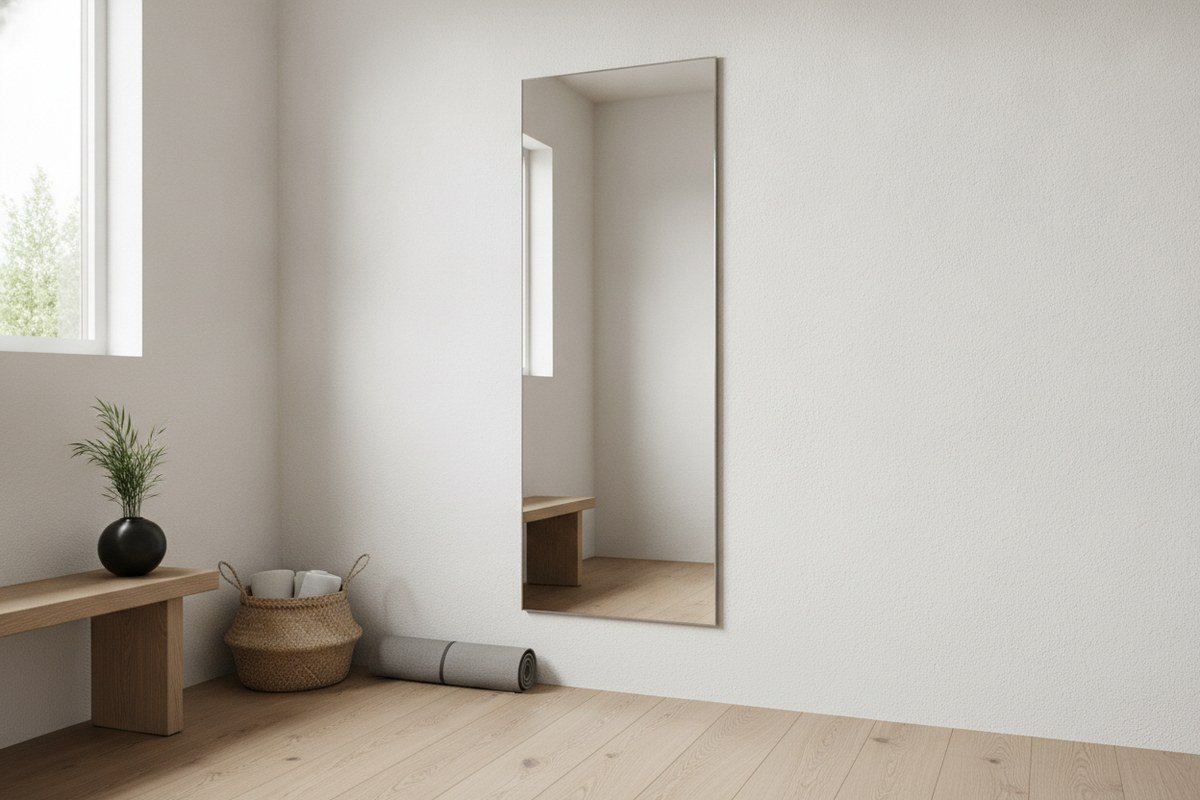
A single well-placed mirror does double duty in a workout corner: it helps you check form, and it visually doubles the perceived size of a tight space. Mount a slim full-length wall mirror at an angle that reflects window light rather than a cluttered wall, keeping the whole corner feeling brighter and more open.
8. Add Floating Shelves Instead of a Cabinet
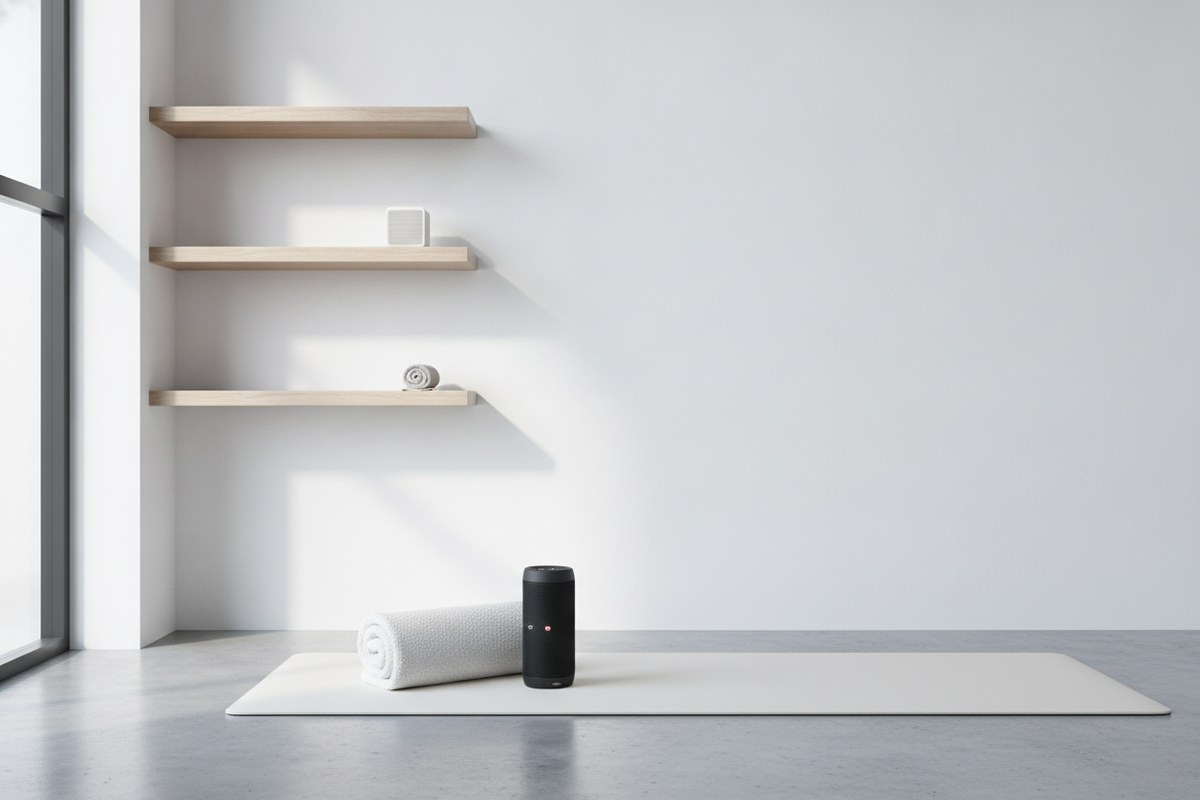
A bulky storage cabinet can overwhelm a small gym corner both physically and visually. Instead, mount one or two floating shelves above the workout zone to hold folded towels, a water bottle, or a small speaker. Keeping surfaces open below eye level preserves the airy, minimalist feel that makes Japandi rooms feel larger than they are.
9. Corral Cords and Small Accessories
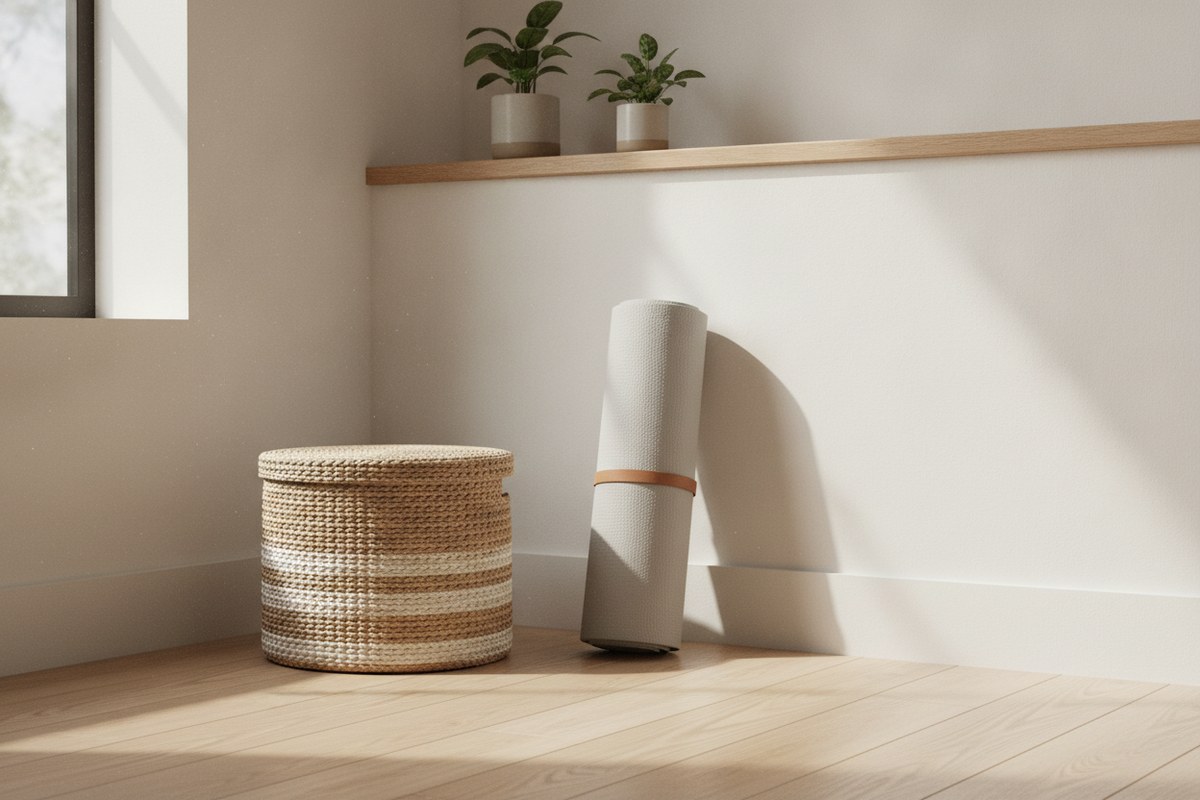
Resistance loops, jump ropes, and phone chargers tend to migrate across the floor mid-workout. A small fabric storage bin with a lid tucked into the corner keeps loose accessories contained and out of sight between sessions, so the space resets to calm the moment you’re done.
10. Borrow Storage From Nearby Furniture
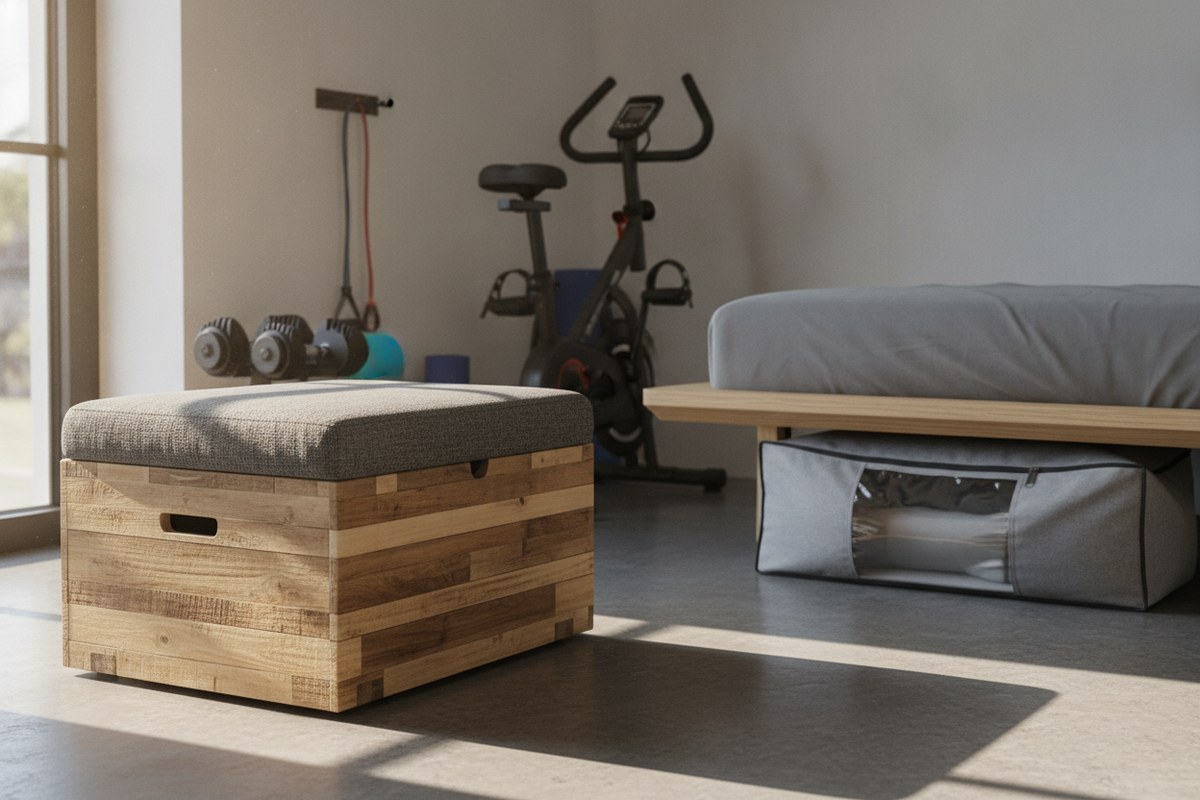
If your gym corner sits near a bed or sofa, let that furniture absorb the overflow. Flat items like a mat or light dumbbells can slide into under-bed storage bags when you need the floor for guests, and a storage ottoman nearby can double as extra seating that also hides a spare set of bands.
11. Light the Corner to Signal “Workout Mode”
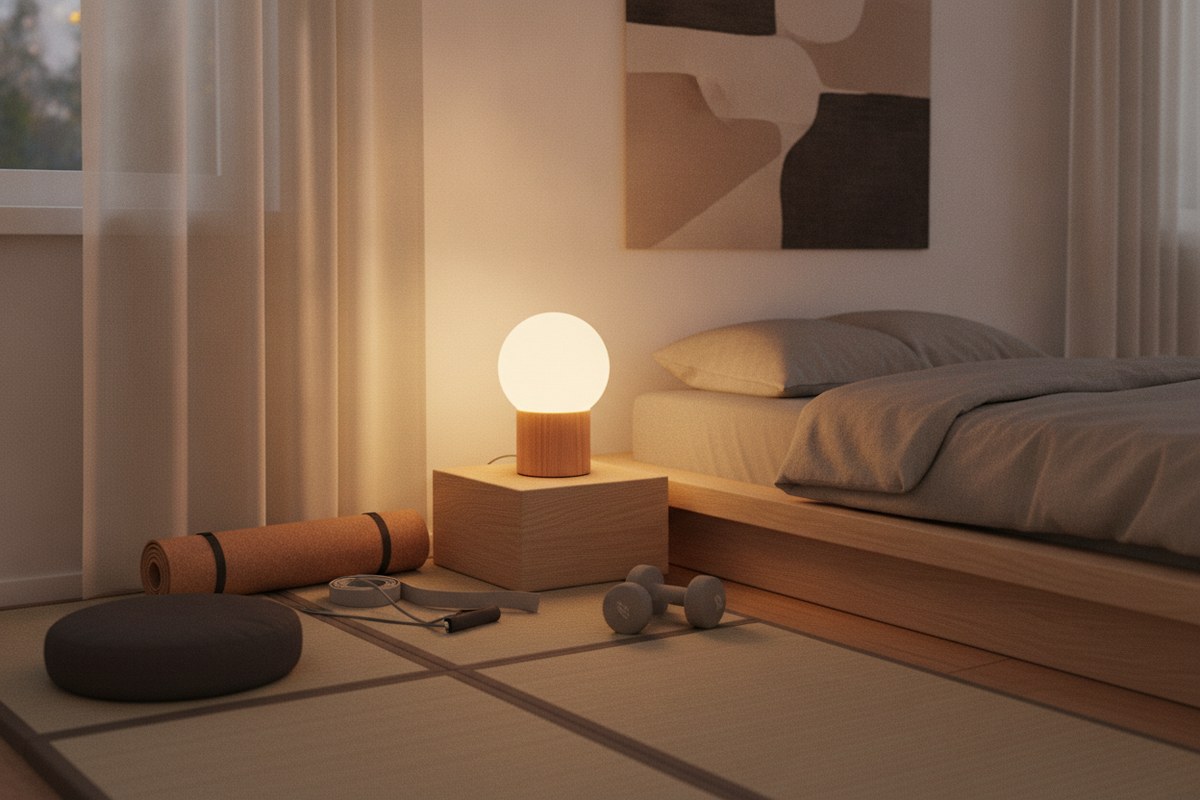
Lighting is an underrated layout tool. A small plug-in lamp or a warm LED strip dedicated to the gym corner helps your brain switch into workout mode the moment it’s on, and switches off just as clearly when the session ends. This mirrors the Japanese habit of using light to mark transitions between a room’s different roles throughout the day.
12. Protect Negative Space Around the Zone
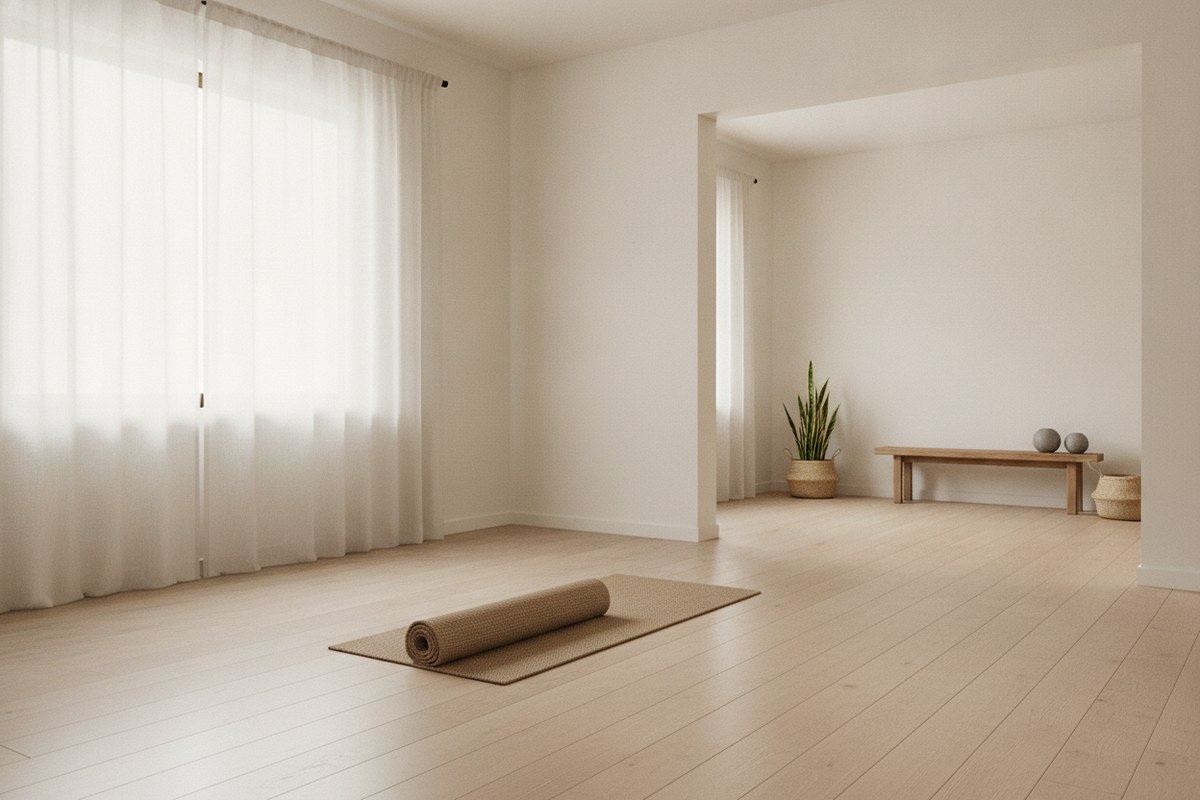
Finally, resist the urge to fill every inch around your equipment. The concept of ma — intentional empty space — is what keeps a small gym corner from feeling cramped or chaotic. Leave a clear buffer of at least a foot around your mat so you can move freely, and treat that empty margin as part of the design, not wasted space.