This post may contain affiliate links. If you buy through them, we may earn a small commission at no extra cost to you.
A small kitchen doesn’t have to mean a chaotic pantry. In fact, limited space is the perfect excuse to borrow from Japanese organizing principles—where every item has a home, nothing is kept ‘just in case,’ and visual calm matters as much as function. Pair that mindset with Japandi style (natural materials, soft neutrals, and clean lines) and your tiny pantry can feel like a boutique grocery store instead of a jumbled cabinet. Here are 10 practical ideas to get there, one shelf at a time.
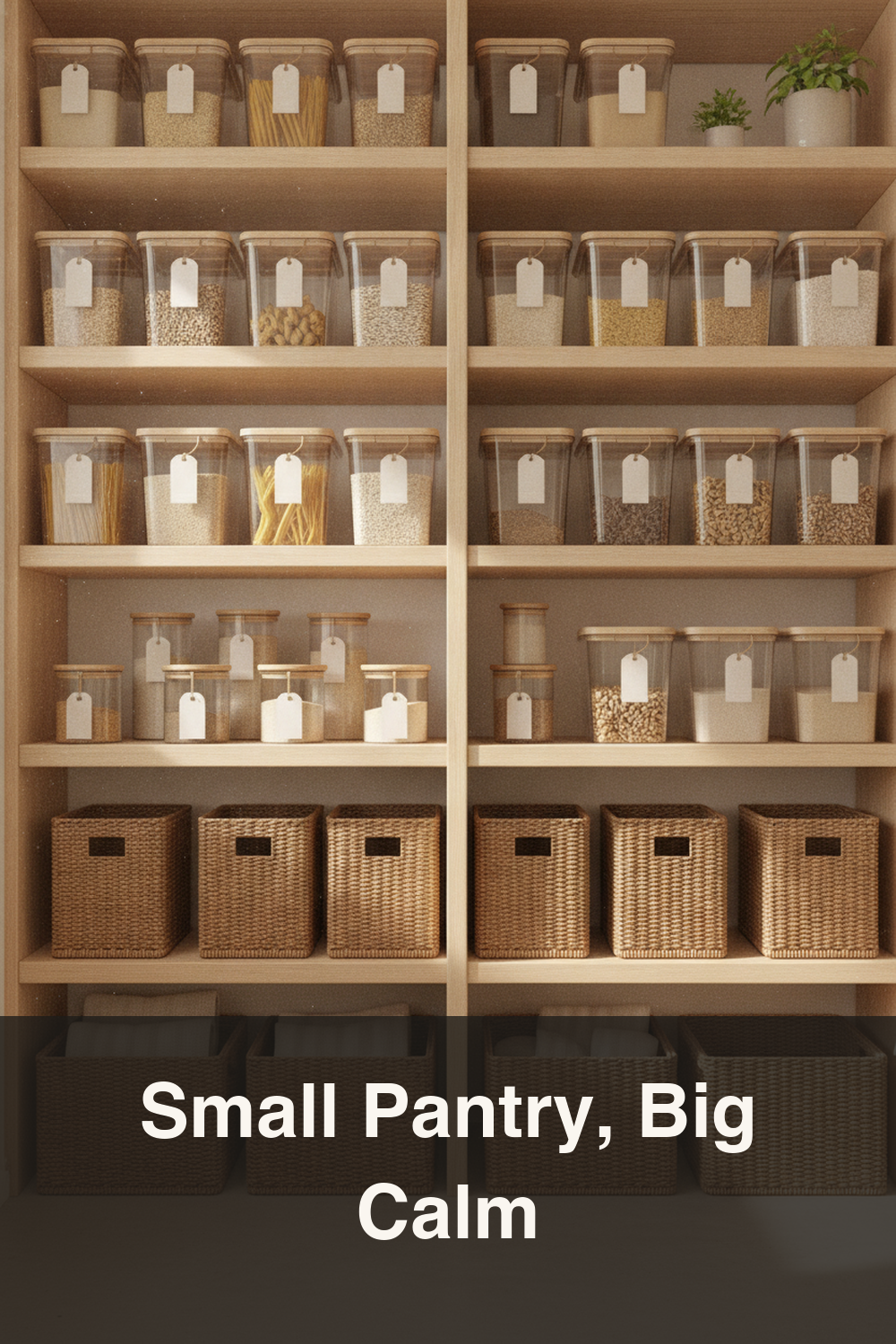
1. Start With a Full Edit (Not Just a Tidy-Up)
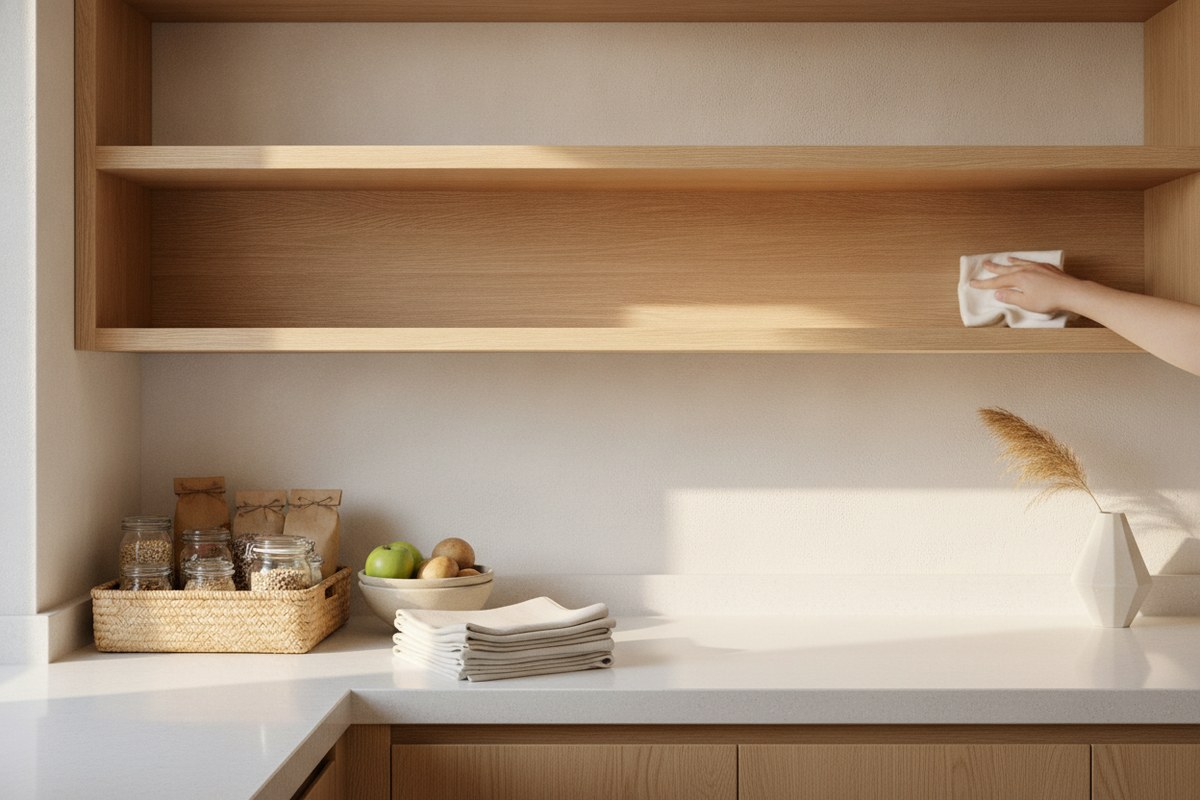
Before you buy a single bin, take everything out of the pantry. This is the Japanese decluttering principle in action: you can’t organize what you haven’t fully seen. Check expiration dates, group duplicates, and be honest about what you’ll actually use. A small pantry can only hold so much, so the goal isn’t to fit more in—it’s to keep only what earns its spot. Wipe down shelves while they’re empty so you’re starting with a clean, blank canvas.
2. Choose Clear, Uniform Bins
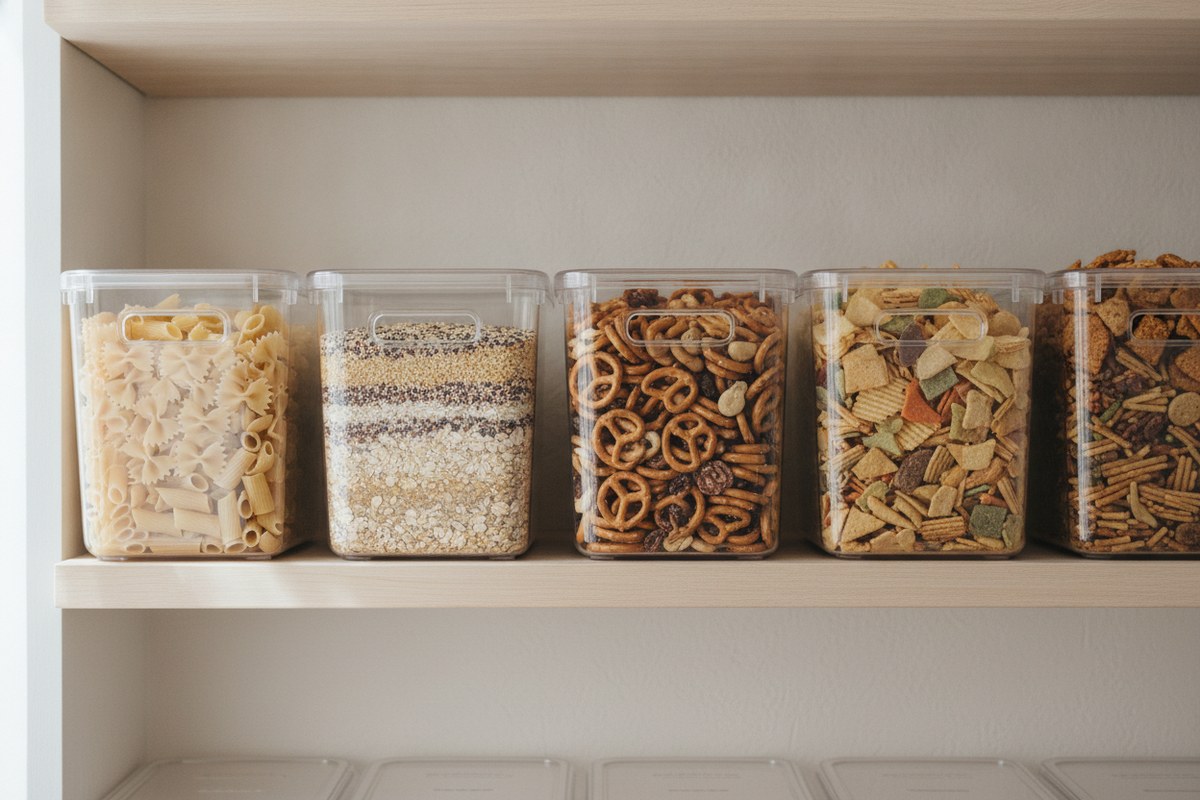
Mismatched bags and boxes are often what make a pantry feel cluttered, even when it’s not. Swapping to clear pantry bins instantly creates visual order because your eye can scan contents without opening anything. Clear containers also help you see when supplies are running low, which naturally cuts down on overbuying—a very Japandi, less-is-more outcome.
3. Add Stackable Shelves to Multiply Vertical Space
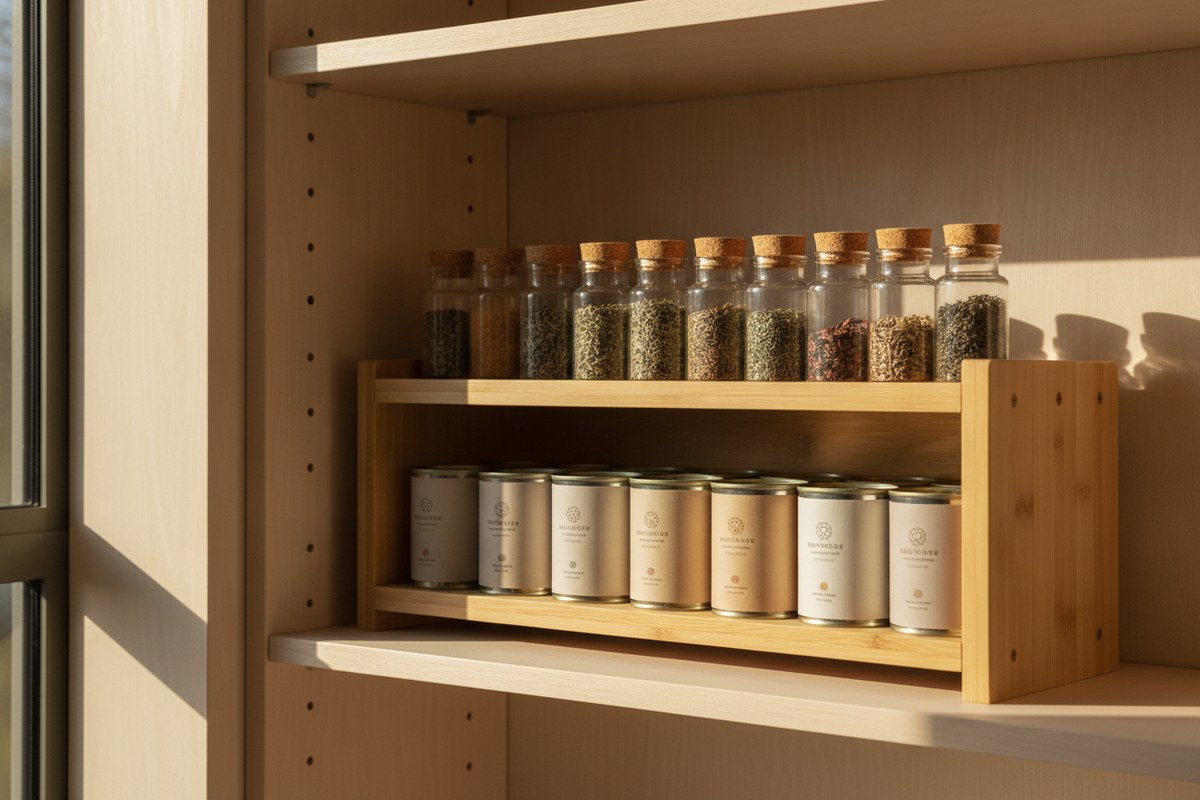
Most small pantries waste the air space above each item. A stackable shelf organizer lets you double up on flat surfaces without stacking cans and boxes precariously on top of each other. This is especially useful for canned goods, spice jars, or snack boxes that are awkward to pile. Think of it as building a second floor inside your existing shelf.
4. Install a Lazy Susan for Corners and Deep Shelves
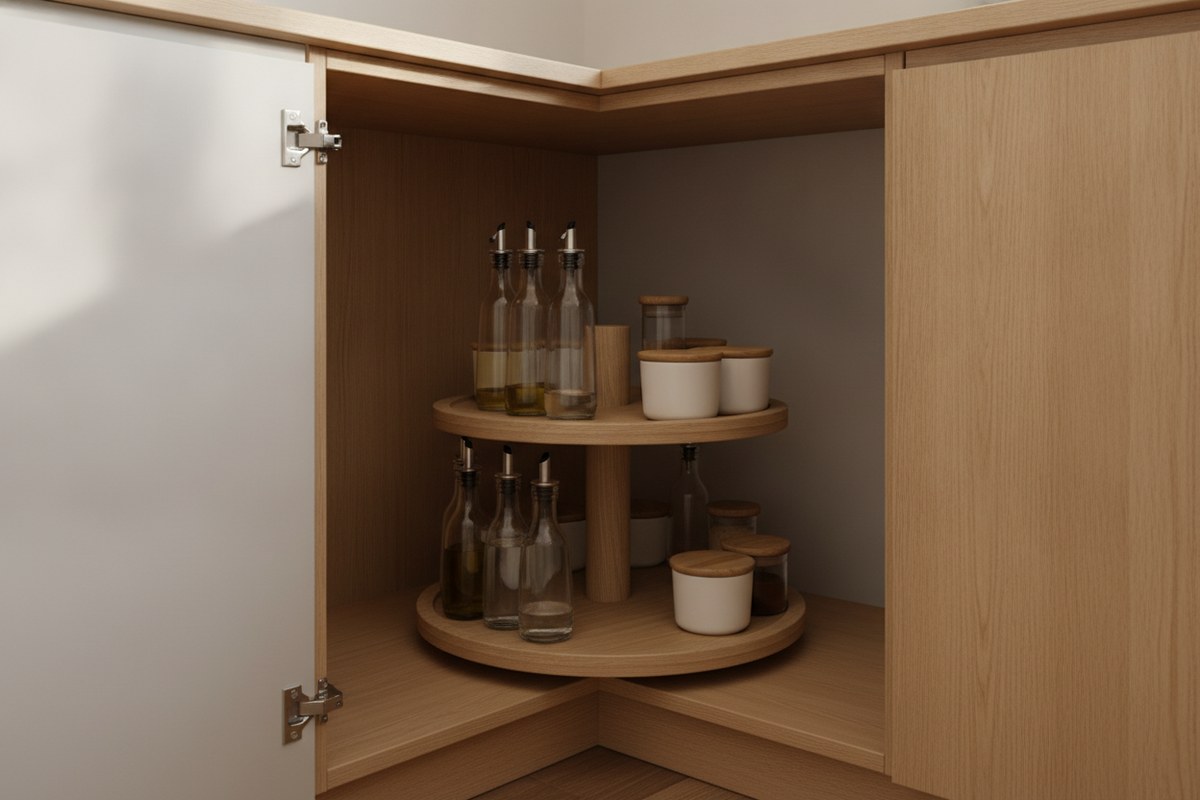
Deep shelves and awkward corners are common in small kitchens, and they’re where items go to get forgotten. A lazy susan turntable solves this instantly—just spin to reach what’s in the back instead of digging. They work beautifully for oils, sauces, and small jars that otherwise hide behind taller items.
5. Use the Pantry Door for Extra Storage
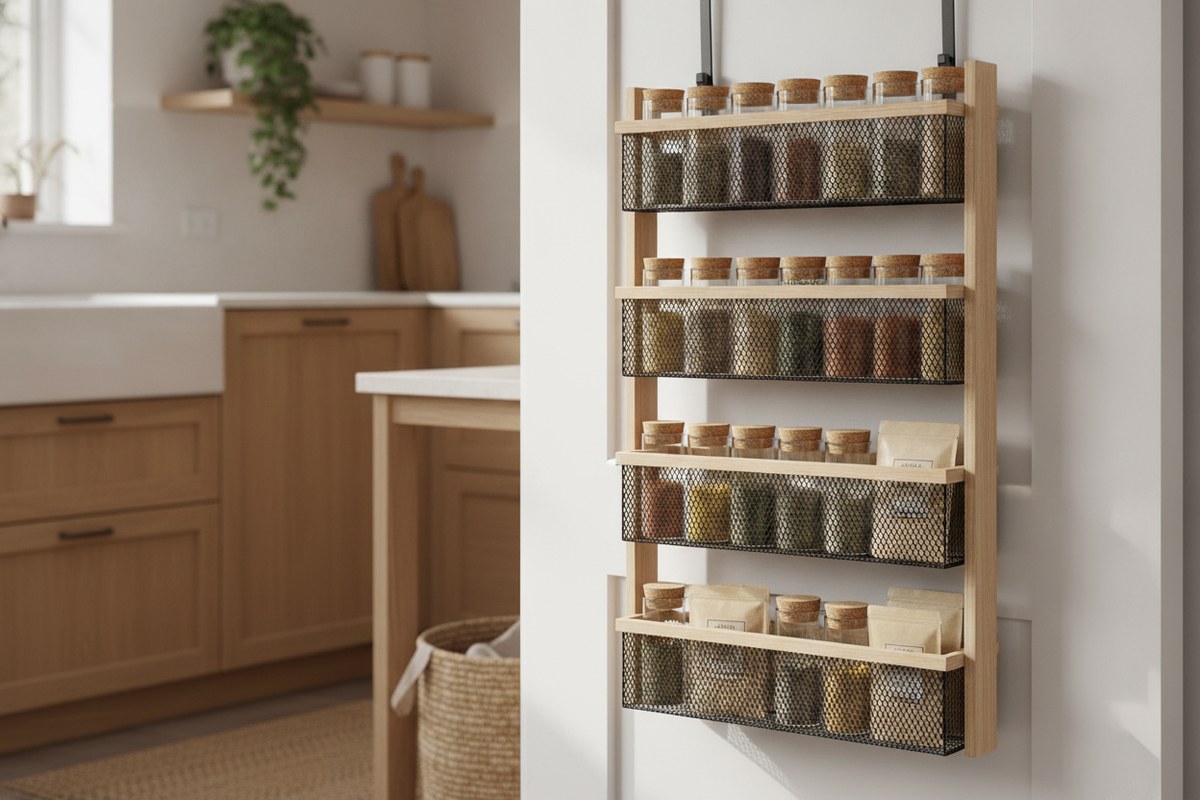
The back of a pantry door is often completely wasted real estate. A slim door-mounted spice rack can hold spices, small condiment bottles, or snack packets without taking up a single inch of shelf space. In Japandi kitchens, this kind of efficient layering keeps surfaces clear while still giving everything a visible, dedicated spot.
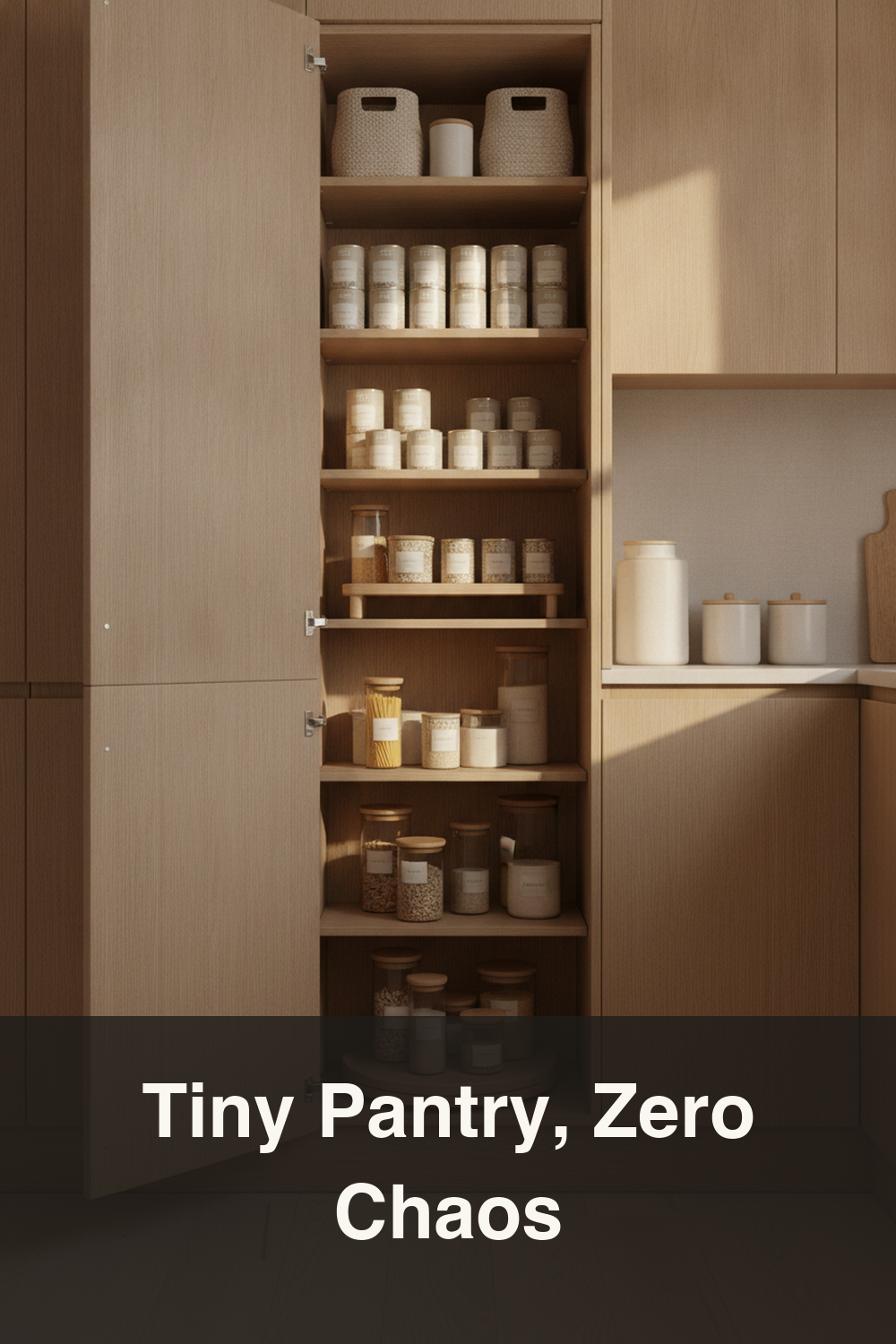
6. Create Zones Like a Japanese Kitchen
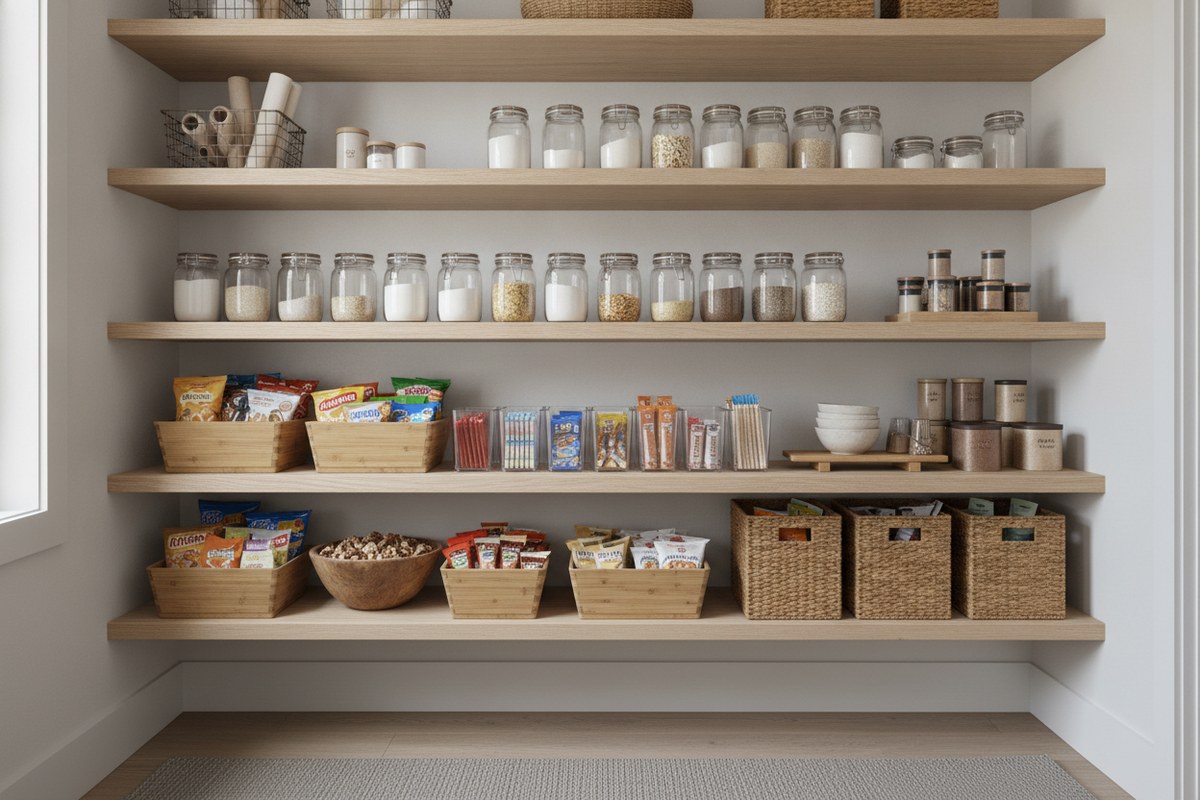
Japanese kitchens are often small by necessity, so zoning is key: baking items together, breakfast items together, snacks in their own bin. Decide on 4–6 zones based on how you actually cook and eat, then keep items within each zone close together. This reduces decision fatigue and means family members can find (and put back) items without asking where things go.
7. Label Everything in a Calm, Unified Font
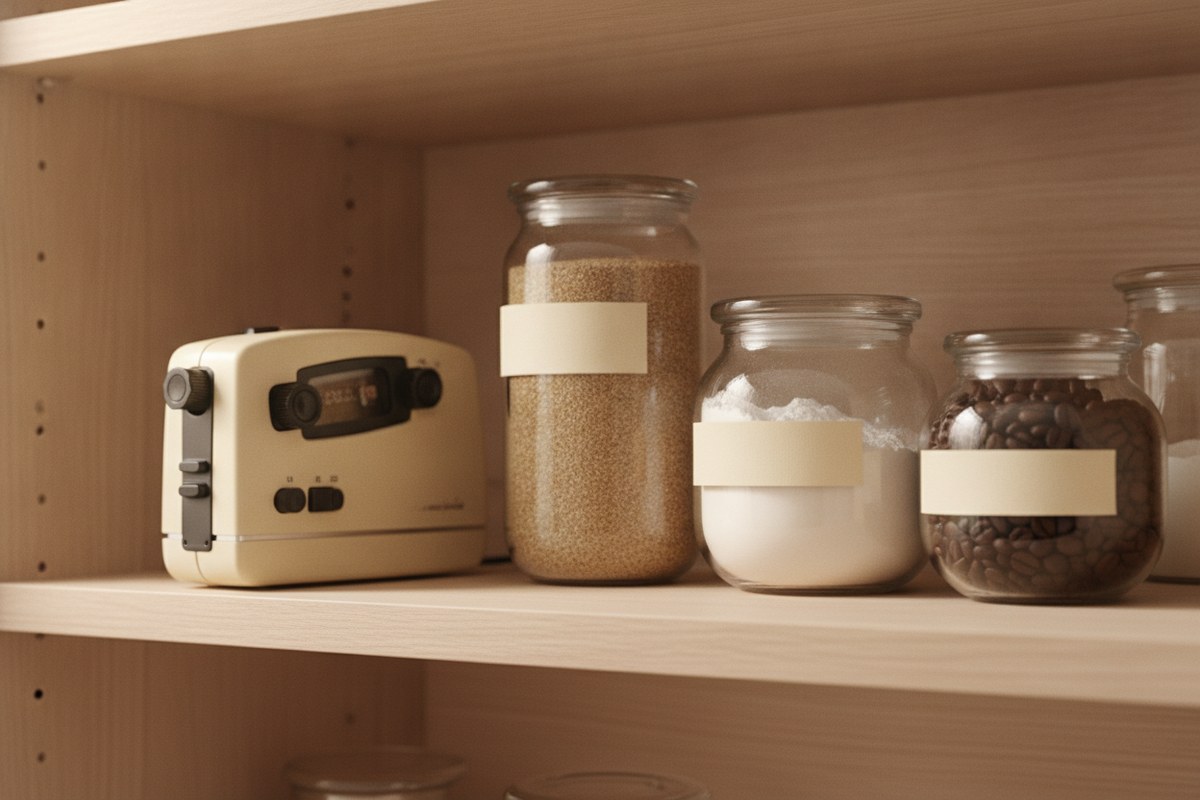
Labels aren’t just functional—they’re part of the Japandi look. A simple pantry label maker lets you create matching, minimal labels in one font and color, which instantly makes a mixed collection of bins and jars feel intentional and cohesive. Label by category rather than brand name so the system stays flexible as products change.
8. Lift Canned Goods With Risers
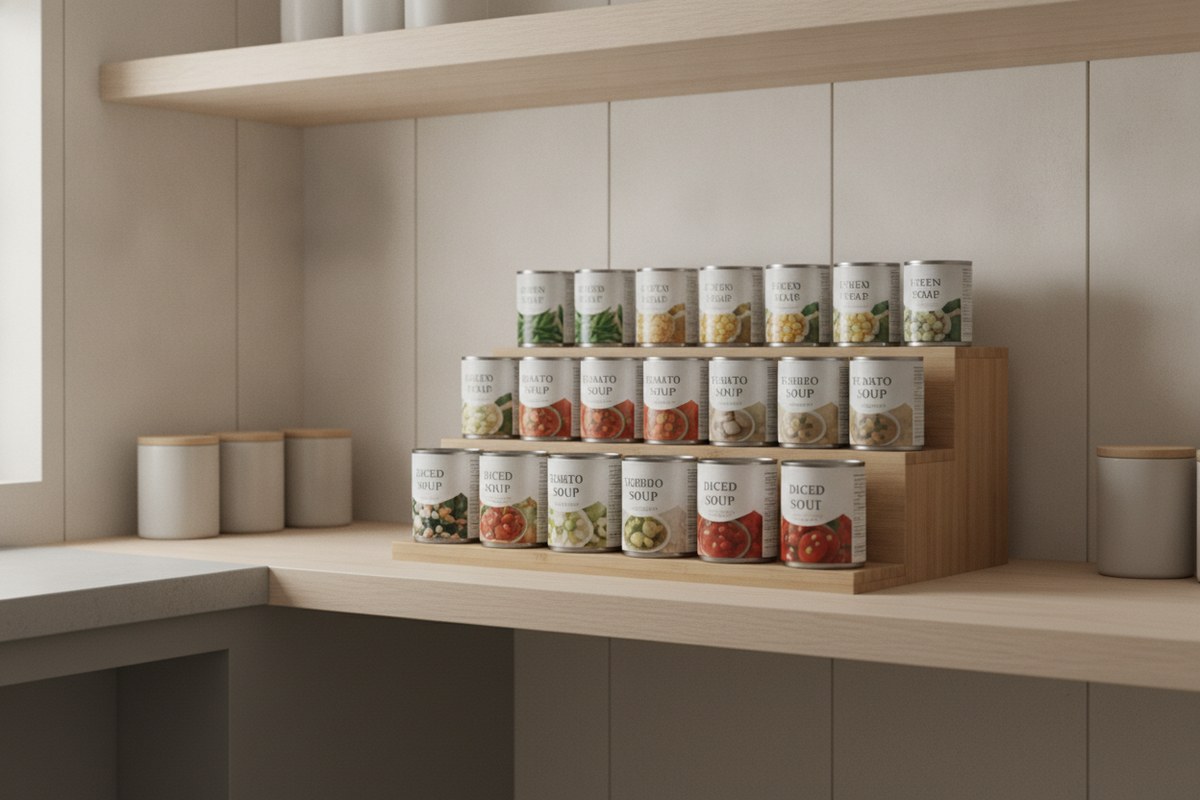
Canned goods are notoriously hard to organize because they’re heavy, uniform, and easy to lose track of at the back of a shelf. A canned goods riser tilts cans forward in visible rows, so you can see what you have at a glance and naturally use the oldest cans first.
9. Soften the Look With Woven Baskets
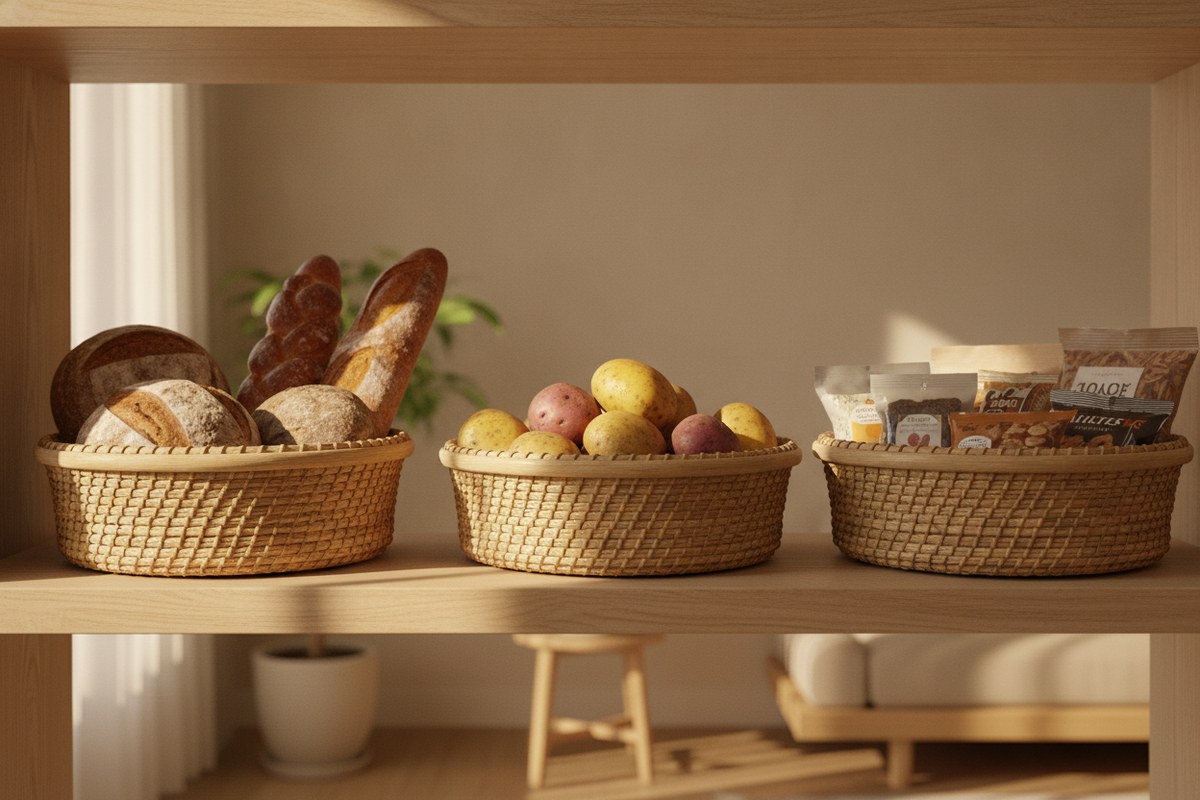
Not everything needs to be in hard plastic. For items like bread, root vegetables, or packaged snacks, woven storage baskets add warmth and texture—core elements of Japandi style—while still keeping loose items corralled. Natural materials like rattan or seagrass soften the look of a utilitarian pantry and make it feel more like a curated space.
10. Keep a Rotation Habit (First In, First Out)
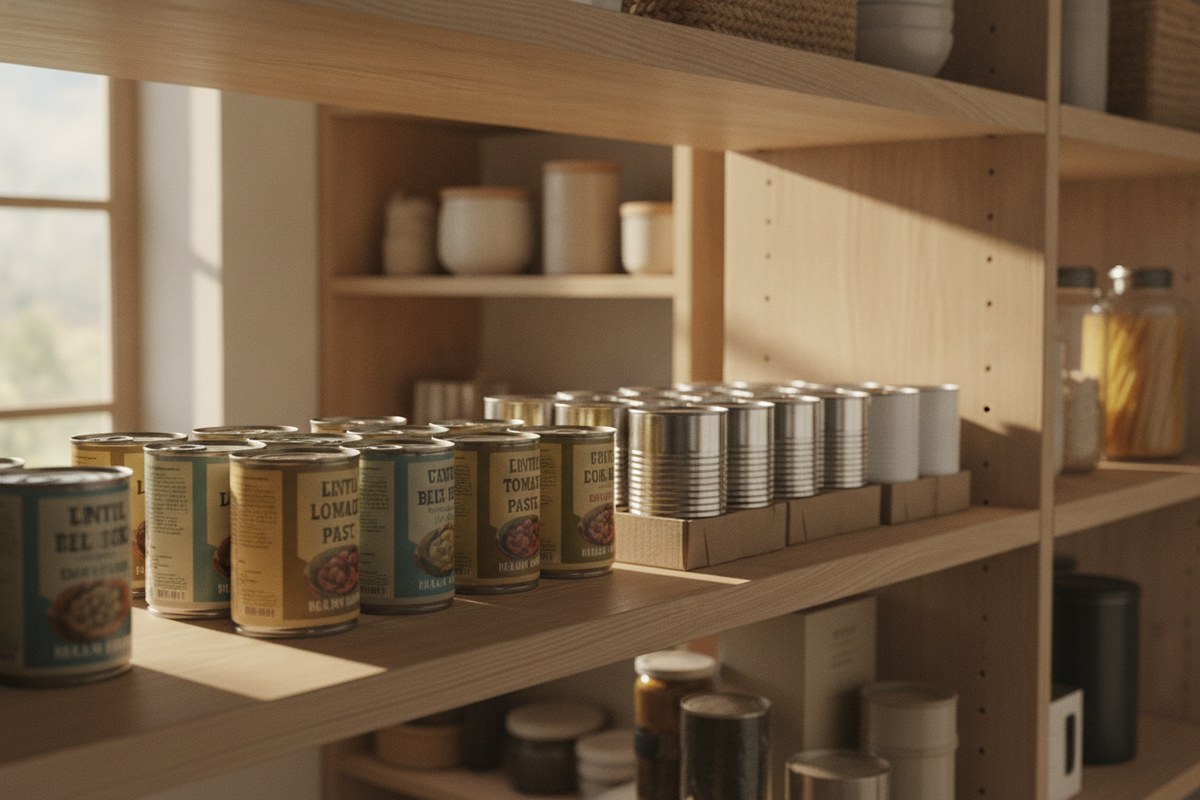
Organization isn’t a one-time project—it’s a habit. Each time you restock, move older items to the front and new ones to the back, the same way small grocery stores manage inventory. This simple first-in-first-out rhythm keeps your pantry from sliding back into clutter and ensures nothing expires forgotten behind a new box of the same thing.
Small pantries thrive on clarity, not more storage. Start with an honest edit, give everything a visible home, and let a few natural materials soften the system. Once it’s set up, maintaining a Japandi-calm pantry takes only minutes a week.