This post may contain affiliate links. If you buy through them, we may earn a small commission at no extra cost to you.
You don’t need a spare room to build a workout habit—you need a corner that works as hard as you do. The trick to a small-space home gym isn’t cramming in more equipment, it’s applying a bit of Japanese-style organization: define a clear footprint, keep only what you use, and give every item a home so the space resets itself in seconds. Below are ten layout ideas that turn an awkward nook, closet wall, or bedroom corner into a gym that feels intentional instead of cluttered, and that blends right into a Japandi-style home instead of looking like a storage unit exploded.
1. Pick the Right Dead Corner
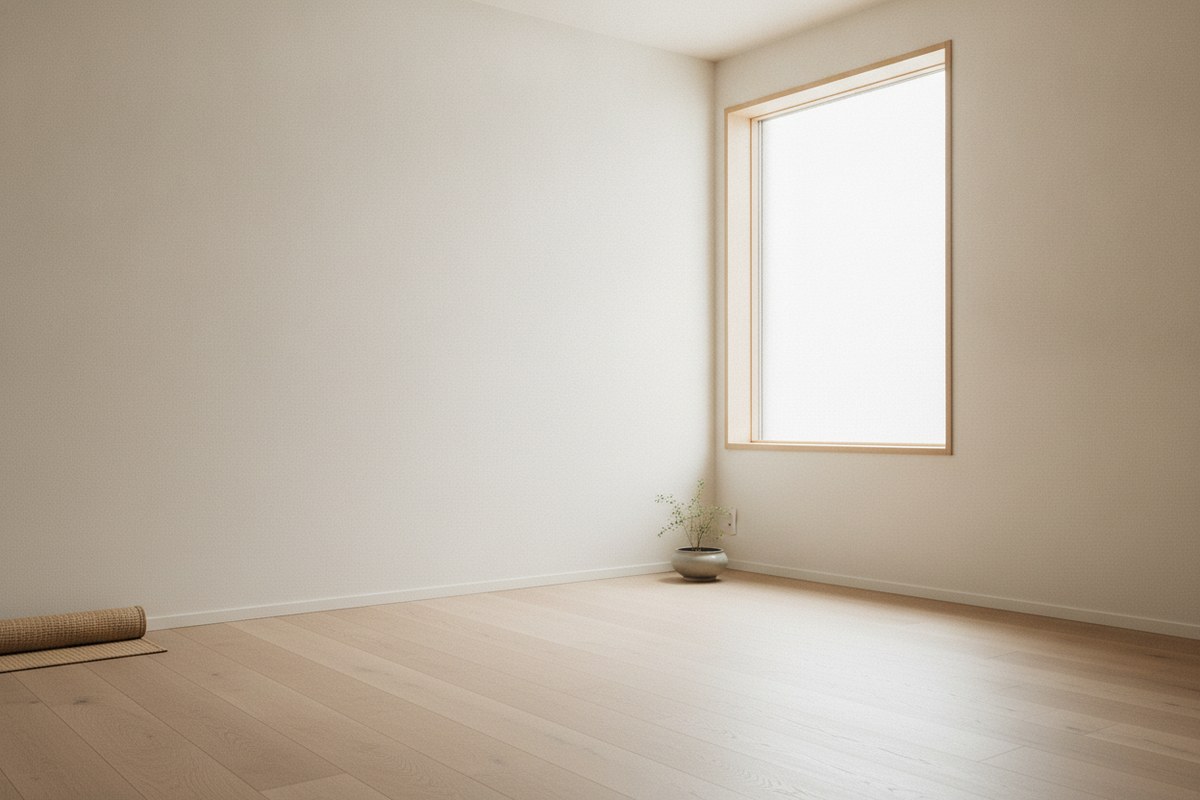
Start by auditing your home for corners that currently do nothing—behind a door, beside a bookshelf, the end of a hallway, or an unused slice of bedroom wall. The best gym corner has at least one solid wall for mounting items and enough clearance to fully extend your arms overhead and to the sides. Avoid high-traffic paths; a corner people walk through daily will never stay organized because it’s constantly disrupted. In Japandi design, a space is defined by purpose first, decoration second, so choose function over the “prettiest” spot.
2. Map the Footprint Before Buying Equipment
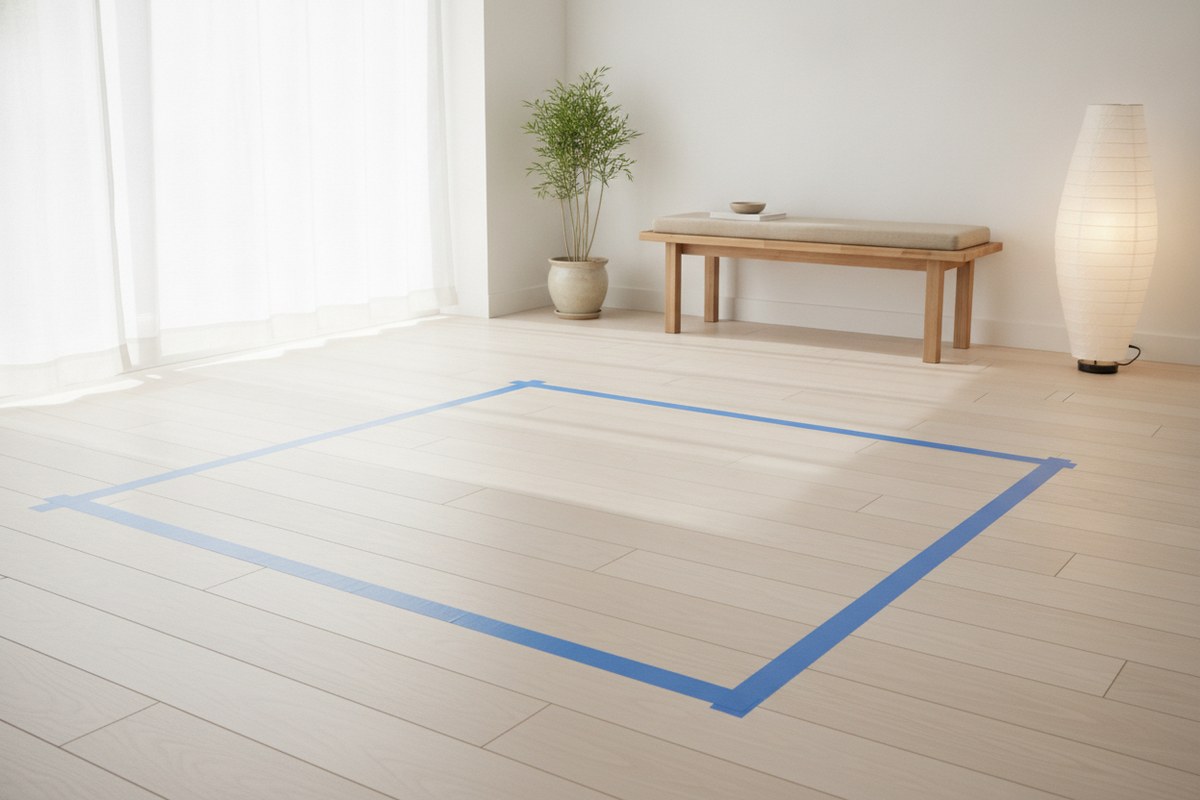
Before anything gets purchased, mark the actual floor footprint with painter’s tape—most home workouts need roughly a 6×6 foot zone for stretching, floor work, and basic movements. This simple exercise prevents overbuying equipment that won’t physically fit, which is one of the biggest reasons small-space gyms turn into clutter. Once you know your real boundaries, you can shop with intention instead of guessing.
3. Choose Foldable, Stackable Equipment First
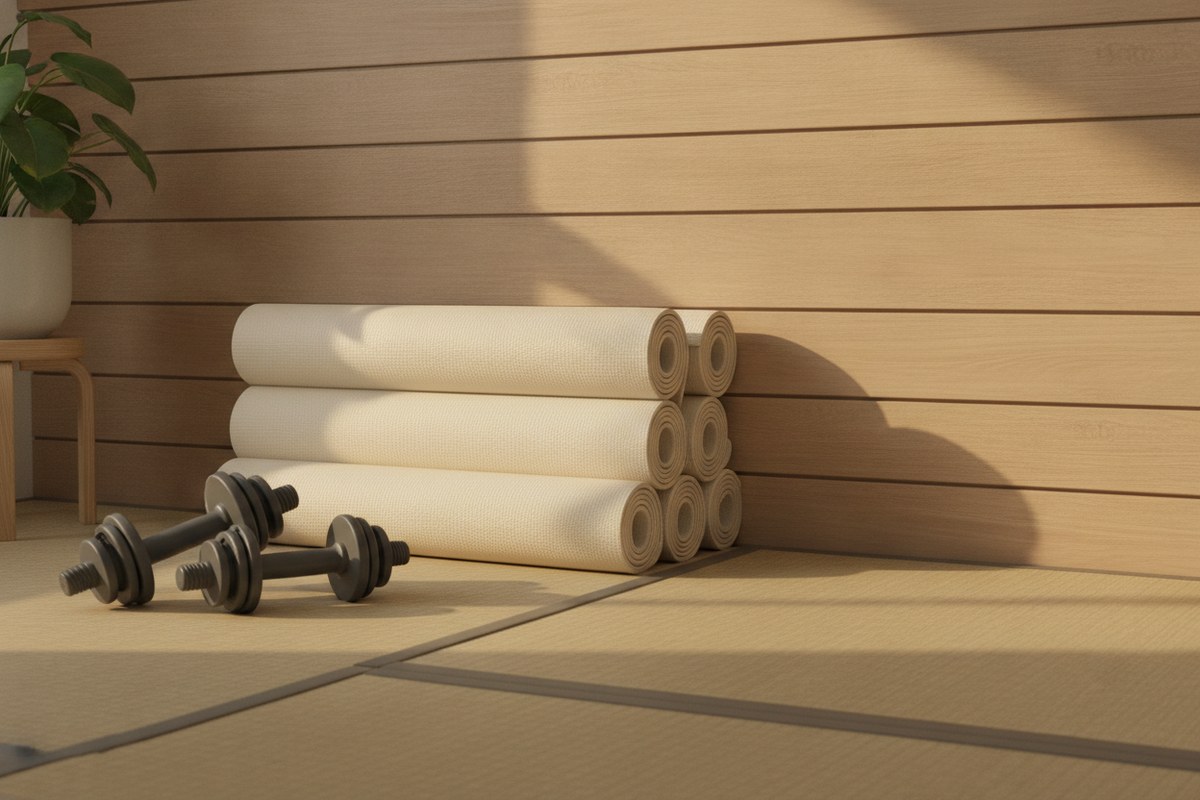
Every piece of equipment in a small gym corner should be able to disappear when not in use. A foldable exercise mat rolls or folds flat against the wall, and compact adjustable dumbbells replace an entire rack of single-weight dumbbells with one small set. This is the heart of Japanese-style minimalism applied to fitness: fewer, better objects that each serve multiple purposes, rather than a pile of single-use gear that eats floor space.
4. Define the Zone with a Low Mat or Rug
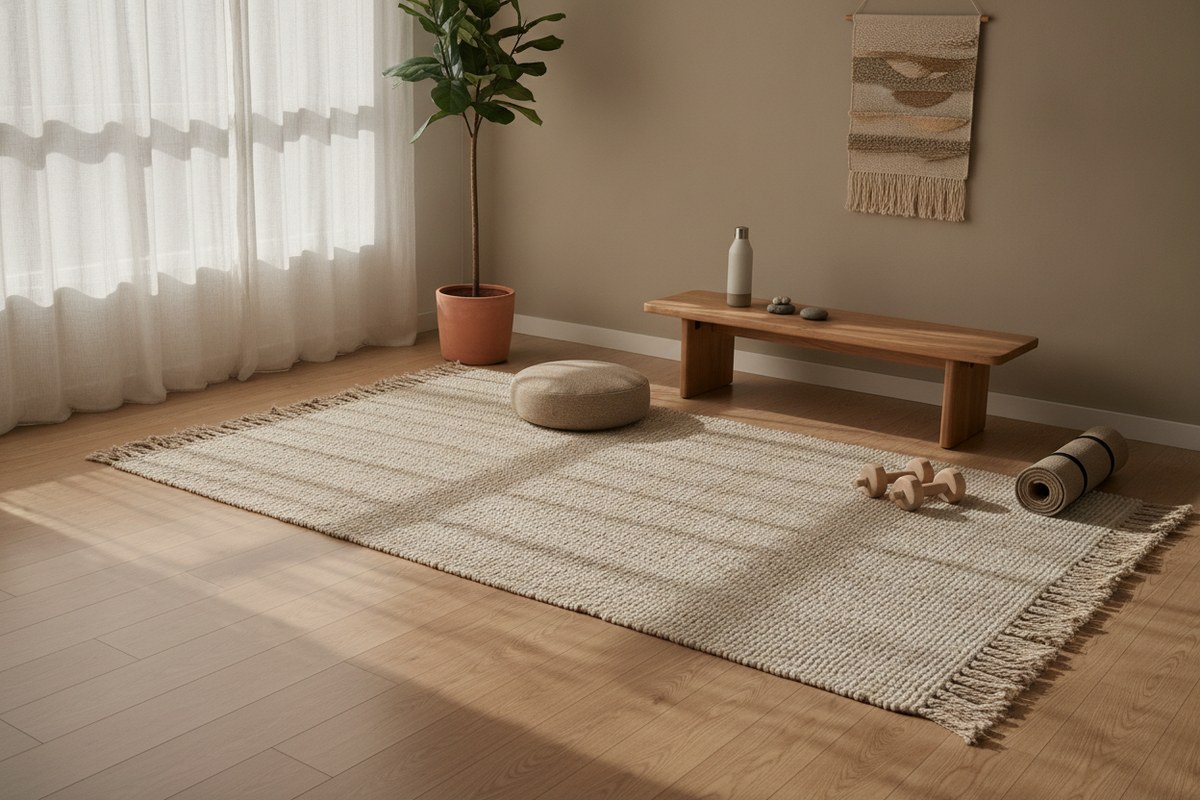
A low-pile rug or dedicated workout mat visually signals “this is the gym corner” without needing walls or furniture to separate it. Choose a neutral, natural-toned mat that fits the Japandi palette of warm woods and soft neutrals rather than a bold athletic brand look. The mat also protects flooring and gives you an instant, repeatable setup spot—roll it out, work out, roll it back, and the room returns to its calm baseline.
5. Add Vertical Storage to Free the Floor
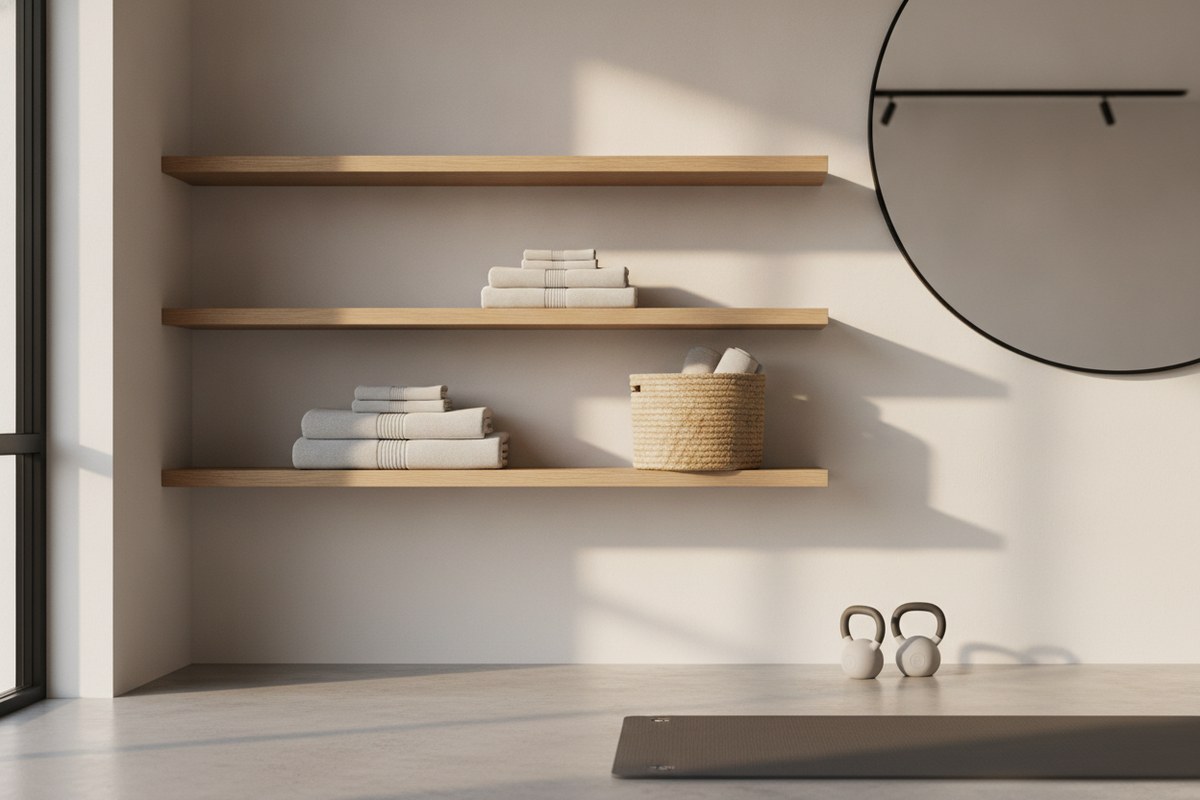
Small-space organization always moves up the wall instead of across the floor. Install slim floating shelves above the corner for folded towels, resistance bands, or water bottles, and use wall-mounted resistance band hooks to keep bands untangled and visible at a glance. Vertical storage keeps the actual square footage of your workout zone completely clear, which matters more in a small space than in a dedicated gym room.
6. Let a Bench Do Double Duty
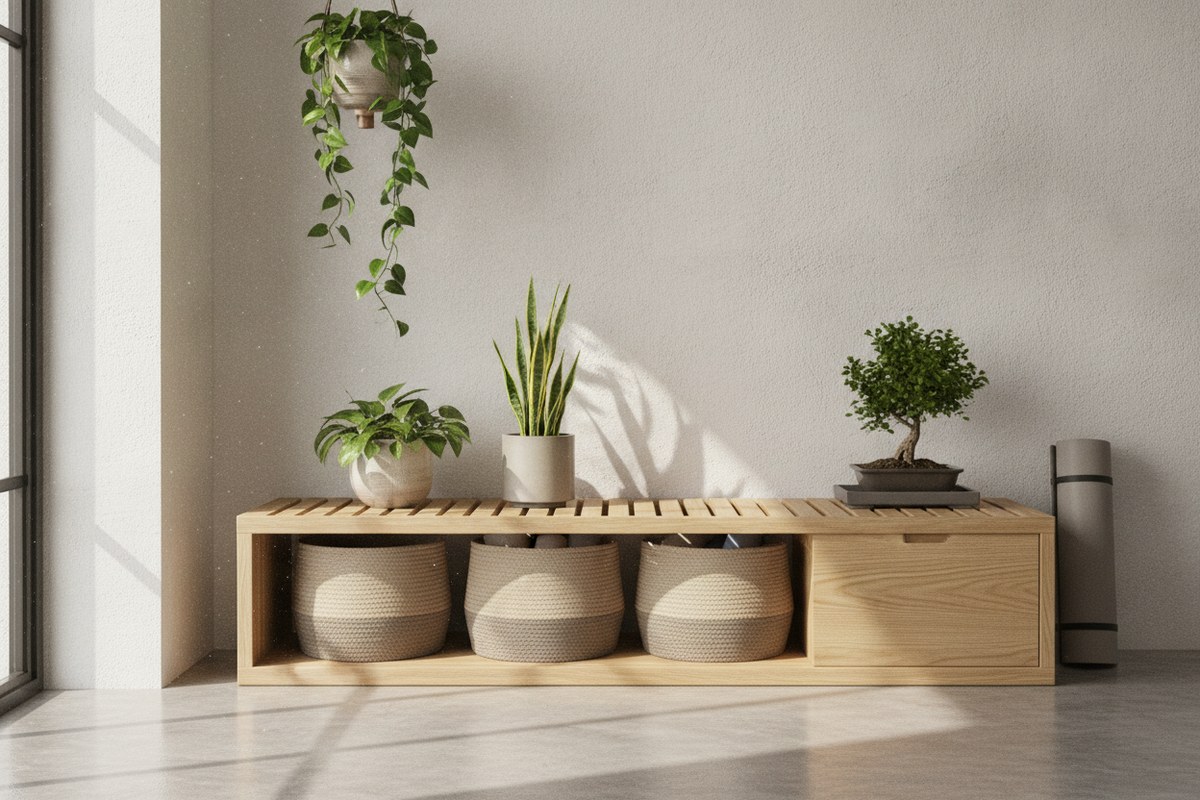
If you have room for one piece of furniture, make it multi-functional. A low wooden bench with hidden storage underneath can hold a mat, bands, and light weights during the day and double as a plant stand, entry bench, or extra seating when it’s not workout time. This single swap often eliminates the need for a separate storage bin entirely, which keeps the whole corner visually quieter.
7. Use a Natural Screen or Shelf as a Soft Divider
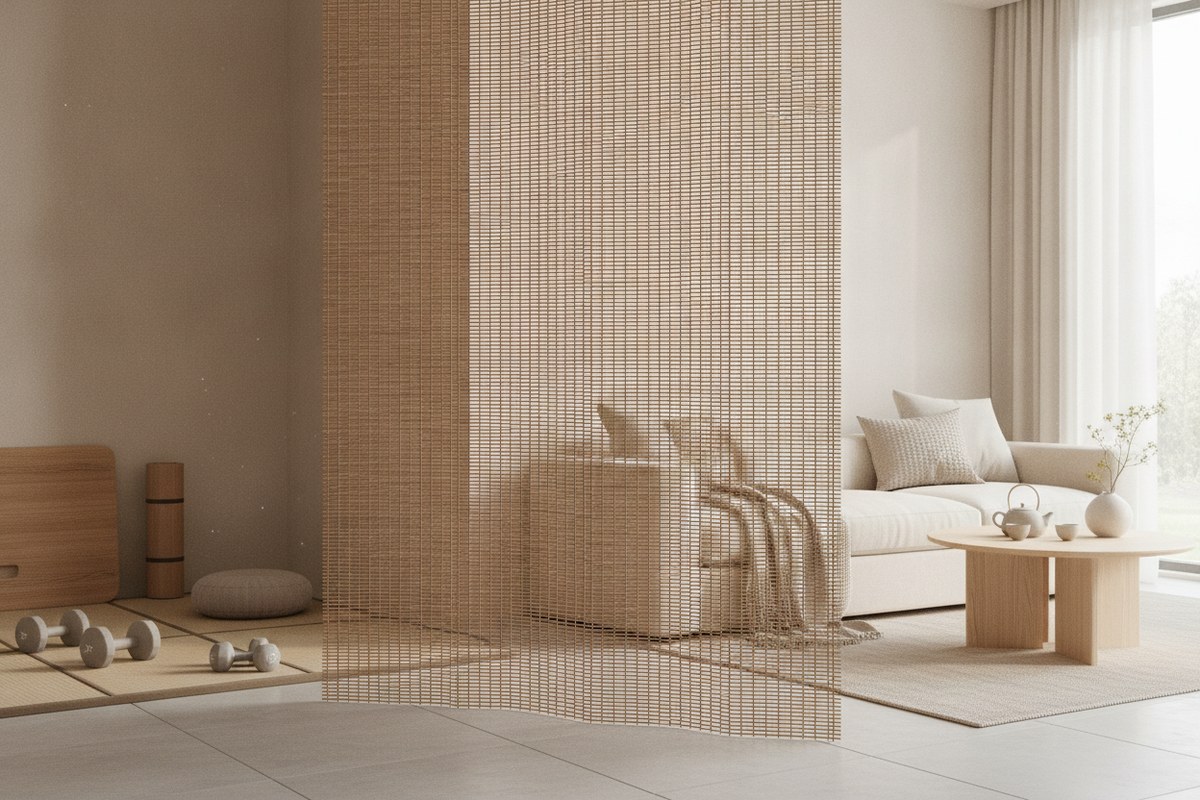
In a studio apartment or shared bedroom, a lightweight bamboo room divider screen can separate the gym corner from your sleeping or living area without closing off light or airflow. Unlike a bulky curtain, a slatted wood screen keeps the Japandi feel of natural materials and visual lightness while still giving the space a defined edge. Fold it flat against the wall when you want the room to feel fully open again.
8. Mount a Mirror to Expand the Space Visually
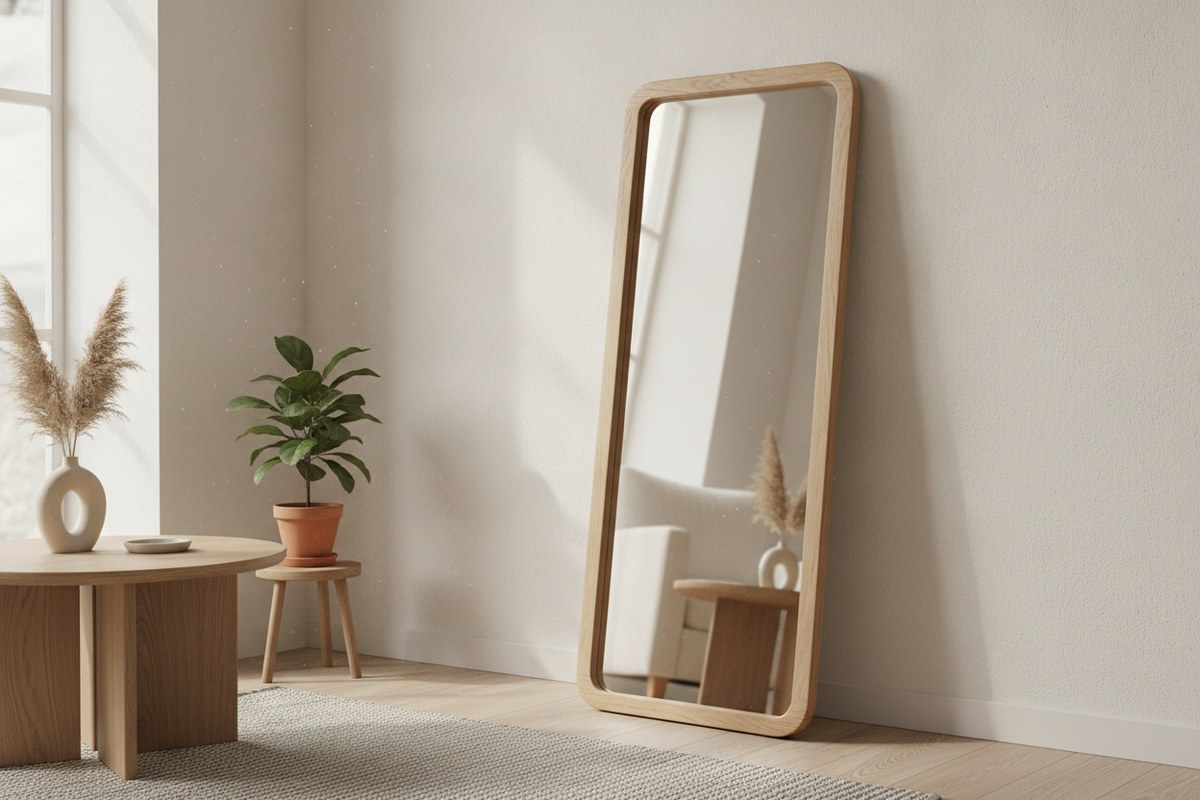
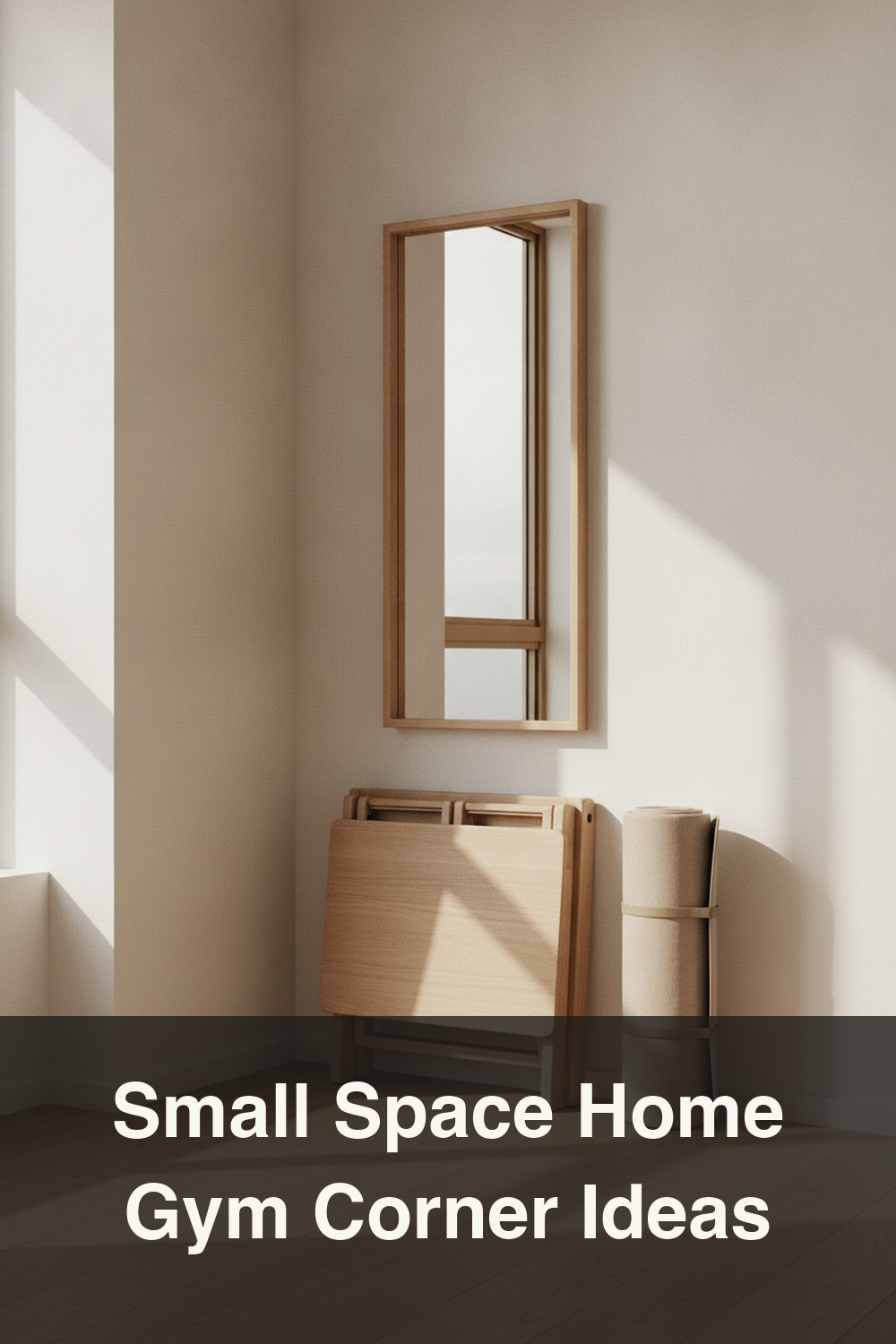
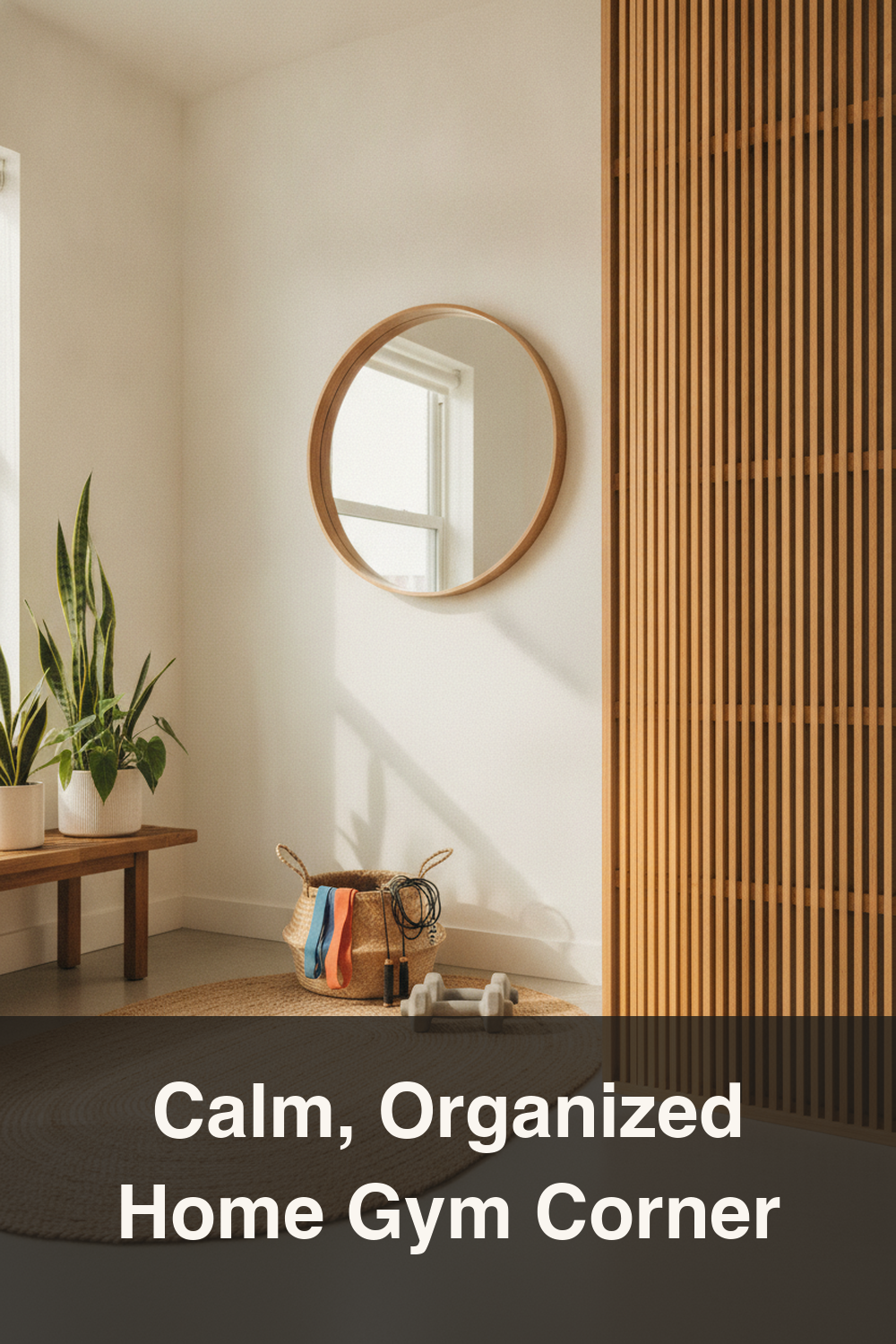
A mirror isn’t just for checking your form—in a small space it bounces light around the room and makes the entire corner feel roughly twice as large. Choose a slim, unframed or wood-framed mirror rather than a bulky gym-style wall mirror, and lean it against the wall or mount it low enough to be useful during floor exercises. This is a classic small-space trick that pulls double duty for both function and visual calm.
9. Corral Small Gear in Baskets, Not Bins
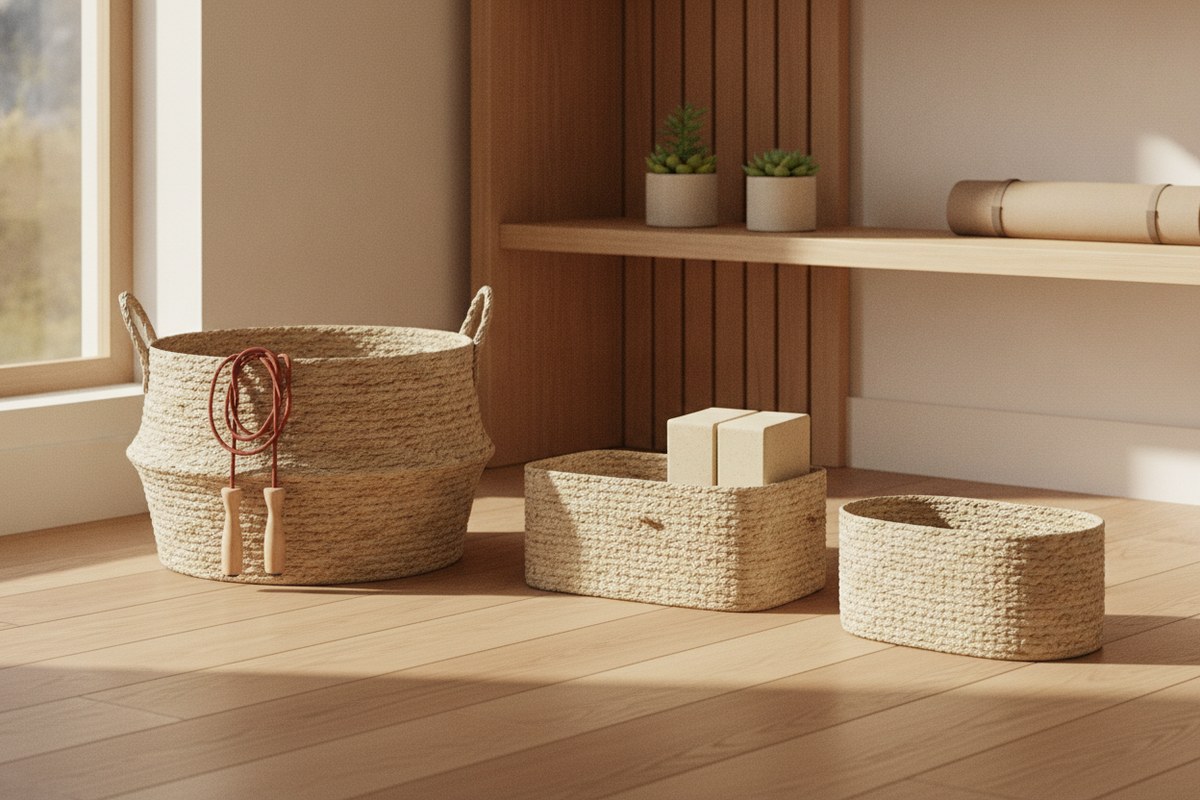
Plastic storage bins tend to read as “garage” rather than “living room,” so swap them for woven storage baskets that hold loose items like jump ropes, ankle weights, or yoga blocks. This is a core Japanese organizing principle—everything has an assigned container, and the container itself should feel calm and intentional rather than purely utilitarian. One basket per category keeps you from the dreaded tangle of mismatched gear in a corner.
10. Keep the Palette Calm and Cohesive
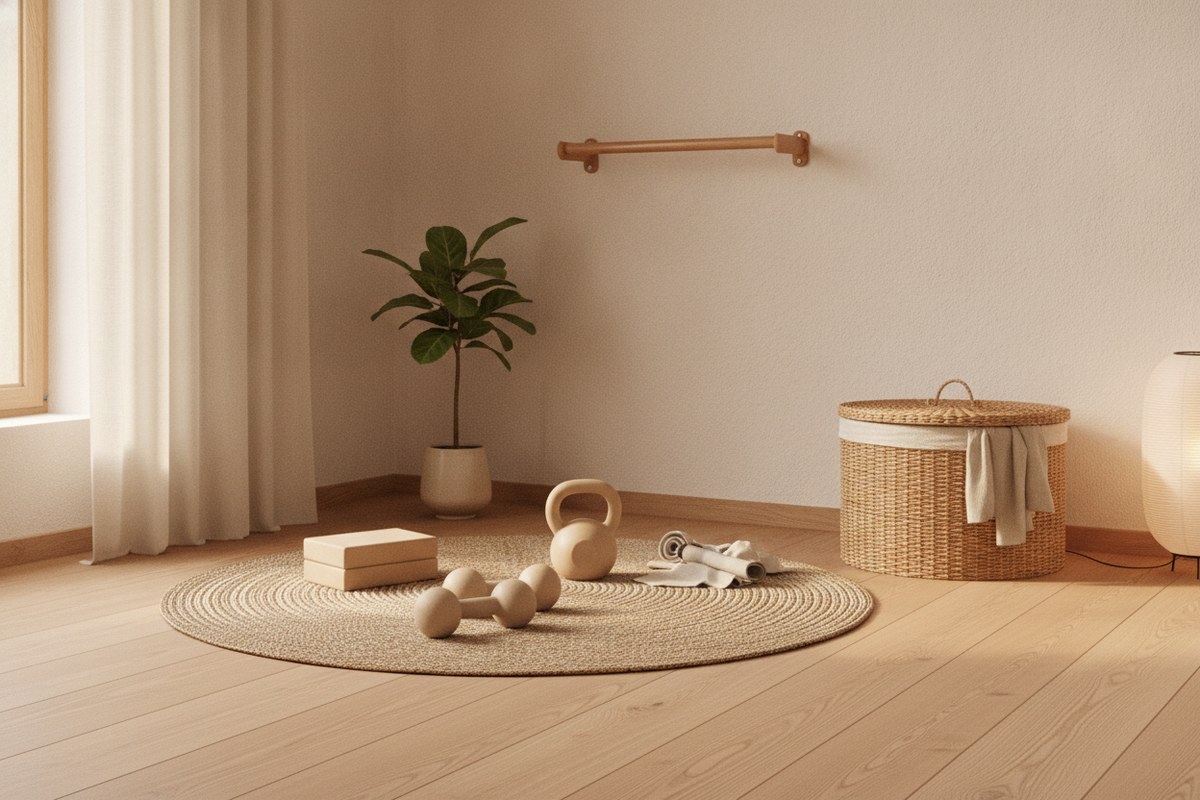
Finally, resist the urge to let your gym corner clash with the rest of the room in bold athletic colors. Stick to the same neutral, warm-wood, and soft-textile palette you use elsewhere in your Japandi home—black or sand-toned equipment, natural fiber mats, and wood or rattan storage. When the gym corner shares the same visual language as your living space, it stops feeling like an intrusion and starts feeling like it was always meant to be there.
A small-space home gym doesn’t need square footage—it needs a clear boundary, a short list of multi-purpose equipment, and a home for every item so cleanup takes seconds, not minutes. Pick two or three of these ideas to start, and let the corner grow into your routine naturally.